Clan Rising
Malpaga Castle today

Italy · Restored

Malpaga Castle

Castello Colleoni

Malpaga Castle is a fortified Renaissance seigneurial residence in Cavernago, Bergamo, largely rebuilt and expanded after 1456 by the condottiero Bartolomeo Colleoni. The castle is notable for extensive interior wall frescoes attributed to Il Romanino, including scenes commemorating the 1474 visit of King Christian I of Denmark and other allegorical and courtly subjects.

Photograph via Wikimedia Commons

Its prime

1474

Today

Restored

As it stood in 1474

What Malpaga Castle looked like in its prime.

A compact, square fortress set within a surrounding ditch and two concentric lines of defensive walls, the castle presents crenellated curtain walls topped by stepped merlons; the outer ring includes service buildings (stables and barracks) in the original plan. The inner courtyard is enclosed by continuous ranges of rooms whose interior plastered walls are covered with large narrative fresco cycles; low pitched roofs shelter the inward-facing suites and a central open courtyard dominated by painted wall-scenes.

Its story

The story of Malpaga Castle.

In 1456 the condottiero and nobleman Bartolomeo Colleoni acquired the ruined castle of Malpaga from the commune of Bergamo. He enlarged and enriched it not only as a military base for his troops but as a seigneurial residence, in the typical Italian Renaissance fashion.

The castle's chief feature is its frescoed interior, attributed to the Renaissance painter Il Romanino. Commissioned by Colleoni's heirs around 1520–1530 to celebrate the family's most famous member, the cycle includes scenes commemorating the 1474 visit of King Christian I of Denmark alongside allegorical and courtly subjects.

Step inside

8 places to explore in 1474.

The record describes 8 distinct spots at Malpaga Castle, including 5 interiors: frescoed state rooms, room commemorating king christian i's visit, colleoni's private studio and more. Create your own photoreal reconstruction and explore every one, more scenes means more rooms, more angles, and more of the place to stand in.

Exterior approach across the ditchCurtain walk and battlementsInner courtyard with narrative frescoesFrescoed state roomsRoom commemorating King Christian I's visitColleoni's private studioFirst-floor rooms with later frescoesOuter service range: stables and barracks

Build Your Own Castle

Recreate Malpaga Castle with AI to explore it.

The artist rebuilds it as it stood in 1474, a photoreal reconstruction that belongs to you alone. Pay with coins, no subscription needed.

Recreate this castle →

Castle Siege

Play Castle Siege at Malpaga Castle.

A strategy game played on Malpaga Castle’s real ground plan: the same surveyed walls shown in the archive below. Post your finite garrison on the battlements between assaults, then hold out as rams, siege towers, trebuchets and sappers arrive in ever-worse waves.

Sign in free to see the garrison muster. One castle costs 150 Clan Coins and is yours forever.

Sign in to take command →

See every castle’s leaderboard →

Whose castle

Clans who held Malpaga Castle.

The families that held Malpaga Castle for a decade or more across its history, follow a name to its clan.

  • Colleoni

    Acquired ruined by the condottiero Bartolomeo Colleoni in 1456; his heirs commissioned the frescoes c. 1520–30.

From the archive

Malpaga Castle on paper: the measured plan and period views.

The survey plan and photographs below are the ground truth this page's reconstructions are checked against, drawn and photographed while the castle was still a working garrison. Every image is public-domain or openly licensed, with its source named.
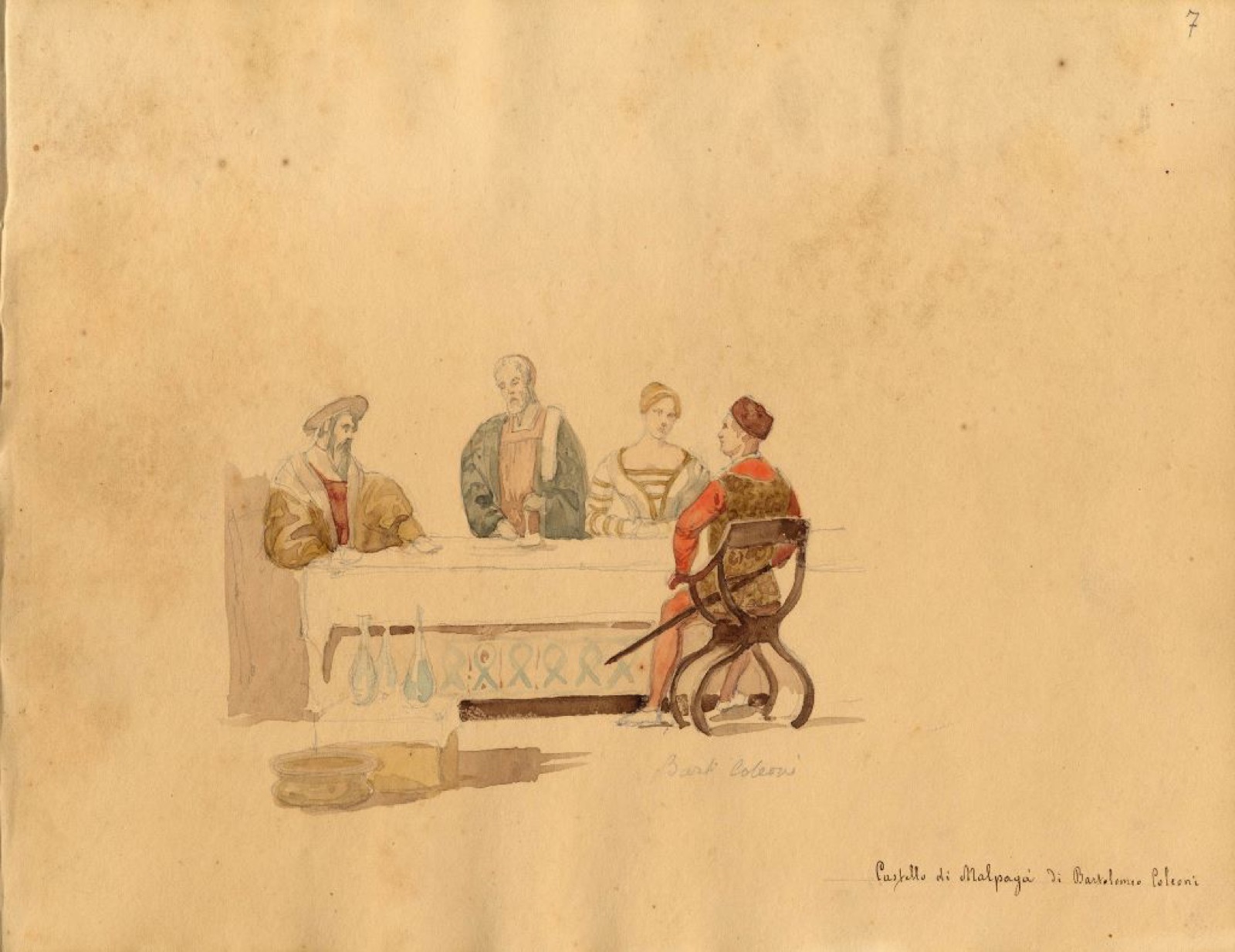
Pitture nel Castello di Malpaga, Malpaga Castle

Pitture nel Castello di Malpaga

1839 · Turin Gallery for Modern and Contemporary Art (via Europeana)

CC BY
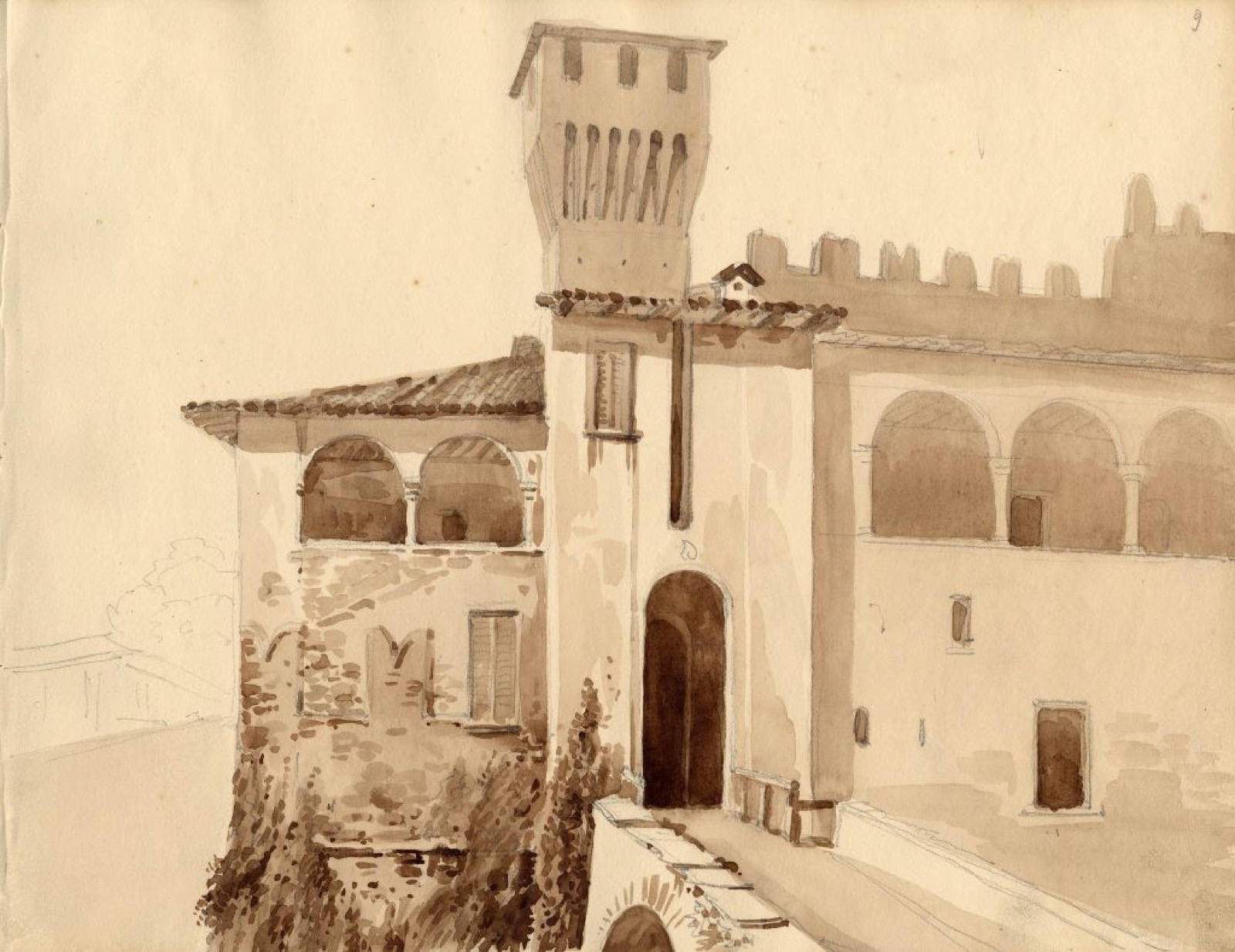
Ingresso del castello di Malpaga, Malpaga Castle

Ingresso del castello di Malpaga

· Turin Gallery for Modern and Contemporary Art (via Europeana)

CC BY
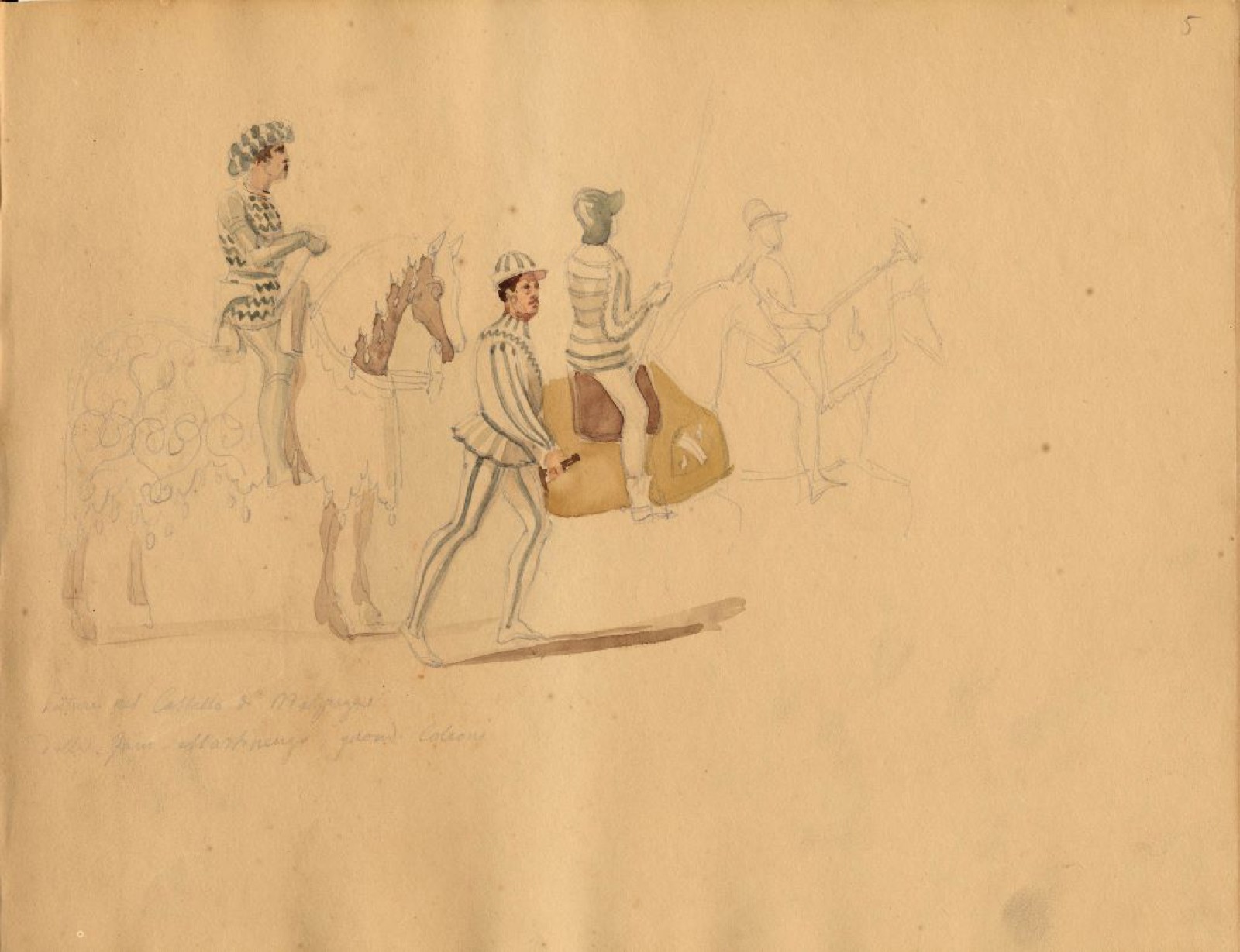
Pitture nel Castello di Malpaga, Malpaga Castle

Pitture nel Castello di Malpaga

1839 · Turin Gallery for Modern and Contemporary Art (via Europeana)

CC BY

Questions about Malpaga Castle

What is the history of Malpaga Castle?

Malpaga Castle’s documented history centres on its transformation in the 15th century from a ruined castle into Bartolomeo Colleoni’s fortified Renaissance residence. An early medieval castle lay in ruins after a raid in the 1440s, before Colleoni acquired it from the commune of Bergamo in 1456. His heirs later commissioned frescoes celebrating his life and the 1474 visit of King Christian I of Denmark.

What is inside Malpaga Castle?

Inside Malpaga Castle are frescoed state rooms, a banquet hall, an inner courtyard and Colleoni’s private studio. The frescoes depict Christian I of Denmark’s visit, banquets, hunting and tournaments, while other scenes show allegories and the Battle of Molinella. The first-floor rooms contain 17th-century frescoes, and Colleoni’s former private room includes a small 15th-century sacred fresco.

Why was Malpaga Castle built, and what was it used for?

Malpaga Castle was built and expanded as both a military base and a seigneurial residence. Bartolomeo Colleoni transformed the ruined castle into a fortified residence and the centre of his domain, combining accommodation for his soldiers with a courtly and political retreat. Its later frescoes helped display the prestige and achievements of his family.

Where is Malpaga Castle?

Malpaga Castle is in Cavernago, in the province of Bergamo. It stands in the hamlet of Malpaga within the communal territory of Cavernago, in northern Italy. Bergamo is the nearest recognised city named in the supplied descriptions.

Which family or clan held Malpaga Castle?

The Colleoni family held Malpaga Castle after Bartolomeo Colleoni acquired it in 1456. He bought the ruined castle from the commune of Bergamo and made it his residence and the centre of his domain. His heirs later commissioned the fresco cycle celebrating the family’s most famous member, around 1520–1530.

What did Malpaga Castle look like in its prime?

Malpaga Castle is a compact square fortress surrounded by a ditch and two concentric lines of defensive walls. Its crenellated curtain walls have stepped merlons, while the outer ring originally contained stables and barracks. Low pitched roofs cover inward-facing ranges of rooms around a central courtyard, whose walls are covered with painted narrative scenes.

Is Malpaga Castle still standing or is it a ruin?

Malpaga Castle is still standing and has been restored. The surviving structure retains its square layout, surrounding ditch, defensive walls, merlons and inner courtyard, although some frescoes have deteriorated or been vandalised. The first defensive line, which included the stables and barracks, has disappeared.

Was Malpaga Castle ever attacked or besieged?

Malpaga Castle was attacked in a raid during the 1440s and was left in ruins. The supplied material does not name the attackers or describe a formal siege. Bartolomeo Colleoni subsequently acquired the ruined castle in 1456 and transformed it into a fortified residence and military base.
All castles of Italy · Castles of Europe · the best castles in Europe · explore the finished reconstructions.