
Latvia · Partial ruin
Koknese Castle
Kokneses pils
Koknese Castle is a medieval stone castle complex on a high bluff above the Daugava river in Koknese, Latvia, founded in the early 13th century. It was a fortified administrative centre that changed hands several times and was partly demolished by retreating forces in 1701; its ruins now sit at the water's edge after 20th-century reservoir flooding.
First raised
1209
Its prime
1636
Today
Partial ruin
As it stood in 1636
What Koknese Castle looked like in its prime.
Perched on a high bluff above the Daugava, the castle presented an elongated plan of pale-grey rubble and ashlar masonry with a continuous curtain wall punctured by tall, narrow arched and slit openings. A compact multi-storey keep and projecting tower sections occupied the western end, historically flanked by at least two substantial round towers. In its prime the masonry rose complete above the river edge, forming a fortified riverside stronghold visible from the valley below.
Its story
The story of Koknese Castle.
Koknese Castle, founded in the 13th century on a high bluff overlooking the Daugava valley, was a fortified administrative centre of the Archbishopric of Riga, whose land-bailiffs collected taxes and administered the law. Disputes over the castle between the territorial lord and his vassals, the von Tiesenhausens, lasted nearly half a century, until 1397, when the territorial ruler finally gained it.
The Archbishop of Riga granted joint-property rights, "Gesamthand Recht", to the archbishopric's most powerful vassal families: the von Rosens from 1350/1428, the von Tiesenhausens in 1417, the von Ungerns in 1455 and the von Üxkülls in 1477. With at least nine family members serving as bailiffs of Turaida and Koknese, the von Rosens were the most prominent vassals in the Livonian district, tracing their origins to Theoderich, a brother of Bishop Albert of Riga.
The castle was heavily contested between Polish, Swedish and Russian forces in the 16th and 17th centuries, changing hands many times while the native inhabitants endured periodic slaughter, capture and famine. In 1701, during the Great Northern War, Koknese was blown up by retreating forces to keep the strategic castle from advancing Russian hands; since a hydroelectric dam was built downriver in 1965, the ruins have sat at the edge of the reservoir's waters.
Step inside
5 places to explore in 1636.
The record describes 5 distinct spots at Koknese Castle, including 1 interior: inner ward / courtyard (interior). Create your own photoreal reconstruction and explore every one, more scenes means more rooms, more angles, and more of the place to stand in.
Build Your Own Castle
Recreate Koknese Castle with AI to explore it.
The artist rebuilds it as it stood in 1636, a photoreal reconstruction that belongs to you alone. Pay with coins, no subscription needed.
Recreate this castle →Defend this castle →Whose castle
Clans who held Koknese Castle.
The families that held Koknese Castle for a decade or more across its history, follow a name to its clan.
Tiesenhausen
The von Tiesenhausens held Koknese as vassals until 1397, after disputes with the territorial lord lasting nearly half a century; enfeoffed again in 1417.
Rosen
The von Rosens held joint-property fiefs from 1350/1428, with at least nine family members serving as bailiffs of Koknese and Turaida.
From the archive
Koknese Castle on paper: the measured plan and period views.
The survey plan and photographs below are the ground truth this page's reconstructions are checked against, drawn and photographed while the castle was still a working garrison. Every image is public-domain or openly licensed, with its source named.
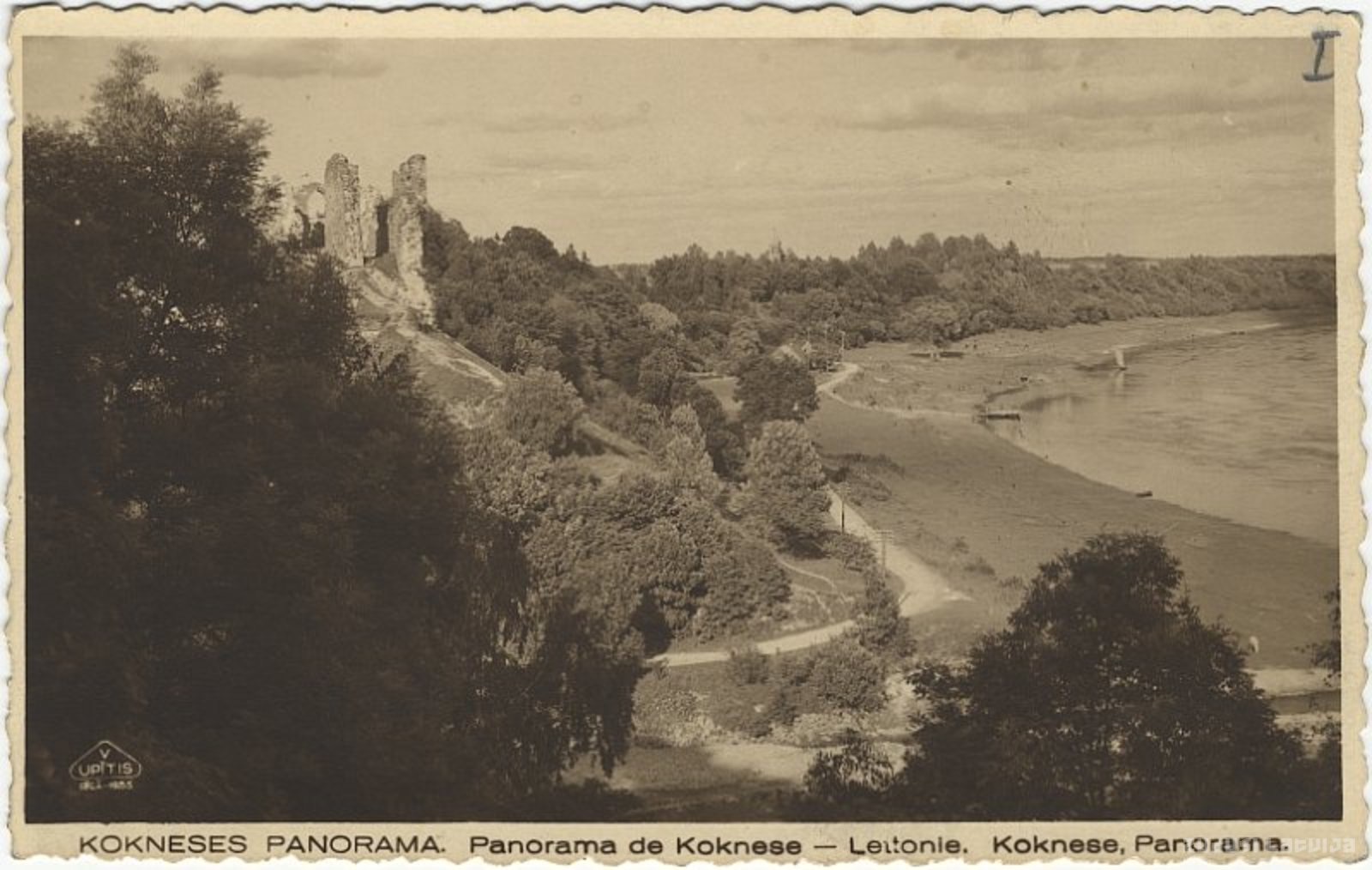
Koknese
1935 · National Library of Latvia (via Europeana)
CC BY
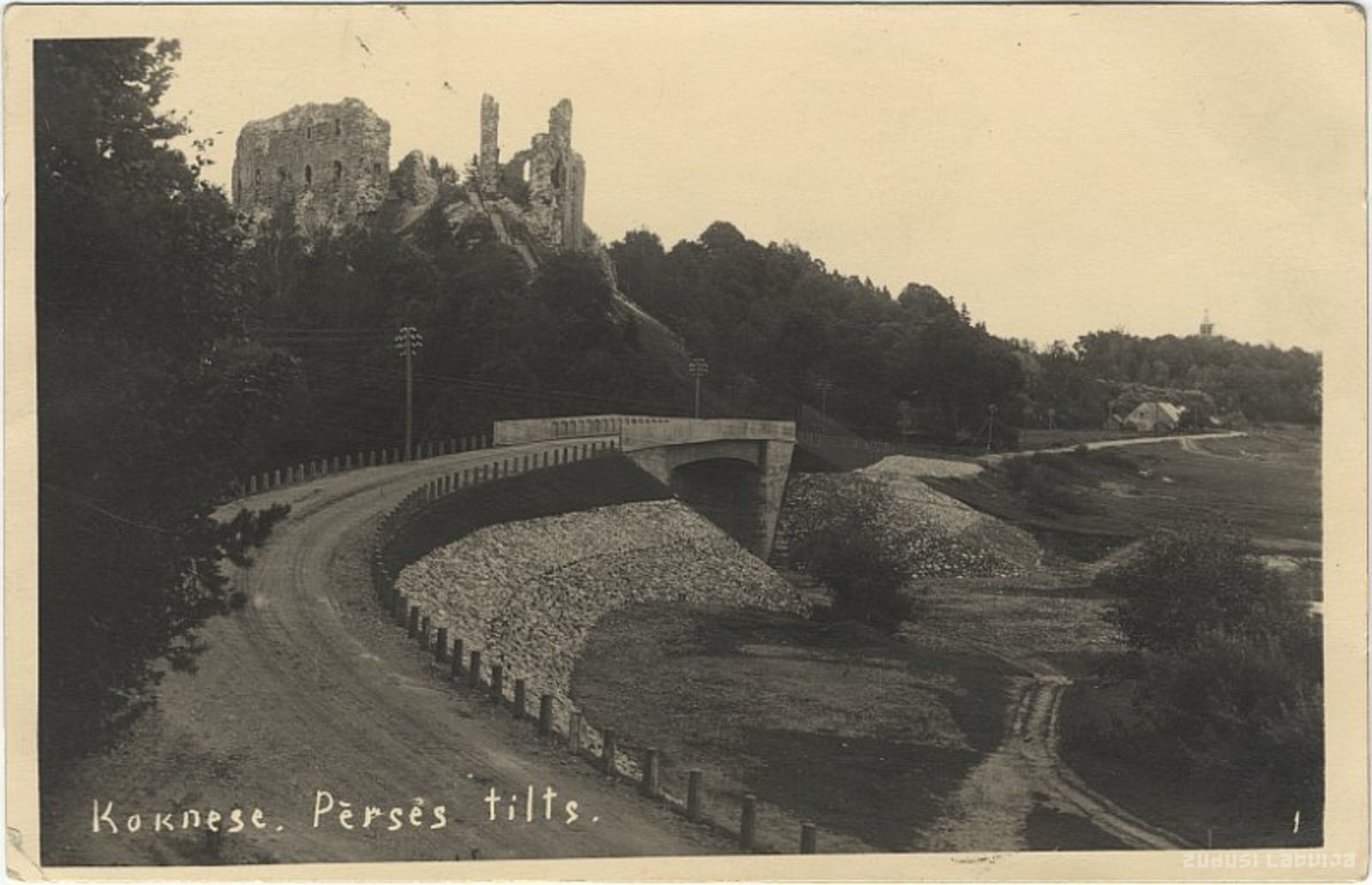
Koknese. Pērses tilts
· National Library of Latvia (via Europeana)
CC BY


