
Latvia · Restored
Turaida Castle
Turaidas pils
Turaida Castle is a medieval red-brick castellum on a riverbank in Turaida, Latvia, founded in 1214 for the Archbishopric of Riga and later enlarged by the Livonian/Teutonic orders. The complex retains its characteristic tall cylindrical main tower, several round forecastle towers and a compact inner ward now presented as a museum reserve. It was abandoned after a fire in the 18th century and has been archaeologically excavated and reconstructed in the 20th century.
First raised
1214
Its prime
1410
Today
Restored
As it stood in 1410
What Turaida Castle looked like in its prime.
A compact red-brick castle group sited on the Gauja riverbank: a tall central cylindrical main tower capped by a conical roof, a large drum-shaped tower with a fieldstone basal section, and several round forecastle towers connected by thick red-brick curtain walls. The roofline is dominated by the pointed conical roof of the main tower and smaller steep timber roofs on annex buildings; the inner ward contains domestic buildings clustered against the curtain walls. Surfaces show regular red-brick courses above a rubble/fieldstone foundation.
Its story
The story of Turaida Castle.
Fredeland, 1214: Building on Kaupo's Ground
After the partition of Livonia agreed in 1207, the castle district of the Livonian lord Kaupo, on the right bank of the Gauja, passed to the bishop of Riga. Kaupo's wooden stronghold had been burned during the Autine rising, and in 1214 a stone castle went up on the ground it had held. Its builders named it Fredeland, 'land of peace', but the Livonian name Turaida, 'Thor's garden', displaced the German name and has lasted ever since.
The work was carried out by the Livonian Brothers of the Sword, soon to merge with the Teutonic Order, and produced a castellum-type fortress in the classic red brick of the Baltic crusading orders. The country around it was not quiet: the battle fought at Turaida in 1211, between Estonian tribes and the Brothers of the Sword, was among the largest of the Livonian crusade.
The Battle on the Aa and the Order's Grip on Turaida, 1298–1556
On 1 June 1298 the Livonian Order was decisively beaten on the banks of the Gauja, the Livländische Aa, near Turaida, by the townsmen of Riga allied with the Grand Duchy of Lithuania under Vytenis. The archbishop's bailiff Otto von Rosen died that year, and the Order took Turaida and held it for the next sixty-eight years.
It was not the last such seizure. Order-appointed bailiffs governed Turaida from 1405 to 1417, and the Order occupied the castle again between 1479 and 1485, and once more in 1556. Between those interruptions the defences kept growing: the tower-shaped southern block in the 14th century and, once firearms had arrived, the semi-round western tower at the start of the 15th. By the early 1500s the inner courtyard and the northern and southern forecastles worked as a single system for defence, household and living quarters.
The Bailiffs of Turaida and the von Rosens
For nearly three centuries the archbishop of Riga and his cathedral chapter governed some 400 square kilometres as secular lords, managing land reserves, founding towns and minting coin. Turaida was the seat of a bailiff, or Vogt, who collected taxes, administered the law and organised the defence of his district, and who was expected to build and repair the archbishop's castles. The seals of the Turaida and Koknese bailiffs carried the archbishopric's long cross and staff with the legend sigillum advocati toreiden.
The office made fortunes. The archbishops granted joint-property rights, Gesamthand Recht, to their strongest vassal families, the von Rosens in 1350 and 1428, the von Tiesenhausens in 1417, the von Ungerns in 1455 and the von Üxkülls in 1477; those families then ruled large fief districts for centuries and raised castles of their own, the Rosens and Tiesenhausens building eleven between them. With at least nine of its members serving as bailiffs of Turaida and Koknese, the von Rosen family was the most influential of the archbishopric's Livonian vassals.
Secularisation, 1566, and the Swedish Gift
The archbishopric was secularised in 1566, and Sigismund II Augustus of Poland-Lithuania handed Turaida first to the Livonian knighthood and then to Elert Kruse, once bailiff of the bishopric of Dorpat, who held it until 1585. The truce of Jam Zapolski in 1582 called the place the citadel of the Turaida castle district; inventories were taken there in 1582 and 1590. In the early 17th century it passed by turns to Swedes and Poles. Gustavus II Adolphus made a gift of Turaida to Nils Stiernsköld in 1625, and in 1652 it was sold to G. W. von Budberg. Polish-Lithuanian troops took it briefly in 1658 during the Second Northern War, after which it lost its value as a fortress and became the centre of the Turaida manor.
Fire in 1776, Excavation from 1976
The castle was still inhabited in 1776, when fire destroyed the timber buildings within it; it was then abandoned and gradually fell into ruin. Balthasar von Campenhausen acquired Turaida in 1818, and through the 19th century a wooden manor house stood beside the main tower while the western range served as a granary; the remaining walls were quarried for building material. By the start of the 20th century only fragments of the defensive wall survived, along with the main tower, the semi-round tower and the western section.
The new Latvian state placed the ruins on its list of protected monuments in 1924, though restoration began in earnest only in the 1950s. From 1976 the archaeologist Jānis Graudonis directed twenty-five years of excavation, and drawings of the castle made in 1793 and 1810, found in Estonian archives, allowed the vanished parts to be reconstructed. Turaida is reckoned the most thoroughly researched medieval castle in the Baltic states, and the site now forms the Turaida Museum Reserve.
Step inside
6 places to explore in 1410.
The record describes 6 distinct spots at Turaida Castle, including 2 interiors: northern forecastle gate tower (entrance), top of the central main tower (viewing platform). Create your own photoreal reconstruction and explore every one, more scenes means more rooms, more angles, and more of the place to stand in.
Build Your Own Castle
Recreate Turaida Castle with AI to explore it.
The artist rebuilds it as it stood in 1410, a photoreal reconstruction that belongs to you alone. Pay with coins, no subscription needed.
Recreate this castle →Defend this castle →From the archive
Turaida Castle on paper: the measured plan and period views.
The survey plan and photographs below are the ground truth this page's reconstructions are checked against, drawn and photographed while the castle was still a working garrison. Every image is public-domain or openly licensed, with its source named.
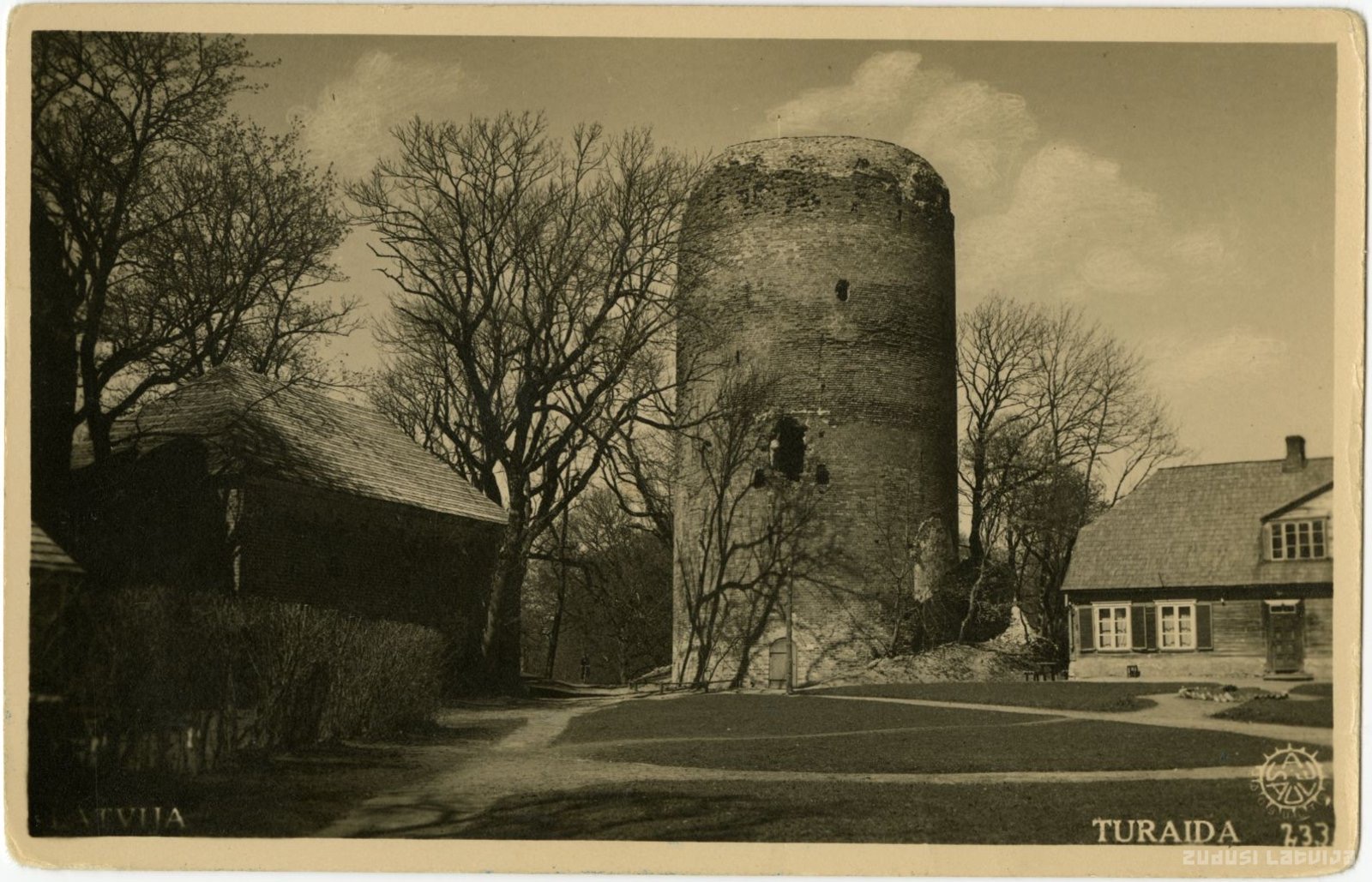
Turaida
· Māris Locs (via Europeana)
CC BY
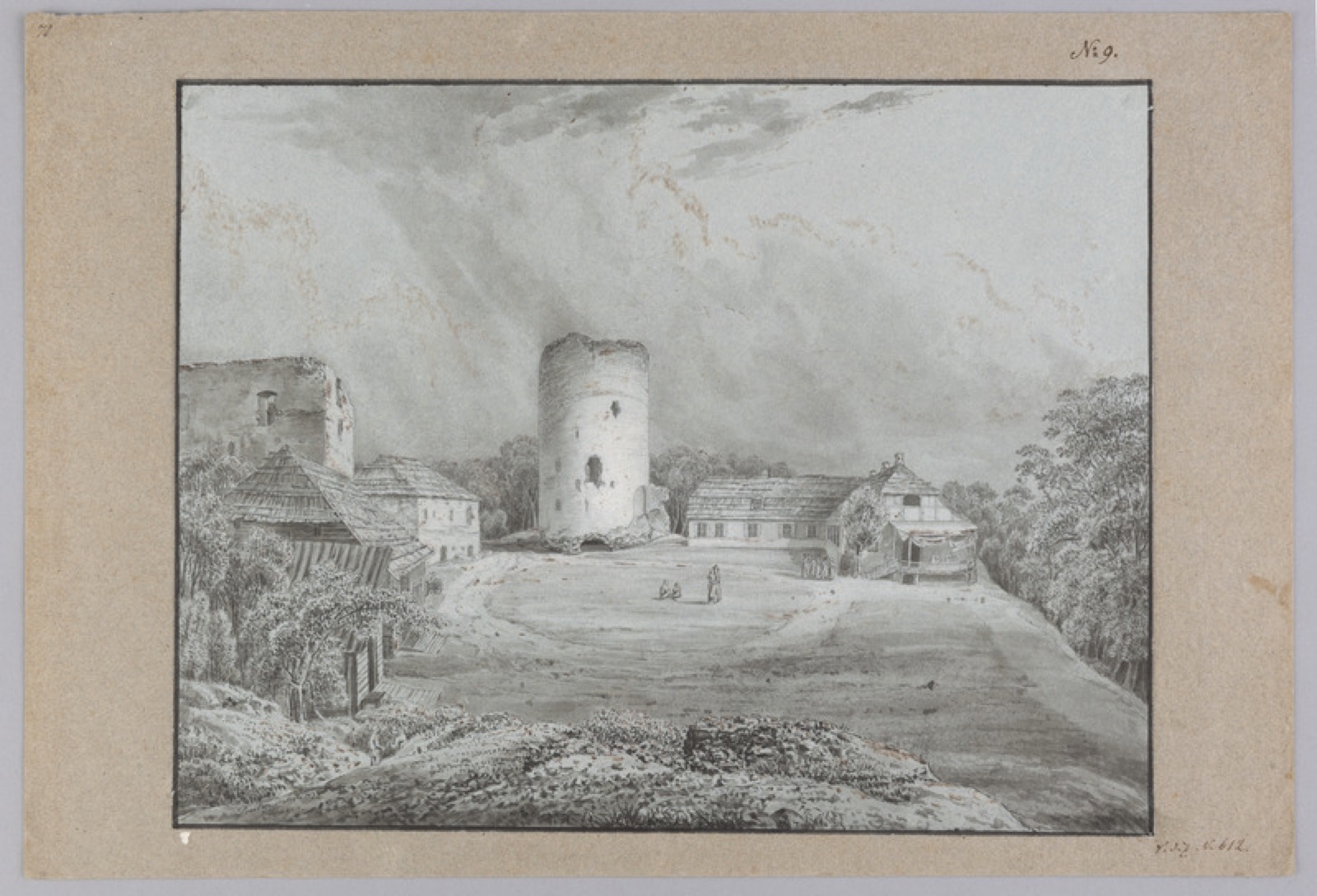
Turaida maastik Liivimaal
1832 · Estonian History Museum (via Europeana)
CC0 (no rights reserved)
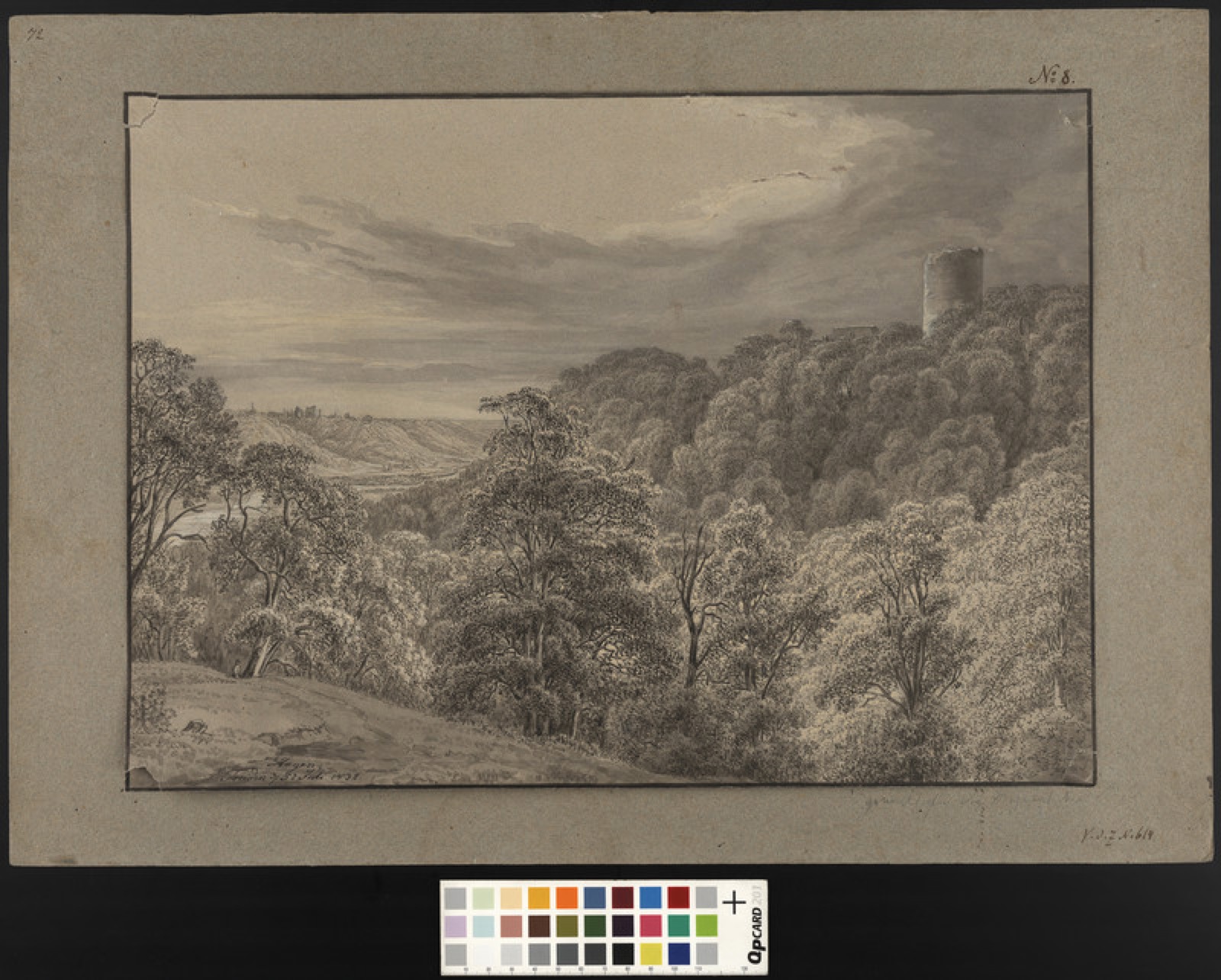
Turaida maastik Liivimaal
1832 · Estonian History Museum (via Europeana)
CC0 (no rights reserved)


