Clan Rising
Panemunė Castle today

Lithuania · Restored

Panemunė Castle

Panemunės pilis

Panemunė Castle is an early 17th-century three-winged manor-castle on a wooded bluff above the Nemunas River in Lithuania. It presents a long, enclosed courtyard flanked by two prominent round towers and surrounded by parkland and an ornamental pond.

Photograph via Wikimedia Commons

First raised

1604

Its prime

1604

Today

Restored

As it stood in 1604

What Panemunė Castle looked like in its prime.

Long three-winged stone manor forming a U around a central cobbled courtyard, with two tall cylindrical corner towers rising at the outer ends of the main wing. Pale plastered walls and regularly spaced windows contrast with steep red-tiled roofs and evenly spaced white chimneys along the ridges. The round towers show horizontal stone banding and conical red roofs. The complex sits atop a wooded river bluff above a wide meandering river, with a pond and parkland on the lower slopes; at its prime the roofs and towers are complete.

Its story

The story of Panemunė Castle.

Panemunė's origins stretch back to the medieval period. In 1535 the castle and its lands were granted by King-Grand Duke Sigismund the Old to the Stankevičius-Bilevičius family of Samogitia, who built a wooden manor house on the grounds of the almost-ruined castle. In 1597 Stanislovas Stankevičius-Bilevičius inherited the manor and soon sold it to János Eperjes, a timber merchant and nobleman of Hungarian descent.

Eperjes envisioned a grander residence and commissioned the construction of a new castle, raised in the early 17th century. His family remained owners for the next 158 years, but by the close of the 17th century their finances had deteriorated so far that parts of the estate were mortgaged or sold, and in the first half of the 18th century the residence fell into disrepair. In 1753 the family sold it to Colonel Leonas Igelstromas, the elder of Gulbinai.

An excellent example of Renaissance and Baroque architecture with elements of late Gothic design, a rectangular layout with four corner towers and a defensive wall, Panemunė is regarded as probably the most authentic residential castle surviving in Lithuania, standing restored on its wooded bluff above the Nemunas amid parkland and an ornamental pond.

Step inside

7 places to explore in 1604.

The record describes 7 distinct spots at Panemunė Castle, including the full exterior approach. Create your own photoreal reconstruction and explore every one, more scenes means more rooms, more angles, and more of the place to stand in.

River approach (Nemunas)Central cobbled courtyardSouth pond and park pathNorth façade facing the fieldsEastern cylindrical tower exteriorWest tower and rooflineForecourt and main entrance

Build Your Own Castle

Recreate Panemunė Castle with AI to explore it.

The artist rebuilds it as it stood in 1604, a photoreal reconstruction that belongs to you alone. Pay with coins, no subscription needed.

Recreate this castle →

Castle Siege

Play Castle Siege at Panemunė Castle.

A strategy game played on Panemunė Castle’s real ground plan: the same surveyed walls shown in the archive below. Post your finite garrison on the battlements between assaults, then hold out as rams, siege towers, trebuchets and sappers arrive in ever-worse waves.

Sign in free to see the garrison muster. One castle costs 150 Clan Coins and is yours forever.

Sign in to take command →

See every castle’s leaderboard →

Whose castle

Clans who held Panemunė Castle.

The families that held Panemunė Castle for a decade or more across its history, follow a name to its clan.

  • Stankevičius-Bilevičius

    Granted to the Stankevičius-Bilevičius family of Samogitia by Sigismund the Old in 1535; sold in 1597.

  • Eperjes

    Bought by János Eperjes in 1597; the Eperjes family were owners for 158 years, selling in 1753.

From the archive

Panemunė Castle on paper: the measured plan and period views.

The survey plan and photographs below are the ground truth this page's reconstructions are checked against, drawn and photographed while the castle was still a working garrison. Every image is public-domain or openly licensed, with its source named.
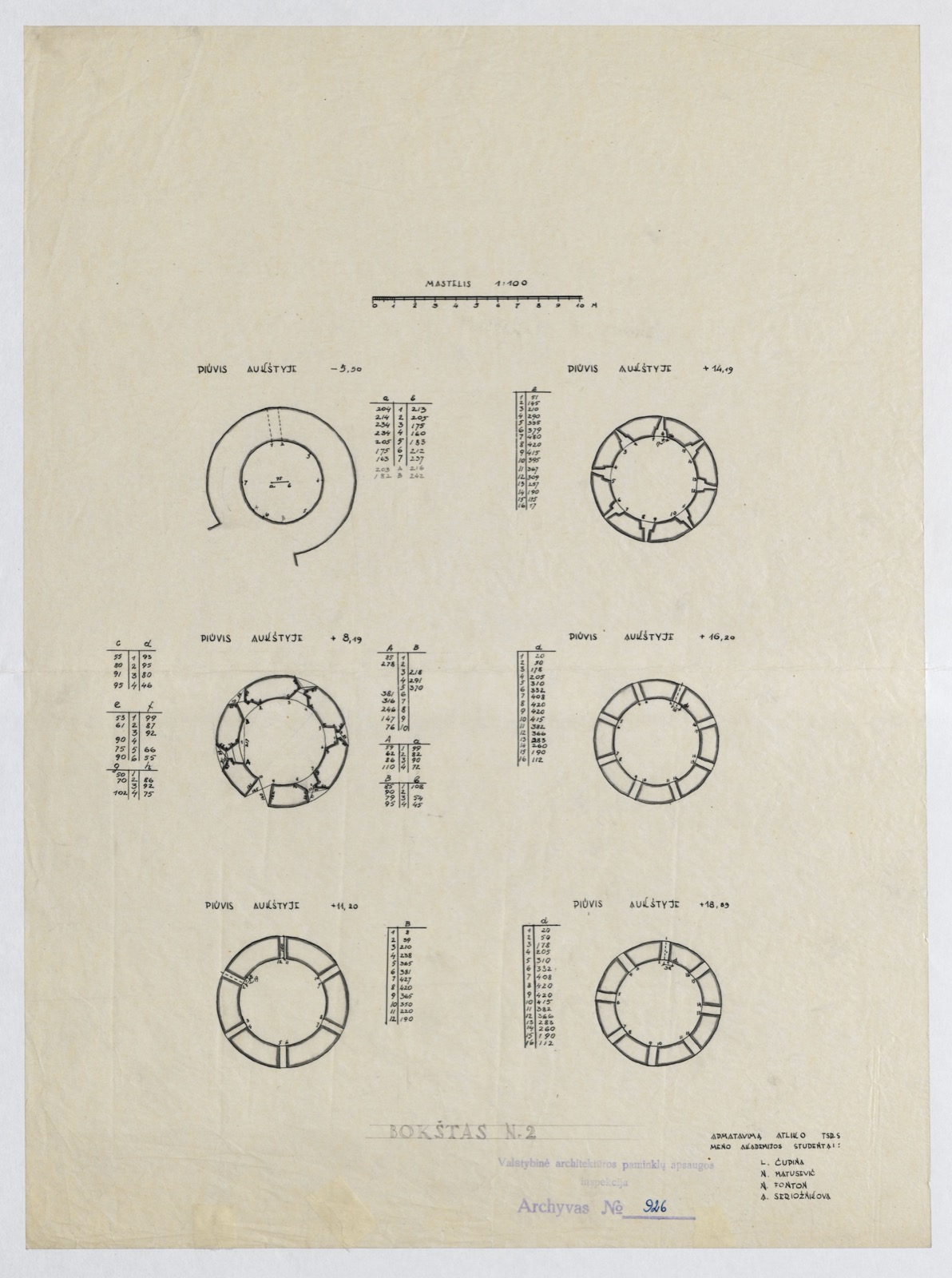
Panemunės(Gelgaudų) pilies bokštas, Panemunė Castle

Panemunės(Gelgaudų) pilies bokštas

· Heritage Conservation Library of the Cultural Heritage Center (via Europeana)

CC BY-SA

Questions about Panemunė Castle

What is the history of Panemunė Castle?

Panemunė Castle began as a medieval site and was rebuilt as a grand residence in the early 17th century. In 1535, Sigismund the Old granted it to the Stankevičius-Bilevičius family, who built a wooden manor there. János Eperjes bought the estate in 1597, and his family remained its owners for 158 years before the castle declined and was sold in 1753.

What is inside Panemunė Castle?

Inside Panemunė Castle are museum spaces and rooms displaying works by Vilnius Art Academy students. The 18th-century reconstruction included representative rooms decorated with friezes of antique figures and white-tiled cylindrical stoves. The castle’s grounds also contain a museum, while rooms are available for accommodation.

Why was Panemunė Castle built, and what was it used for?

Panemunė Castle was built as a grand Renaissance residence for János Eperjes and his family. Eperjes commissioned a new castle to replace the earlier wooden structures, creating a residence with defensive walls and towers. Later, its military importance declined, and it was used for administrative and residential purposes before becoming a museum and public cultural site.

Where is Panemunė Castle?

Panemunė Castle is in Jurbarkas District Municipality, on a wooded bluff above the Nemunas River. It stands in the settlement of Pilies I, also called Vytėnai, in the western part of Lithuania. The castle overlooks the river and is surrounded by parkland and ponds.

When was Panemunė Castle built?

Panemunė Castle was first raised in 1604, placing its construction in the early 17th century. The brick-and-mortar castle was built between 1604 and 1610, replacing earlier wooden structures. It was later altered during reconstructions, including an 18th-century transformation with Baroque and Neo-Classical features.

Was Panemunė Castle ever attacked or besieged?

Panemunė Castle was attacked and besieged in 1314 by Grand Duke Vytenis of Lithuania. His army besieged the castle for 17 days, then captured it. The attack took place when the first castle was associated with the Teutonic Order, which had reportedly built it in 1313.

Which family or clan held Panemunė Castle?

The Stankevičius-Bilevičius family held Panemunė Castle and its lands from their grant by Sigismund the Old in 1535 until the manor was sold in 1597. János Eperjes then bought it, and the Eperjes family held ownership for the next 158 years. They sold the castle in 1753.

What did Panemunė Castle look like in its prime?

In its prime, Panemunė Castle was a long, three-winged stone manor arranged around a central cobbled courtyard. Two tall cylindrical corner towers rose at the outer ends of the main wing, with pale plastered walls, regularly spaced windows, steep red-tiled roofs and white chimneys. The towers had horizontal stone banding and conical red roofs.

Is Panemunė Castle still standing or is it a ruin?

Panemunė Castle is still standing and has been restored. It suffered periods of disrepair, structural damage and vandalism, including the demolition of its north-east tower in 1919. Restoration and conservation took place in several stages, including work in 1939, 1959–1962, 1984 and 1995–1997, with further rebuilding beginning in 2009.

Who built Panemunė Castle?

János Eperjes commissioned Panemunė Castle, and the design is attributed to the Dutch architect Peter Nonhaardt. Construction began in 1604 and the castle was completed in 1610. Nonhaardt was also the author of the Vilnius Lower Castle reconstruction project.

Can you visit Panemunė Castle?

Panemunė Castle is open to visitors and contains a museum. Works by Vilnius Art Academy students are exhibited there, and the grounds also house the museum. The castle belongs to Vilnius Academy of Arts, which continued restoration works after Lithuania restored its independence in 1990.
All castles of Lithuania · Castles of Europe · the best castles in Europe · explore the finished reconstructions.