Voruta
Voruta is a toponym recorded once in the Hypatian Chronicle as the place where King Mindaugas defended himself in 1251; its exact location is unknown. Historians have proposed many real hillforts and castles as the site, while others treat the word as a generic term for 'castle'. Voruta functions in Lithuanian historiography and popular culture as a legendary or hypothetical early capital of the Grand Duchy of Lithuania.
Its prime
1251
Today
Legendary
As it stood in 1251
What Voruta looked like in its prime.
Compact 13th-century Lithuanian hillfort: a steep earthen motte topped by a continuous timber palisade and several round wooden watch-towers, with a multi-storey central wooden keep roofed in wooden shingles. Outer baileys lie below behind packed-earth ramparts and a defensive ditch. The site sits on a wooded hill overlooking lowland rivers and marshes. Timber gatehouse and plank causeway provide access. Interior spaces are timber-framed halls and workshops with smoke-darkened beams and packed-earth floors; all structures intact in 1251.
Its story
The story of Voruta.
Mindaugas's Stand at Voruta, 1251
Voruta is named in a written source only once: the Hypatian Chronicle records that Mindaugas, the first and only crowned king of Lithuania, defended himself there in 1251 during an internal war against his nephews Tautvilas and Edivydas and their ally, Duke Vykintas of Samogitia. By the chronicle's account, rather than meet the besieging army in open battle, Mindaugas held the castle and sent his brother-in-law out on a night raid that scattered part of the attacking force; Tautvilas then withdrew to Samogitia. Mindaugas is recorded holding a castle on two further occasions in the sources, but neither its name nor its location is given, and it is unclear whether the two mentions even refer to the same place.
The Search for a Lost Capital
Some 19th- and 20th-century historians dubbed Voruta "the first capital of Lithuania" and tried to pin down its location; around fifteen sites have been proposed in total, and some of those theories have since been largely discredited. Others argue Voruta was not an actual place, but a misreading of a word meaning "capital"; the philologist Kazimieras Būga separately held that the word voruta itself simply meant "castle", or perhaps "wooden fortress".
The Šeimyniškėliai hillfort, in Anykščiai district, was first proposed as the site in 1935 by the Latvian ethnologist Eduards Volters and has more recently been argued for by historian Tomas Baranauskas and archaeologist G. Zabiela, based partly on the resemblance between "Voruta" and the name of a stream running past the hillfort, and partly on archaeological finds there of a wooden castle built around the mid-13th century in a previously unoccupied place. Despite the uncertainty, Voruta remains a familiar name in Lithuania, spoken of more often as a legendary early capital than pinned down as an actual fortress.
Step inside
6 places to explore in 1251.
The record describes 6 distinct spots at Voruta, including 1 interior: great hall inside the wooden keep. Create your own photoreal reconstruction and explore every one, more scenes means more rooms, more angles, and more of the place to stand in.
Build Your Own Castle
Recreate Voruta with AI to explore it.
The artist rebuilds it as it stood in 1251, a photoreal reconstruction that belongs to you alone. Pay with coins, no subscription needed.
Recreate this castle →Defend this castle →From the archive
Voruta on paper: the measured plan and period views.
The survey plan and photographs below are the ground truth this page's reconstructions are checked against, drawn and photographed while the castle was still a working garrison. Every image is public-domain or openly licensed, with its source named.
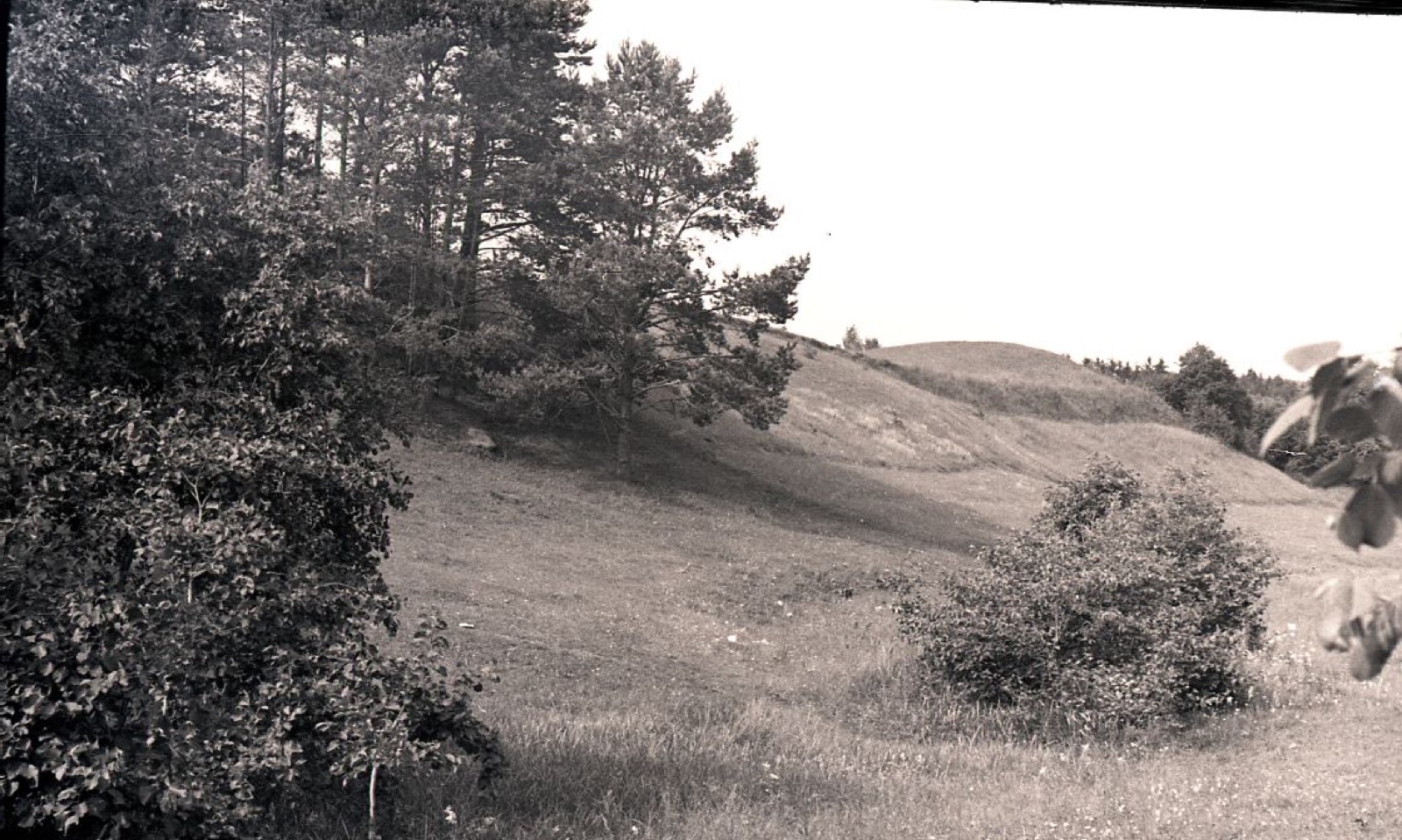
Piliakalnis, vadinamas "Voruta" Anykščių rajonas. Bikūnų apylinkė. Šeimyniškių kaimas
1960 · Heritage Conservation Library of the Cultural Heritage Center (via Europeana)
CC BY-SA
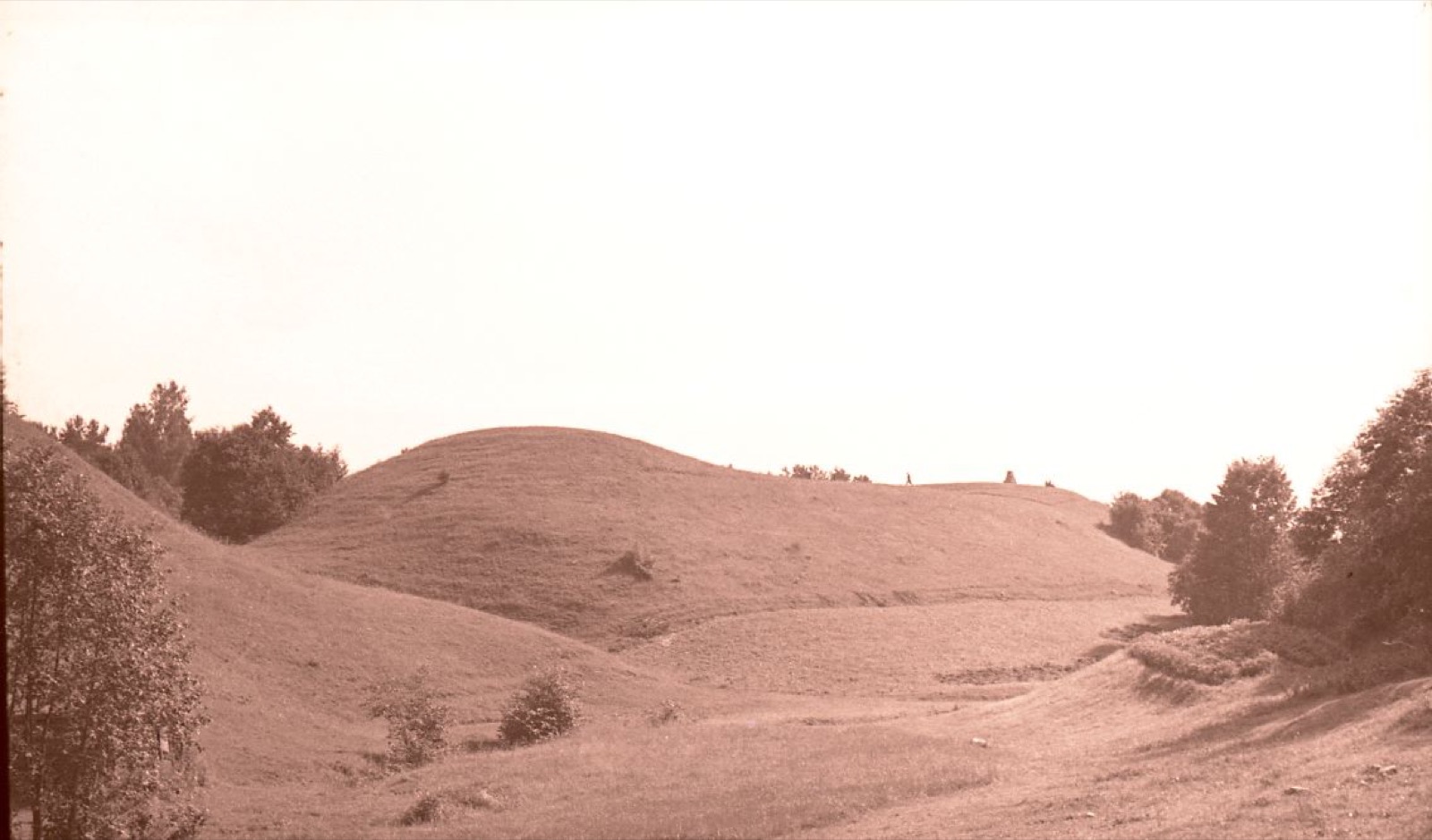
Piliakalnis, vadinamas "Voruta." Anykščių rajonas. Bikūnų apylinkė. Šeimyniškių kaimas
1960 · Heritage Conservation Library of the Cultural Heritage Center (via Europeana)
CC BY-SA


