Dunglass Castle
Dunglass Castle was the historic seat of the Home family near the mouth of the Dunglass Water in East Lothian. The medieval castle was rebuilt and enlarged by the Homes and served as a royal lodging before being destroyed by an explosion in 1640; no upstanding masonry of the medieval castle survives today. The site also preserves the medieval Dunglass Collegiate Church and the earthwork outline of a mid-16th-century artillery fort.
Its prime
1636
Today
Ruin
As it stood in 1636
What Dunglass Castle looked like in its prime.
A multi-range stone manor-castle occupying craggy bedrock above the Dunglass Water near the coast, its upper floors including a long gallery running along one side and windows looking out over enclosed gardens and terraces (the 'Priest's Yard'). The principal ranges form an arranged domestic silhouette rather than a towered keep; low earthwork ramparts and the outline of a mid-16th-century artillery fort sit on a nearby hill overlooking the older castle. The building appears intact and in regular use.
Its story
The story of Dunglass Castle.
The first medieval castle at Dunglass was built by the Pepdie family in the 14th century and passed, on the marriage of Nicola Pepdie to Sir Thomas Home of Home, into the Home family. Rebuilt and enlarged by the Homes, it became their seat and a royal lodging, frequently visited by the Stewart kings.
Alexander Home, 3rd Lord Home, allied with Margaret Tudor against Regent Albany, was persuaded to meet Albany at Dunglass and arrested; though he later made an alliance with the Earl of Arran, he was executed in 1516 and the family forfeited, the castle passing for a time to Archibald Douglas, 6th Earl of Angus. In the winter of 1532 the English under Henry Percy, 6th Earl of Northumberland, besieged and slighted it.
In September 1547, during the Rough Wooing, the Duke of Somerset's forces captured Dunglass from George Douglas of Pittendreich, refortified and garrisoned it, and built a new artillery fortification nearby, set out by Richard Lee, its earthwork outline survives. The castle itself was destroyed by an explosion in 1640; no upstanding masonry remains, though the medieval Dunglass Collegiate Church at the site is maintained by Historic Environment Scotland.
Step inside
7 places to explore in 1636.
The record describes 7 distinct spots at Dunglass Castle, including 3 interiors: long gallery, great hall / banquet chamber, dunglass collegiate church (exterior and interior). Create your own photoreal reconstruction and explore every one, more scenes means more rooms, more angles, and more of the place to stand in.
Build Your Own Castle
Recreate Dunglass Castle with AI to explore it.
The artist rebuilds it as it stood in 1636, a photoreal reconstruction that belongs to you alone. Pay with coins, no subscription needed.
Recreate this castle →Defend this castle →Whose castle
Clans who held Dunglass Castle.
The families that held Dunglass Castle for a decade or more across its history, follow a name to its clan.
Pepdie
The Pepdies built the first medieval castle at Dunglass in the 14th century.
Home
Seat of the Homes from the marriage of Nicola Pepdie to Sir Thomas Home of Home; forfeited after 1516, when the castle passed for a time to the Earl of Angus.
From the archive
Dunglass Castle on paper: the measured plan and period views.
The survey plan and photographs below are the ground truth this page's reconstructions are checked against, drawn and photographed while the castle was still a working garrison. Every image is public-domain or openly licensed, with its source named.
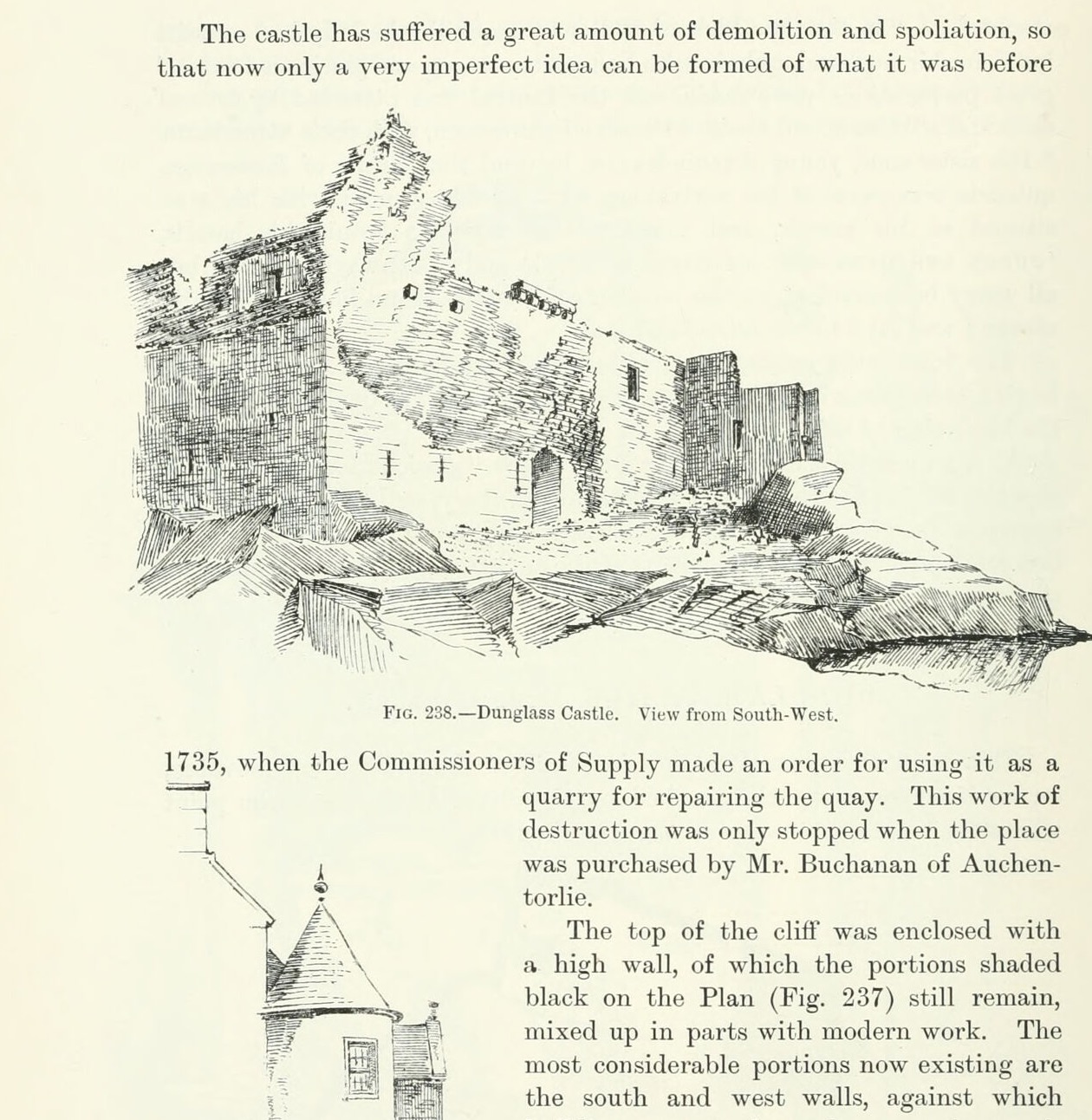
Fig. 238. Dunglass Castle. View from South-West.
1889 · MacGibbon & Ross, vol. 3 (1889)
Public domain
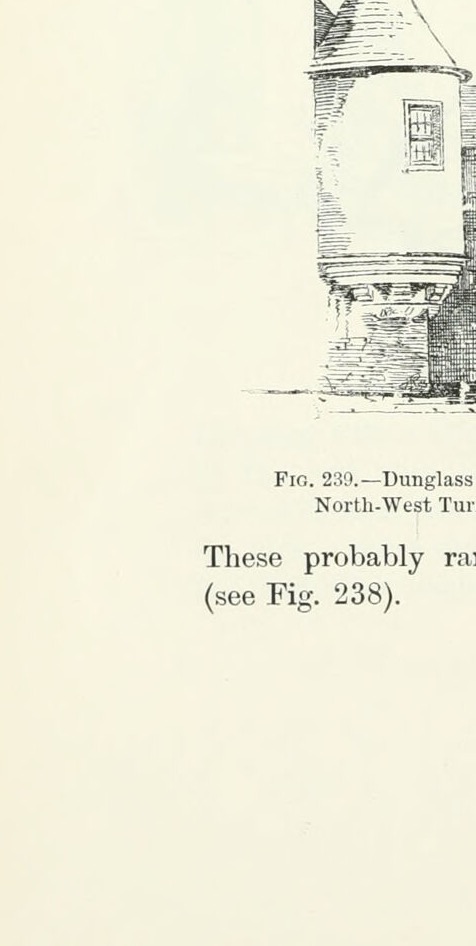
Fig. 239. Dunglass Castle. North-West Turret.
1889 · MacGibbon & Ross, vol. 3 (1889)
Public domain
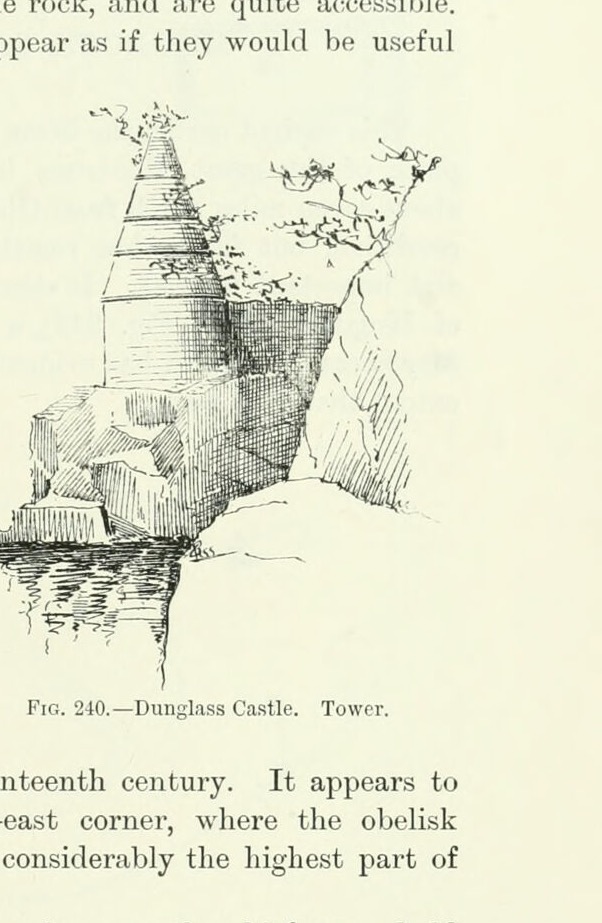
Fig. 240. Dunglass Castle. Tower.
1889 · MacGibbon & Ross, vol. 3 (1889)
Public domain


