Clan Rising
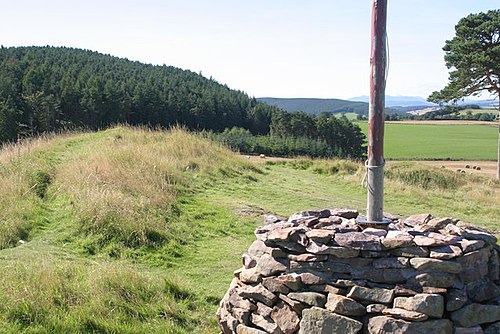
Hatton Castle today

Scotland · Restored

Hatton Castle

Hatton Castle is a 16th-century Scottish Z-plan tower house built in 1575 for the Oliphant family, located on Hatton Hill above Newtyle in Angus. The building was de-roofed in the 18th century and later restored; it is now a privately owned family home and a Category B listed building.

Photograph via Wikimedia Commons

Its prime

1575

Today

Restored

As it stood in 1575

What Hatton Castle looked like in its prime.

A compact Z-plan tower house of the late 16th century: a main rectangular block with two projecting corner towers creating an irregular silhouette. Walls are sandstone beneath a traditional lime harling rendered in a pinkish tone, pierced by tall leaded windows with small panes of hand-made glass. Sited on the lower slope of Hatton Hill, the castle faces the wooded Den of Newtyle with open views across Strathmore to distant hills; the structure appears complete and regularly roofed.

Its story

The story of Hatton Castle.

Hatton Castle was built in 1575 for Laurence, fourth Lord Oliphant, as a Z-plan tower house on the lower slopes of Hatton Hill, the most easterly of the Sidlaw Hills, south of Newtyle in Angus. An earlier castle, Balcraig, stood less than half a mile away on the same hill, and the 4th Lord also extended Kellie Castle in Fife, which bears many similarities.

Hatton was the home of the Masters of Oliphant rather than their fathers, who resided primarily at Aberdalgie and Dupplin. One old anecdote records the Scots custom of "enforced hospitality" here: the Lords Oliphant "used to keep a cannon pointed to the road near by their old castle, so as to compel the wayfarers to come in and be regaled".

De-roofed in the 18th century, the castle gradually became encrusted in ivy and home to pigeons and jackdaws, until the Kinpurnie Estate sold it for reconstruction. It is now a family home once more, restoration has continued with the specialist castle-restorer Gordon Matthew of Midmar, a Category B listed building whose Great Hall hosts non-commercial house concerts.

Step inside

8 places to explore in 1575.

The record describes 8 distinct spots at Hatton Castle, including 5 interiors: great hall, laird's bedroom with priest hole, strong room (treasury) and more. Create your own photoreal reconstruction and explore every one, more scenes means more rooms, more angles, and more of the place to stand in.

Approach from the road with cannonSouth-facing exterior elevationGreat HallLaird's bedroom with priest holeStrong room (treasury)Scale-and-platt staircaseGardens and orchard by the castleView across Strathmore from upper window

Build Your Own Castle

Recreate Hatton Castle with AI to explore it.

The artist rebuilds it as it stood in 1575, a photoreal reconstruction that belongs to you alone. Pay with coins, no subscription needed.

Recreate this castle →Defend this castle →

Whose castle

Clans who held Hatton Castle.

The families that held Hatton Castle for a decade or more across its history, follow a name to its clan.

  • Oliphant

    Built in 1575 for Laurence, 4th Lord Oliphant; home of the Masters of Oliphant.

From the archive

Hatton Castle on paper: the measured plan and period views.

The survey plan and photographs below are the ground truth this page's reconstructions are checked against, drawn and photographed while the castle was still a working garrison. Every image is public-domain or openly licensed, with its source named.
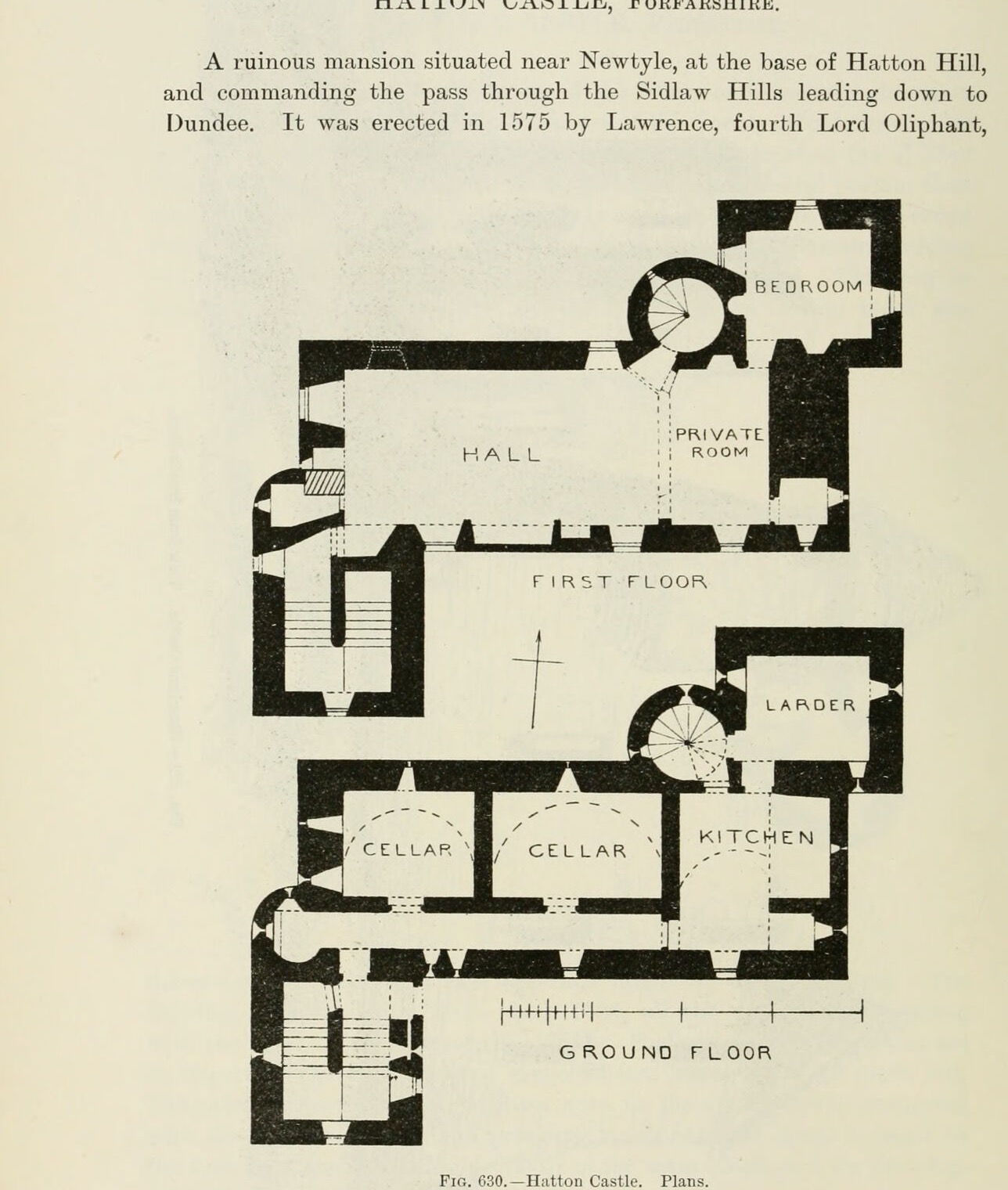
Fig. 630. — Hatton Castle. Plans., Hatton Castle

Fig. 630. — Hatton Castle. Plans.

1892 · MacGibbon & Ross, vol. 4 (1892)

Public domain

Nearby

Landmarks within reach of Hatton Castle.

Questions about Hatton Castle

What is the history of Hatton Castle?

Hatton Castle was built in the 16th century as a residence for Laurence, fourth Lord Oliphant. Constructed in 1575, it was a Z-plan tower house and the home of the Masters of Oliphant. After being de-roofed in about 1720, it became overgrown before being sold for reconstruction and later restored as a family home.

What is inside Hatton Castle?

Inside Hatton Castle are a Great Hall, a laird’s bedroom with a priest hole, a strong room or treasury, and a scale-and-platt staircase. The Great Hall measures approximately 34 × 17 × 17 feet and is noted for its acoustic qualities. The castle also has upper windows with views across Strathmore.

Why was Hatton Castle built, and what was it used for?

Hatton Castle was built as a fortified country house or château for Laurence, fourth Lord Oliphant. Its Z-plan tower house form combined a residence with defensive features, including a strong room and a cannon pointed towards the nearby road. It later became a family home again after restoration.

Does anyone live in Hatton Castle now?

Hatton Castle is a family home today. The present owners have continued its restoration, aided by specialist castle-restorer Gordon Matthew of Midmar. It was the home of the Masters of Oliphant rather than their fathers, who mainly lived at Aberdalgie and Dupplin Castles.

Where is Hatton Castle?

Hatton Castle is on the lower slopes of Hatton Hill, south of Newtyle in Angus. It overlooks the wooded Den of Newtyle, with views across Strathmore towards distant hills. The castle stands on the most easterly part of the Sidlaw Hills.

When was Hatton Castle built?

Hatton Castle was built in 1575. The first-raised year is not recorded, but the surviving building belongs to the 16th century and was commissioned by Laurence, fourth Lord Oliphant.

Which family or clan held Hatton Castle?

Hatton Castle was held by the Oliphant family. It was built in 1575 for Laurence, fourth Lord Oliphant, and served as the home of the Masters of Oliphant rather than their fathers, who mainly resided at Aberdalgie and Dupplin.

What did Hatton Castle look like in its prime?

Hatton Castle was a compact Z-plan tower house, with a rectangular main block and two projecting corner towers forming an irregular silhouette. Its sandstone walls were finished with traditional pinkish lime harling, and tall leaded windows contained small panes of hand-made glass. The structure was regularly roofed and faced the wooded Den of Newtyle.

Is Hatton Castle still standing, or is it a ruin?

Hatton Castle is still standing and has been restored. It was de-roofed in the 18th century and later became overgrown with ivy before being sold for reconstruction. Much of its character from 1575 has been preserved, including the leaded windows with hand-made glass, and restoration has continued under the present owners.

Who built Hatton Castle?

Hatton Castle was commissioned by Laurence, fourth Lord Oliphant, in 1575. The supplied material does not name an architect or designer. Its original construction included the unusual scale-and-platt staircase, a feature normally found in larger buildings.
All castles of Scotland · Castles of Europe · the best castles in Europe · explore the finished reconstructions.