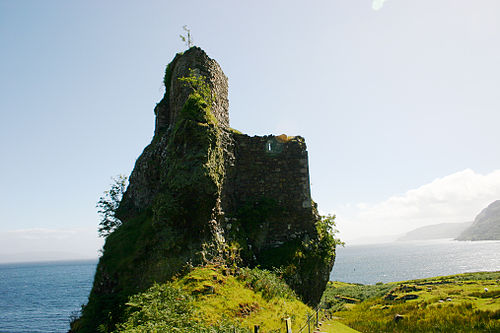
Scotland · Partial ruin
Inchdrewer Castle
Inchdrewer Castle is a 16th-century Scottish tower house near Banff, Aberdeenshire, built as an L-shaped tower with later courtyard ranges and a distinctive circular tower. It served as the seat of the Ogilvies of Dunlugas and underwent multiple periods of extension, damage and repair before long abandonment in the 19th and 20th centuries.
First raised
1500
Its prime
1600
Today
Partial ruin
As it stood in 1600
What Inchdrewer Castle looked like in its prime.
A compact L-shaped tower house of tooled ashlar dressed rubble with a later-attached circular tower to the south; corbelled, battlemented wallheads cap the towers and small turrets rise above first- or second-storey level. Late-18th-century wing shows larger, more regular windows. A narrow round-headed entrance sits on the west side and a wider main doorway in the south elevation opens to an enclosed courtyard. The castle stands on a slight rise with views across to Banff Bay, complete and roofed at its prime.
Its story
The story of Inchdrewer Castle.
Inchdrewer Castle, a 16th-century tower house on a slight rise south-west of Banff looking across to Banff Bay, was originally owned by the Currour family, who continued to style themselves "lairds of Inchdrewer" even after Walter Ogilvie of Dunlugas bought it in 1557 and made it his family's main seat. It began as an L-shaped tower of tooled ashlar-dressed rubble, extended late in the century with a circular stair tower and courtyard ranges.
The Ogilvies were staunch Royalists, and Covenanter forces under General Robert Monro left the castle in ruins in 1640. George Ogilvy was made first Lord Banff in 1642. In 1713 the 3rd Lord Banff was murdered and his body hidden inside the castle, which was then set on fire; the castle came under siege again in 1746, during the Jacobite rising.
After the death of the 8th Lord Banff the property passed to the Abercrombys of Birkenbog, who leased it to a tenant, and it stood uninhabited after 1836. Renovation in 1965–71 made the tower wind- and watertight, but abandonment and vandalism followed. Ruinous by 2013, it was sold after the death of Count Robin Mirrlees, its owner of some fifty years, to the former model Olga Roh, who said she intended to restore it. Reports claim the spirit of the 3rd Lord Banff and a white dog haunt the castle.
Step inside
9 places to explore in 1600.
The record describes 9 distinct spots at Inchdrewer Castle, including 2 interiors: first-floor hall and its elongated light aperture, spiral stair within the circular tower. Create your own photoreal reconstruction and explore every one, more scenes means more rooms, more angles, and more of the place to stand in.
Build Your Own Castle
Recreate Inchdrewer Castle with AI to explore it.
The artist rebuilds it as it stood in 1600, a photoreal reconstruction that belongs to you alone. Pay with coins, no subscription needed.
Recreate this castle →Defend this castle →Whose castle
Clans who held Inchdrewer Castle.
The families that held Inchdrewer Castle for a decade or more across its history, follow a name to its clan.
Currour
Original owners; the family continued to style themselves "lairds of Inchdrewer" after the 1557 sale.
Ogilvy
Bought by Walter Ogilvie of Dunlugas in 1557; main seat of the Ogilvy Lords Banff into the early 19th century.
Abercromby
Inherited by the Abercrombys of Birkenbog after the death of the 8th Lord Banff.
From the archive
Inchdrewer Castle on paper: the measured plan and period views.
The survey plan and photographs below are the ground truth this page's reconstructions are checked against, drawn and photographed while the castle was still a working garrison. Every image is public-domain or openly licensed, with its source named.
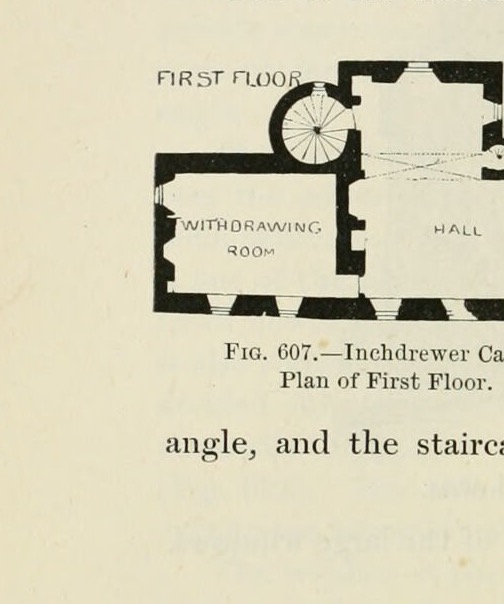
Fig. 607. Inchdrewer Castle. Plan of First Floor.
1887 · MacGibbon & Ross, vol. 2 (1887)
Public domain
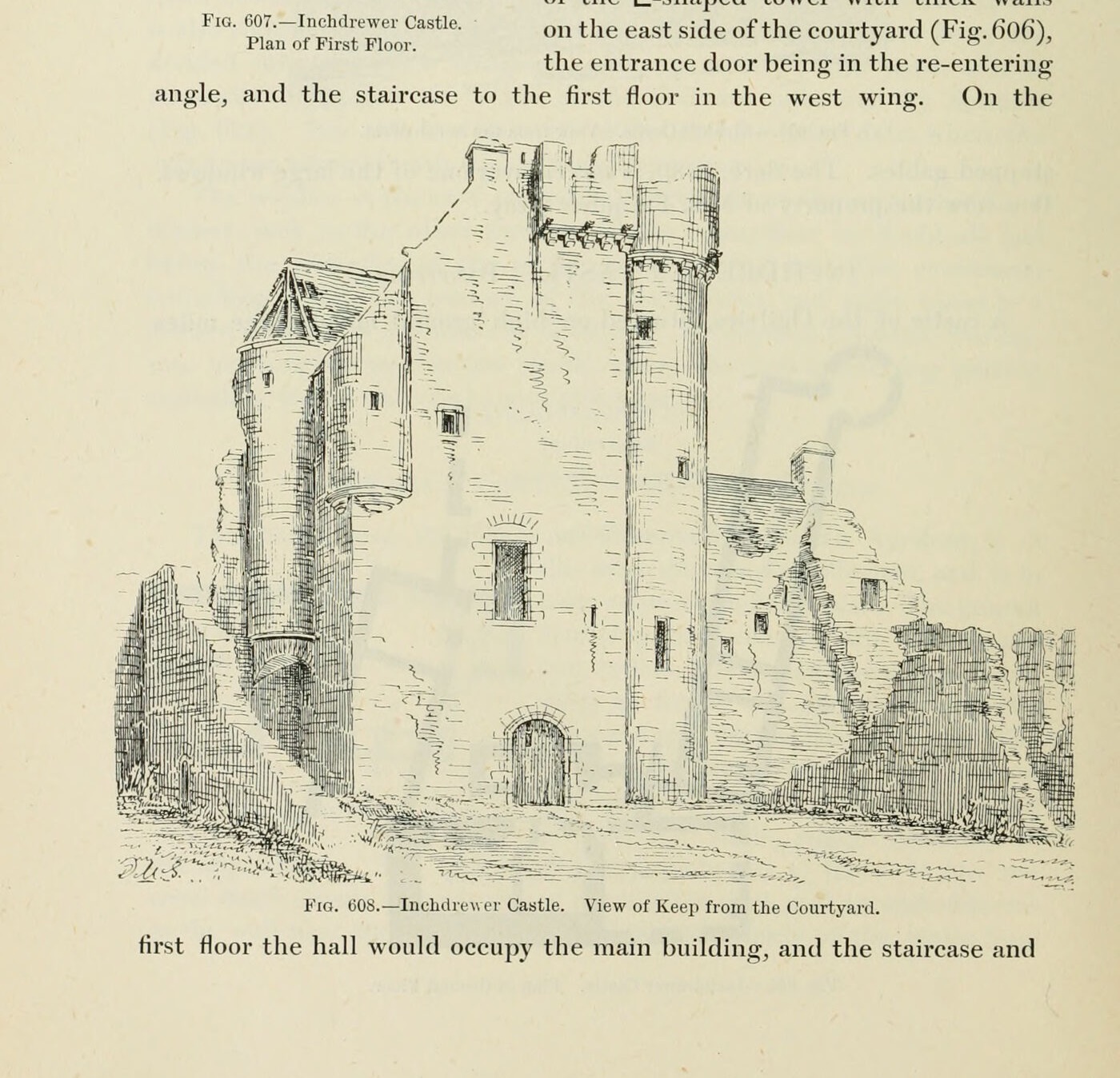
Fig. 608. Inchdrewer Castle. View of Keep from the Courtyard.
1887 · MacGibbon & Ross, vol. 2 (1887)
Public domain