
Scotland · Restored
Kinlochaline Castle
Kinlochaline Castle is a 15th-century Scottish tower house on the Ardtornish estate at the head of Loch Aline in Morvern. The rectangular, four-storey tower is built of pale sandstone and was burned and abandoned in the 17th century before later restoration; it is now a private residence. The castle occupies a wooded promontory above a narrow approach road and stone bridge.
Its prime
1500
Today
Restored
As it stood in 1500
What Kinlochaline Castle looked like in its prime.
A four-storey rectangular tower house of pale, rare sandstone blocks, roughly 43 by 34 feet, with very thick masonry walls. The silhouette is a tall, compact block with a steep gabled slate roof and small projecting round corner turrets at the upper ends; narrow vertical windows punctuate the facades. The building sits atop a wooded slope at the head of a loch, seen rising above trees, reached by a single-lane road crossing a low stone bridge.
Its story
The story of Kinlochaline Castle.
Caisteal an Ime, the Castle of Butter
Kinlochaline Castle is a 15th-century tower house at the head of Loch Aline, on the Ardtornish estate in Morvern in what is now the Highland council area. It stands four storeys tall and measures 43 by 34 feet (13 by 10 metres), built in blocks of rare sandstone with walls 10 feet (3 metres) thick, and it was placed at the loch head for coastal defence.
The tower is also known as Caisteal an Ime, Scottish Gaelic for the Castle of Butter. The name is traced to a Lady of Clan MacInnes, Dubh Chal, the Lady of the Black Veil, who is said to have paid the builder with butter equal to the volume of the castle he had raised.
Mac Colla's Siege and Argyll's Feud, 1644–1690
Kinlochaline was burned in 1644, when Alasdair Mac Colla besieged it during the Wars of the Three Kingdoms. In 1679 the castle was attacked again, this time by Archibald Campbell, 9th Earl of Argyll, in the course of a feud. Kinlochaline was abandoned about 1690.
Listed in 1971, Rebuilt in the 1990s
The tower was listed at category B on 5 October 1971, and its ownership is recorded as Clan MacInnes. Reconstruction work in the late 1990s was overseen by Historic Scotland, and the tower is now a residence.
Step inside
6 places to explore in 1500.
The record describes 6 distinct spots at Kinlochaline Castle, including the full exterior approach. Create your own photoreal reconstruction and explore every one, more scenes means more rooms, more angles, and more of the place to stand in.
Build Your Own Castle
Recreate Kinlochaline Castle with AI to explore it.
The artist rebuilds it as it stood in 1500, a photoreal reconstruction that belongs to you alone. Pay with coins, no subscription needed.
Recreate this castle →Defend this castle →From the archive
Kinlochaline Castle on paper: the measured plan and period views.
The survey plan and photographs below are the ground truth this page's reconstructions are checked against, drawn and photographed while the castle was still a working garrison. Every image is public-domain or openly licensed, with its source named.
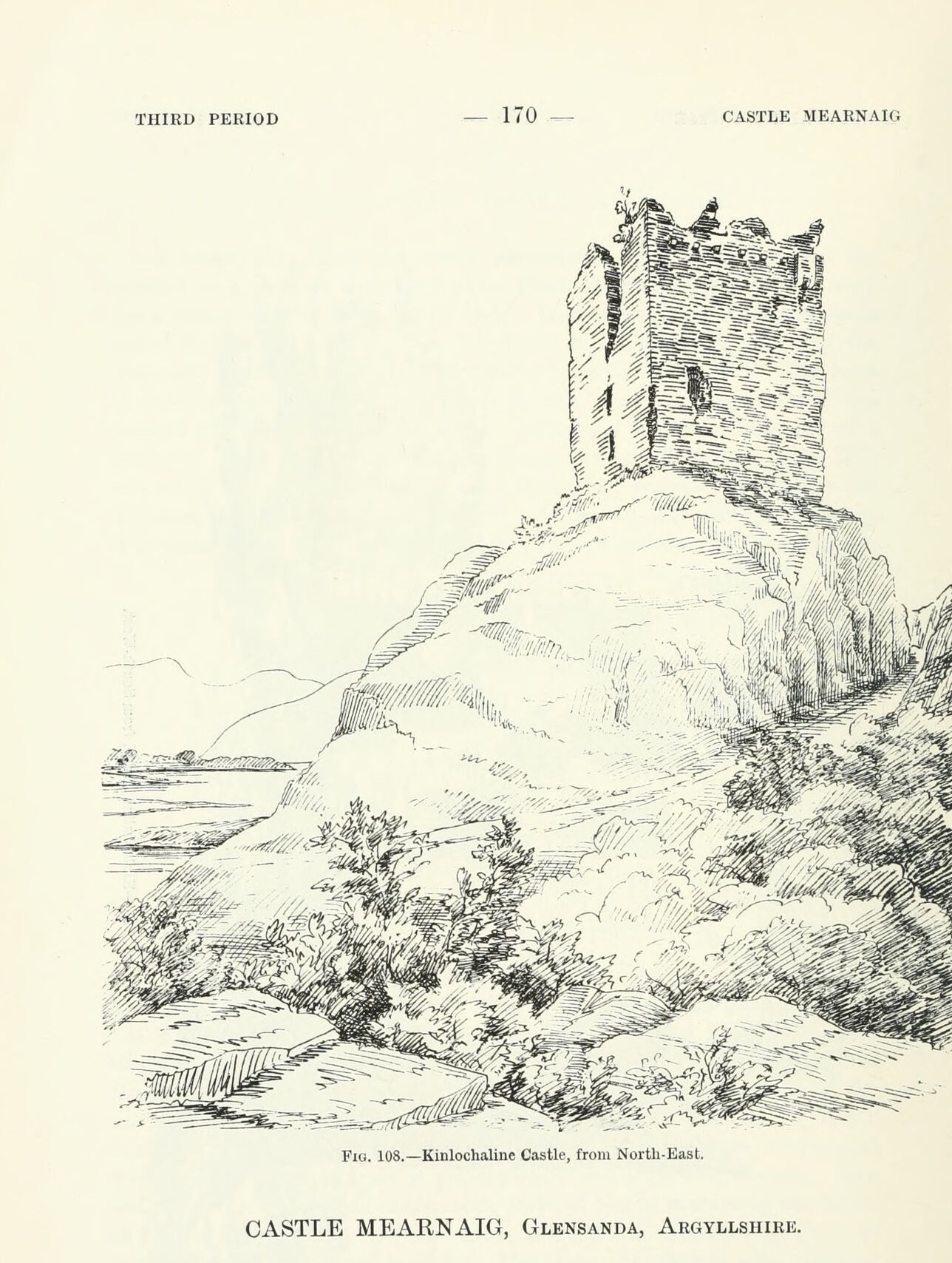
Fig. 108. Kinlochaline Castle, from North-East.
1889 · MacGibbon & Ross, vol. 3 (1889)
Public domain


