Clan Rising
Kruševac Fortress today

Serbia · Ruin

Kruševac Fortress

Kruševac Fortress (City of Prince Lazar) was a medieval fortified town built in the late 14th century that served as the seat of Prince Lazar. Today only ruins survive, most notably the Donjon Tower and fragments of the eastern curtain wall; the palace church Lazarica is the best-preserved element.

Photograph via Wikimedia Commons

First raised

1381

Its prime

1387

Today

Ruin

As it stood in 1387

What Kruševac Fortress looked like in its prime.

A compact fortified town dominated by a tall rectangular donjon (keep) set within enclosing curtain walls; at its prime the keep rose above a continuous stone rampart with linked wall sections and small projecting towers. Masonry is mixed local stone with areas of pebble plaster on the tower faces producing a variegated, pale grey-beige surface. The fortress occupied a raised urban site, with the court church (Lazarica) and domestic buildings clustered inside the walls and a crenellated wall-walk giving access to battlements.

Its story

The story of Kruševac Fortress.

Kruševac Fortress, the City of Prince Lazar, is first mentioned in 1381, and was most likely built by Lazar himself, for the fortified town became the seat of his realm, Moravian Serbia. Within the walls stood the court church, the Lazarica, also built by the prince.

Under the Ottomans the Lazarica was vandalised and put to use as a gunpowder store. Of the medieval town only ruins now survive, most notably the Donjon Tower and fragments of the eastern curtain wall, while the Lazarica remains the best-preserved element of Prince Lazar's capital.

Step inside

8 places to explore in 1387.

The record describes 8 distinct spots at Kruševac Fortress, including 3 interiors: gate passage through the donjon, donjon hallway and stair to battlements, lazarica (court church), interior. Create your own photoreal reconstruction and explore every one, more scenes means more rooms, more angles, and more of the place to stand in.

Outer approach across the raised siteDonjon (keep), exteriorGate passage through the DonjonDonjon hallway and stair to battlementsEastern curtain wall and adjoining wall-walkWall-walk and battlementsLazarica (court church), exteriorLazarica (court church), interior

Build Your Own Castle

Recreate Kruševac Fortress with AI to explore it.

The artist rebuilds it as it stood in 1387, a photoreal reconstruction that belongs to you alone. Pay with coins, no subscription needed.

Recreate this castle →Defend this castle →

From the archive

Kruševac Fortress on paper: the measured plan and period views.

The survey plan and photographs below are the ground truth this page's reconstructions are checked against, drawn and photographed while the castle was still a working garrison. Every image is public-domain or openly licensed, with its source named.
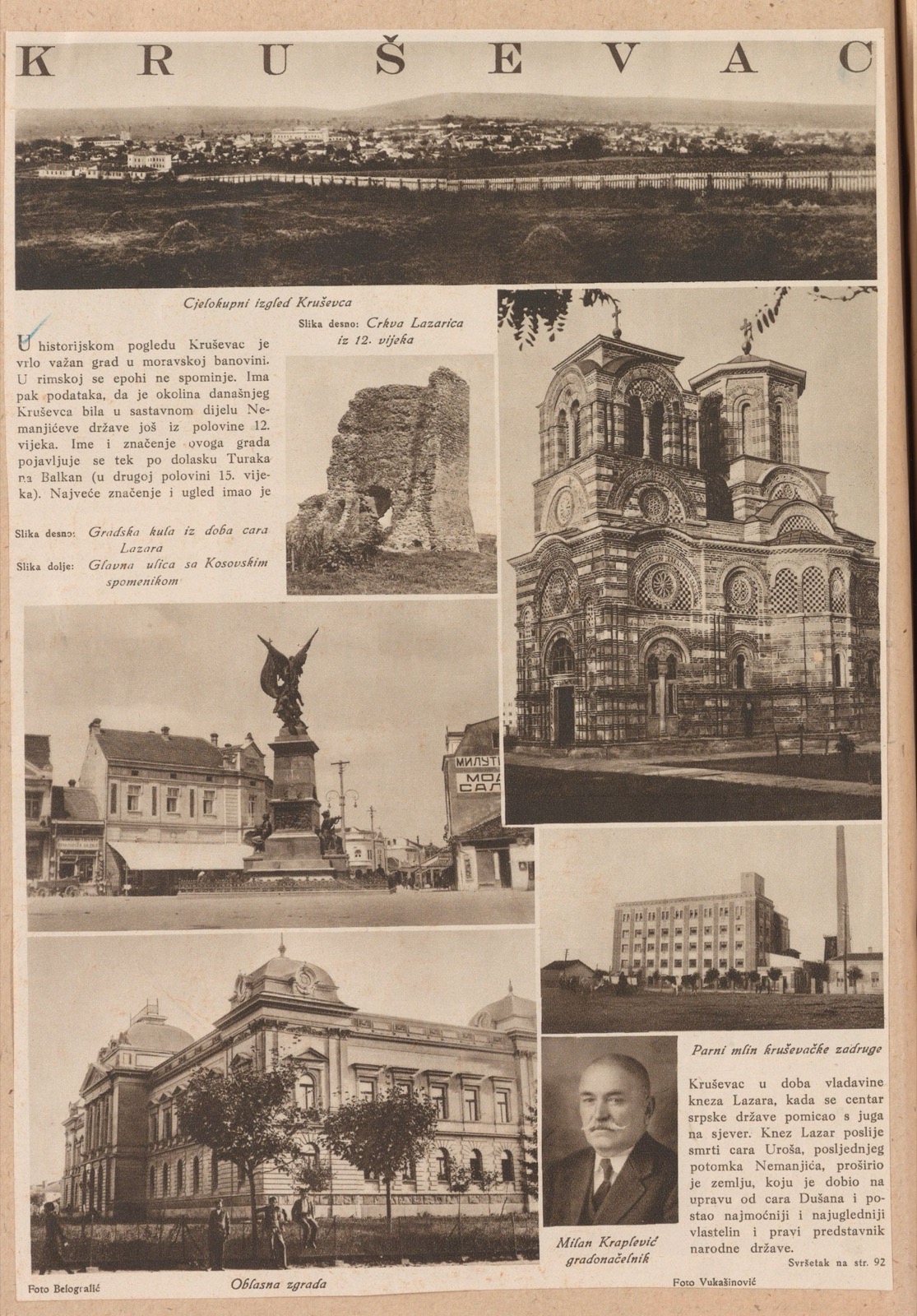
Kruševac, Kruševac Fortress

Kruševac

1930 · Ministry of Culture and Media of the Republic of Croatia (via Europeana)

Public domain
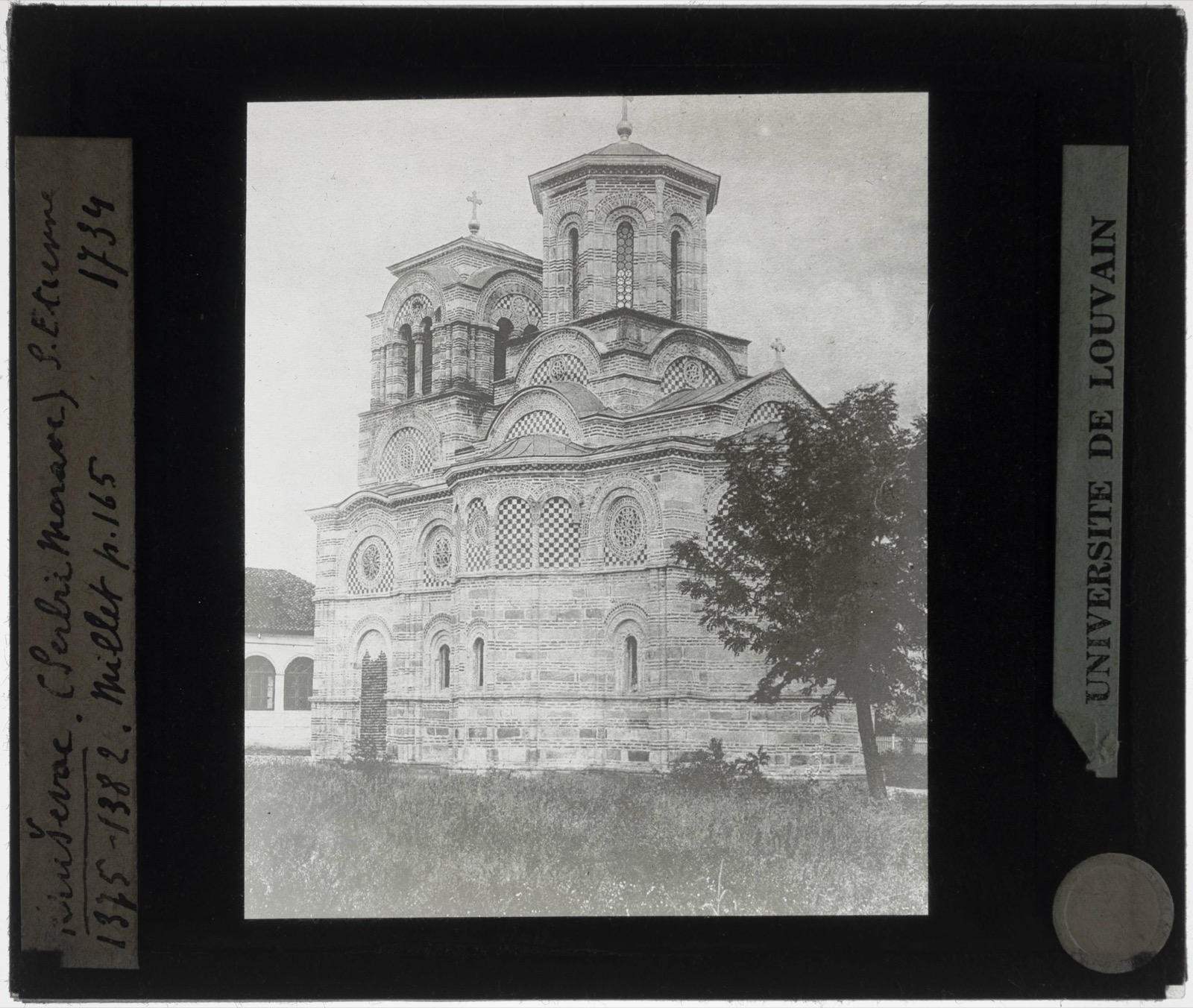
Kruševac. Kerk van Lazarica Exterieur:, Kruševac Fortress

Kruševac. Kerk van Lazarica Exterieur:

· Catholic University of Leuven (via Europeana)

Public domain

Questions about Kruševac Fortress

What is the history of Kruševac Fortress?

Kruševac Fortress was built in the late 14th century as the seat of Prince Lazar’s realm, Moravian Serbia. First mentioned in 1381, it remained the capital under his son Stefan Lazarević until 1405, when the capital moved to Belgrade. The city changed hands during 15th-century struggles before falling under Ottoman rule in 1454.

What is inside Kruševac Fortress?

Inside Kruševac Fortress are the remains of the Donjon’s entrance passage, hallway and staircase to the battlements, together with the court church Lazarica. The church is the best-preserved part of the former capital. The Donjon staircase once led to higher levels and an exit onto the city walls.

Why was Kruševac Fortress built, and what was it used for?

Kruševac Fortress was built to serve as a fortified capital and the seat of Prince Lazar’s realm, Moravian Serbia. The court church Lazarica and domestic buildings stood within its walls, while the fortifications protected the urban centre. Under Ottoman rule, Lazarica was vandalised and used as a gunpowder store.

Where is Kruševac Fortress?

Kruševac Fortress is in Kruševac, Serbia. It occupied a raised urban site, and the former fortress area is now a park containing a museum. Kruševac was the capital of Prince Lazar’s realm, Moravian Serbia, during the late 14th century.

When was Kruševac Fortress built?

Kruševac Fortress was first raised in the late 14th century, with 1381 as its documented first-mentioned and inception year. It was already the seat of Prince Lazar’s realm by that time, and a charter issued in 1387 referred to Kruševac as the city of his dominion.

Was Kruševac Fortress ever attacked or besieged?

Kruševac Fortress was attacked and occupied several times during the first half of the 15th century. The Turks briefly occupied it in 1413 and again in 1427, while Hungarians took it in 1437. The Ottomans launched a major offensive in 1454, and the city finally fell under Ottoman rule later that year.

What did Kruševac Fortress look like in its prime?

In its prime, Kruševac Fortress was a compact fortified town dominated by a tall rectangular donjon within enclosing curtain walls. A continuous stone rampart linked the wall sections and small projecting towers, while a crenellated wall-walk led to the battlements. Mixed local stone and pebble plaster gave the tower faces a pale grey-beige, variegated appearance.

Is Kruševac Fortress still standing, or is it a ruin?

Kruševac Fortress is now a ruin, with only fragments of the medieval town surviving. The most notable remains are the Donjon Tower and part of the eastern curtain wall, while Lazarica is the best-preserved element. The walls and other buildings are very poorly preserved, and parts of the walls were demolished during the last century.

Who built Kruševac Fortress?

Kruševac Fortress was most likely built by Prince Lazar, also known as Lazar Hrebeljanović. The surviving material identifies him as the person who commissioned it, but does not name an architect. The court church Lazarica was also built by the prince.

More castles of Serbia

All castles of Serbia · Castles of Europe · the best castles in Europe · explore the finished reconstructions.