
Wales · Ruin
Builth Castle
Castell Llanfair-ym-Muallt
Builth Castle was a stone castle erected by King Edward I on a pre-existing motte-and-bailey site just outside Builth Wells, Powys. Today no masonry survives; the site is represented by a large motte, ditches and embankments. The earthworks mark the footprint of a medieval castle that was used and repaired into the later Middle Ages before falling into ruin.
Its prime
1409
Today
Ruin
As it stood in 1409
What Builth Castle looked like in its prime.
Sited on a large grassy motte, the castle in its prime presents a compact stone stronghold: a stone keep crowning the motte and a surrounding stone curtain enclosing two distinct baileys. The baileys are defined by raised earthen banks and external ditches cutting into the surrounding pasture. The masonry is of grey medieval stone, the curtain wall running roughly 270 yards in length around the enclosed site, with the small town of Builth Wells visible nearby across rolling Powys countryside.
Its story
The story of Builth Castle.
Edward I's First Welsh Castle, 1277–1282
The site Edward I chose in 1277 already carried a castle: a motte ringed by two baileys, the whole enclosed by a further boundary wall. That older stronghold had changed hands several times as Normans and Welsh fought for supremacy in the district, and the small town of Builth had grown up beside it. In 1260 Llywelyn ap Gruffudd took the old castle and largely destroyed it, and it is not clear how much of the structure still stood when Edward began building in stone.
Builth was the first castle Edward I built in Wales. Construction started in May 1277 and ran until August 1282, when the work was abandoned unfinished for lack of money; this was probably because Llywelyn ap Gruffudd had been killed and the King had shifted his priorities towards the invasion of Gwynedd. As at Flint, begun at the same time, the builders started by enclosing the site with a wooden palisade, at Builth some 270 yards long. The total cost came to £1,666, a comparatively modest sum because the earthworks were already there.
Madog's Revolt and Mortimer's Bargain, 1294–1330
The castle was besieged in 1294 during the revolt of Madog ap Llywelyn. On 7 February 1301 Edward I gave Builth to his son Edward, and between 1310 and 1315 a local magnate, Roger Mortimer, served that Edward as castellan. When the younger Edward succeeded his father as king he gifted the castle to his wife, Isabella, who with his consent rented it back to Mortimer for 170 marks per half-year, due at Michaelmas and Easter. Mortimer, whose hold over Isabella grew steadily stronger and who eventually became her lover, went on to secure an agreement that the castle would pass to him outright on her death.
Isabella and Mortimer mounted a coup against Edward II, which ended in the King's ignominious death. In 1330, on reaching adulthood, his son Edward III arranged for the pair to be captured and had Mortimer executed for treason. Mortimer's property was seized on the King's orders, and Buellt was taken by Gilbert Talbot, 1st Baron Talbot, the Justiciar of South Wales.
Alice de Lacy, the Black Prince and Glyndŵr's Attack, 1330–1409
Edward III had been helped in his counter-coup against Mortimer by the prominent noblewoman Alice de Lacy and her second husband, Eubulus le Strange, and in reward he granted them Builth Castle for life. Eubulus died in 1335, and after Alice remarried her new husband, Hugh de Freyne, who had raped her, was acknowledged by the King as lord of Builth. Alice died childless in 1348.
The King granted Builth to his son, the Black Prince, who in 1359 re-established the rental arrangement with the Mortimer family, still at 170 marks per half-year, while keeping the right to garrison the castle in time of war. When Owain Glyndŵr's forces attacked it during his revolt in the early 15th century, the garrison was commanded by Sir John Oldcastle, the model for Shakespeare's Falstaff. The castle was repaired in 1409 at a cost of £400.
The Yorkist Claim, Prince Arthur's Lordship and the Burning
The rental arrangement was terminated during the Wars of the Roses, when Richard of York, heir of the Mortimer family, claimed the crown as heir of Philippa of Clarence; the hostilities ended when his heir, Elizabeth of York, married the man who became Henry VII. In November 1493 Buellt, Builth Castle included, was re-established as a Marcher Lordship for their son Arthur, who died childless in 1502.
During the reign of Arthur's younger brother, Henry VIII, the castle burnt down, and over the years that followed the local population raided the ruins for building material for their own houses. All the masonry has gone, and what survives is the mound the castle stood on, with its ditches and embankments; the site is a scheduled monument and a National Monument of Wales.
Step inside
6 places to explore in 1409.
The record describes 6 distinct spots at Builth Castle, including the full exterior approach. Create your own photoreal reconstruction and explore every one, more scenes means more rooms, more angles, and more of the place to stand in.
Build Your Own Castle
Recreate Builth Castle with AI to explore it.
The artist rebuilds it as it stood in 1409, a photoreal reconstruction that belongs to you alone. Pay with coins, no subscription needed.
Recreate this castle →Defend this castle →Whose castle
Clans who held Builth Castle.
The families that held Builth Castle for a decade or more across its history, follow a name to its clan.
Mortimer
Held Builth on a rental arrangement from the Black Prince from 1359 until the Wars of the Roses.
From the archive
Builth Castle on paper: the measured plan and period views.
The survey plan and photographs below are the ground truth this page's reconstructions are checked against, drawn and photographed while the castle was still a working garrison. Every image is public-domain or openly licensed, with its source named.
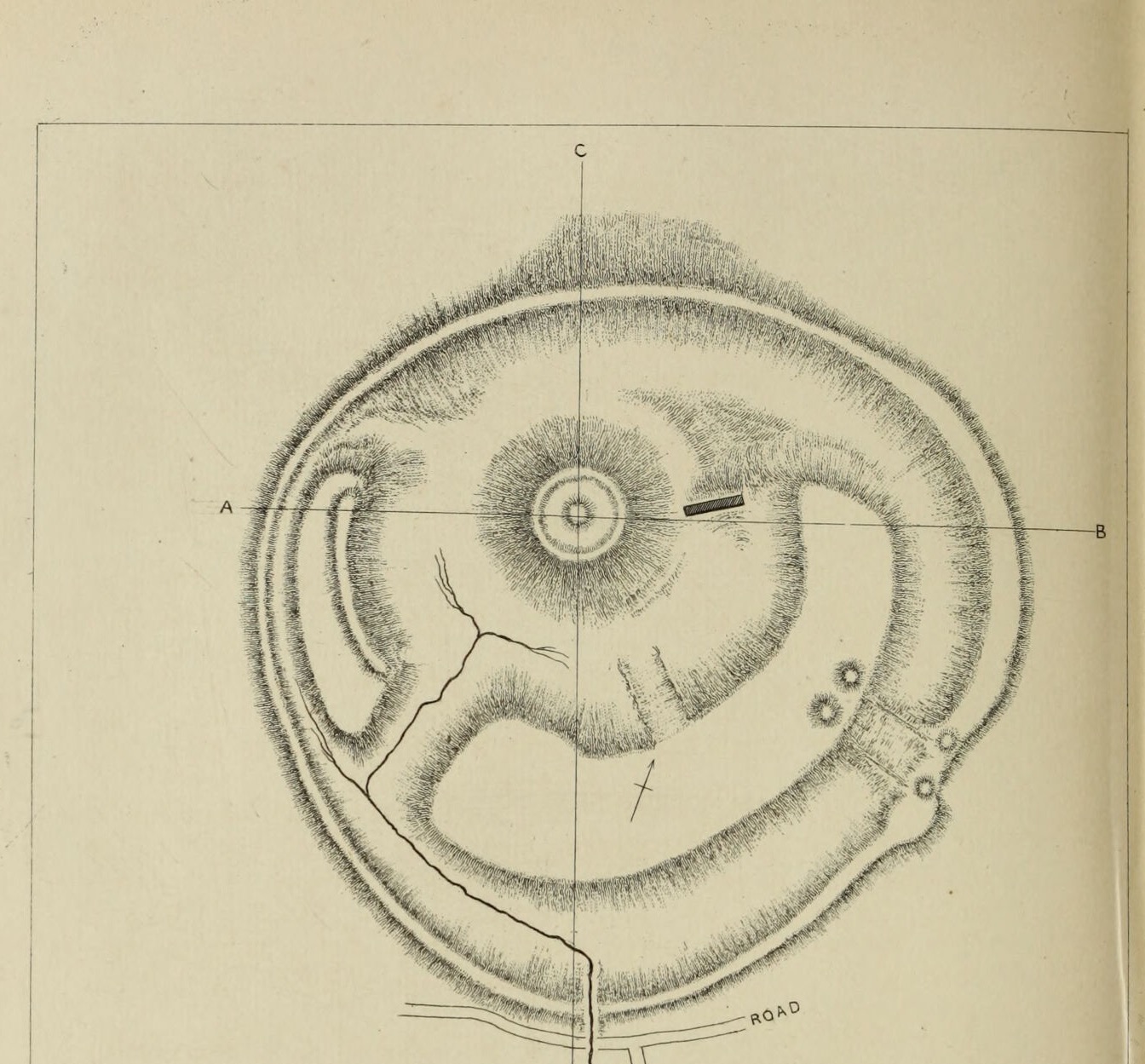
THE CASTLE OF BUILTH.
1884 · G. T. Clark, Mediaeval Military Architecture, vol. 1 (1884)
Public domain
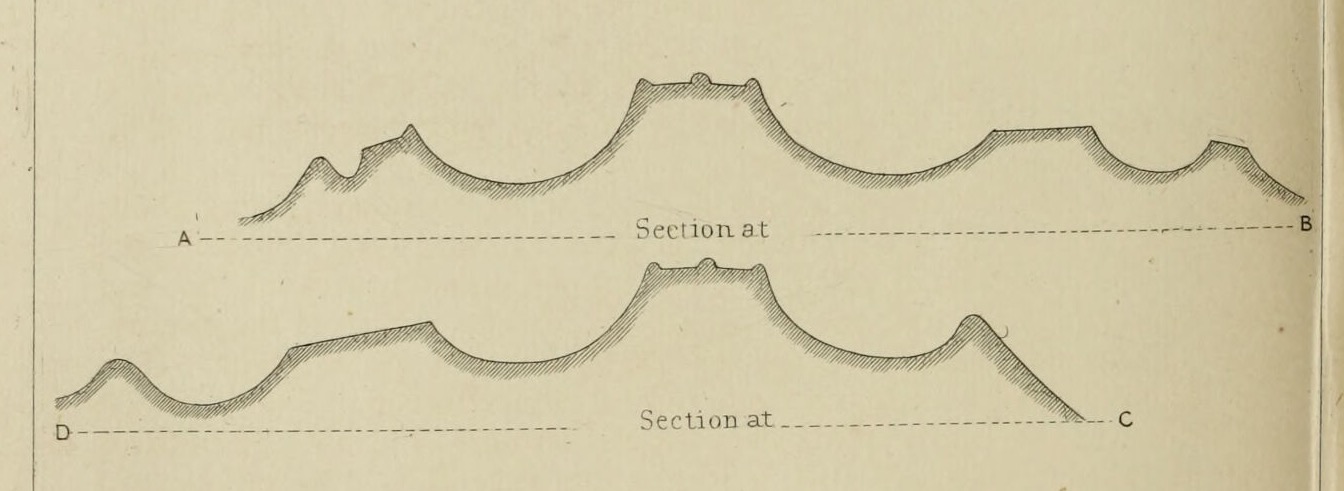
Section at A ---------------- B
1884 · G. T. Clark, Mediaeval Military Architecture, vol. 1 (1884)
Public domain
Section at D ---------------- C
1884 · G. T. Clark, Mediaeval Military Architecture, vol. 1 (1884)
Public domain
Nearby


