Baring
also von Baring
Bankers and proconsuls, the sixth great power of Europe.
- Origin
- London, England
- Motto
- Probitate et labore
- Famous bearer
- Sir Francis Baring, 1st Baronet (1740-1810), founder of Baring Brothers, Chairman of the East India Company
- Register
- English family
Ranked of all time
The 15 Most Powerful English Houses of All Time
The Baring arms and country

Coat of armsBaringArmsCC BY-SA 3.0

- Coat of arms: Granted to an individual and inherited down that one documented line. These are the arms of particular families of the name, not of everyone who shares the surname.
CoreHistoric reach
The seat of Baring
Seat vacantChief
No one leads the Baring community yet. When the movement opens, you can stand for its leadership, or help elect whoever does.
Current mission
No shared goal set yet. Once Baring has leadership, it sets the public focus: a restoration, a gathering, a real-world project that helps its own.
The Baring clan is being rebuilt. Join the waiting list for the movement today, and you help decide who leads it and what it does.
Help rebuild the Baring clan →Motto
Probitate et labore
“By honesty and labour”
What does the Baring name mean?
From the German 'Bahring' or 'Baring', a family name originally of Hanoverian Lutheran cloth merchants. Johann Baring (1697-1748) emigrated from Bremen to Exeter in 1717, anglicising the name, and his sons established the family wool-merchant business that grew into Britain's first merchant bank.
The history of Baring
A burgher of Groningen and the first bishop of Lauenburg
The name is German before it is English. Bahring, or Baring, belonged to Hanoverian Lutheran families of the merchant and professional sort, and the earliest ancestor the family can name is Peter Baring, or Petrus Baring, a burgher of Groningen around 1500. Groningen was then a semi-independent city-state inside the Holy Roman Empire and a member of the Hanseatic League, which meant that a burgher's standing there carried a share of the town's trade and a share of its government at the same time. That double inheritance, commerce and office held together, describes the family in every later generation.
Peter Baring's son Franz Baring, who Latinised himself as Franciscus Baringius, became the first Lutheran bishop of Lauenburg from 1565, in the Duchy of Saxe-Lauenburg in what is now Schleswig-Holstein. Every Baring in Germany and England today descends from him. In the Electorate of Hanover the family belonged to the upper bourgeoisie known as the Hübsche Familien, from hübsch, meaning pretty or good looking, which formed the third division of the ruling class of the Holy Roman Empire after the nobility and the clergy. Not noble, then, but governing.
The Bremen apprentice who came to the Exe
The English branch descends from another Franz Baring (1657-1697), a professor of theology in Bremen. His son Johann Baring (1697-1748) left Bremen in 1717 for Exeter, to take up an apprenticeship with a wool exporter, and never went home. Apprenticeship was the ordinary door into an eighteenth-century merchant network, and the historian Jon Stobart has argued that the bond between master and apprentice was what allowed a young man to be known to other merchants and, far more valuable, to be trusted by them. A stranger from a German port needed exactly that.
Johann, called John in England, built a small fortune in wool and a substantial cloth-export business on the Exe quayside at Exeter. He was joining a trade with deep German roots: the Hanseatic League had run the Baltic commerce for centuries, and the Company of Merchant Adventurers of London, chartered in 1407, held most of England's fine cloth import trade.
Mincing Lane, 1762
Francis Baring was born at Larkbeer on the outskirts of Exeter on the eighteenth of April 1740. He was brought up in counting-houses on both sides of the Channel and apprenticed at sixteen to a London merchant, and by twenty-two he had decided the family's future lay in the City rather than on the quayside. In 1762, with his elder brother John as a mostly silent partner, he set up the firm of John and Francis Baring & Co in a small office in Mincing Lane. It was the first merchant bank in Britain, though for its first decade it looked like any orthodox merchant house, financing the West India and East India trades through bills of exchange and short-term credit.
Francis enlarged it steadily through the 1770s and 1780s. He took a directorship of the East India Company in 1779 and its chairmanship in 1792, sat in Parliament for Grampound and then for Calne, and was created a baronet in 1793 for negotiating the loan that funded the British war effort against revolutionary France. By the turn of the century the City's general agreement was that Baring Brothers was the leading merchant house in London. The family motto, Probitate et labore, by honesty and labour, is a merchant's motto rather than a soldier's.
The loans that paid for the war against Napoleon
From 1798 onward Baring Brothers organised, syndicated and placed on the London market the great sovereign loans that funded the British alliance system against Napoleon: subsidies to Austria, Prussia and Russia, war loans to Portugal and Sweden. This was the work that turned a merchant house into an instrument of state.
In 1802 Barings and Hope & Co were called on to facilitate the largest land purchase in history. Through 1803 and 1804 the firm financed Napoleon's sale of the Louisiana Territory to the United States, advancing the eleven and a quarter million dollars due to France and holding the American bonds on its own book. The transaction doubled the size of the United States and is still regarded as one of the most historically significant trades ever made. Barings went on to help finance the United States government during the War of 1812.
Francis retired from active management in 1804 and handed the firm to his second son Alexander Baring, later 1st Baron Ashburton, who carried the sovereign-loan business through the Congress of Vienna and the reconstruction that followed it. Francis died at Lee in Kent on the twelfth of September 1810, in his seventy-first year. By 1818 the Duc de Richelieu, French ambassador to the Congress of Aix-la-Chapelle, is said to have counted the great powers of Europe as England, France, Russia, Austria, Prussia and Baring Brothers. A fall-off in business and poor leadership in the 1820s then cost the house its dominance in the City to the rival firm of N M Rothschild & Sons.
One of the most titled families in the kingdom
The succession is unusually well documented for a family that began in trade. Francis Baring was the father of Sir Thomas Baring, 2nd Baronet, and grandfather of Francis Baring, 1st Baron Northbrook (1796-1866), the Whig politician who served as First Lord of the Admiralty. He was also the father of Alexander Baring, 1st Baron Ashburton, and, through his third son Henry Baring, the grandfather of both Edward Baring, 1st Baron Revelstoke (1828-1897) and Evelyn Baring, 1st Earl of Cromer.
The result is one of the most titled families in the United Kingdom. Baron Ashburton was created in 1835, Baron Northbrook in 1866, the Earldom of Northbrook and Viscountcy of Baring in 1876 (extinct in 1929), Baron Revelstoke in 1885, Baron Cromer in 1892 and Viscount Cromer in 1899, the Earldom of Cromer with the Viscountcy of Errington in 1901, and Baron Howick of Glendale as late as 1960. Two baronetcies were created besides, in 1793 and in 1911.
The viceroy and the consul-general
In the nineteenth century the family translated banking weight into direct imperial government. Thomas Baring, 1st Earl of Northbrook (1826-1904), served as Viceroy of India from 1872 to 1876, modernising the Indian railway system and the administrative codes of the Raj.
His cousin Evelyn Baring, 1st Earl of Cromer (1841-1917), was British Consul-General in Egypt for twenty-four years, from 1883 to 1907, governing the country as its de facto ruler through the figurehead Khedives, rebuilding the Egyptian financial system and laying the infrastructural foundations of modern Cairo.
Behind both men stood the bank, which financed the railways of Argentina and the docks of Buenos Aires, the bonds of the Russian Empire and the Suez Canal.
Soldiers, bishops, a Bletchley linguist and the branch that stayed German
The name spread far beyond the counting-house. Georg Baring, Baron Georg von Baring (1773-1848), was a Hanoverian officer in the King's German Legion. Charles Baring (1807-1879) was Bishop of Durham. Thomas Baring (1799-1873) and Thomas Charles Baring (1831-1891) were both bankers and Conservative members of Parliament, and Guy Baring (1873-1916) was an MP and an army officer. Maurice Baring (1874-1945) was an English man of letters and a member of the pre-war Coterie.
Others took the name into public life and into the ordinary business of the twentieth century: Evelyn Baring, 1st Baron Howick of Glendale (1903-1973), Governor of Kenya; Rowland Baring, 2nd Earl of Cromer (1877-1953), Lord Chamberlain; his successor Rowland Baring, 3rd Earl of Cromer (1918-1991), Ambassador to the United States and Governor of the Bank of England; John Baring, 7th Baron Ashburton (1928-2020), merchant banker and Chairman of BP; and Charles Baring, 2nd Baron Howick of Glendale, the horticulturalist. Sarah Baring (1920-2013) worked at Bletchley Park as a linguist, Norah Baring (1907-1985) acted in British films, Giles Baring (1910-1986) was an English cricketer, and Fred Baring (1890-1961) carried the surname into Australian rules football.
The German line never went away. Arnulf Baring (1932-2019), the historian, belonged to the branch that remained in Germany, where the family is counted among the Bildungsbürgertum, the educated middle class, as it is counted in England among the aristocracy. Since the early nineteenth century the Barings have kept close relations with the Berenberg family of bankers.
What outlasted the bank
Barings stayed in unbroken family management for one hundred and ninety-five years, the same family running the same house out of the City. In 1969 the family set up the Baring Foundation as its philanthropic arm. The bank itself closed in February 1995 after unauthorised derivatives trading losses in its Singapore office and was sold to the Dutch ING Group for one pound.
That ended the firm, not the family. The peerages stand, with the Earl of Cromer holding the senior title; the family wealth, the stewardship of the bank's heritage and the Baring Foundation's giving all continued past 1995. The name that came ashore at Exeter in 1717 with an apprentice wool-trader put its seats down in Devon and Hampshire and its counting-house in London, and it is the only name on the English roll whose bearers both financed the British Empire and governed parts of it.
Champions of the Baring name
The bearers whose lives are inseparable from this surname. Each has their own page, biography, achievements, geography, connection to the family.
Historic Places, Rebuilt
Explore the streets and seats the Baring name knew, rebuilt with AI as they stood in history.
The castles of the homeland
The great strongholds of the homeland, look one up, see what it looked like in its prime, and recreate it to explore.
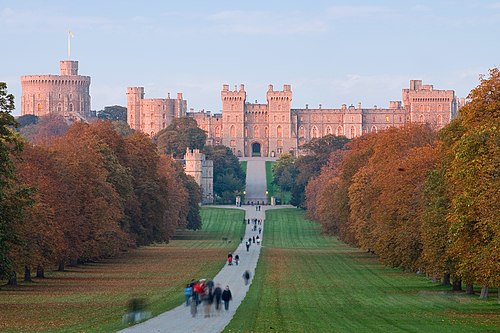 Windsor CastleRestored · prime 1820
 Tower of LondonRestored · prime 1285
 Bamburgh CastleRestored · prime 1904
All castles in England → · Strongest castles in England → · Castles of Europe
Play As Your Clan
Hold a real castle against whatever you choose to send at it, take a ship out in her own service years, or stand at the shoulder of someone the record remembers. The chronicler sets the scene; the deeds are yours.
Notable bearers of the Baring name
- Sir Francis Baring, 1st Baronet (1740-1810), founder of Baring Brothers, Chairman of the East India Company
- Thomas Baring, 1st Earl of Northbrook (1826-1904), Viceroy of India
- Evelyn Baring, 1st Earl of Cromer (1841-1917), Consul-General in Egypt
- Maurice Baring (1874-1945), writer and member of the pre-war Coterie