Parker
The parker.
- Origin
- London, England
- Register
- English family
The Parker arms and country

Coat of armsArms of ParkerWikimandia · CC BY-SA 4.0 
Coat of armsArms of Parker of BassingbournBorne by the Bassingbourn line, one branch of the name rather than all of it.Aergia · CC BY-SA 4.0


- Coat of arms: Granted to an individual and inherited down that one documented line. These are the arms of particular families of the name, not of everyone who shares the surname.
CoreHistoric reach
The seat of Parker
Seat vacantChief
No one leads the Parker community yet. When the movement opens, you can stand for its leadership, or help elect whoever does.
Current mission
No shared goal set yet. Once Parker has leadership, it sets the public focus: a restoration, a gathering, a real-world project that helps its own.
The Parker clan is being rebuilt. Join the waiting list for the movement today, and you help decide who leads it and what it does.
Help rebuild the Parker clan →What does the Parker name mean?
Middle English, deer-park keeper.
The history of Parker
The man who kept the lord's deer
Parker is a job before it is a family. The word comes from Old French and means the keeper of the park; in Middle English it settled into the office of the deer-park keeper. It is not a father's name and not a village's name. Behind every modern bearer stands a man handed charge of an enclosed piece of ground and the animals inside it, and called by that job until his children were stuck with it.
A medieval park was not a garden and not a public space. It was private hunting ground, cut out of woodland and waste and shut in behind a bank and a wooden pale, entered by gates that were counted and kept. The point was to hold deer in and everybody else out, and the man who made that work lived inside the pale, in a lodge rather than in the village.
The same record that gives the surname as 'keeper of the park' notes that Parker was also a nickname for gamekeepers in medieval England: the formal office and the rough label for that work ran together, and both hardened into one surname.
Forest law, and the ground it covered
The office arrived with a legal revolution. After the Norman conquest the forest laws were introduced into England, and under them large sections of the country were set aside as royal forest, a code running alongside the ordinary law rather than inside it, protecting not only the deer but the wood and cover that fed them, over ground where English families were already living and grazing.
Holding a private park was a statement (a lord with the standing to fence off good land, keep it unproductive and stock it with deer) and the parker was the man it rested on. He fed the herd through winter, mended the pale, managed the cull, prepared the ground when the lord and his guests came to hunt, and walked the boundary looking for men who should not be there. Taking a deer from a park was not ordinary theft; it was an offence against the lord and against forest law, and the parker was the man who caught you at it.
A French word worn down by English mouths
One of the clearest effects of 1066 was linguistic. Anglo-Norman, a northern dialect of Old French, became the language of the ruling classes and displaced Old English at the top of society, while official documents shifted from Old English to Latin. Norman French words poured into English, and French given names (William, Robert, Richard) became ordinary within a generation.
Parker sits on that seam. The park was a Norman institution with a French name, held by lords who spoke French; the man who kept it was an Englishman doing physical work in English. William the Conqueror never learned English, and for centuries the nobility understood it poorly, so the word for the job came down from above, in French, and was worn into an English shape by the people who used it daily. The word is Norman. The man was not.
How 'the parker' hardened into Parker
The habit of fixed family names in England is generally traced to the preparation of the Domesday Book, completed in 1086. Surnames were adopted first among the feudal nobility and gentry (incoming Normans marked themselves out by putting 'de' before the French village or estate they came from) and spread downward from there.
Lower down, the pressure was arithmetic. Through the early modern period the three commonest male given names accounted for close to half the male population: of boys born in London in 1510, 24.4 per cent were christened John, 13.3 per cent Thomas and 11.7 per cent William. Where one man in four was John, a clerk could tell them apart only by adding what each did. John the parker. Then Parker.
By the 14th century most English people used surnames, and by 1400 most English families, along with those of Lowland Scotland, had adopted hereditary ones. It was not always welcomed: in the late Middle Ages compulsory surnames were resisted in England because they were associated with taxation. A fixed name made a household findable, and that had a price.
The office names, and which of them meant anything
Occupational surnames are the plainest class in the language (Smith, Taylor, Miller, Farmer, Thatcher, Shepherd, Potter) common because every settlement needed the work done. But a whole group of names only look occupational. A Dictionary of English Surnames observes that surnames of office such as Abbot, Bishop, Cardinal and King are often nicknames: it is most unlikely a man surnamed King was a king, and the first bearer had probably behaved like one.
Parker is on the other side of that line: no rank attached, no irony in it. It was a paid post on an estate that a man of no birth could genuinely hold, one of a handful of manorial offices through which a tenant family could rise a step above its neighbours. Where an English servant sometimes took his master's name outright, a parker took the name of what he was trusted with.
Park country, and the map the name made
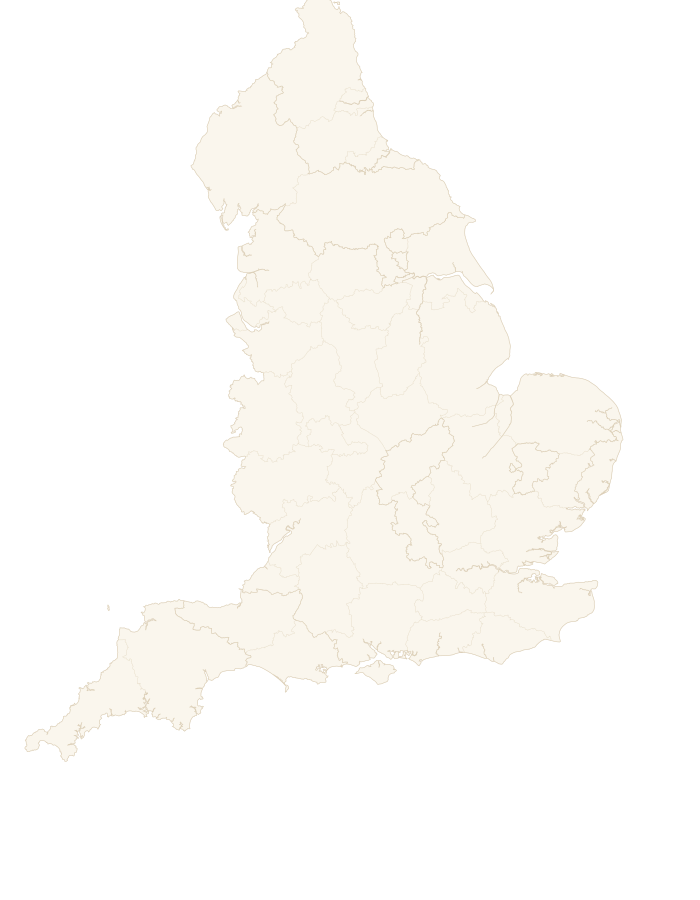
The modern distribution still traces the ground. The name's strength runs through London, Kent, Surrey, East and West Sussex, Hampshire and the Isle of Wight, Berkshire and Oxfordshire, and Buckinghamshire: the wooded, heavily emparked belt of southern England where great estates and royal forest sat thickest.
Its older reach was national: Cumbria, Lancashire and Cheshire, down through Staffordshire, Warwickshire and Shropshire, across Norfolk, Suffolk, the Cambridgeshire fens and Essex, and west into Somerset, Devon and Cornwall. That is not one family migrating. It is the same job existing everywhere at once, and the same byname made independently in twenty counties.
A four-year study led by the University of the West of England, concluded in 2016, worked through sources from the 11th to the 19th century and found that over 90 per cent of the 45,602 surnames of Britain and Ireland are native to these islands. Parker is one of them, and it travelled: by 1990 it was the 47th most common surname in the United States.
Matthew Parker and the rescue of the Anglo-Saxon library
The greatest bearer of the name was born at Norwich on 6 August 1504, eldest son of a worsted cloth-finisher: a tradesman's boy, not a gentleman's. Matthew Parker went up to Corpus Christi College, Cambridge in 1521, took his degree in 1525, and was elected a fellow and ordained priest in 1527, in the reformist college world that produced the next generation of English Protestant clergy. In 1535 Anne Boleyn made him her chaplain and gave him charge of the infant Princess Elizabeth's religious education.
He was Master of Corpus Christi from 1544 and Vice-Chancellor of Cambridge in 1545, kept his head down through the Marian years, and was consecrated Archbishop of Canterbury at Lambeth on 17 December 1559, Elizabeth's first. He drafted the Thirty-Nine Articles in 1563, which took final form in 1571 and became the doctrinal spine of Anglicanism for four centuries, and commissioned the Bishops' Bible of 1568, from which the King James translators of 1611 drew much of their phrasing.
His other work was salvage. The dissolution of the monasteries had thrown England's medieval libraries onto the open market and much was already lost. Parker spent his archbishopric buying back Anglo-Saxon manuscripts, and by his death held some four hundred, among them the sixth-century Gospels of St Augustine, the Parker manuscript of the Anglo-Saxon Chronicle, and the Bury Bible. He left them to Corpus Christi College in 1575 under a covenant binding the college to preserve the library and inspect it every two years, kept unbroken ever since. He died at Lambeth on 17 May 1575, and modern Anglo-Saxon scholarship rests on what he bought.
Hornby, Shirburn, and the Parkers who got a castle
Some of the name climbed all the way. At Hornby Castle above the Lune valley the third Baron Monteagle left an only daughter, Elizabeth, who married Edward Parker, 12th Baron Morley. Their son William Parker, fourth Baron Monteagle, became the famous one: the peer forewarned of the Gunpowder Plot in 1605.
The family paid for its politics in the next generation. William's son Henry was a zealous Royalist and the estates were declared forfeit in the Civil War: Colonel Assheton took the castle in 1643 and the Duke of Hamilton's Scottish army occupied it in 1648. The Parkers recovered Hornby but were financially ruined by it, and sold to Robert Brudenell, 2nd Earl of Cardigan, in 1663.
The second castle lasted better. Shirburn in Oxfordshire, moated and licensed for crenellation in 1377, was made the family seat in the Georgian era by Thomas Parker, 1st Earl of Macclesfield, who renovated and remodelled it. It held an extraordinary collection: an important early-18th-century library, the Macclesfield Psalter, correspondence of Sir Isaac Newton, and George Stubbs's 'Brood Mares and Foals' of 1768. The Earls of Macclesfield stayed in residence until 2004, and the family company owns it still.
Set that against the origin, and the shape of the name is clear. It begins with a man walking a fence line in somebody else's wood, keeping somebody else's deer, and reaches two castles, an archbishopric and one of the finest libraries in England. Most Parkers descend from the working office and not from the barons: the better inheritance, because the office was earned again every day.
Champions of the Parker name
The bearers whose lives are inseparable from this surname. Each has their own page, biography, achievements, geography, connection to the family.
Historic Places, Rebuilt
Explore the streets and seats the Parker name knew, rebuilt with AI as they stood in history.
Castles the Parker held
Strongholds this name held for a decade or more, look one up, or rebuild it to explore.
- Shirburn Castle
Seat of the Parker Earls of Macclesfield from the Georgian era; in residence until 2004, and still owned by the family company.
- Hornby Castle
Came by marriage to Edward Parker, 12th Baron Morley; his descendants held it until forced to sell in 1663.
The castles of the homeland
The great strongholds of the homeland, look one up, see what it looked like in its prime, and recreate it to explore.
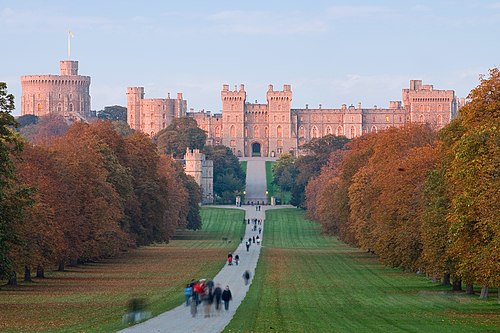 Windsor CastleRestored · prime 1820
 Tower of LondonRestored · prime 1285
 Bamburgh CastleRestored · prime 1904
All castles in England → · Strongest castles in England → · Castles of Europe
Play As Your Clan
Hold a real castle against whatever you choose to send at it, take a ship out in her own service years, or stand at the shoulder of someone the record remembers. The chronicler sets the scene; the deeds are yours.