Cooper
The cooper, cask and keg.
- Origin
- South East, England
- Famous bearer
- Anthony Ashley-Cooper, 7th Earl of Shaftesbury (1801–1885), factory reformer
- Register
- English family
The Cooper tartan and country

TartanCooper tartanMicheletb · CC BY-SA 4.0

- Tartan: The checked cloth the family is known by.
What is the Cooper clan tartan?
One Cooper sett is recorded, and it is the swatch above. A sett is the block of coloured bands the cloth is built from, repeated in both directions; the whole plaid is that one square enlarged.
Cooper is an English name, and the sett is a Scottish invention. Tartan registration grew outward from the Highlands to cover surnames carried well beyond them, and a weaver who could sell a Cooper tartan sold one: some of these setts are Victorian and some were designed within living memory. That is how most names outside the Highlands came by a sett at all. Nobody polices any of it. Wearing the Cooper sett declares allegiance to the name, not descent from any particular line of it.
CoreHistoric reach
The seat of Cooper
Seat vacantChief
No one leads the Cooper community yet. When the movement opens, you can stand for its leadership, or help elect whoever does.
Current mission
No shared goal set yet. Once Cooper has leadership, it sets the public focus: a restoration, a gathering, a real-world project that helps its own.
The Cooper clan is being rebuilt. Join the waiting list for the movement today, and you help decide who leads it and what it does.
Help rebuild the Cooper clan →What does the Cooper name mean?
Middle English, barrel-maker.
The history of Cooper
How a job became a family name
Cooper is the trade written down. The modern spelling comes from Middle English couper or cowper, taken from Middle Dutch kuper, a cask-maker, from kup, a tub; behind that stands Latin cupa, a tun or barrel. The word crossed the North Sea with the ships and casks it named, and the trade left the same name wherever England traded: the Dutch Kuiper and the German Kupfer and Kuper are cousins of every English Cooper. The surname Hooper comes from the same workshop, the hooper being the man who fitted the hoops onto the barrels the cooper built. In Scotland an unrelated root feeds the same spelling, where Cooper comes instead from the town of Cupar in Fife.
The name did not become hereditary the moment somebody made a barrel. English surnames began as descriptions of a particular man, and were not necessarily passed on. By the 14th century most English and Scottish people used one, and by 1400 most English families, and those of Lowland Scotland, had hereditary surnames outright. That is when Cooper stopped meaning "this man makes casks" and began meaning "this family descends from a man who did".
It is also why there are so many Coopers, and why they are not one family: every market town, port, brewery and abbey cellar needed the work done, so the byname attached itself independently to unrelated men in unrelated counties, over and over, until one name covered families who had never met.
What a tight cask actually took
Coopering is the making of staved vessels: timber staves, heated or steamed until they bend, drawn together by wooden or metal hoops and closed with flat ends, or heads. There is no nailed frame holding a cask together. The shape holds itself, stave against stave under hoop pressure, and a cask that will carry liquid across an ocean must be cut so accurately it needs nothing else. That is the whole difficulty of the trade, and why it took years to learn.
The output was not only barrels but buckets, tubs, butter churns, vats, hogsheads, puncheons, pipes and troughs. The trade split three ways: white coopering for household goods such as pails, churns and ladles; dry or slack coopering for flour, tobacco and vegetables, built to keep moisture out; and wet or tight coopering for water, wine, whisky and oil, the hardest of the three. The sizes were a language of their own: a firkin held 8 imperial gallons, a kilderkin 16, a barrel 32, a hogshead 52 and a butt 104, and the firkin is still the commonest ale cask.
The container the world moved in
Before the shipping container, the cask was how nearly everything travelled. Wherever goods were traded casks were used, in exactly the way cardboard boxes later were: beer and wine, salt provisions, tar, oil, flour, tobacco, and a crew's drinking water. In Anglo-Saxon Britain barrels held ale, butter, honey and mead, and staved drinking vessels of oak, yew or pine were bound with worked precious metal and buried with the dead as treasure.
The craft is far older than the surname. Pliny the Elder reports that European cooperage began with the Gauls, in Alpine villages where they kept their drink in hooped wooden casks. In 1897 excavators at Roman Silchester pulled casks from the linings of shallow wells: Pyrenean silver fir, staves an inch and a half thick, each scratched with a Roman numeral so the cask could be rebuilt in order. That is a working cooper's habit, seventeen centuries old, and still how a cask is marked today.
1298, the livery company, and the mark on every cask
Coopers in Britain were organising as a trade as early as 1298. The Worshipful Company of Coopers is one of the oldest of the London livery companies and survives still, now largely as a charity. It set who could work and to what standard, and in the 16th century it won coopers the right to be independent of the breweries, a tradesman in his own right, not a brewery's servant.
An ordinance passed in England in 1420 went further, requiring every cooper to stamp each finished cask with a mark unique to him, so his work could be recognised and the trade protected from interlopers. The practice continued well into the 20th century. If your name is Cooper, an ancestor of yours very probably had a mark of his own, burned into the head of every barrel he sold, and a bad barrel could be traced back to the man who made it.
No ship sailed without one
The age of sail ran on cooperage. Ships carried water and provision casks whose contents kept crew and passengers alive on long voyages, and barrels of the high-value cargo, wine and sugar, that paid for the trip. Even loading was a cooper's knowledge: casks were sized to fit the sloping walls of a hull and packed tight, because casks that shifted at sea endangered cargo, crew and ship alike. After the Normans settled England following 1066, wine came over the Channel in quantity, and it came in casks somebody had to build, stow and mend.
Whalers needed most of all: long voyages, large crews, casks for salted meat and water outbound and whale oil home. Sperm whale oil is so viscous that containing it was a specialism of its own, and oil coopers were arguably the most skilled tradesmen in all of pre-industrial cooperage. A whaler therefore carried a cooper aboard, assembling shooks (barrels shipped flat, in pieces) and mending casks at sea. These shipboard men were nicknamed groggers: an emptied rum cask filled with boiling water and rolled round the deck gave up the drink called grog.
Three hundred coopers at Guinness, and the last wooden cask
On land the breweries were the great employers. Coopers built the wooden vats the beer was brewed in and the kegs it shipped in, and a keg had to be exceptionally strong: it held the pressure of a fermenting liquid and took brutal handling, rolled into tap-rooms and lowered down cellar hatches. Guinness in Ireland kept up to 300 highly paid coopers of its own and used wooden casks for close to two centuries.
Then it ended, and the dates are exact. Guinness brought in aluminium kegs in 1946; by 1961 only 70 coopers were left on the payroll; the last wooden cask was used in March 1963. British breweries turned to metal through the 1960s, and the shipping container, the metal drum and the cardboard box took the rest of the work.
What survives is the part machines cannot do, because the wood now flavours what it holds: a cask is steamed to loosen the lignin, toasted (about 35 minutes over a low fire for wine, 45 seconds over a high one for whisky) and charred. By 2009 only four breweries in England still employed coopers and just one master cooper was left, Alastair Simms, at Wadworth in Devizes and by 2015 at Theakston in Masham. When he advertised for apprentices the applications poured in; he took one on by November 2015, and still works with a croze he reckons is over 250 years old.
Where the Coopers settled
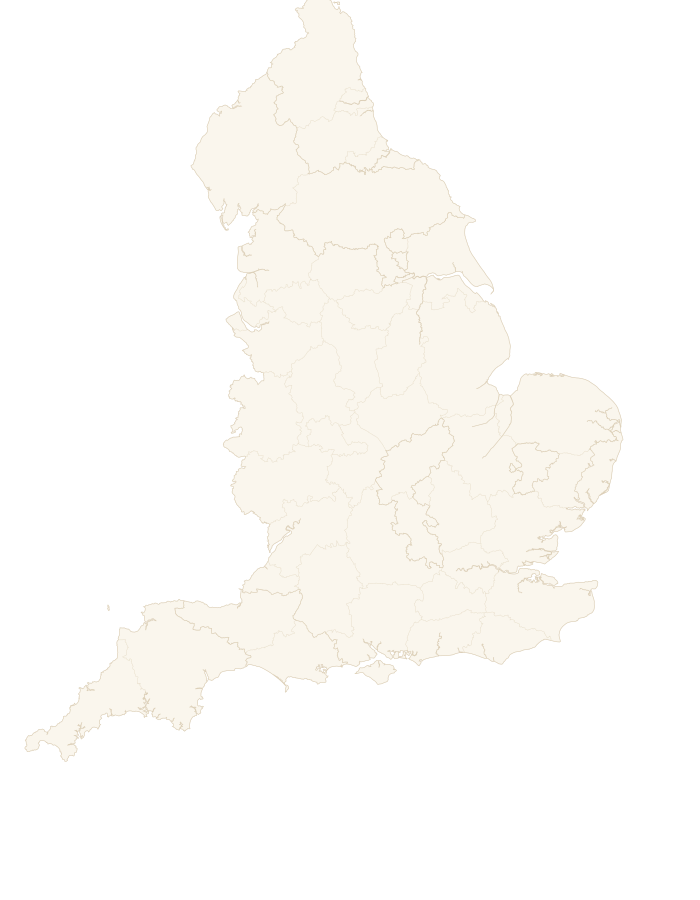
By the late 19th century the name was spread across England but concentrated in three areas: the northern midlands, Sussex and Hampshire, and Suffolk. That is the geography of brewing, cider, fishing and shipping: the south-eastern counties feeding London's cellars and the Channel ports, the Suffolk coast casking its catch, the midlands casking everything else.
Two branches climbed out of the workshop into land. The Coopers of Wimborne St Giles in Dorset were raised to the peerage as Earls of Shaftesbury in 1672, and the earldom runs still under Nicholas Ashley-Cooper, 12th Earl, born in 1979, a line so tied to one name that ten of the twelve earls have been called Anthony Ashley-Cooper. In Ireland, Markree Castle in County Sligo was allotted to Cornet Edward Cooper in 1663, and ten generations held it until 2015.
The name went overseas early: Humility Cooper sailed on the Mayflower, which puts a Cooper among the founding English passengers of New England. And one Cooper went straight back to the barrel: Thomas Cooper (1826–1897) founded Coopers Brewery, still one of Australia's best-known breweries.
The people who carried the name
The greatest of them is the reformer. Anthony Ashley Cooper, 7th Earl of Shaftesbury (1801–1885), Dorset-born and Tory, spent sixty years in Parliament and left the foundation stones of Victorian social law: the abolition of slavery in the British Empire in 1833, the Mines and Collieries Act of 1842 ending the employment of women and children underground, and the Ten Hours Act of 1847 capping the working day in the mills. The other side of that argument carried the name too: Thomas Cooper (1805–1892), the Chartist poet, pressed the working man's case from outside Parliament while Shaftesbury pressed it within.
The name reaches into most corners of public life. Thomas Cooper (c. 1517–1594) was bishop of Lincoln and then Winchester; another Thomas Cooper (died 1659) was a colonel in the Parliamentary army. Mary Cooper (died 1761) was an English bookseller and publisher in her own right; Astley Cooper (1768–1841) was an English surgeon; Selina Cooper (1864–1946) was a suffragist and politician; and Thomas Cooper, Baron Cooper of Culross (1892–1955), a Scottish judge and historian of his country's law.
Closer to living memory, the actress Gladys Cooper (1888–1971) and the comedian and magician Tommy Cooper (1921–1984) made the name a fixture of stage and screen. Sir Henry Cooper of Lambeth put it in every household in Britain when, on 18 June 1963 at Wembley, the left hook they called Enry's 'Ammer floored the world heavyweight title-holder Cassius Clay in the fourth round. He held the British, Empire and European titles through the 1960s and retired in 1971 the most decorated British boxer of the post-war era.
A Cooper reading this is not necessarily descended from an earl or a bishop. But somewhere behind the name is a man in a yard of oak shavings and steam who could cut thirty pieces of wood so precisely that they held beer, or whale oil, or a ship's drinking water, with nothing but hoops to keep them shut, and whose mark, by law, was burned into every one he sold.
Champions of the Cooper name
The bearers whose lives are inseparable from this surname. Each has their own page, biography, achievements, geography, connection to the family.
- Anthony Ashley Cooper, 7th Earl of Shaftesbury
The Dorsetshire-born Tory peer whose parliamentary career across sixty years secured the 1833 abolition of slavery in the British Empire, the 1842 Mines and Collieries Act ending child and female employment underground, the 1847 Ten Hours Act regulating the textile mills, and a chain of further humanitarian statutes that constitute the foundational corpus of Victorian factory and social legislation.
- Sir Henry Cooper
The Lambeth-born English heavyweight boxer whose left hook (Enry's 'Ammer) knocked down the world heavyweight title-holder Cassius Clay in the fourth round at Wembley on the eighteenth of June 1963, who held the British, Empire and European heavyweight titles continuously through the 1960s, and who at his retirement in 1971 was the most-decorated British boxer of the post-war era.
Historic Places, Rebuilt
Explore the streets and seats the Cooper name knew, rebuilt with AI as they stood in history.
Castles the Cooper held
Strongholds this name held for a decade or more, look one up, or rebuild it to explore.
- Markree Castle
Allotted to Cornet Edward Cooper in 1663; ten generations of Coopers held Markree until 2015.
The castles of the homeland
The great strongholds of the homeland, look one up, see what it looked like in its prime, and recreate it to explore.
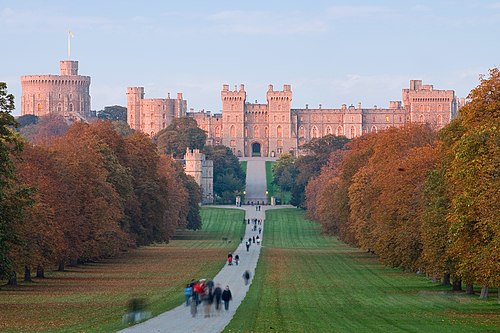 Windsor CastleRestored · prime 1820
 Tower of LondonRestored · prime 1285
 Bamburgh CastleRestored · prime 1904
All castles in England → · Strongest castles in England → · Castles of Europe
Play As Your Clan
Hold a real castle against whatever you choose to send at it, take a ship out in her own service years, or stand at the shoulder of someone the record remembers. The chronicler sets the scene; the deeds are yours.
Notable bearers of the Cooper name
- Anthony Ashley-Cooper, 7th Earl of Shaftesbury (1801–1885), factory reformer