King
When the village crowned someone 'king' for a day, and the jest lasted six centuries.
- Origin
- London, England
- Famous bearer
- William Lyon Mackenzie King (1874–1950), Canada's 10th Prime Minister
- Register
- English family
The King arms and country
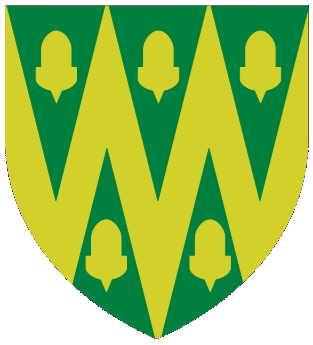
Coat of armsKing of Wartnaby EscutcheonBorne by the Wartnaby Escutcheon line, one branch of the name rather than all of it.Robin S. Taylor · CC BY-SA 4.0 
Coat of armsEscutcheon of the King baronets of Campsie (1888)Borne by the Campsie line, one branch of the name rather than all of it.Charles Matthews · CC BY-SA 4.0

.svg)
- Coat of arms: Granted to an individual and inherited down that one documented line. These are the arms of particular families of the name, not of everyone who shares the surname.
CoreHistoric reach
The seat of King
Seat vacantChief
No one leads the King community yet. When the movement opens, you can stand for its leadership, or help elect whoever does.
Current mission
No shared goal set yet. Once King has leadership, it sets the public focus: a restoration, a gathering, a real-world project that helps its own.
The King clan is being rebuilt. Join the waiting list for the movement today, and you help decide who leads it and what it does.
Help rebuild the King clan →What does the King name mean?
Old English cyning, 'king'. In surname studies this is almost always a nickname that hardened into a hereditary name: the neighbour who walked like a lord, the cheeky champion elected King of the Bean at Twelfth Night, or the villager who played mock king in May games. That is the world most English Kings inherit, festival jokes and personality, not a parchment from the palace. Real royal households did swarm with cooks, clerks, musicians and porters, but those jobs usually produced other surnames; a straight King is the story the village told about one memorable man. Irish Mac an Rí ('son of the king') anglicises to the same spelling, parish and DNA trails tell them apart.
The history of King
The one English surname that almost never means what it says
The word behind it is old and grand. Late Old English cyning, "ruler" or "leader", from Proto-Germanic kuningaz, the root behind German König and Old Norse konungr. One persuasive reading links kuningaz to Old English cynn, "family, race", making a king originally the leader of the kin.
None of that is what your ancestor was. A Dictionary of English Surnames is blunt: "surnames of office, such as Abbot, Bishop, Cardinal and King, are often nicknames". King belongs with Bishop, Abbot, Sheriff and Knight in a group that looks occupational and is not. It is rather unlikely that a man surnamed King was a king or descended from one. Bernard Deacon's suggestion is that the first bearer acted like a king or a bishop (or, in Bishop's case, was simply as corpulent as one).
English nicknaming ran on exaggeration and irony, and it did not flatter. The Oxford English Dictionary of Family Names in Britain and Ireland, built from a study of 45,602 surnames that concluded in 2016, sets King's class beside the occupational Smiths and the patronymic Jacksons, in Richard Coates's words, "names where the origin describes the original bearer such as Brown, Short, or Thin, though Short may in fact be an ironic 'nickname' surname for a tall person". Not a claim about blood. A verdict a village passed on one man.
Crowned on a pageant cart at Corpus Christi
There is one place in medieval English life where an ordinary man reliably wore a crown in front of his whole town: the mystery plays, which began in church as tableaux of Bible stories and grew into full drama. In 1210 Pope Innocent III, suspicious of how popular the miracle plays had become, issued a papal edict forbidding clergy from acting on a public stage.
That handed the whole enterprise to the town guilds. Latin gave way to the vernacular, comic scenes were written in, and the word "mystery" took on a second sense, because an archaic meaning of mystery is guild, the men who put the plays on. By the end of the 15th century whole cycles ran on festival days, each play on a decorated pageant cart trundling through the streets from crowd to crowd, a full cycle taking up to twenty hours, most often at the Feast of Corpus Christi.
Four English collections survive more or less whole: the York cycle of forty-eight pageants, the Towneley plays of thirty-two, and the Chester cycle of twenty-four. Guilds took the scenes that suited their trade: carpenters built Noah's Ark, bakers did the loaves and fishes, and the York mercers kept Doomsday. Crowns were everywhere in that repertoire: the Magi at the Nativity, the Coronation of the Virgin, Christ enthroned in judgement. Somebody local wore each one, in front of everyone he knew, and was never allowed to forget it.
King of the Bean, and the lord of misrule
Start with the hall in winter: shadows on the beams, ale going round, and one man chosen Lord of Misrule and made king for a night because he made everyone laugh. Medieval England was held together by manor courts, guild pageants and saints' days, much of that calendar ordinary people playing at power for a day and handing it back at dusk. The man who found the bean in the Twelfth Night cake was crowned King of the Bean; the villager who led the May games was mock king of the summer.
The joke had teeth, because everyone knew the difference between the man in the paper crown and the man whose writ ran to the hedge. So the honest origin of your name is not a palace but a memorable neighbour: the one who carried himself like a lord, or won the crown at the feast, or played the king on the cart. When clerks came round insisting every household carry one fixed surname, that teasing honour was what went in the column.
The century the joke became a legal fact
Surnames are a far later invention than given names; in western Europe they only begin appearing in the 11th century. In England the practice is generally traced to the Domesday Book, completed by 1086 after the Norman Conquest, which listed every tenant-in-chief of the king shire by shire, and gave English government an appetite for pinning people to a fixed identifier.
Surnames were taken up first among the nobility and gentry and spread downward slowly. Christopher Daniell places the first recorded modern surname inherited across generations in 1140. Only by the 14th century did most English and Scottish people use surnames at all, and by 1400 most English and Lowland Scottish families had settled into hereditary use. Wales followed after unification under Henry VIII in 1536.
The ordinary response to a permanent name was suspicion: in the late Middle Ages mandatory surnames were resisted precisely because they were associated with taxes. Henry VIII, who reigned from 1509 to 1547, ordered that marital births be recorded under the father's surname, which locked the system shut. By the 19th-century census King pools thickest from London through the Home Counties and out into the West Country, the belt of old market towns and pageant-keeping parishes where the joke had most room to start.
Why so few Kings ever served the king
Royal households were enormous, swarming with cooks, clerks, chaplains, musicians and porters. So why did so few of them become Kings? Partly because English servants commonly took a modified form of their employer's name rather than his office: Vickers is thought to have arisen as the name of a vicar's servant.
The other half of the answer is the Conquest. By the end of William's reign most officials of government and of the royal household were Normans, and official documents had shifted from Old English to Latin. Anglo-Norman displaced Old English among the ruling class, and even given names turned over, with William, Robert and Richard crowding out the Anglo-Saxon ones. The household at the top of English society was, for generations, not speaking the language the word cyning lived in.
What that leaves is better than a false pedigree. The language of majesty leaked downward into everyday banter until a farmer could be crowned by his neighbours over a cake, and King is very often that banter, turned legal.
Mac an Rí: the Irish river that runs into the same name
Not every King comes from an English village. The Irish surname Mac an Rí, "son of the king", anglicises to precisely the same four letters, and many bearers with Irish roots carry that name rather than the English nickname. Same letters on the mailbox, different rivers upstream: parish records and DNA trails are what tell them apart.
A third Irish strand is neither: the Anglo-Irish landed Kings, Barons and later Earls of Kingston, who took Mitchelstown in County Cork by marriage from the White Knights and held it until the castle burned in August 1922. A line running back to Mitchelstown is a settler-gentry story, distinct from the Gaelic Mac an Rí and from the English mock kings alike. Scotland has a claim to the spelling too: Barra Castle was held by a family of Kings from the mid-13th century, early enough to stand beside the oldest hereditary surname use in Britain.
Küng, König, and the Kings who never spoke English
One more current feeds the name, European in origin but reaching most of its bearers through America. King is also an Anglicised form of the German surname Küng (also written König and Koenig), which in many German dialects is pronounced very much like the English word king. The switch was less a translation than a respelling of what people already heard.
That German-rooted form is widespread among American Mennonites and Amish, which puts a substantial share of North American Kings in a different heritage from the English one: German-speaking Anabaptist families who crossed the Atlantic and kept their communities intact. If your tradition runs through Pennsylvania or Ohio farm country rather than an English or Irish parish, this is the branch to test for first.
The bearers who made the name worth carrying
The name reached the top of the English church early. Oliver King, who died in 1503, was Bishop of Bath and Wells and the man who rebuilt Bath Abbey. Henry King (1592-1669) was Bishop of Chichester and, more durably, a poet.
The modern high-water mark is Canadian. William Lyon Mackenzie King (1874-1950) served as Canada's tenth Prime Minister and remains the longest-serving Prime Minister in the history of the Commonwealth, leading his country through the Second World War and laying the foundations of its welfare state. In the same war Ernest J. King (1878-1956) was Fleet Admiral of the United States Navy, Commander in Chief of the United States Fleet and Chief of Naval Operations at once. A war earlier, Elwyn Roy King (1894-1941) had made the name in the air as an Australian fighter ace.
Leslie Lynch King Jr. (1913-2006) was born under this surname and grew up to become President Gerald Ford of the United States, a head of state who began life as a King and stopped being one. The name is well planted in scholarship and letters too: Leonard William King (1869-1919), the English archaeologist; the Scottish painter Jessie Marion King; and Stephen King, born in 1947, the most widely read novelist ever to carry the spelling.
None of them, so far as the records go, descended from a monarch. That is the point of the name and the best thing about it. King is a surname ordinary Europeans gave one another in villages and guildhalls and on pageant carts, out of affection and mockery and a little awe, and then carried, with a straight face, for six hundred years.
Champions of the King name
The bearers whose lives are inseparable from this surname. Each has their own page, biography, achievements, geography, connection to the family.
Historic Places, Rebuilt
Explore the streets and seats the King name knew, rebuilt with AI as they stood in history.
Castles the King held
Strongholds this name held for a decade or more, look one up, or rebuild it to explore.
- Mitchelstown Castle
Seat of the King family, Barons and Earls of Kingston, who acquired Mitchelstown by marriage from the White Knights; the castle burned in August 1922.
- Barra Castle
Seat of the King family from the mid-13th century.
Castles that share the King name
The same name on the map, look one up, see what it looked like in its prime, and recreate it to explore.
 King John's CastlePartial ruin · prime 1574
 King John's PalaceRuin · prime 1360
 King Charles's CastleRuin · prime 1551
All castles in England → · Strongest castles in England → · Castles of Europe
Play As Your Clan
Hold a real castle against whatever you choose to send at it, take a ship out in her own service years, or stand at the shoulder of someone the record remembers. The chronicler sets the scene; the deeds are yours.
Notable bearers of the King name
- William Lyon Mackenzie King (1874–1950), Canada's 10th Prime Minister
- Oliver King (d. 1503), Bishop of Bath and Wells; rebuilt Bath Abbey
- Henry King (1592–1669), poet and Bishop of Chichester
- Stephen King (b. 1947), novelist (American line; famous bearer of the spelling)