Cecil
also Sitsilt, Cyssyl
Burghley and Salisbury, three centuries at the head of English government.
- Origin
- East of England, England
- Motto
- Cor unum, via una
- Famous bearer
- William Cecil, 1st Baron Burghley (1520-1598), chief minister to Elizabeth I
- Register
- English family
Ranked of all time
The 15 Most Powerful English Houses of All Time
The Cecil arms and country

Coat of armsArms of the House of CecilThe arms of the house itself: the main line, not one of its cadet branches.CC BY-SA 3.0 
Coat of armsCoat of arms of Cecil, Marquesses of ExeterBorne by the Marquesses of Exeter: the ennobled line of the name, not the name at large.CC BY-SA 4.0


- Coat of arms: Granted to an individual and inherited down that one documented line. These are the arms of particular families of the name, not of everyone who shares the surname.
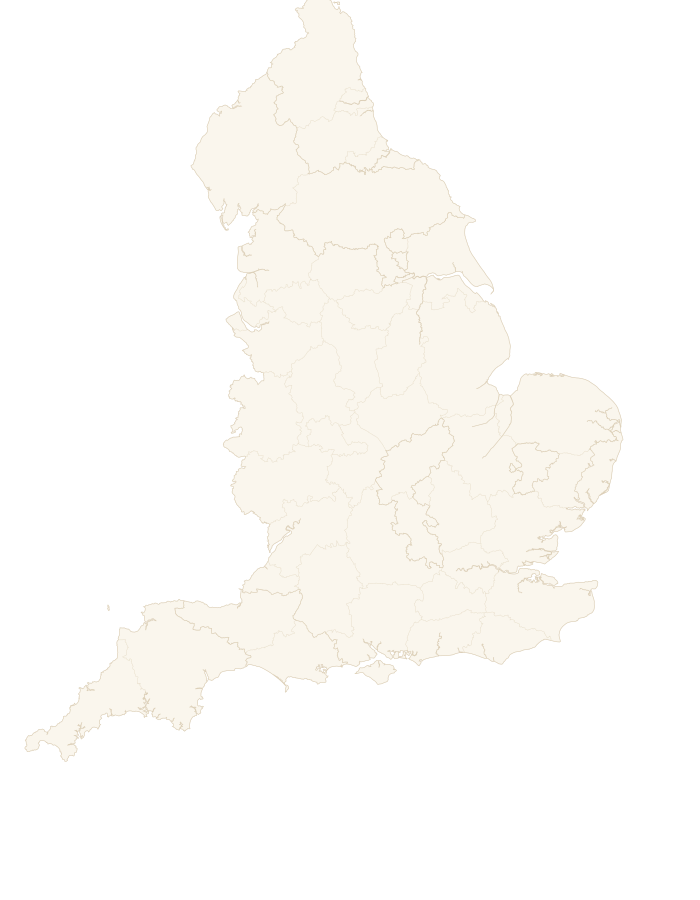
CoreHistoric reach
The seat of Cecil
Seat vacantChief
No one leads the Cecil community yet. When the movement opens, you can stand for its leadership, or help elect whoever does.
Current mission
No shared goal set yet. Once Cecil has leadership, it sets the public focus: a restoration, a gathering, a real-world project that helps its own.
The Cecil clan is being rebuilt. Join the waiting list for the movement today, and you help decide who leads it and what it does.
Help rebuild the Cecil clan →Motto
Cor unum, via una
“One heart, one way”
What does the Cecil name mean?
From the Welsh-Norman 'Seisyllt' or 'Sitsilt', a personal name of Welsh origin anglicised after the Welsh border family migrated east in the 15th century. David Cecil of Stamford in Lincolnshire attended Henry VII at Bosworth in 1485, and the family's rise dates from that moment. The senior line became Lords Burghley from 1571 and Earls (later Marquesses) of Salisbury from 1605.
The history of Cecil
Seisyllt, Sitsilt, Cecil: a Welsh name written down by English clerks
The surname began as Seisyllt, a personal name of Welsh origin, recorded also as Sitsilt and Cyssyl, and carried by a family of the Welsh border. When that family migrated east in the 15th century the name passed into English record-keeping and was anglicised into the spelling the world now knows.
The timing put the name across a seam in two naming systems. In England hereditary family names are generally traced to the Domesday Book of 1086, adopted first among the feudal nobility and gentry, and by 1400 most English families had settled into inherited surnames. Wales came to fixed hereditary practice later, following unification under Henry VIII in 1536. A Welsh personal name entering English clerkship in the 1400s was caught between a country that had frozen its surnames and one that had not, and the English form stuck.
David Cecil at Bosworth, 1485
The family's rise dates from a single day. David Cecil of Stamford in Lincolnshire attended Henry VII at Bosworth in 1485, and from that moment the name was attached to the English crown rather than to a Welsh border holding. Lincolnshire remains a historic district of the name alongside Hertfordshire and London.
What followed was unusual in shape. The Cecils built their standing not on a great medieval lordship but on offices held at the centre of government, in the household and the council chamber. The senior line became Lords Burghley from 1571 and Earls, later Marquesses, of Salisbury from 1605, titles won by service to the state rather than by descent from a Norman baron.
Forty years at Elizabeth's elbow
William Cecil, 1st Baron Burghley (1520-1598), is the figure on whom the whole later history of the name rests. He served Elizabeth I as her Principal Secretary of State and then as Lord High Treasurer for forty years, and he was the architect of the Elizabethan religious and political settlement, the arrangement that decided how England would be governed and how it would worship. By the queen's own repeated acknowledgement he was the most indispensable of her ministers.
Forty years is not a career, it is a reign of its own running in parallel with hers, and Burghley's work was the unglamorous kind that holds a state together: revenue, appointments, the management of a council, the security of the crown against those who wanted the queen dead. His name is bound to the Babington Plot of 1586.
Burghley House, Theobalds and the manor of Bourne
Burghley put his money into stone. He built Burghley House in Lincolnshire and Theobalds Palace in Hertfordshire, and from the mid-1500s the Cecils held the manor of Bourne in Lincolnshire, William Cecil holding it as treasurer to the queen.
Bourne came to them with centuries of history on it. A ringwork castle may have been raised there soon after 1071 by Oger the Breton, the largest landholder in Bourne in the Domesday account of 1086, and the timber motte is believed to have been added by Baldwin FitzGilbert of the de Clare family. Through the marriage of Hugh Wac and Emma FitzBaldwin around 1141 it came to the Wake family on Baldwin's death in 1154, and under the Wakes it was rebuilt in stone, a keep raised inside a semi-oval curtain wall.
An inventory taken in 1380 under Blanche Wake, wife of Thomas Wake, records 413 houses, 2,295 inhabitants and about 200 people serving in the castle. It later passed to the Holland family; Margaret Beaufort, mother of Henry VII, lived there with Henry Stafford for five years, and Henry VIII's illegitimate son Henry FitzRoy held it until his death in 1536. Under the Cecils the castle itself drops out of the record; its earthworks, a mound with traces of inner and outer moats, are now Wellhead Park, open to the public.
The son who managed a succession
Burghley's younger son, Robert Cecil, 1st Earl of Salisbury (1563-1612), succeeded his father as the central figure of late-Elizabethan and then Jacobean government. His largest achievement was the quietest: he managed the succession of James I to the English throne in 1603, the moment the crowns changed dynasty without the country coming apart, and he then served the new king as chief minister for nine years.
He also moved the family's centre of gravity. Robert exchanged the Cecil seat at Theobalds for the royal manor of Hatfield in Hertfordshire, and there built Hatfield House, completed in 1611, the great Jacobean prodigy house that is still the Cecil seat four centuries later.
A castle of queens comes to the second earl
The Cecils' hold on Hertfordshire deepened when Hertford Castle was granted to William Cecil, 2nd Earl of Salisbury, after Charles I came to the throne. The castle had been built beside the River Lea in the Norman era, when William the Conqueror granted it to Peter de Valognes, High Sheriff of Essex and Hertfordshire, and its military role gave way early to life as a royal residence. Edward I gave it to his second wife Margaret in 1299, and it went afterwards to John of Gaunt, who used it as his chief country home.
It became a castle of queens. Henry V granted it in 1418 to his new wife, Princess Katherine of France, and the two spent much time there together; in 1445 it went to Margaret of Anjou on her marriage; after the Wars of the Roses Edward IV granted it to his wife Elizabeth Woodville. Richard III gave it to the Duke of Buckingham, and Edward VI later granted it to Princess Mary.
From the reign of James I it ceased to be a royal residence and fell into decay, which is the condition in which it reached the Cecils. Most of the internal buildings have since been demolished; the main survivor is the Tudor gatehouse, a Grade I listed building, with sections of the medieval bailey wall still standing on the east side.
Three times prime minister, the last to govern from the Lords
Robert Gascoyne-Cecil, 3rd Marquess of Salisbury (1830-1903), was born at Hatfield House on 3 February 1830, into a family that had served the crown at its highest levels since Elizabeth's reign and had held Hatfield for more than two centuries. A clever, short-sighted, melancholy boy, unhappy at Eton, he entered politics through a safe family seat in 1853 and made his early name as a brilliant journalist and debater on the Conservative benches.
He served as Secretary of State for India, then made his reputation on the European stage as Foreign Secretary. At the Congress of Berlin in 1878, working alongside Disraeli, he helped settle a Balkan crisis that had brought Russia and Britain close to war, and came home with a peace that held. He was Prime Minister in 1885, again from 1886 to 1892, and a third time from 1895 to 1902, holding the Foreign Office in his own hands for most of that period, an almost unmatched concentration of responsibility for a world-spanning empire.
His skill was diplomatic rather than oratorical: the patient management of crises, the avoidance of the irrevocable step, the long view of a man who distrusted enthusiasm in public life. Through a quarter-century of imperial expansion and great-power rivalry he kept his country out of any war among the major powers of Europe, and he was the last Prime Minister to lead a British government from the House of Lords. He gave up the premiership in the summer of 1902, worn out, and died at Hatfield on 22 August 1903.
Cor unum, via una
One heart, one way, is the family motto, and for a house that held the top of English government in the 16th, 17th and 19th centuries it is an accurate one. Three Cecils reached the head of the state under the same surname, four centuries apart: Burghley for Elizabeth, the 1st Earl of Salisbury for James, the 3rd Marquess of Salisbury for Victoria. No other non-royal English family has held that position for so long.
The titles and the ground survived. The senior line has been Lords Burghley since 1571 and Earls, then Marquesses, of Salisbury since 1605; Hatfield House, finished in 1611, is still the family seat, and the marquessate is now held by Robert Cecil, 7th Marquess of Salisbury (b.1946). The line runs back from there through Burghley House to a Welsh personal name, Seisyllt, and to the day a Lincolnshire man attended Henry VII at Bosworth.
Champions of the Cecil name
The bearers whose lives are inseparable from this surname. Each has their own page, biography, achievements, geography, connection to the family.
Historic Places, Rebuilt
Explore the streets and seats the Cecil name knew, rebuilt with AI as they stood in history.
Castles the Cecil held
Strongholds this name held for a decade or more, look one up, or rebuild it to explore.
- Hertford Castle
Granted to William Cecil, 2nd Earl of Salisbury, after Charles I came to the throne.
- Bourne Castle
The Cecils, under William Cecil, treasurer to Elizabeth I, held the manor of Bourne from the mid-1500s.
Landmarks the Cecil held
Palaces, houses and great buildings tied to this name, look one up, or rebuild it to explore.
- Hatfield House
Seat of the Cecil Earls and Marquesses of Salisbury since James I granted the estate to Robert Cecil in 1607; the present house was built by him in 1611 and remains the home of the 7th Marquess.
- Burghley House
Built for Sir William Cecil, 1st Baron Burghley, between 1555 and 1587; seat of the Cecil Earls and Marquesses of Exeter and still lived in by the family.
The castles of the homeland
The great strongholds of the homeland, look one up, see what it looked like in its prime, and recreate it to explore.
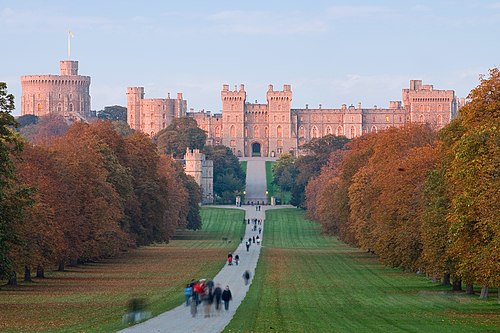 Windsor CastleRestored · prime 1820
 Tower of LondonRestored · prime 1285
 Bamburgh CastleRestored · prime 1904
All castles in England → · Strongest castles in England → · Castles of Europe
Play As Your Clan
Hold a real castle against whatever you choose to send at it, take a ship out in her own service years, or stand at the shoulder of someone the record remembers. The chronicler sets the scene; the deeds are yours.
Notable bearers of the Cecil name
- William Cecil, 1st Baron Burghley (1520-1598), chief minister to Elizabeth I
- Robert Cecil, 1st Earl of Salisbury (1563-1612), chief minister to James I
- Robert Cecil, 3rd Marquess of Salisbury (1830-1903), Conservative Prime Minister
- Robert Cecil, 7th Marquess of Salisbury (b.1946), current head of the Cecil line