Mason
The operative mason.
- Origin
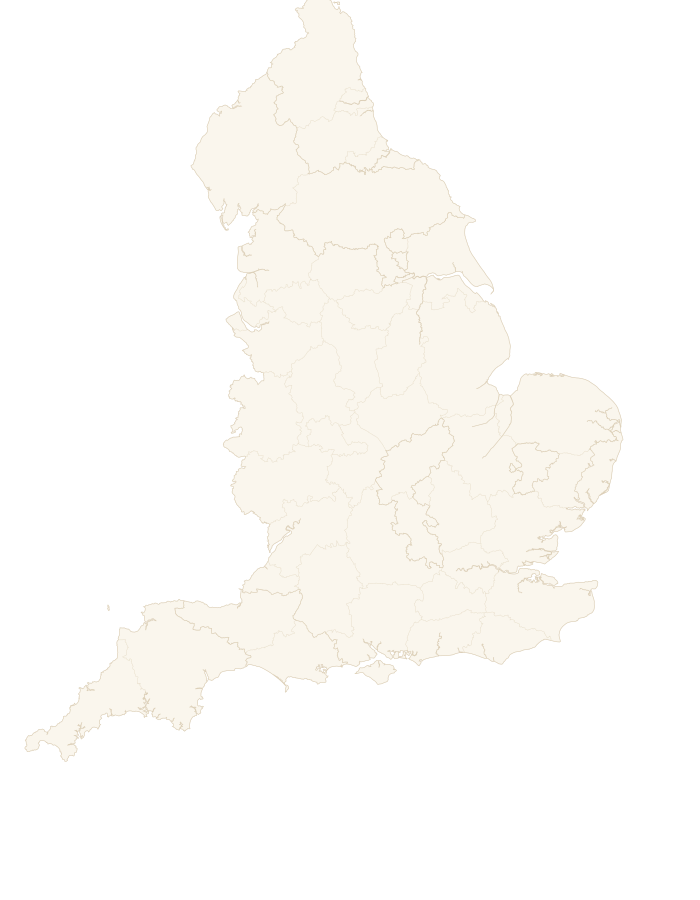
- South East, England
- Register
- English family
Where the Mason name comes from
CoreHistoric reach
The seat of Mason
Seat vacantChief
No one leads the Mason community yet. When the movement opens, you can stand for its leadership, or help elect whoever does.
Current mission
No shared goal set yet. Once Mason has leadership, it sets the public focus: a restoration, a gathering, a real-world project that helps its own.
The Mason clan is being rebuilt. Join the waiting list for the movement today, and you help decide who leads it and what it does.
Help rebuild the Mason clan →What does the Mason name mean?
Old French masson, stoneworker.
The history of Mason
The Norman word that came ashore with the castle builders
Mason is Old French masson, the man who works stone, and it entered England on the same tide as the men who needed one. William landed at Pevensey on 28 September 1066 and threw up a wooden castle at Hastings within days; through the five years of revolt that followed, his barons raised fortifications in unprecedented numbers, first on the motte-and-bailey pattern and then in dressed stone. Robert Liddiard's remark that a glance at the urban landscape of Norwich, Durham or Lincoln is a forcible reminder of the Conquest is a remark about masonry. The Normans rewrote the English skyline in cut rock, and the trade that cut it took a French name.
The Church rebuilt itself in stone at the same moment. Lanfranc, abbot of William's own foundation at Caen, received Canterbury in 1070; Thomas of Bayeux was installed at York after Ealdred died in September 1069, and after Wulfstan's death in 1095 no bishopric in England was held by an Englishman. Every incoming prelate wanted a building to match his authority. Dressed-stone construction had already revived across Europe in the 9th and 10th centuries, and by the 12th century religious fervour had raised thousands of churches and cathedrals in stone across the West. Demand for men who could cut a true bed and a true joint was effectively bottomless.
The name follows the work. One of the earliest English instances is John Macun, listed in London around 1130, and among the oldest concentrations of the name was Kent, on the Isle of Thanet. At that date a byname described a man rather than binding his children; by 1400 most English families, and those of Lowland Scotland, had made their surnames hereditary. Mason therefore crystallised in exactly the window when the country was building in stone on a scale it had never attempted before, which is why no single Mason family stands behind it. Every quarry district minted its own, independently, out of the same French word.
Six different trades answering to a single name
A medieval building site divided the stone between specialists, and all of them were masons. The quarryman split or cut rock at the face and got the blocks clear of the extraction surface. The sawyer mason took those blocks down to dimension stone; a piece cut for a named component was ordered sawn six sides. The banker mason worked in the shed, setting out from templets and a bed mould, and produced everything from a plain chamfer to tracery windows, detailed mouldings and classical architectural work. Three men, three sets of tools, one surname between them.
The banker's skill was invisible when it was done right. He had to bed each stone so it sat in the finished wall in the orientation it had lain in the ground, except where the design demanded otherwise: voussoirs, jambs, copings and cornices are turned deliberately against their natural bed. His basic kit was a mallet, chisels and a metal straight edge, because a flat surface true to a straight edge is the foundation of everything else in the craft. A drove chisel smoothed a roughly finished face; the long thin punch hammer drove the rest. Carbide-tipped chisels only replaced the blacksmith's iron and steel in the last century.
Then the stone left the yard. The fixer mason travelled to the site and set it, using lifting tackle and a lewis worked with a crane or a block and tackle to swing blocks off the ground, bedding them in lime mortar and grout and tying them with dowels and cramps; the tolerances make it one of the most skilled jobs on the wall. The walling hammer, sometimes called a catchy hammer, produced rubble, pinnings and snecks for cheaper work. The memorial mason cut gravestones and inscriptions. The carver mason crossed the line from craft into art, cutting foliage, beasts and figures.
Seven years indentured before a man was called free
The guild decided who was allowed to cut stone, and it did so in three grades. An apprentice was indentured to his master for seven years, his labour being the price of the training. A journeyman was a qualified craftsman paid by the day. A master mason was reckoned a freeman: he could travel where he wished to take work on a patron's project, operate as a self-employed craftsman, and bind apprentices of his own. Nothing on that ladder was ceremonial. It controlled who could take paid work on the cathedrals and castles then going up across Europe.
Mobility is the strange feature of the trade. A weaver worked where his loom stood, but a cathedral consumed decades and then ended, and the master who had run its yard had to move to the next commission. Masons were among the few craftsmen for whom a portable proof of qualification therefore mattered, because the men judging a stranger's claim had never seen him work. The lodge did that judging, and the shape survives intact in the craft's descendants: a private lodge still holds the exclusive authority to elect its own candidates, often with sole rights over the men living near its premises.
A man also signed his work. A medieval stonemason would often carve a personal symbol onto his block to distinguish it from the next bench's output, which doubled as a plain quality-assurance system, since a failing course could be traced to the hand that cut it. That mark was the only signature most of them left; individual names went largely unrecorded even while the surname spread through every parish with a church under construction. The apprenticeship still runs, shortened to three years, split between the site and the classroom.
Bath, Portland, Yorkstone, and the granite that was another trade
What a Mason did with his hands depended on what lay under his feet. Two sedimentary families carry most of the work: the limestones, of which Bath and Portland are the English exemplars, and the sandstones, of which Yorkstone is the most used. Durham Cathedral and St Peter's in Rome are both sedimentary buildings. A man raised in the oolite counties and a man raised on millstone grit learned the same grades and the same tools but not the same instincts about how a block would behave under the chisel.
Granite is so hard that working it is virtually a separate trade. Simple mouldings have been carved from it by sheer persistence, in the Cornish churches and in the grey city of Aberdeen, but its usual work rewards strength rather than delicacy: kerbstones, flooring, breakwaters. Marble runs the other way, fine and easily worked and mostly white, the material Antenor, Phidias, Praxiteles and Critias took from Paros and Thasos, the Pentelic stone of the Acropolis, and the bright quarries around Carrara that supplied Byzantine and Italian Renaissance facings. Slate splits so cleanly and holds detail so sharply that it took the memorial and inscription work, and the roofs besides.
The methods were as old as the stones. Ashlar is masonry of dressed stone and rubble its opposite, frequently hidden as infill behind an ashlar face; dry stone dispenses with mortar and holds by shape, compression and friction; trabeated work lays a lintel across posts, arcuated work turns the same void with an arch. A Mason building a field wall and a Mason setting a nave arcade were using one vocabulary at different registers. In compression alone, without steel, the trade managed 50-metre Roman bridges, 65-metre cathedrals and, by the 1690s, twelve-storey apartment buildings.
The engine that replaced the draft horse
The Renaissance had already begun loosening the trade's grip on its own name. Italian city-states put stonemasons back onto classical models, and Florence raised the Cathedral, the Fountain of Neptune and the Laurentian Library, the last planned and built by Michelangelo Buonarroti. In the same period the stonemasons' guild started admitting members who were not stonemasons at all, and that admission is the hinge on which the whole later history turns: the body that had once decided who could cut stone began to decide something else entirely.
Working practice changed hardest in the 20th century. Until its first half, the heavy work was still done by draft animals and human muscle. The internal combustion engine brought cranes and forklifts that made setting a heavy block routine, motor-driven mixers that took the labour out of mortar, compressed-air tools, and petrol and electric abrasive saws that cut faster and truer than a chisel line ever could. The one constant is the chisel itself: the common sizes and shapes bought today are virtually unchanged from those found at the pyramids of Giza.
Then the material lost. Stone was pushed aside by brick and steel-reinforced concrete, and largely reduced to a cosmetic cladding on a concrete frame, despite being stronger than concrete in compression and far cheaper in energy to produce. The counter-movement is recent and technical. Fernand Pouillon revived load-bearing stone after the war as pierre de taille, made possible when the masonry engineer Paul Marcerou adapted high-precision timber saws at a quarry in Fontvieille; post-tensioned stone, digital stereotomy and the trabeated stone exoskeleton at 15 Clerkenwell Close have followed, on the argument that a load-bearing stone building emits roughly a tenth the carbon of its concrete equivalent.
The Regius Poem, and the Edinburgh lodge that never closed
The oldest documents of the craft are the Old Charges, running from the Regius Poem of about 1425 to the beginning of the 18th century. They are addressed to members of operative masons' lodges and they do three things: relate a mythologised history of the craft, set out the duties of its grades, and prescribe the manner in which oaths of fidelity are to be taken on joining. The 15th century also produces the first evidence of ceremonial regalia. At this date the paperwork of a trade body and the paperwork of a mystery are the same paperwork.
The clearest bridge between the working craft and what grew out of it is Scottish. The minutes of the Lodge of Edinburgh, Mary's Chapel, No. 1 show continuity from an operative lodge in 1598 through to a modern speculative one, which makes it by its own records the oldest Masonic lodge in the world. The rituals and passwords known from operative lodges around the turn of the 17th and 18th centuries already run continuous with those the later 18th century formalised. Members who did not practise the physical craft came to be called accepted, and then speculative, masons.
Four London lodges and one dinner, 24 June 1717
On St John's Day, 24 June 1717, four existing London lodges met for a joint dinner and constituted the Grand Lodge of London and Westminster, later the Grand Lodge of England. Within a decade most of the existing English lodges had joined the new regulatory body, which spent the period in self-publicity and expansion, warranting lodges of its own. Ireland followed in 1725 and Scotland in 1736, though for years neither persuaded all the lodges in its country to come in. A trade organisation had become a national institution with a membership roll.
It stopped being a craftsmen's body almost at once. Across the 18th century aristocrats and artists crowded out the working masons who had given the thing its name, and the fraternity turned fashionable throughout Europe and the American colonies. By 1789 France held between 50,000 and 100,000 masons, the most popular of all Enlightenment associations. English lodges were headed by the Prince of Wales and Prussian ones by Frederick the Great; Napoleon, as emperor, selected his own brother as Grand Master of France.
The English body then split over its own modernisations. A rival was formed on 17 July 1751 calling itself the Antient Grand Lodge on the claim that it kept the older usages, and it coined the word modern as an insult for the 1717 body. The two vied for supremacy until a compromise on ritual brought them back together on 27 December 1813 as the United Grand Lodge of England, still the largest single Masonic jurisdiction, with a combined membership in its provincial lodges estimated at 175,000.
When the chisel became a symbol
Everything in the lodge room is a stonemason's tool with the work taken out of it. The square and compasses, the level and plumb rule, the trowel, the rough ashlar and the smooth ashlar all carry moral lessons, assigned with no great consistency between jurisdictions. The three degrees keep the guild's own grades and the guild's own language: Entered Apprentice, Fellow Craft, Master Mason. Proving proficiency to the lodge in order to take the next degree is still described as asking for a wage increase.
The central drama is a building site. The allegorical ceremonies turn on the construction of the Temple of Solomon and on the artistry and death of its chief architect, Hiram Abiff, explained to the candidate through painted tracing boards set out according to the degree being worked. Outside the door sits the Tyler, the outer guard, sometimes a paid man, whose whole office is to secure the privacy of a working lodge. That post is the direct descendant of an operative fact: a mason's trade secrets were his livelihood.
One inheritance was meaner than the guild's. The old trade bodies recognised femme sole, the principle that let a widow carry on her husband's trade, though in masonry the surviving evidence points to the less empowered end of the scale. When James Anderson composed the first printed constitutions in the 1720s, the basis of most that followed, women were excluded outright. Maria Deraismes was not initiated until 1882, and resigned to let her lodge rejoin its Grand Lodge before founding a mixed one with Georges Martin; Annie Besant carried the movement into the English-speaking world.
Carrying the word could also cost a man dearly. Clement XII prohibited Catholics from joining by the bull In eminenti apostolatus in 1738, a ban restated by the Congregation for the Doctrine of the Faith in 1983 and reaffirmed in 2023. In the United States the disappearance in 1826 of William Morgan, who had meant to publish an exposure of the rituals, produced the Anti-Masonic Party, the first significant third party in American national politics. Nazi Germany dissolved the lodges and confiscated their property; Franco's Spain criminalised membership and investigated and imprisoned the suspected.
The tartan a Victorian committee handed the Masons
Anyone tracing a Mason line into Scotland meets the claim that the name is a sept of Clan Sinclair, usually with the Norman-French Saint-Clair offered as the connection. The sept lists carrying that claim were drawn up in the 19th century, when clan societies and tartan manufacturers set out to capitalise on the enthusiasm for all things Scottish. The lists linked as many surnames as possible to a particular clan, regardless of whether any actual historical connection to that clan surname existed.
Mason was assigned to Sinclair by that exercise, alongside Masson, Lyall, Purdy, Snoddy and Clyne. Miller and Millar were made a sept of MacFarlane and Taylor a sept of Cameron by the same method for the same commercial reason: a man without a clan name could then feel entitled to a tartan. Historically a sept meant something sharper. It was a family that followed another chief, sometimes bound by a bond of manrent, sometimes simply living on a powerful laird's land, related to him or not, as the MacMartins of Letterfinlay were Camerons outside Lochaber and themselves within it.
The cost of the Victorian lists is a false impression that has outlived them: that a common surname implies one origin and one clan. Mason is the clearest counter-example on the roll. It was made independently in every district with a quarry and a church to build, in England and Scotland alike, by men who never met and were not kin to each other. What the bearers share is not descent but a job that no European town could do without.
Oddone at Vercelli: one trade word, three surname systems
The same word produced the same name wherever the same job existed. In France, maçon, the stoneworker or builder, threw the surname off directly. In Italy the surname Mason is first found in Piedmont in the 13th century, where the records show the Masini, descendants of a long line of counts: Oddone was elected captain of the commune in 1284, and Oddonnino was governor of Vercelli in 1290.
The Italian forms then splintered as medieval spelling splintered, into Maso, Masin, Masetto, Masiello, Masutto, Masoni and dozens besides, with Mason itself among the survivors. A Mason in Kent, a Mason in the Piedmontese hills and a French maçon were not relatives. They were three answers to the same parish question about who knew how to make a wall stand up.
The Assurance, 1652, and the Masons who became Virginians
The most consequential Mason line in the New World began with a Cavalier. George Mason I (1629-1686) had sat in the Parliament of England in the reign of Charles I and arrived at Norfolk, Virginia aboard the ship Assurance in 1652. He is the progenitor the family reckons from, and every Mason who mattered in American politics afterwards descends from that crossing.
His son George Mason II (1660-1716) and grandson George Mason III (1690-1735) built the position that mattered locally. Both sat in the House of Burgesses; both served as sheriff of Stafford County, as county lieutenant and as colonel of the county militia; both were planters and men of business. Three generations of that was enough to make the fourth George Mason a man whose opinion the continent had to hear out.
George Mason IV (1725-1792) went from Virginia as a delegate to the Constitutional Convention and, with James Madison, is called the Father of the Bill of Rights, the guarantees of individual liberty the drafted constitution had left out. His younger brother Thomson Mason (1733-1785) was also a Virginia delegate. Thomson's son Stevens Thomson Mason (1760-1803) served as a colonel in the Continental Army, sat in the Virginia legislature and went to the United States Senate from 1794 until his death; another son, John Thomson Mason (1765-1824), was Attorney General of Maryland in 1806.
A governor at twenty-two, a commissioner at war
The family then went west. John Thomson Mason (1787-1850) was a lawyer, a United States marshal, Secretary of Michigan Territory from 1830 to 1831, a land agent and a figure of consequence in the Texas Revolution. His son Stevens Thomson Mason (1811-1843) was appointed acting Territorial Secretary at nineteen, became acting Territorial Governor in 1834 at twenty-two and went on to be governor of the state of Michigan, dead at thirty-two having run a state before most men finish qualifying for anything.
The line's other nineteenth-century figure took the opposite road. James Murray Mason (1798-1871), grandson of George Mason IV, served as a United States representative and then senator from Virginia, and from 1861 to 1865 as the appointed commissioner of the Confederate States to Great Britain and France. Four generations separate the Mason who insisted the constitution name the liberties of individuals from the Mason sent to argue the Confederate case in the courts of Europe.
The Huddersfield boy who took the architecture degree and left
James Neville Mason was born at Marsh, Huddersfield, on 15 May 1909, youngest of three sons of a Yorkshire wool-trade merchant. The family money sent him to Marlborough College and to Peterhouse, Cambridge to read architecture, and he took the degree in 1931 before walking away from buildings altogether, having played every part the Cambridge Festival Theatre would give him. He joined the Old Vic company in 1933 and was leading man at the Gate Theatre in Dublin in 1934 and 1935.
He learned film technique across the quota-quickie system of the late 1930s and reached the top of the British box office in 1944 with the Gainsborough costume melodramas The Man in Grey and Fanny by Gaslight. The Seventh Veil (1945) was voted the most popular male performance in any British film of its year. By the end of 1946 he was the highest-paid actor in British cinema, and in 1947 he left for Hollywood.
There he became the actor the American studios reached for whenever a literate, commanding Englishman was wanted: Brutus to Marlon Brando's Mark Antony in Julius Caesar (1953), Norman Maine opposite Judy Garland in A Star Is Born (1954), Captain Nemo in 20,000 Leagues Under the Sea, the villain of North by Northwest (1959), Humbert Humbert in Lolita (1962), the headmaster in Georgy Girl (1966). The third Best Actor nomination came at seventy-three, for the Boston defence lawyer in Sidney Lumet's The Verdict (1982). He had moved to Corsier-sur-Vevey on Lake Geneva in 1962, made his last film, The Shooting Party, in 1983, and died there on 27 July 1984.
Champions of the Mason name
The bearers whose lives are inseparable from this surname. Each has their own page, biography, achievements, geography, connection to the family.
Historic Places, Rebuilt
Explore the streets and seats the Mason name knew, rebuilt with AI as they stood in history.
The castles of the homeland
The great strongholds of the homeland, look one up, see what it looked like in its prime, and recreate it to explore.
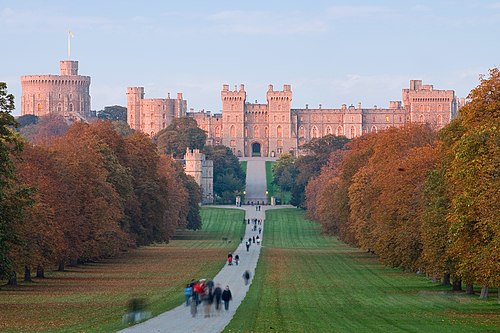 Windsor CastleRestored · prime 1820
 Tower of LondonRestored · prime 1285
 Bamburgh CastleRestored · prime 1904
All castles in England → · Strongest castles in England → · Castles of Europe
Play As Your Clan
Hold a real castle against whatever you choose to send at it, take a ship out in her own service years, or stand at the shoulder of someone the record remembers. The chronicler sets the scene; the deeds are yours.