Webb
The weaver.
- Origin
- South East, England
- Famous bearer
- Sidney Webb, 1st Baron Passfield (1859–1947), co-founder of the LSE
- Register
- English family
The Webb arms and country

Coat of armsArmorial Bearings of the WEBB family of Weobley, HerefordshireBorne by the Weobley line, one branch of the name rather than all of it.Rs-nourse · CC BY-SA 4.0 
Coat of armsArmorial Bearings of the WEBB family of Ledbury, HerefordshireBorne by the Ledbury line, one branch of the name rather than all of it.Rs-nourse · CC BY-SA 4.0


- Coat of arms: Granted to an individual and inherited down that one documented line. These are the arms of particular families of the name, not of everyone who shares the surname.
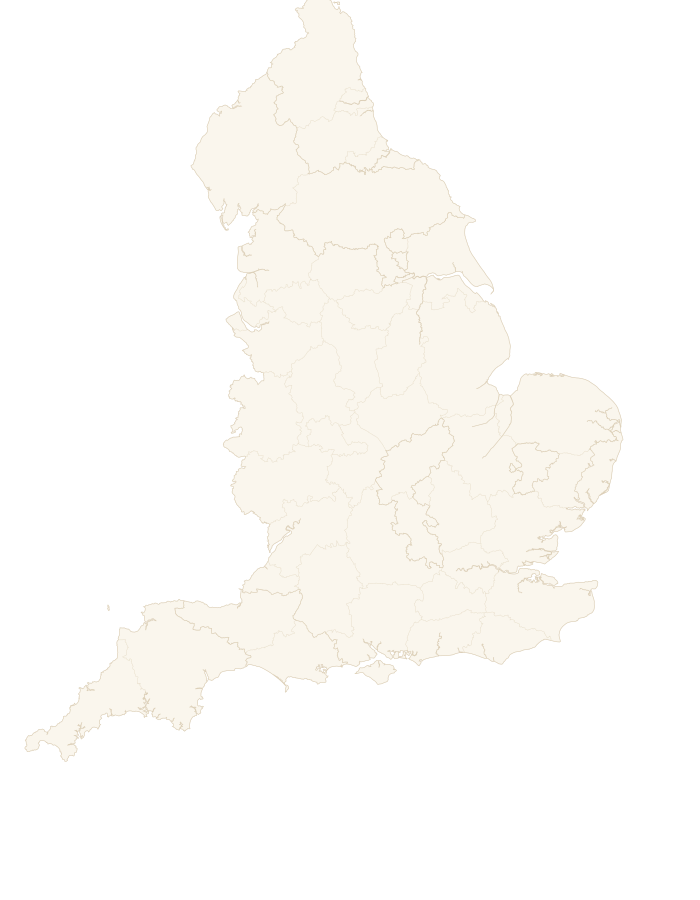
CoreHistoric reach
The seat of Webb
Seat vacantChief
No one leads the Webb community yet. When the movement opens, you can stand for its leadership, or help elect whoever does.
Current mission
No shared goal set yet. Once Webb has leadership, it sets the public focus: a restoration, a gathering, a real-world project that helps its own.
The Webb clan is being rebuilt. Join the waiting list for the movement today, and you help decide who leads it and what it does.
Help rebuild the Webb clan →What does the Webb name mean?
Occupational, weaver. Old English webba.
The history of Webb
The webba, the webster, and the century the name stuck
English surnames began as descriptions rather than inheritances: a man's trade, his father's name, the place he came from. Family names in England are generally credited to the preparation of the Domesday Book in 1086, and the nobility took them first. Trade names rose from underneath. By 1400 most English families, and most people in Lowland Scotland, carried a surname; the man at the loom carried the loom's own word for him.
Mandatory surnames were resisted in late-medieval England because they were associated with taxes, but the workaday ones stuck anyway: a parish clerk needed some way to tell one John from the next. The University of the West of England study that concluded in 2016 read 45,602 surnames and found more than ninety per cent native to Britain and Ireland, its leader Richard Coates naming Smith and Baker as the obvious occupational cases. Webb is common for the same reason: no settlement that grew wool did without the person who turned it into cloth.
Wool towns, and the merchant who owned the thread
Wool was the predominant fibre of medieval Europe, with linen and nettlecloth beneath it for the poor. The warp-weighted loom was standard until horizontal looms came in during the 10th and 11th centuries, and the weaver worked at home and sold his cloth at fairs. As weaving became an urban craft its practitioners applied to establish guilds, and it was the cloth merchant holding membership of a city's weavers' guild who was permitted to sell, standing between the tradesman at the loom and the buyer.
By the 13th century the putting-out system had turned that around. The merchant bought the wool, handed it to the weaver, bought back the finished cloth and set the rate of pay. His prosperity is still standing in the wool towns of eastern England (Norwich, Bury St Edmunds, Lavenham), the Norfolk and Suffolk country that is part of the Webb name's English home ground.
Who was permitted to call himself a weaver
The guild's central privilege was exclusion: only members could sell their goods or practise their skill within a city. Guilds fixed prices, hours of trading and the number of apprentices a master might keep, and they owned the ladder of apprenticeship, journeymanship and mastery by which a boy became a weaver rather than simply a man with a loom. Their authority rested on charters granting a monopoly of production in the locality.
They were a welfare society too, keeping sick and elderly members and supporting widows and orphans. Women's place in them was narrow and real at once: most craft guilds admitted women only through marriage, widowhood or a master father, yet at Rouen women had held full master status in seven of the city's 112 guilds since the 13th century, and London's silkwomen could inherit property and run businesses of their own. The -ster suffix behind Webster is a grammatical fossil of the same fact.
Sheep pasture after 1346, and the first weaving sheds
The 14th century broke the arrangement. Poor weather brought failed harvests and starvation to a Europe that had grown overpopulated during the peace of the 13th, the Hundred Years War took its own, and in 1346 the Black Death cut the population by as much as half. Arable land was labour-intensive and the labour had gone; land prices dropped, and corn ground went under sheep.
Traders from Florence and Bruges came for the wool, and the sheep-owning landlords began having it woven outside the jurisdiction of the city and the trade guilds. Weavers worked first at home, then in buildings put up for the purpose, where the hours and the amount of work were set by whoever owned the building: the factory system arriving by walking out on the guild that had defined the craft. Around 1685 Huguenot weavers, Calvinists fleeing persecution on the continent, reached Britain with techniques that beat those of the English woollen and worsted men, who then learned them.
Kay's shuttle, Cartwright's patents, and the emptying loomshop
A broad loom was one too wide for the weaver to pass the shuttle through the shed himself, so it obliged him to keep an expensive assistant, often an apprentice, until John Kay's flying shuttle of 1733 made the second pair of hands unnecessary. Weaving ran ahead of spinning and the shortage moved to thread; the Bridgewater Canal, opened in June 1761, brought cotton into a Manchester ringed by streams fast enough to drive machinery.
Edmund Cartwright proposed a weaving machine in 1784 and was told the craft was too nuanced to automate; he built a factory at Doncaster, took patents between 1785 and 1792, and was voted £10,000 by Parliament in 1809. Power weaving took hold only in the two decades after about 1805, when there were still 250,000 hand weavers in the United Kingdom. Richard Guest set out the arithmetic in 1823: a very good hand weaver of twenty-five or thirty wove two pieces of shirting in a week, where a steam loom weaver of fifteen wove seven. Handloom weavers led among both the Luddites and the Chartists.
The Dawley doctor's son and the Stanhope Medal
Matthew Webb was born on 19 January 1848 at Dawley, in the iron-and-coal country of east Shropshire, the second of the twelve children of Matthew Webb, a Dawley general practitioner, and his wife Sarah. He was schooled at home and at Coalbrookdale High School, and at twelve he pulled his younger brother Charles out of the Severn. On his thirteenth birthday, in January 1861, he was apprenticed as a midshipman to Captain John Reeves of the merchant ship Conway out of Liverpool.
He served the four years to 1865, sat the second mate's examination at the Mercantile Marine Office in Liverpool, and over the next nine years worked up through second mate and first mate to captain, on the Atlantic and Indian Ocean trades. In April 1873 the Royal Humane Society awarded him its Stanhope Medal: a seaman had gone overboard from the Cunard liner Russia in mid-Atlantic, and Webb dived after him and swam thirty-five minutes in heavy seas without finding him. It gave him a small profile in the British press, and he left the merchant marine in 1874, in his twenty-sixth year, for professional open-water swimming.
Twenty-one hours and forty-five minutes of the Channel
His first attempt, from Dover on 12 August 1875, ended six hours and forty-eight minutes in, beaten by heavy weather. He went again from Dover on 24 August, entering the water off the Admiralty Pier at 12:56 in the afternoon in his merchant-marine swim trunks, smeared from head to foot with porpoise oil against the cold, three rowed pilot-boats alongside him.
He swam breast-stroke, the only competitive long-distance stroke of the period (the crawl had not yet been developed for distance) through the afternoon, the evening, the night and the dawn. The tide carried him roughly twenty-two miles east of the direct fifteen-mile line between Dover and Calais, so the swim measured about thirty-nine miles in all, and he walked ashore on the Cap Gris-Nez beach near Calais at 10:41 on the morning of 25 August 1875: the first authenticated swim of the English Channel, and the foundation of every long-distance open-water record that followed.
Niagara Falls, and the two Webbs who built a school
Webb took two thousand pounds for the publication rights to his memoir The Art of Swimming (1876) and spent 1876 to 1882 on exhibition swims and lectures across England, Scotland, Ireland and the United States, earning more than any professional sportsman of his era bar the owners of the great racehorses. On 24 July 1883, in his thirty-fifth year, he died at Niagara Falls attempting an exhibition swim of the Whirlpool Rapids below the falls, taken on for a fee of ten thousand dollars, and was buried in Oakwood Cemetery there. More than two thousand four hundred authenticated Channel crossings have been made since his.
The Webbs who came next worked on paper rather than in water. Sidney Webb, 1st Baron Passfield (1859–1947) and Beatrice Webb (1858–1943), the social reformer, co-founded the London School of Economics in 1895, and the Fabian Society as well. From a webba at a warp-weighted loom to a school of economics in the capital is the ordinary English distance: a trade word carried on by families who had long since left the trade.
Champions of the Webb name
The bearers whose lives are inseparable from this surname. Each has their own page, biography, achievements, geography, connection to the family.
Historic Places, Rebuilt
Explore the streets and seats the Webb name knew, rebuilt with AI as they stood in history.
The castles of the homeland
The great strongholds of the homeland, look one up, see what it looked like in its prime, and recreate it to explore.
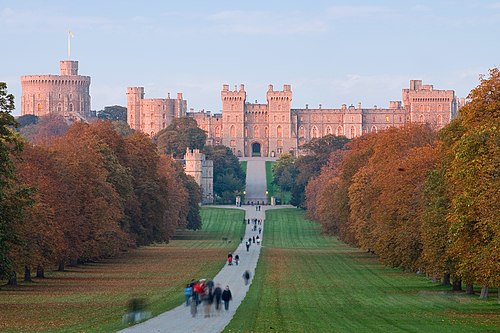 Windsor CastleRestored · prime 1820
 Tower of LondonRestored · prime 1285
 Bamburgh CastleRestored · prime 1904
All castles in England → · Strongest castles in England → · Castles of Europe
Play As Your Clan
Hold a real castle against whatever you choose to send at it, take a ship out in her own service years, or stand at the shoulder of someone the record remembers. The chronicler sets the scene; the deeds are yours.
Notable bearers of the Webb name
- Sidney Webb, 1st Baron Passfield (1859–1947), co-founder of the LSE
- Beatrice Webb (1858–1943), social reformer, co-founder of the LSE