West
The west.
- Origin
- South East, England
- Motto
- Jour de ma vie
- Famous bearer
- Rebecca West (1892–1983), writer (born Cicily Isabel Fairfield)
- Register
- English family
The West arms and country
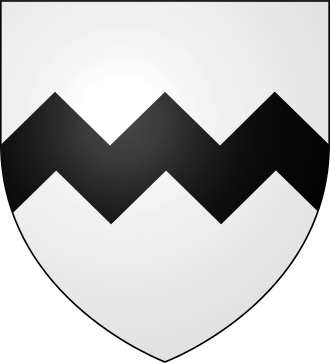
Coat of armsWest armsWikimandia · CC BY-SA 4.0 
Coat of armsWest (of Darley Abbey, Derbyshire) armsBorne by the Darley Abbey line, one branch of the name rather than all of it.Lobsterthermidor · CC BY-SA 3.0

_arms.svg)
- Coat of arms: Granted to an individual and inherited down that one documented line. These are the arms of particular families of the name, not of everyone who shares the surname.
CoreHistoric reach
The seat of West
Seat vacantChief
No one leads the West community yet. When the movement opens, you can stand for its leadership, or help elect whoever does.
Current mission
No shared goal set yet. Once West has leadership, it sets the public focus: a restoration, a gathering, a real-world project that helps its own.
The West clan is being rebuilt. Join the waiting list for the movement today, and you help decide who leads it and what it does.
Help rebuild the West clan →Motto
Jour de ma vie
“Day of my life”
What does the West name mean?
Locative, the west of the village, or the man from the west.
The history of West
The croft that faced the sunset
West is what the neighbours called a man, not what a herald granted a family. It marked the household at the west end of the village, the croft that faced the sunset, or the stranger who walked in along the western road. That is how English bynames were built before they were surnames, with reference to one aspect of the individual: his trade, his father's name, his birthplace or something plain about his look.
A compass point only works as half of a pair. Calling one man West is useless unless somebody in the same parish is not west of anything. Generic locatives of this kind are the ordinary furniture of European naming: Monte, the mountain, in Portuguese; Górski, the hill, in Polish; Pitt, from the pit, in English. Richard Coates, who led the four-year University of the West of England study of British surnames, offers Hill and Green, as in the village green, as the type. West needed no manor, no charter and no lord's leave, only a settlement with a west side, so it was coined independently in parish after parish.
The village that had to have a west end
The name depends on a shape of settlement. A scattered farmstead has no ends; a nucleated village has four. The spread of towns and of nucleated settlement in the countryside, rather than scattered farms, was probably accelerated by the coming of the Normans after 1066, and once people lived along a clustered street the compass supplied identifiers no neighbour had to be taught.
The other half of the machinery was written record: the introduction of family names in England is generally dated to the Domesday survey completed under William's authority by 1086, which listed by shire the holdings of every tenant-in-chief and who had held each estate before the conquest.
Those first hereditary names came from a different world than West. Some of the roughly 8,000 Norman and continental landholders who settled after Hastings put de, of, before their village in France or the estate they had been handed, and by 1086 only about five per cent of land south of the Tees was still in English hands. A man called West had no estate to be named for; he was named for the ground he stood on.
The century the byname stopped moving
Surnames appear in English records from the 11th century, used by the barons, but they were not necessarily passed on: a man could be West for where he lived while his son took a name from a trade or a father. By 1400 most English families, and most in Lowland Scotland, had adopted hereditary surnames; Wales did not follow until unification under Henry VIII in 1536. Mandatory surnames were resisted in late medieval England because they were associated with taxes, and the objection was sound: a permanent name makes a household findable by the exchequer.
Henry VIII, who reigned from 1509 to 1547, ordered that marital births be recorded under the father's surname, and that rule is how one villager's position at the sunset end of his parish became the property of everybody descended from him. A four-year study led by the University of the West of England and concluded in 2016, the Oxford English Dictionary of Family Names in Britain and Ireland, analysed 45,602 surnames and found more than 90 per cent of them native to Britain and Ireland.
A West in the barony of De La Warr
The name did not stay at the west end of the village. Reginald West (1395-1450) was an English noble who held the barony of De La Warr as its sixth baron, in the generation after hereditary surnames had been taken up by most English families. West is the family name standing behind that title: a descriptive tag off a parish street attached to a barony of the realm.
The name reached the other great career of the period too. Nicholas West (1461-1533) was an English bishop and a diplomatist. Nothing in the name carried rank or land; men carried it into rank.
By the Georgian century it is scattered across English public life with no single house behind it. Gilbert West (1703-1756) was an English poet; Temple West (1714-1757) was a British admiral. It had crossed the Atlantic by then: Nathaniel West (c. 1665-1723) sat as a legislator in colonial Virginia, the surname making that crossing unremarked, since a locative byname gives a clerk nothing to alter.
The Streatham girl who took her name from an Ibsen heroine
Cicily Isabel Fairfield was born at Streatham in south London on 21 December 1892, third daughter of an Anglo-Irish journalist and an Edinburgh-born pianist. She was schooled at George Watson's Ladies' College in Edinburgh, studied acting briefly at the Royal Academy of Dramatic Art, then turned to journalism; reviewing for the suffragette weekly The Freewoman at eighteen made her one of the most discussed young political journalists in London. In 1912, at nineteen, she took the working name Rebecca West from the feminist heroine of Ibsen's Rosmersholm, and wrote under it for seventy-one years.
She married Henry Maxwell Andrews in 1930, and through that decade made three journeys through Yugoslavia. Out of them came Black Lamb and Grey Falcon (1941), eleven hundred pages of travel, culture and politics in the south-Slav lands on the edge of war, and the foundational English-language book on the Balkans of the twentieth century.
The post-war reportage put her at the foundation of English political journalism as well: the New Yorker coverage of the Nuremberg trials in 1946, collected as The Meaning of Treason (1947), and the William Joyce treason trial at the Old Bailey. She was made a Dame Commander of the British Empire in 1959, revised the treason book in 1964 to take in the Cold-War Cambridge defections, and worked to the end, her Sunday Telegraph reviews still running through her eighties. She died at her London flat on 15 March 1983, aged ninety.
Wests on the stage and the pitch
The name has done unusually well in performance. Timothy West (1934-2024) and Dominic West (born 1969) are English actors, Simon West (born 1961) an English film director, Kit West (1936-2016) a British special effects artist, Cedric West (1918-1997) an English jazz guitarist. It reaches back to the beginning of cinema: T. J. West (1885-1916) of West's Limited ran an English cinema chain when the picture house was new. Vita Sackville-West (1892-1962), English poet, novelist and gardener, carried it in the double-barrelled form English families made by joining a second surname to the first, sometimes as a condition of an inheritance.
On the field the record is as busy. Gordon West (1943-2012) and Colin West (born 1962) were English footballers, the second going on to coach, and Dorian West (born 1967) an English rugby footballer. Barbara Winifred West (1913-2014) spent a long life as a British hockey player, coach and administrator, and Peter West (1920-2003) was a British television presenter and sports commentator.
The same direction, in a dozen countries
The name travelled with everyone who left. Morris West (1916-1999) was an Australian writer and Winifred West (1881-1971) an Australian educationist, Graeme West (born 1953) played and then coached rugby league in New Zealand, and Trevor West (1938-2012) was an Irish mathematician and academic. On the continent it turns up on its own account: Emilie West (1844-1907), a Danish schoolteacher and proponent of needlework and Albert West (1949-2015), a Dutch singer.
That spread is the honest shape of the name, and it is worth knowing before anybody sells a West crest. There is no West castle, no chief and no seat, because there was never one West family: the byname was handed out parish by parish to men who were not related, whose only common inheritance was the side of the village they lived on. Anyone offered a West tartan or one ancestral coat of arms is being offered a kindred the record does not contain.
What it does carry is better than a manufactured pedigree: one of the oldest kinds of English identification there is, and one that belonged to the people at the edge of the settlement rather than the hall at its centre. The motto that rides with it, Jour de ma vie, day of my life, fits that inheritance. It is not a claim on ancestral land, but a claim on the day at hand.
Champions of the West name
The bearers whose lives are inseparable from this surname. Each has their own page, biography, achievements, geography, connection to the family.
Historic Places, Rebuilt
Explore the streets and seats the West name knew, rebuilt with AI as they stood in history.
Castles that share the West name
The same name on the map, look one up, see what it looked like in its prime, and recreate it to explore.
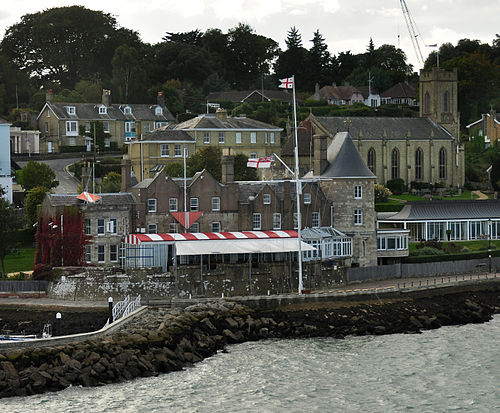
All castles in England → · Strongest castles in England → · Castles of Europe
Play As Your Clan
Hold a real castle against whatever you choose to send at it, take a ship out in her own service years, or stand at the shoulder of someone the record remembers. The chronicler sets the scene; the deeds are yours.
Notable bearers of the West name
- Rebecca West (1892–1983), writer (born Cicily Isabel Fairfield)