Cromwell
The chief minister of the Reformation, and the Lord Protector.
- Origin
- East of England, England
- Motto
- Pax quaeritur bello
- Famous bearer
- Thomas Cromwell, 1st Earl of Essex (c.1485–1540), chief minister of Henry VIII
- Register
- English family
The Cromwell arms and country

Coat of armsArms of Cromwell Of TattershallBorne by the Tattershall line, one branch of the name rather than all of it.CC BY-SA 4.0 
Coat of armsArms of Cromwell, Barons Cromwell of TatshallBorne by the Barons Cromwell of Tatshall: the ennobled line of the name, not the name at large.Rs-nourse · CC BY-SA 3.0


- Coat of arms: Granted to an individual and inherited down that one documented line. These are the arms of particular families of the name, not of everyone who shares the surname.
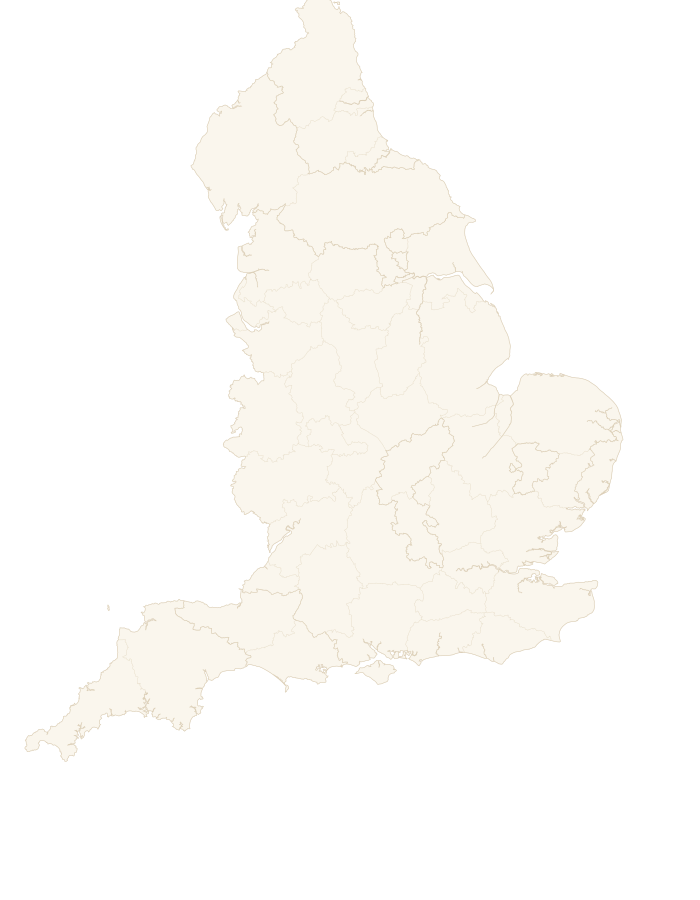
CoreHistoric reach
The seat of Cromwell
Seat vacantChief
No one leads the Cromwell community yet. When the movement opens, you can stand for its leadership, or help elect whoever does.
Current mission
No shared goal set yet. Once Cromwell has leadership, it sets the public focus: a restoration, a gathering, a real-world project that helps its own.
The Cromwell clan is being rebuilt. Join the waiting list for the movement today, and you help decide who leads it and what it does.
Help rebuild the Cromwell clan →Motto
Pax quaeritur bello
“Peace is sought by war”
What does the Cromwell name mean?
Locative, from the Nottinghamshire-Yorkshire village of Cromwell (Old English crom + well, a winding stream). The senior line was a Putney-Welsh gentry family of the fifteenth century; the Welsh-Cromwell line came up to London under Henry VII and produced two of the most consequential English political figures of the modern period: Thomas Cromwell, Earl of Essex (c.1485–1540), chief minister of Henry VIII and architect of the dissolution of the monasteries; and his great-great-grand-nephew Oliver Cromwell (1599–1658), Lord Protector of the Commonwealth.
The history of Cromwell
A winding stream, and a barony out of Nottinghamshire
The name is locative and the place is small: Cromwell, a village on the Nottinghamshire and Yorkshire border, from the Old English elements crom and well, a crooked or winding stream. Men who left it carried it as a label, and by the fourteenth century it was a baronial name in its own right. John de Cromwell was created Baron Cromwell in 1308; a second creation ran to Ralph de Cromwell, 1st Baron Cromwell, who died in 1398. A third holder of the title, Ralph Cromwell, 3rd Baron Cromwell (c. 1393-1456), is recorded as a politician and diplomat.
Walter Cromwell's Putney, and the fulling mill on the Thames
The Cromwells who made the name famous came south. Thomas Cromwell's grandfather John moved from Nottinghamshire to Putney, then a Surrey village with a ferry across the Thames upstream of London, to work a fulling mill leased to him by the Archbishop of Canterbury, who kept a mansion further up at Mortlake and was lord of the manor of Wimbledon. Thomas's father Walter (c. 1450 - c. 1514) was an ambitious yeoman who plied several trades at once: sheep farmer, fuller and shearman, with a tavern and a brewery besides. The tradition that he was also a blacksmith is plausible, though it may have grown out of his use of an alternative surname, recorded as Cromwell alias Smyth.
Walter was substantial enough for jury service and election as Constable of Putney in 1495, and disorderly enough to keep appearing in the manorial court on his own account, usually over small matters but also for assault. It ended badly. In 1514 he was found to have falsely and fraudulently removed evidence from the court roll concerning his manorial tenancy, and every acre he had accumulated was confiscated. His wife came from better stock than he did: Katherine Meverell, of the Meverells of Staffordshire, who married him in 1474 while living in Putney in the house of a local attorney, John Welbeck.
Two daughters of that house carried the name into the next century. The elder, Katherine, married Morgan Williams, described in one account as the son of a Welsh lawyer who had come to Putney in the following of Henry VII when the king established himself at nearby Richmond Palace, and in another as a brewer out of Glamorgan. The younger, Elizabeth, married a sheep farmer, William Wellyfed. Katherine and Morgan's son Richard went into his uncle Thomas's service and by the autumn of 1529 had changed his name to Cromwell. Everything that came a century later, the Protectorate included, hangs on that quiet decision to drop Williams.
The ruffian who came home a lawyer
Thomas Cromwell was born at Putney by or around 1485. No record survives of his childhood, and it is not known whether he was ever schooled or apprenticed. He admitted later to Thomas Cranmer that he had been a ruffian in his young days, and around the start of the sixteenth century he left his family and crossed the Channel, allegedly after a spell in prison. The tradition that he joined the French army and fought at Garigliano in 1503 comes from a novella by the Italian writer Matteo Bandello, which casts him as a page carrying a foot soldier's pike and helmet; John Foxe repeated it as fact in his Actes and Monuments of 1563.
What is better attested is the education Europe gave him. He entered the household of the Frescobaldi, Florentine bankers, then worked as a cloth merchant in the Low Countries, where mixing with the English Merchant Adventurers gave him contacts and languages. He had a prodigious memory and was probably fluent in French and Italian, proficient in Latin, with some Greek. He was back in Italy by June 1514, when the English Hospital in Rome recorded his stay, acting for Cardinal Christopher Bainbridge, Archbishop of York, before the Roman Rota. In 1517-1518 he went again, to secure Pope Leo X's continued approval for the indulgences sold by St Mary's Guild at Boston, and on that trip he read Erasmus's new edition of the gospels closely and began to doubt the trade he had been hired to defend.
Around 1515 he married Elizabeth Wyckes, widow of a Yeoman of the Guard and daughter of a Putney shearman who had served Henry VII as a Gentleman Usher. They had three children, Gregory, Anne and Grace; Elizabeth died in 1529 and the girls are believed to have followed her within months, possibly of the sweating sickness. By then Cromwell was in London in the wool-export trade and the law, a member of Gray's Inn from around 1517, and from 1524 a confidential legal and financial agent in the household of Cardinal Wolsey. For Wolsey he assisted in the dissolution of nearly thirty monasteries, the revenues funding Wolsey's new foundations: The King's School at Ipswich in 1528 and Cardinal College at Oxford in 1529.
Nine years at the head of the English state
Wolsey fell in 1529 and his servant did not. Cromwell took a Commons seat at Taunton in the Reformation Parliament that opened in November 1529 and within four years was the leading manager of the king's business in the House. He was sworn of the Privy Council in 1530, made Chancellor of the Exchequer in 1533, Master of the Rolls on 8 October 1534 and Principal Secretary the same year, and from 1534 until his arrest in June 1540 he was Henry VIII's chief minister. He held, in addition, the unique ecclesiastical office of Vicegerent in Spirituals and Vicar General, which put a layman over the bishops.
The statute book from those years is his. The Act in Restraint of Appeals of 1533 stated the imperial sovereignty of the English Crown; the Act of Supremacy of 1534 made the king Supreme Head of the Church of England, and the same November session brought the sharpest revision of the treason laws since 1352 and a First Fruits and Tenths Act that heavily increased clerical taxation. The Submission of the Clergy Act and the Succession to the Crown Act had gone through the session before. Until the 1950s historians treated him as little more than the agent of a despotic king; Geoffrey Elton's The Tudor Revolution of 1953 reversed that, casting Cromwell as the presiding genius who translated royal supremacy into parliamentary terms and stripped the medieval features out of central government.
He built the offices to match the laws. The Court of Augmentations was set up in 1536 to handle the windfall from the monasteries, and the Court of Wards and the Court of First Fruits and Tenths both owed their design to him although they were founded after his death. He reformed the Council of the North, extended royal authority into Ireland, was the architect of the Laws in Wales Acts of 1535 and 1542, legislated against enclosure and carried the poor relief legislation of 1536. Diarmaid MacCulloch credits Cromwell's early guidance for the careers of the two men who would run Elizabeth's government, William Cecil and Nicholas Bacon.
The lesser houses, and a Bible in every parish
The Dissolution was his instrument and it began with the small houses. The Suppression of Religious Houses Act 1535, covering monasteries with a gross income of less than two hundred pounds a year, had passed both houses by 18 March 1536. It cost him an ally at once: Anne Boleyn wanted the proceeds spent on educational and charitable purposes rather than paid into the king's coffers, and set her chaplains to preach against the Vicegerent. Her almoner John Skypp denounced Cromwell and his fellow Privy Councillors before the whole court in a blistering sermon on Passion Sunday, 2 April 1536.
The cost was not only monastic. The visitations of the universities and colleges in 1535 dispersed and destroyed great quantities of books condemned as popish and superstitious, a loss that has been called easily the greatest single disaster in English literary history; Oxford was left without a library collection until Thomas Bodley's donation in 1602. In January 1538 Cromwell opened a campaign against what reformers called idolatry, and statues, rood screens and images came down through the year, culminating that September in the dismantling of the shrine of St Thomas Becket at Canterbury.
Set against that is the book he put in every parish. He obtained the licence to publish the Matthew's Bible, funded its printing and sent a copy to every parish in England, then drove through its revised version, the Great Bible, which nearly died when the Inquisitor-General of France forbade the printing of Miles Coverdale's text on 17 December 1538. Cromwell persuaded the French king to release the unfinished sheets so the work could be completed in England, and the first edition appeared in April 1539. His injunctions required one book of the whole Bible in English to be set up in every church in the country. The title page carried Henry, Cranmer and Cromwell together.
Tower Hill, 28 July 1540
The country did not take it quietly. Cromwell's injunctions enforcing the Ten Articles of 1536 went beyond the Articles themselves and provoked risings in Lincolnshire and then across the six northern counties, the movement known as the Pilgrimage of Grace, whose rebels blamed the king's evil counsellors, principally Cromwell and Cranmer. One of the arrested leaders, Thomas Darcy, 1st Baron Darcy, told him under interrogation in the Tower that men who had stood with their prince as Cromwell now stood had come at the last to the same end he was bringing Darcy to. The honours went on anyway: Lord Privy Seal on 2 July 1536, Baron Cromwell of Wimbledon on 8 July 1536, the Garter on 5 August 1537, and on 18 April 1540 the earldom of Essex with the office of Lord Great Chamberlain.
Three months later he was finished, and the cause was a wedding. In October 1539 the king accepted Cromwell's proposal that he marry Anne of Cleves. She landed at Dover on 27 December, Henry met her at Rochester on New Year's Day disguised, and the marriage, celebrated by Cranmer at Greenwich on 6 January 1540, was never consummated. The Duke of Norfolk and Stephen Gardiner, Bishop of Winchester, had the opening they wanted, and Norfolk's niece Catherine Howard to put in the king's way. Cromwell was arrested at a Council meeting at Westminster on 10 June 1540. Norfolk tore the St George's collar from his shoulders with the words that a traitor must not wear it, and Cromwell shouted back that this was his reward for faithful service.
He was attainted without trial, the bill passing on 29 June, and it was publicly proclaimed that he could be called only Thomas Cromwell, cloth carder. Hoping for clemency, he wrote to the king in support of the annulment of the Cleves marriage, ending the letter with a cry for mercy three times over. He was beheaded on Tower Hill on 28 July 1540, the same day Henry married Catherine Howard, and his head was set on a spike on London Bridge. The king came to regret it. On 3 March 1541 the French ambassador Charles de Marillac reported that Henry was lamenting that on the strength of false accusations he had put to death the most faithful servant he ever had.
Barons of Wimbledon, earls of Ardglass
The attainder took the earldom of Essex and the 1536 barony, but the name recovered a peerage almost at once: a barony of Cromwell created in 1540 and held first by Thomas's son Gregory. Gregory married well, to Elizabeth Seymour, sister of Queen Jane Seymour and widow of Sir Anthony Ughtred, and in 1539 the couple moved into Leeds Castle in Kent. He outlived his father by only eleven years, dying of the sweating sickness in 1551, and left five children.
The line ran on through Henry Cromwell, 2nd Baron Cromwell (1538-1592), who married Mary Paulet, and Edward, 3rd Baron (c. 1559-1607). Edward's son Thomas Cromwell (1594-1653) took the name to Ireland, created Viscount Lecale in 1624 and Earl of Ardglass in 1645. Three more earls followed, Wingfield (1624-1668), Thomas (1653-1682) and Vere Essex, and with the death of Vere Essex Cromwell in 1687 both the earldom of Ardglass and the barony of Cromwell expired. His daughter Lady Elizabeth Cromwell (1676-1709) married Edward Southwell and carried the blood into other houses.
One strand of Thomas Cromwell's family went the other way entirely. He had an illegitimate daughter, Jane (c. 1530-1580), brought up in his households, who at nine went to Leeds Castle with Gregory and Elizabeth; his accounts show him paying for the girl's clothing and expenses. Around 1550 Jane married William Hough of Leighton in the Wirral, son of Richard Hough, who had been Cromwell's own agent in Chester from 1534 to 1540. Jane and her husband remained staunch Catholics, and together with their daughter Alice, her husband William Whitmore and their children they came to the attention of the authorities as recusants under Elizabeth I. The man who dissolved the abbeys left a recusant line behind him.
Huntingdon: a gentry line, and a man who nearly sailed for Connecticut
Richard Williams, alias Cromwell (c. 1510-1544), the nephew who had taken his uncle's name, founded the branch that mattered most. The family acquired great wealth as occasional beneficiaries of Thomas's administration of the Dissolution, and Richard's son Sir Henry Williams, alias Cromwell (1537-1604), sat in Parliament and was one of the two wealthiest landowners in Huntingdonshire. Henry's son Robert (c. 1560-1617) was a younger son with many siblings and inherited only a house at Huntingdon and a little land, worth perhaps three hundred pounds a year, near the bottom of the range of gentry incomes. He married Elizabeth Steward, and they had ten children.
The fifth of them, and the only boy to survive infancy, was Oliver Cromwell, born at Huntingdon on 25 April 1599 in a house standing on the site of the old Huntingdon Priory, and baptised four days later at St John's. He went to Huntingdon Grammar School and then to Sidney Sussex College, Cambridge, a recently founded house with a strong Puritan ethos, and left in June 1617 without a degree, immediately after his father died. He put his own standing plainly in 1654: he was by birth a gentleman, living neither in considerable height, nor yet in obscurity.
Most of his life before 1640 was failure. He married Elizabeth Bourchier at St Giles-without-Cripplegate in London on 22 August 1620, daughter of a wealthy London leather merchant with extensive lands in Essex and connections among the Puritan gentry there, a network that later mattered a great deal. Elected for Huntingdon in 1628, he made one poorly received speech, and that year sought treatment from the Swiss physician Theodore de Mayerne for complaints that included melancholy. A quarrel over the town charter brought him before the Privy Council in 1630, and in 1631 he sold most of his Huntingdon property and moved to a farmstead at St Ives, keeping chickens and sheep and selling eggs and wool like a yeoman. In 1634 he tried to emigrate to what became the Connecticut Colony and was prevented from leaving. Only in 1636, inheriting Ely properties and his uncle's post as tithe collector for Ely Cathedral, did he climb back into the acknowledged gentry.
Marston Moor, Naseby, Dunbar
Returned for Cambridge to both the Short and the Long Parliaments of 1640, Cromwell presented the petition for John Lilburne's release in the Long Parliament's first week, moved the second reading of the Annual Parliaments Bill in May 1641, and had a hand in drafting the Root and Branch Bill for the abolition of episcopacy. His only military experience was the county trained bands. When war came he recruited a cavalry troop in Cambridgeshire after intercepting a shipment of college silver plate on its way from Cambridge to the king, rode for Edgehill on 23 October 1642 and arrived too late, and spent 1643 learning the trade in East Anglia, notably at Gainsborough on 28 July, before being made governor of the Isle of Ely.
By Marston Moor in July 1644 he was lieutenant general of horse. His cavalry broke the Royalist horse and then took the Royalist foot from behind, which decided the battle; he fought at the head of his troops, was wounded in the neck, stepped away for treatment and came back. Afterwards he quarrelled with the Earl of Manchester, who complained that Cromwell was commissioning officers of low birth. The reply became the most quoted sentence he ever wrote: he would rather have a plain russet-coated captain who knew what he fought for and loved what he knew than what Manchester called a gentleman and was nothing else.
The Self-Denying Ordinance of early 1645 forced members of both Houses to choose between civil office and military command, and every one of them except Cromwell gave up the army; his commission was extended and he kept his seat. As lieutenant general of horse in the New Model he routed the Royalist cavalry at Naseby in June 1645 and helped destroy the last Royalist field army at Langport on 10 July. His innovation was close-order cavalry, troopers riding knee to knee, and the discipline to hold them together after a charge instead of letting them chase fugitives off the field. It told again at Preston in 1648, where in sole command for the first time he beat an army twice the size of his nine thousand, at Dunbar on 3 September 1650, where four thousand Scots were killed and ten thousand taken, and at Worcester on 3 September 1651, where the last major Scottish Royalist army was destroyed and Charles II barely escaped into exile.
Peace is sought by war
Pride's Purge in December 1648 stripped the Long Parliament of everyone unwilling to try the king, and Cromwell, still in the north when it happened, came back to London and became a determined supporter of the trial. He was the third of fifty-nine men to sign the death warrant, and when none of the officers charged with supervising the execution would sign the order for the beheading itself, he seized a pen, scribbled out the order and handed the pen on. Charles I was executed on 30 January 1649. The family motto that later attached to the name, Pax quaeritur bello, peace is sought by war, is as honest a summary of the next nine years as anyone could write.
Ireland is the part of the record that has never been forgiven. He landed at Dublin on 15 August 1649 and took the fortified ports to secure his supply lines. At Drogheda in September his troops killed nearly 3,500 people; at Wexford in October, while surrender was still being negotiated, soldiers broke into the town, around 2,000 troops and up to 1,500 townspeople died, and much of Wexford burned. He failed to take Waterford, and lost up to 2,000 men in failed assaults at Clonmel in May 1650 before the town surrendered on terms. He sailed from Youghal on 26 May. The mass evictions and deportations came under other commanders, but the Act for the Settlement of Ireland 1652 confiscated Catholic-owned land wholesale, and gave the country the phrase to hell or to Connacht, and the curse of Cromwell that Churchill still felt lying on both nations three hundred years later.
At home he ran out of patience with parliaments. On 20 April 1653, backed by about forty musketeers, he cleared the chamber of the Rump and demanded that the mace, the bauble, be taken away. The assembly that followed voted its own dissolution on 12 December, and four days later Cromwell was sworn Lord Protector in plain black clothing rather than regalia, signing himself Oliver P. In 1657 he encouraged the Jews to return to England, more than 360 years after their expulsion by Edward I. That same year Parliament offered him the crown, and he agonised for six weeks before refusing on 13 April: he would not set up what providence had destroyed, and he would not build Jericho again.
Tyburn, and a head buried in 1960
He died at Whitehall on 3 September 1658, aged fifty-nine, the anniversary of Dunbar and Worcester, after a bout of malarial fever followed by a kidney or urinary complaint; his decline was probably hastened by the death of his daughter Elizabeth Claypole in August. A great storm swept England the night he died. He was buried at Westminster Abbey with a funeral modelled on that of James I. Richard succeeded him, had no base in Parliament or the army, and was forced to resign in May 1659; George Monck marched on London, and Charles II was invited back in 1660.
On 30 January 1661, the twelfth anniversary of the king's execution, Cromwell's body was exhumed from the Abbey, hanged in chains at Tyburn and thrown into a pit, and his head cut off and set on the roof of Westminster Hall, where it stayed until at least 1684. It then passed through private hands for three centuries, including a documented sale in 1814 to Josiah Henry Wilkinson, and was exhibited publicly more than once before being buried beneath the antechapel floor at Sidney Sussex College, Cambridge, in 1960; the exact spot was never disclosed. His daughter's body was left undisturbed in the Abbey.
The family scattered but did not vanish. His widow Elizabeth was preparing to leave England in 1660 when goods stored under her name at a fruiterer's warehouse in Thames Street were searched and royal property seized; she waited out the Restoration quietly in Wales, then went to her son-in-law John Claypole's house at Northborough in Northamptonshire, where she died in November 1665. Henry Cromwell (1628-1674) had served as Lord Deputy of Ireland. Frances (1638-1720), baptised at St Mary's, Ely, married Robert Rich in November 1657 and was widowed within three months, married Sir John Russell in 1663 and raised five children; her son John Russell (1670-1735) became President of Bengal. Richard, the second Protector, lived on quietly until 1712.
The statue Victoria would not open a town hall beside
No English name has been fought over harder in public. A statue of Cromwell by Matthew Noble was put up outside Manchester Cathedral in 1875, the first large-scale statue erected in the open in England, and it was disliked by local Conservatives and by the city's large Irish population. Queen Victoria is said to have made its removal a condition of her opening the new town hall; the statue stayed, she declined, and the Lord Mayor did the honours. It was moved to Wythenshawe Hall in the 1980s. The statue outside Parliament, first proposed in 1856, was blocked by Irish Nationalist pressure from taking public money and was finally erected in 1895 with the funds supplied privately by Lord Rosebery.
The arguing continued into living memory. Winston Churchill twice proposed naming a battleship HMS Oliver Cromwell and was vetoed both times by George V, who thought the name unwise for an expensive warship at a moment of Irish political unrest; a British medium tank of 1944 and a locomotive of 1951 carried it instead. Other bearers made quieter marks: William Nelson Cromwell (1854-1948) co-founded the law firm Sullivan & Cromwell, and John P. Cromwell (1901-1943) received the United States Navy's Medal of Honor. Hilary Mantel's Wolf Hall trilogy, two of its three volumes Booker winners, and the BBC adaptation of 2015 have put the Putney brewer's son back at the centre of how the English tell their own Reformation.
Champions of the Cromwell name
The bearers whose lives are inseparable from this surname. Each has their own page, biography, achievements, geography, connection to the family.
Historic Places, Rebuilt
Explore the streets and seats the Cromwell name knew, rebuilt with AI as they stood in history.
Castles the Cromwell held
Strongholds this name held for a decade or more, look one up, or rebuild it to explore.
- Tattershall Castle
Largely rebuilt in brick and greatly expanded by Ralph Cromwell, 3rd Baron Cromwell, Treasurer of England, in the 15th century.
The castles of the homeland
The great strongholds of the homeland, look one up, see what it looked like in its prime, and recreate it to explore.
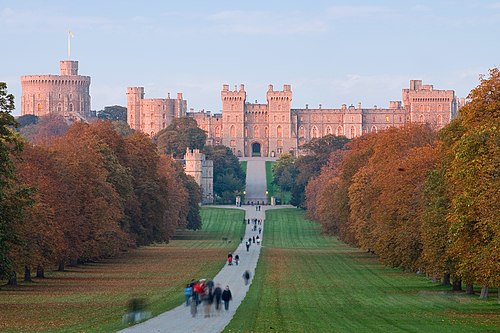 Windsor CastleRestored · prime 1820
 Tower of LondonRestored · prime 1285
 Bamburgh CastleRestored · prime 1904
All castles in England → · Strongest castles in England → · Castles of Europe
Play As Your Clan
Hold a real castle against whatever you choose to send at it, take a ship out in her own service years, or stand at the shoulder of someone the record remembers. The chronicler sets the scene; the deeds are yours.
Notable bearers of the Cromwell name
- Thomas Cromwell, 1st Earl of Essex (c.1485–1540), chief minister of Henry VIII
- Oliver Cromwell (1599–1658), Lord Protector of the Commonwealth
- Richard Cromwell (1626–1712), Lord Protector 1658–59