House of Hanover
also Hannover, House of Hanover
Royal house of Britain, 1714-1901, the dynasty of empire.
- Origin
- London, England
- Motto
- Nec aspera terrent
- Famous bearer
- George I (1660-1727), first Hanoverian monarch of Britain
- Register
- Princely house
Ranked of all time
The 15 Most Powerful English Houses of All Time
The Hanover arms and country

Coat of armsRoyal Hanover InescutcheonRoyal_Arms_of_the_Kingdom_of_Hanover.svg : Sodacan derivative work: Sodacan · CC BY-SA 3.0

- Coat of arms: Granted to an individual and inherited down that one documented line. These are the arms of particular families of the name, not of everyone who shares the surname.
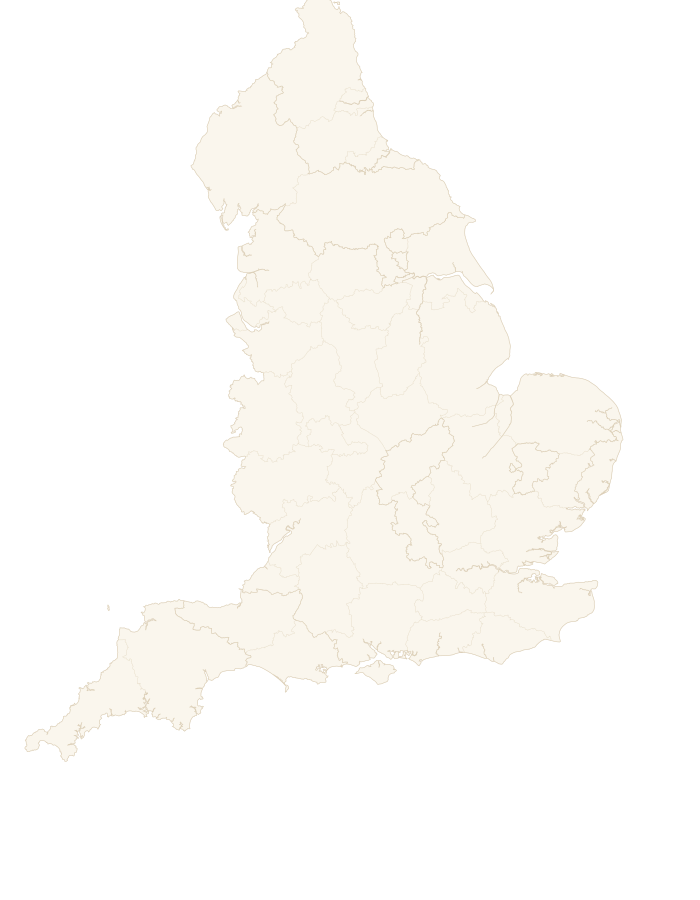
The seat of House of Hanover
Seat vacantChief
No one leads the House of Hanover community yet. When the movement opens, you can stand for its leadership, or help elect whoever does.
Current mission
No shared goal set yet. Once House of Hanover has leadership, it sets the public focus: a restoration, a gathering, a real-world project that helps its own.
The Hanover clan is being rebuilt. Join the waiting list for the movement today, and you help decide who leads it and what it does.
Help rebuild the Hanover clan →Motto
Nec aspera terrent
“Difficulties do not deter us”
What does the Hanover name mean?
From the city of Hannover (Hanover) in Lower Saxony, the capital of the Electorate of Hanover, a north-German principality that became a British royal dynasty through the inheritance of Sophia of Hanover, granddaughter of James I. The Act of Settlement 1701 made Sophia and her Protestant descendants the heirs to the British throne after Queen Anne. Her son George Ludwig succeeded as George I in 1714.
The history of House of Hanover
The duchy that split in 1635, and the city a duke moved to
The house that ruled Britain for 187 years began as a cadet branch of the House of Welf, written elsewhere as Guelf or Guelph, itself the senior branch of the House of Este. When the Duchy of Brunswick-Lüneburg was divided in 1635, George, Duke of Brunswick-Lüneburg (1582-1641) took the Principality of Calenberg and moved his residence to the city of Hanover. That move is the whole of the name: the family went on styling itself the House of Brunswick-Lüneburg, Hanover line, but what the English wrote down was the town the court sat in.
George's four sons then passed the inheritance around among themselves. Christian Louis, George William, John Frederick and Ernest Augustus held Calenberg in turn between 1641 and 1698, two of them relinquishing it on becoming Prince of Lüneburg, and the two principalities were not reunited until 1705, in the hands of George's grandson, another George.
A second inheritance came out of the Thirty Years' War. The Peace of Westphalia in 1648 awarded the Prince-Bishopric of Osnabrück alternately to a Catholic bishop and to a cadet of Brunswick-Lüneburg, and because the treaty gave cadets priority over heirs and reigning princes, Osnabrück became a form of appanage held in alternation. Ernest Augustus ruled it from 1662 to 1698, his sixth son Ernest Augustus, Duke of York and Albany, from 1715 to 1728, and Prince Frederick, second son of George III, from 1764 to 1802. Osnabrück was mediatized to Hanover in 1803.
Sophia of the Palatinate, and the clause that made a German house English
Ernest Augustus was raised to prince-elector of the Holy Roman Empire in 1692, which turned Calenberg into the Electorate of Hanover. His wife mattered more. Sophia of the Palatinate was a granddaughter of James VI and I, and when the English succession went into crisis at the end of the Stuart century she was the senior eligible Protestant descendant of that king.
The Act of Settlement of 1701 decreed that Roman Catholics could not accede to the throne and declared Sophia heiress after Queen Anne, with her Protestant descendants to follow her. Everything the House of Hanover became in Britain follows from that provision. No battle was fought for the crown and no English heiress married for it: a religious test was applied to a genealogy, and the answer it produced lived in Lower Saxony.
Sophia's son George Louis had become Elector and Prince of Calenberg in 1698, and Prince of Lüneburg on the death of his uncle George William in 1705, reuniting what the partition of 1635 had broken up. His mother died in 1714 and he inherited her claim. The crown passed on 1 August of the same year, and the Elector of Hanover found himself King of Great Britain and Ireland.
Six monarchs, and a court that lost the argument to Westminster
The dynasty gave the British kingdoms six sovereigns: George I from 1714 to 1727, George II from 1727 to 1760, George III from 1760 to 1820, George IV from 1820 to 1830, William IV from 1830 to 1837, and Victoria from 1837 to 1901. The German names of the first two were translated for their new subjects, Georg Ludwig into George Louis and Georg August into George Augustus.
The first two Hanoverian reigns did more for the British constitution by leaving it alone than any deliberate reform would have done. Under George I and George II the office of Prime Minister consolidated in the hands of Sir Robert Walpole and then of the Pelhams, and the centre of political gravity shifted from the court to Westminster. The cabinet system, the supremacy of the Commons in matters of finance, and the practical separation of executive policy from the personal will of the monarch all hardened into shape in the first half of the Hanoverian period.
One man, two states: the personal union with Hanover
George I, George II and George III were not only kings in London. All three remained electors and dukes of Brunswick-Lüneburg, informally Electors of Hanover, and they were no sort of figurehead there. They ruled as dual monarchs of Britain and of Hanover, keeping the Hanoverian Army and Hanoverian foreign policy in their own hands in the same decades when British ministers were taking both out of their hands at home.
The arrangement was a personal union and nothing more: two states sharing a man. It came out of the Napoleonic Wars enlarged, Hanover being raised from an electorate to a kingdom in 1814, so that the sovereign in London was also King of Hanover.
The first of them born in Britain
George William Frederick was born at Norfolk House in St James's Square, London, on 4 June 1738, eldest son of Frederick, Prince of Wales, and Princess Augusta of Saxe-Gotha. He was the first Hanoverian monarch born in Britain and the first to speak English as his native language, which in his own family was a novelty: his great-grandfather George I never learned the language at all, and his grandfather George II spoke it with a strong Hanoverian accent.
He was educated at home by his tutors Lord Bute and Bishop Hayter on the broad eighteenth-century syllabus of mathematics, philosophy, history, French and Latin, together with the practical arts of agriculture, astronomy and architecture. That unusually wide formation is the reason his later patronage ran to instruments and buildings as readily as to painting and music.
He succeeded on 25 October 1760, in his twenty-third year, on the death of his grandfather, and was crowned at Westminster Abbey on 22 September 1761. Four days before the coronation he married Princess Charlotte of Mecklenburg-Strelitz. They had fifteen children over the next twenty-three years, and the marriage ran fifty-seven years without scandal. He bought Buckingham House for the royal household in 1761, and the domestic establishment he kept at Kew, at Windsor and there became the model of the plain constitutional monarchy Victoria would make permanent.
Sixty years on the throne, and what was built during them
The reign of George III was the longest of any king in British history before the twentieth century, and it carried the country from a leading European power to the largest empire the world had seen. Parliamentary sovereignty was consolidated across the long ministries of Pitt the Younger, from 1783 to 1801 and again from 1804 to 1806. The Royal Navy reached its supremacy at Trafalgar in 1805, Wellington's army beat Napoleon at Waterloo in 1815, and the Act of Union of 1801 made the United Kingdom of Great Britain and Ireland in the form it held for the next century.
The institutions on his personal account are the more durable half of it. He was founder-patron of the Royal Academy of Arts in 1768 and paid for it out of the civil list at Somerset House. He assembled the King's Library, which his son George IV gave to the nation in 1823, the largest single gift of books in British history and the foundation of the British Museum's printed-book collection. He was patron of William Herschel's observatory at Slough, and in 1809 he kept the first Golden Jubilee an English monarch had ever held.
He spent the last decade of the reign in retirement at Windsor while his eldest son governed as Regent, and he died at Windsor Castle on 29 January 1820, in his eighty-second year, buried afterwards at St George's Chapel. The crown he handed on had less personal power than the one he inherited and far more reach.
The Regency, and the last two Georgian reigns
The Regency was the high cultural moment of late-Georgian Britain, and it ran while the old king was still alive at Windsor: Jane Austen and Lord Byron were writing, the Royal Pavilion at Brighton went up, and John Nash reshaped the plan of central London. The Regent came into his own right as George IV in 1820 and reigned ten years.
William IV, who followed in 1830, is remembered for one measure that outweighs everything else in a seven-year reign: the Reform Act of 1832, the foundational widening of the British parliamentary franchise. By then the family's name had become an adjective as well as a dynasty. Georgian, applied to the architecture built between 1714 and 1830, is the label for the period style across most of the English-speaking world.
1837: the two crowns come apart
William IV died in 1837 and the two thrones parted company. The British crown went to his niece Victoria. Hanover could not follow, because succession there was regulated by semi-Salic law, agnatic-cognatic, which gave priority to every male line before any female one, and so the kingdom passed instead to Victoria's uncle, the Duke of Cumberland. The personal union begun on Anne's death in 1714 ended with him.
He reigned in Germany as Ernest Augustus, King of Hanover, from 1837 to 1851, and his son George V followed from 1851 until his deposition. The Kingdom of Hanover ended in 1866, annexed by Prussia, and the king, who was also Duke of Cumberland, was forced into exile in Austria. The family has been resident there ever since, holding Austrian nationality alongside its German and British.
The quarrel with the Hohenzollerns was closed the way dynastic quarrels usually were. In 1913 Princess Viktoria Luise of Prussia, daughter of the Kaiser, married Ernest Augustus, Duke of Brunswick, grandson of the last king of Hanover, and the rift opened by the annexation of 1866 was formally settled.
Sixty-three years, and the last of the name on the British throne
Victoria's reign was the apex of British power and the longest the family ever held. The Great Exhibition of 1851 and the Crystal Palace announced British industrial pre-eminence to the world. Crown rule over India was established in 1858 under the Government of India Act. The Pax Britannica rested on the global supremacy of the Royal Navy, and the colonisation of much of Africa sat inside the same sixty-three years.
She died at Osborne House on 22 January 1901, the last British monarch of the House of Hanover. The crown went to her son Edward VII, who took his family name from his father, Prince Albert of Saxe-Coburg and Gotha, so the British throne passed out of the Hanoverian house into the House of Saxe-Coburg and Gotha, which renamed itself Windsor in 1917.
Brunswick, 1884 to 1918
The senior line of Brunswick-Lüneburg, which ruled Brunswick-Wolfenbüttel, became extinct in 1884, and by semi-Salic law the Hanover line should have taken the duchy. Prussia would not have it. There was strong pressure against allowing George V of Hanover, or his son the Duke of Cumberland, to succeed to a member state of the German Empire without conditions that included swearing to the German constitution, and a Brunswick law of 1879 had already provided a council of regency to take over at the duke's death.
The Duke of Cumberland proclaimed himself Duke of Brunswick anyway. Negotiations dragged on and were never resolved; Prince Albert of Prussia was appointed regent, and after his death in 1906 Duke John Albert of Mecklenburg succeeded him. What settled it was a death in the family. The duke's eldest son was killed in a car accident in 1912, and the father renounced Brunswick in favour of his younger son Ernest Augustus, who married the Kaiser's daughter Viktoria Luise, swore allegiance to the German Empire, and took the ducal throne in November 1913.
He had five years of it. Ernest Augustus served as a major-general in the First World War and was overthrown as Duke of Brunswick in 1918, when Germany became a republic and abolished royalty and nobility. The house that had held an electorate since 1692 and a British crown since 1714 reigned nowhere after that year.
The British titles, and the surname Guelph
The family's British peerages were a gift from George III. In 1799 he created his son Ernest Augustus, later the King of Hanover, Duke of Cumberland and Teviotdale and Earl of Armagh, and those titles descended in the Hanoverian line in Germany. George V added to them in 1914, granting the members of the house the title of Prince of Great Britain and Ireland. The war then undid all of it: the peerages were suspended under the Titles Deprivation Act 1917, and in 1919 the Duke of Cumberland was deprived of his British titles for bearing arms against Great Britain.
The German paperwork kept what the British paperwork dropped. The style Royal Prince of Great Britain and Ireland had been entered in the family's German passports in 1914 alongside the German titles, and when the revolution of 1918 to 1919 abolished the privileges of nobility, titles in Germany became part of the surname. On 29 August 1931 Ernest Augustus, Duke of Brunswick, as head of the house, formally resumed it for himself and his dynastic descendants as a title of pretense.
In the United Kingdom the family goes by something much plainer. By the decision of a court of the House of Lords, all its members bear the last name Guelph in Britain and are styled Royal Highnesses in their documents: the oldest form of the name, carried long before Calenberg or Hanover or London, is the one it is left with. The current head has the right to petition under the Act of 1917 for restoration of the suspended peerages and has not done so.
Blankenburg, Marienburg, and a small palace built in 1720
The twentieth century took the family's houses one at a time. After leaving Brunswick Palace the duke and his family went back to their exile seat, Cumberland Castle at Gmunden in Austria, and a settlement with the Free State of Brunswick in 1924 gave them Blankenburg Castle and other estates, where they moved in 1930. In late 1945, days before Blankenburg was handed to the Red Army by British and American forces and became part of East Germany, they left again for Marienburg Castle near Hanover, taking all their furniture in British army trucks sent on the order of King George VI.
Duke Ernest Augustus died at Marienburg in 1953. Herrenhausen Palace in Hanover had been completely destroyed during the Second World War, and his eldest son sold what was left of the Herrenhausen property in 1961. One building was kept out of the sale: the Princely House nearby, a small palace built in 1720 by George I for his daughter Anna Louise. The head of the house today is Ernst August, Prince of Hanover.
Georgia, New Brunswick, and fifty towns called Victoria
Few families put their name on so much of the map, because the empire that expanded fastest expanded under this one. The United States has the state of Georgia, Hanover in Massachusetts, New Hampshire and Pennsylvania, and Hanover, Caroline, Brunswick and King George counties in Virginia. Seven towns in the United States and Canada are named for Queen Charlotte, and there are thirteen Brunswicks in the United States and six in the United Kingdom.
Canada has the province of New Brunswick, Hanover and Guelph in Ontario, and Victoria in British Columbia; South Africa has Hanover in the Northern Cape; Australia has the state of Victoria and the city of Adelaide; and more than fifty towns worldwide are called Victoria.
Champions of the Hanover name
The bearers whose lives are inseparable from this surname. Each has their own page, biography, achievements, geography, connection to the family.
Historic Places, Rebuilt
Explore the streets and seats the Hanover name knew, rebuilt with AI as they stood in history.
Landmarks the Hanover held
Palaces, houses and great buildings tied to this name, look one up, or rebuild it to explore.
- St James's Palace
Principal London residence of the first two monarchs of the House of Hanover.
- Kensington Palace
Favoured residence of George I and George II; Queen Victoria was born and raised in the palace.
- Clarence House
Built 1825-1827 by John Nash for Prince William, Duke of Clarence, who continued living there as King William IV.
- Kew Palace
Royal retreat of the Hanoverians from 1728; George III was confined at Kew during his illness and Queen Charlotte died in the palace in 1818.
The castles of the homeland
The great strongholds of the homeland, look one up, see what it looked like in its prime, and recreate it to explore.
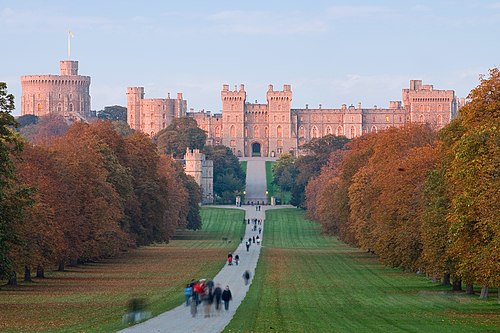 Windsor CastleRestored · prime 1820
 Tower of LondonRestored · prime 1285
 Bamburgh CastleRestored · prime 1904
All castles in England → · Strongest castles in England → · Castles of Europe
Play As Your Clan
Hold a real castle against whatever you choose to send at it, take a ship out in her own service years, or stand at the shoulder of someone the record remembers. The chronicler sets the scene; the deeds are yours.
Notable bearers of the Hanover name
- George I (1660-1727), first Hanoverian monarch of Britain
- George III (1738-1820), king during the American and Napoleonic wars
- Victoria (1819-1901), queen-empress of the British Empire at its apex