Johnson
Son of John, the most-Anglo-Saxon-sounding Norman name in the English census.
- Origin
- London, England
- Famous bearer
- Samuel Johnson (1709–1784), lexicographer, Dictionary of the English Language
- Register
- English family
The Johnson arms and country

Coat of armsArms of Johnson FamilyEccekevin · CC BY-SA 4.0 
Coat of armsEscutcheon of the Johnson baronets of New York (1755)Borne by the New York line, one branch of the name rather than all of it.Charles Matthews · CC BY-SA 4.0

.svg)
- Coat of arms: Granted to an individual and inherited down that one documented line. These are the arms of particular families of the name, not of everyone who shares the surname.
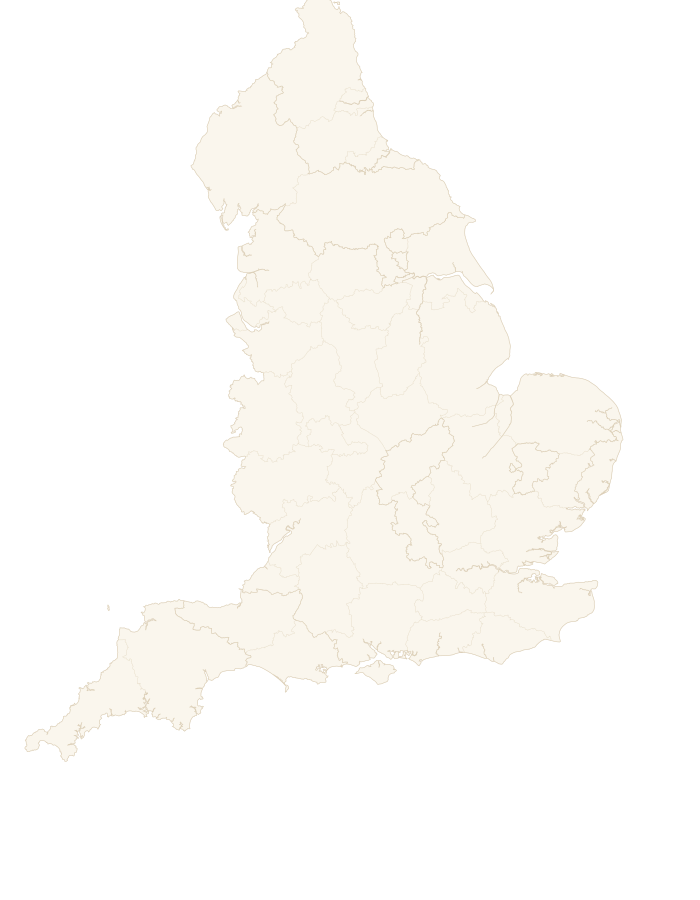
CoreHistoric reach
The seat of Johnson
Seat vacantChief
No one leads the Johnson community yet. When the movement opens, you can stand for its leadership, or help elect whoever does.
Current mission
No shared goal set yet. Once Johnson has leadership, it sets the public focus: a restoration, a gathering, a real-world project that helps its own.
The Johnson clan is being rebuilt. Join the waiting list for the movement today, and you help decide who leads it and what it does.
Help rebuild the Johnson clan →What does the Johnson name mean?
Patronymic, son of John (Norman-Latin Johannes, naturalised as English John). The base name John was the most popular boys' name in mediaeval England from the Conquest onwards, so the patronymic Johnson took root anywhere John was a common first name in the 14th–15th-century surname-fixation era. Johnson is in the top-10 surnames of every English-speaking country except Wales, where the patronymic 's' goes to Jones instead.
The history of Johnson
The two saints who made John unavoidable
Johnson is not the name of a family. It is the name of a father, and that father was called John because the medieval Church made it almost impossible for him to be called anything else. The name is Hebrew in origin, Yohanan, "God has been gracious". It came west through Greek Ioannes and Medieval Latin Johannes, became Jean in Old French, and had settled into Middle English as Ioon, Ihon and Iohn by the middle of the 12th century. It owes its popularity to two highly revered saints: John the Baptist, the forerunner of Christ, and the apostle John, held by tradition to be the author of the fourth Gospel. First a favourite among the Greeks, it flourished across Europe after the First Crusade.
That is why the patronymic built from it is common in a dozen languages at once. Italian has more than ninety surnames formed from the single given name Giovanni, and Wales, fixing its surnames later and from a far smaller pool, turned the same name into Jones, literally the Welsh Johnson. You do not descend from one hall or one charter. You descend from the commonest baptismal decision in Christian Europe.
The Conquest that replaced England's stock of first names
England did not always name its sons John. Before 1066 the country ran on Anglo-Saxon names: Alfred, Edgar, Edmund, Edward, Harold, Oswald. One of the most obvious effects of the Norman Conquest was the arrival of Anglo-Norman as the language of the ruling classes, displacing Old English, and with it names common in France in place of the Anglo-Saxon stock: William, Robert and Richard soon became common, while female names changed more slowly. The fashion reached the bottom of society because nothing was left at the top to resist it; Domesday in 1086 shows only about 5 per cent of land south of the Tees still in English hands.
The result can be counted. Nearly a quarter of the boys born in London in 1510 were John, against 13.3 per cent Thomas and 11.7 per cent William. Through the early modern period the three commonest male names covered close to half the male population, and John or William stayed the most popular for most of the 19th century. A clerk writing "John's son" was recording the least distinguishing fact available to him, and that is why the surname ended up everywhere.
The century the byname froze into a surname
Early English surnames were descriptions, not inheritances, taken from a man's trade, his father's name, his birthplace or his looks, and not necessarily passed on. The historian Christopher Daniell identifies 1140 as perhaps the first recorded use of a surname inherited by more than one generation. By 1400 the inherited name was the rule rather than the exception in England and in Lowland Scotland.
A Johnson born after the freeze need not have had a father named John at all: the name had become property rather than description. Richard Coates, who led the four-year University of the West of England study of 45,602 British and Irish surnames completed in 2016, places Johnson among the names that "originally enshrined the father's name". It fixed across the southern shires and the East Midlands in the 14th and 15th centuries, ran thick through West Yorkshire, Lincolnshire and Norfolk, and sits heaviest today in London and South Yorkshire, travelling with English settlement into the Plantation of Ulster, the New England colonies and the industrial north.
Johnstone of Annandale is a different name entirely
If you find the surname spelled Johnston or Johnstone, it is usually not "John's son" at all. It is a place: John plus the Middle English toun or ton, a settlement, so John's town. It belongs to Clan Johnstone, once among the most powerful of the Border Reiver clans, who held extensive possessions in Annandale and the western Scottish Marches for more than six hundred years. The first of the line on record was Jon, whose son Gilbert de Jonistune appears in documents after 1194, and in 1388 his descendant Sir John Johnston was Warden of the Western Marches. Their feud with the Maxwells produced the Battle of Dryfe Sands in 1593, where Lord Maxwell was killed with many of his men, and a reconciliation meeting in 1608 at which the next Lord Maxwell treacherously killed the Johnstone chief and was hanged for it.
The Union of the Crowns in 1603 ended the militarised border. James VI, now also James I of England, abolished border law and even the word Borders in favour of the Middle Shires. Borderers, particularly those he banished, took part in the plantation of Ulster and became the Ulster-Scots, and in America the Scotch-Irish. The two names have sat side by side there ever since, and clerks moved the t in both directions. Spelling alone will not tell you which line you belong to; the parish will.
The Scandinavian Johnsons, frozen four centuries later
There is a third line, and it is genuinely separate. Johansson, "son of Johan", is the most common family name in Sweden, ahead of Andersson; the Danish, Norwegian, German and Dutch form is Johansen; and the spelling either most often takes in the United States is Johnson. Scandinavian patronyms stayed live descriptions, changing every generation and not passed to a person's children. Hereditary surnames were almost unheard of in Norway before 1500, and as late as 1801 only 2.2 per cent of the rural population of Western Norway had one.
The freeze came late and by statute. Denmark's naming acts of 1771, for the Duchy of Schleswig only, and 1828 pushed most Danes to take their current patronymic as a permanent family name, which is why more than two-thirds of Danes now carry a -sen name. Sweden's Names Adoption Act of 1901 abolished the patronymic practice outright, and a Norwegian law of 1923 ordered a hereditary family name for every newborn. Iceland never followed and still uses -son and -dottir the old way. A Johnson out of Gothenburg or Bergen froze the name centuries after a Johnson out of Lincolnshire; the two share a saint rather than an ancestor.
Samuel Johnson and the bearers who carried the name into office
The greatest of the name gave the language its shape. Samuel Johnson (1709–1784), born in Lichfield, Staffordshire, to a bookseller, was contracted by London booksellers in June 1746 to produce a dictionary for 1,500 guineas. He said he could do it in three years; it took nine, single-handed. A Dictionary of the English Language appeared on 15 April 1755 with 42,733 entries, and stood as the pre-eminent dictionary of English until the Oxford English Dictionary was completed 173 years later. His Lives of the Most Eminent English Poets (1779–1781) covered 52 poets and founded English literary biography, and James Boswell, whom he met in 1763, invented modern biography with the Life of Samuel Johnson (1791). Johnson is buried in Westminster Abbey.
Later bearers took the name into government: Andrew Johnson (1808–1875), 17th President of the United States; Lyndon B. Johnson (1908–1973), the 36th, of a family traceable in the American South from 1795, who carried the Civil Rights Act of 1964, the Voting Rights Act of 1965 and Medicare; and Boris Johnson (b. 1964), British Prime Minister 2019 to 2022. A caution about frequency tables. Johnson stands very high in American surname counts, but much of that total belongs to families whose ancestors were enslaved and assigned the name in bondage rather than carrying it from Europe. That history is real, and it is not this one. This page follows the European line only.
Champions of the Johnson name
The bearers whose lives are inseparable from this surname. Each has their own page, biography, achievements, geography, connection to the family.
Historic Places, Rebuilt
Explore the streets and seats the Johnson name knew, rebuilt with AI as they stood in history.
The castles of the homeland
The great strongholds of the homeland, look one up, see what it looked like in its prime, and recreate it to explore.
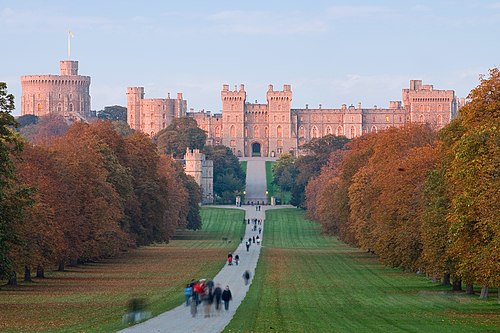 Windsor CastleRestored · prime 1820
 Tower of LondonRestored · prime 1285
 Bamburgh CastleRestored · prime 1904
All castles in England → · Strongest castles in England → · Castles of Europe
Play As Your Clan
Hold a real castle against whatever you choose to send at it, take a ship out in her own service years, or stand at the shoulder of someone the record remembers. The chronicler sets the scene; the deeds are yours.
Notable bearers of the Johnson name
- Samuel Johnson (1709–1784), lexicographer, Dictionary of the English Language
- Lyndon B. Johnson (1908–1973), 36th President of the United States
- Andrew Johnson (1808–1875), 17th President of the United States
- Boris Johnson (b. 1964), British Prime Minister 2019–2022