Thompson
The northern Thomases.
- Origin
- North East, England
- Famous bearer
- Emma Thompson (b. 1959), actress and writer; two Academy Awards
- Register
- English family
The Thompson arms, tartan and country

TartanThompson Grey Dress TartanThe dress sett: the same pattern rewoven with a white ground, worn for dancing and evening wear.Matt898 · CC BY-SA 4.0 
TartanThompson Thomson MacTavish special grey TartanMatt898 · CC BY-SA 4.0 
Coat of armsArms of Thompson, Baron HavershamBorne by Baron Haversham: the ennobled line of the name, not the name at large.Aergia · CC BY-SA 4.0 
Coat of armsThompson (of Reculver) EscutcheonBorne by the Reculver line, one branch of the name rather than all of it.Robin S. Taylor · CC BY-SA 4.0


_Escutcheon.png)
- Tartan: The checked cloth the family is known by.
- Coat of arms: Granted to an individual and inherited down that one documented line. These are the arms of particular families of the name, not of everyone who shares the surname.
What is the Thompson clan tartan?
Two Thompson setts are shown above, one of them the dress sett, rewoven on a lighter ground. They are not rival claims to be picked between; they are different records, and different weaves, of the same family cloth. A sett is the block of coloured bands the cloth is built from, repeated in both directions; the whole plaid is that one square enlarged.
Thompson is an English name, and the sett is a Scottish invention. Tartan registration grew outward from the Highlands to cover surnames carried well beyond them, and a weaver who could sell a Thompson tartan sold one: some of these setts are Victorian and some were designed within living memory. That is how most names outside the Highlands came by a sett at all. Nobody polices any of it. Wearing the Thompson sett declares allegiance to the name, not descent from any particular line of it.
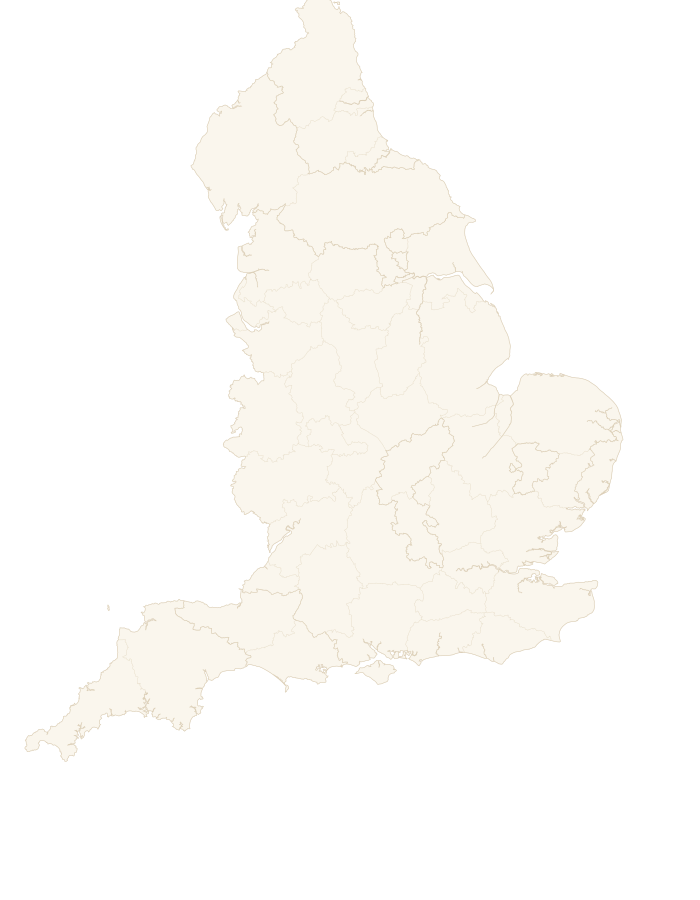
CoreHistoric reach
The seat of Thompson
Seat vacantChief
No one leads the Thompson community yet. When the movement opens, you can stand for its leadership, or help elect whoever does.
Current mission
No shared goal set yet. Once Thompson has leadership, it sets the public focus: a restoration, a gathering, a real-world project that helps its own.
The Thompson clan is being rebuilt. Join the waiting list for the movement today, and you help decide who leads it and what it does.
Help rebuild the Thompson clan →What does the Thompson name mean?
Son of Thom(as) with the northern -p- spelling; Thomson is the usual Scots form without the medial -p-.
The history of Thompson
Thom's son, and the letter the Scots never wrote
Thompson means what it looks like: the son of Thom, the everyday short form of Thomas. What makes it English rather than Scottish is a single consonant. The medial -p- is an intrusive bilabial that crept in between the Thom- and the -son as parish clerks in County Durham and the North Riding wrote the patronymic down in a hand that ran the halves together. Across the Tweed the same name kept its leaner form, Thomson. If your family spells it with the p, that spelling was fixed in an English northern register.
It belongs to the oldest and commonest class of surname there is, sitting beside Richardson, Wilson, Jackson and Robinson, names that, as Richard Coates put it when his study of 45,602 British and Irish surnames concluded in 2016, "originally enshrined the father's name". Which means something a diaspora reader should hear plainly: there is no single founding Thompson. Every northern valley that held a Thomas raised its own line of Thompsons, independently, at the same time.
Why one boy in eight was called Thomas
The reason the name is everywhere is arithmetic. Of the boys born in London in 1510, 24.4 per cent were named John, 13.3 per cent Thomas and 11.7 per cent William, three names covering nearly half the male population, and it held right through the Early Modern period. A parish with fifty men in it might contain seven Thomases.
That crowding is the engine. You cannot call one name across a field and expect one man to turn, so you say whose he is: Thom's son. The byname was a working tool long before it was a family name, and it was needed most exactly where the given name was commonest, which is why the patronymics of John, Thomas, William and Richard ended up with millions of bearers while rarer names never grew. The stock of given names was itself an import: after 1066 names common in France displaced Anglo-Saxon ones, and the north's first Norman archbishop was a Thomas: Thomas of Bayeux, installed at York after Ealdred's death in September 1069.
The century the byname stopped changing
Surnames arrive in England with the Norman settlement: documented among the barons in the 11th century, generally credited to the preparation of the Domesday Book completed by 1086, with Christopher Daniell dating what may be the first surname inherited across generations to 1140.
They did not begin as things a man passed on. Early English bynames marked a trade, a father, a birthplace or a physical feature and were not necessarily inherited at all: a Thom's son could father a John's son. The habit of fixing them took hold first among the nobility and gentry, spread downwards slowly, and was resisted, because in late-medieval England compulsory surnames were associated with taxation. By 1400 most English families, and those of Lowland Scotland, had hereditary surnames; Thompson had compressed into a fixed surname by the late fourteenth century. Henry VIII, who reigned from 1509 to 1547, then ordered marital births recorded under the father's surname. By 1700 Thompson stood among the dozen most common surnames in the English north.
A coal-and-shipyard map of the north
Plot the Thompsons of England and you have drawn an industrial map without meaning to. The name clusters on the Tyne, the Tees and across Yorkshire: the Northumberland and Durham coalfield, the Tees ironworks belt, the Sheffield and Rotherham steel district, the wool-cloth towns of the West Riding. That is no gentry distribution. It is a distribution of people who worked fire, metal and cloth where England industrialised hardest.
It is also the part of England that was most thoroughly broken and remade. William devastated Northumbria systematically in the Harrying of the North over the winter of 1069–70, and by the Domesday survey of 1086 only about 5 per cent of land in England south of the Tees remained in English hands. The Thompsons of the coalfield were not heirs of a broken Anglo-Saxon aristocracy. They were the people who stayed and worked where that aristocracy had been erased.
Riveters, platers and the road out of Jarrow
The Tyneside yards are where the name did its most visible work. Swan Hunter, Vickers-Armstrong and Palmers of Jarrow launched the steam-and-armoured fleets of the late-Victorian and Edwardian Royal Navy, and the slipway gangs that built them carried Thompson riveters, platers and shipwrights in numbers. A warship went together by hand, hot rivet by hot rivet.
The name is also in one of the defining images of British industrial collapse. In October 1936 two hundred unemployed men walked from the closed Palmers yard at Jarrow to Westminster to put their town's case to Parliament, and the marching ranks held a substantial Thompson contingent. If your family left the north-east in the 1930s, that shut yard is likely the reason.
The name goes out with the trade
Industrial skill travelled and the surname went with it, into the colonial emigration of the later nineteenth century: Cape Colony and Natal, the goldrush districts of New South Wales and Victoria, the shipbuilding towns of Ontario. By 1900 the patronymic was among the twenty most common English-language surnames in the world. In the United States just 1,712 surnames now cover half the population, and Thompson is one of that small handful, which is why the useful question for a Thompson is never which clan, but which parish.
Thompsons on the record
Sir Benjamin Thompson, Count Rumford (1753–1814), is the strangest career the name has produced. Massachusetts-born and an American Loyalist, he became scientific adviser and Minister of War to the Elector of Bavaria, reforming its army and the Munich poor-relief system. Boring cannon at the Munich Arsenal in 1798 he made the foundational observation on the mechanical equivalent of heat, and back in England founded the Royal Institution at Albemarle Street in 1799.
The name's other great contribution is a book: E. P. Thompson (1924–1993) wrote The Making of the English Working Class in 1963, the foundational text of post-war British social history, and a work about the weavers, croppers and labourers of exactly those northern towns. Emma Thompson (b. 1959) holds two Academy Awards, Best Actress for Howards End in 1992 and Best Adapted Screenplay for Sense and Sensibility in 1995; in the United States Hunter S. Thompson made his name on political journalism, and J. Walter Thompson (1847–1928) founded the agency that shaped early Madison Avenue.
Champions of the Thompson name
The bearers whose lives are inseparable from this surname. Each has their own page, biography, achievements, geography, connection to the family.
Historic Places, Rebuilt
Explore the streets and seats the Thompson name knew, rebuilt with AI as they stood in history.
The castles of the homeland
The great strongholds of the homeland, look one up, see what it looked like in its prime, and recreate it to explore.
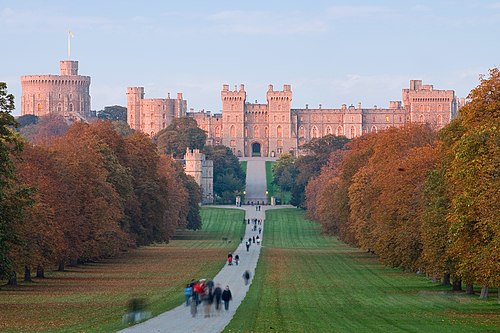 Windsor CastleRestored · prime 1820
 Tower of LondonRestored · prime 1285
 Bamburgh CastleRestored · prime 1904
All castles in England → · Strongest castles in England → · Castles of Europe
Play As Your Clan
Hold a real castle against whatever you choose to send at it, take a ship out in her own service years, or stand at the shoulder of someone the record remembers. The chronicler sets the scene; the deeds are yours.
Notable bearers of the Thompson name
- Emma Thompson (b. 1959), actress and writer; two Academy Awards
- E. P. Thompson (1924–1993), historian; The Making of the English Working Class
- Sir Benjamin Thompson, Count Rumford (1753–1814), Anglo-American physicist who founded the Royal Institution
- J. Walter Thompson (1847–1928), American advertising-agency founder