Cook
The cook.
- Origin
- North East, England
- Famous bearer
- Captain James Cook (1728–1779), navigator
- Register
- English family
The Cook arms and country

Coat of armsEscutcheon of the Cook baronets of Brome Hall (1663)Borne by the Brome Hall line, one branch of the name rather than all of it.Charles Matthews · CC BY-SA 4.0 
Coat of armsEscutcheon of the Cook baronets of Doughty House (1886)Borne by the Doughty House line, one branch of the name rather than all of it.Charles Matthews · CC BY-SA 4.0
.svg)
.svg)
- Coat of arms: Granted to an individual and inherited down that one documented line. These are the arms of particular families of the name, not of everyone who shares the surname.
CoreHistoric reach
The seat of Cook
Seat vacantChief
No one leads the Cook community yet. When the movement opens, you can stand for its leadership, or help elect whoever does.
Current mission
No shared goal set yet. Once Cook has leadership, it sets the public focus: a restoration, a gathering, a real-world project that helps its own.
The Cook clan is being rebuilt. Join the waiting list for the movement today, and you help decide who leads it and what it does.
Help rebuild the Cook clan →What does the Cook name mean?
Occupational, the kitchen cook. Old English cōc.
The history of Cook
The kitchen word that became a family name
In Old English the man who worked the fire and the pot was the coc, and for a long time the word stuck to him alone and not to his children. English surnames began as descriptions rather than inheritances: a man was marked out by his trade, his father's name, the place he came from or something about his body. Barons in eleventh-century England are among the earliest people recorded with fixed family names, and the historian Christopher Daniell points to 1140 for what may be the first English surname inherited past one generation.
By 1400 most English families, and those of Lowland Scotland with them, carried hereditary surnames, and the cook's son was a Cook whether or not he ever stood over a fire. There was no Cook estate to inherit and no Cook charter to defend, only a job every household of any size needed done and a word for the man who did it, hardening into a name in thousands of separate kitchens at once.
Apprentice, journeyman, and the master grade called queu
The work behind the name was never casual labour. In northern France between roughly the ninth century and the fifteenth, cook was a recognised profession and cooks counted as trained craftsmen who climbed through defined grades. Taillevent, whose Le Viandier is the classic recipe collection of medieval France, served as apprentice and then journeyman before he was granted the master's grade. The master, the queu, held knowledge passed from one generation of the kitchen to the next.
That graded craft belonged to the French world that crossed the Channel in 1066. William of Normandy granted lands to his followers, built castles at the strong points of the country, and installed a French-speaking elite whose holdings the Domesday Book recorded in 1086.
The labourer's son from Marton
James Cook was born on 7 November 1728 at Marton in North Yorkshire, the son of a farm labourer, and rose from the humblest beginnings of any great commander of his age. He was apprenticed to a Whitby shipowner in the rough trade of carrying coal down the North Sea coast, the most demanding school of seamanship there was, then volunteered into the Royal Navy as an ordinary sailor and worked up through the ranks.
The Seven Years War made his reputation on paper rather than in battle. He charted the St Lawrence River so accurately that the fleet could carry the army up it to take Quebec, and his surveys of the coast of Newfoundland marked him out as the finest marine cartographer in the service.
Three voyages and the disease he ended
In 1768 Cook was given the Endeavour and his first great voyage of discovery, ostensibly to observe the transit of Venus from the Pacific and in fact also to look for the unknown southern lands. Over three years he circumnavigated and charted the whole coastline of New Zealand, proving it to be islands, then ran the length of the eastern coast of Australia, charting it for the first time and claiming it for the crown, and saved his ship from near loss on the Great Barrier Reef by seamanship alone.
On the second voyage, from 1772 to 1775, he took two ships deep into the southern ocean after the supposed great southern continent and became the first man known to have crossed the Antarctic Circle, pushing further south than any navigator before him through ice and fog. His tracks established that no habitable southern continent of the kind long imagined was there to find, and he fixed the positions of Pacific islands with an accuracy made possible by the marine chronometer he carried and tested.
His greatest service to his own men is the least celebrated. By rigorous attention to diet, cleanliness and fresh provisions he all but eliminated scurvy from his crews, the disease that had killed more seamen on long voyages than storm and enemy combined, and brought men home healthy from voyages of years where other expeditions lost half their number. The Royal Society gave him its highest honour for it. He was killed on 14 February 1779 at Kealakekua Bay in Hawaii, on a third voyage searching the northern Pacific for a passage round the top of America.
Where the map still finds the name
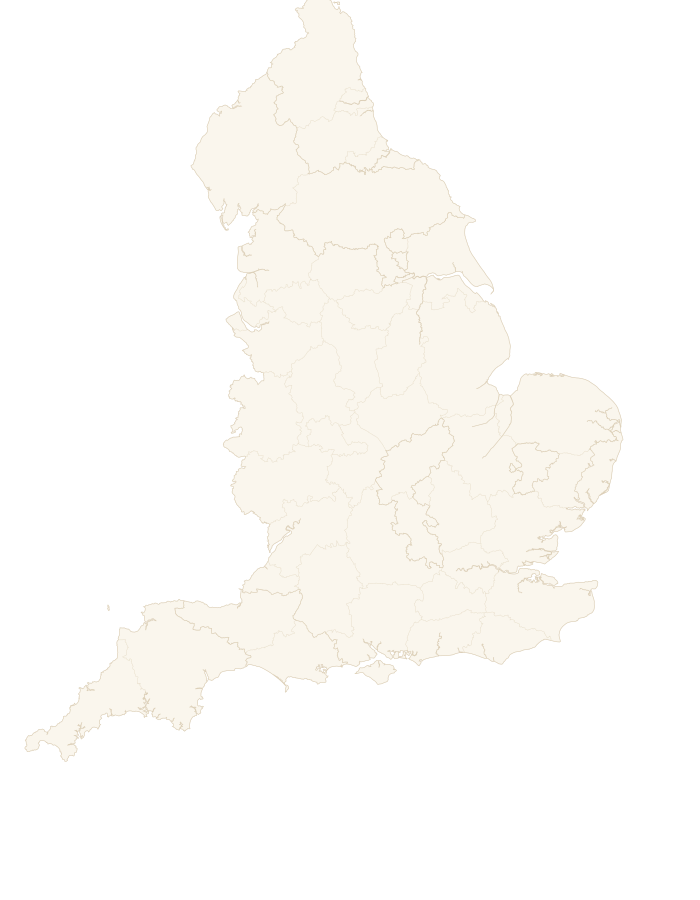
The modern weight of the name sits in the north east and in Yorkshire: Northumberland, Tyneside, Wearside and Durham, the Tees Valley, the city of York and the ridings out to the Humber. That is Marton and Whitby country, the belt of coast and moor the Endeavour's commander came from.
The older record is far wider, which is what an occupational name looks like when it forms independently in many places rather than spreading from one. Cooks are recorded through the east Midlands from Lincolnshire to Northamptonshire, through London and the Thames counties, along the south coast in Kent, Sussex and Hampshire, and across the West Country from Gloucestershire to Cornwall. No county owns it, because no family started it.
Cooks who painted, wrote and organised
The British record of the name leans towards people who made things and argued for things. A. J. Cook (1883-1931) was a Welsh trade unionist. Beryl Cook (1926-2008) was an English painter, Barrie Cook (1929-2020) an English artist, and Olive Cook (1912-2002) a British writer and artist. Oscar Cook (1888-1952) wrote novels and short stories on supernatural themes, and Hugh Cook (1956-2008) was an English-born science fiction novelist.
Nathaniel Cook, working in the nineteenth century, designed the standard set of chess figures. Roderick Cook (1932-1990) was an English playwright, director and actor, Pam Cook (born 1943) is an English film theorist, and Alastair Cook (born 1984) and Geoff Cook (born 1951) both carried the name into English cricket.
Cooks who went south: Australia and New Zealand
The coast James Cook charted in 1770 became, within a century, a place his namesakes lived in and shaped. Edith Agnes Cook (1859-1942) was the first female student at Adelaide University and went on to be principal of the Advanced School for Girls. Arnold Cook (1922-1981) was an Australian academic and the country's national guide dog pioneer. Moxon Cook (1857-1917) worked as an Australian sports journalist, Leonard Cook (1912-1991) boxed for Australia at the 1936 Olympics, and Octavia Cook (born 1978) is a New Zealand jeweller.
American Cooks from the Revolution onward
The name crossed the Atlantic early and stayed. Lemuel Cook (1759-1866) served in the American Revolutionary War and lived on to 1866. Orchard Cook (1763-1819) sat as a United States Representative from Massachusetts and Zadock Cook (1769-1863) as a Representative from Georgia. Ira Cook (1821-1902) worked as surveyor, mayor, banker, tax collector, council member, investor and entrepreneur at once, and Clarence Chatham Cook (1828-1900) wrote as author and art critic.
Later Cooks turned up in laboratories and cockpits. Orator F. Cook (1867-1949) was a botanist, entomologist and agronomist; Katherine M. Cook (1876-1962) an educator and government official. Everett Richard Cook (1894-1974) was a flying ace of the First World War, Harvey Weir Cook (1892-1943) an aviator, and Orval R. Cook (1898-1980) a four-star general of the United States Air Force.
A quieter cluster belongs to one league. Clara Cook (1921-1996), Donna Cook (1926-2006), Doris Cook (born 1931) and Dorothy Cook all played in the All-American Girls Professional Baseball League, four women of the same surname in the same competition, and Victoria Cook (1933-2019) became a world champion archer for the United States. None of them held land or a title, which is the point of a name like this one.
Champions of the Cook name
The bearers whose lives are inseparable from this surname. Each has their own page, biography, achievements, geography, connection to the family.
Historic Places, Rebuilt
Explore the streets and seats the Cook name knew, rebuilt with AI as they stood in history.
Historic Places, Rebuilt · New
Cook's Whitby bark off the new-charted coast of Australia, the great cabin laboratory and the boats pulling for an unknown shore.
Historic Places, Rebuilt · New
St Paul's, Covent Garden and the gaslit West End, Regency London, soot-hazed and horse-drawn.
The castles of the homeland
The great strongholds of the homeland, look one up, see what it looked like in its prime, and recreate it to explore.
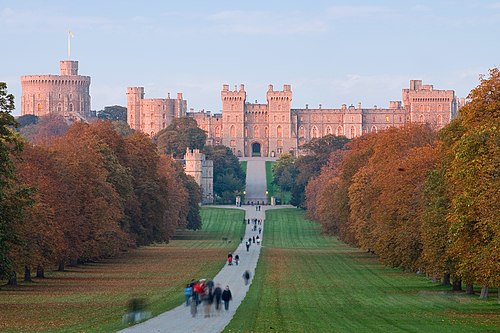 Windsor CastleRestored · prime 1820
 Tower of LondonRestored · prime 1285
 Bamburgh CastleRestored · prime 1904
All castles in England → · Strongest castles in England → · Castles of Europe
Play As Your Clan
Hold a real castle against whatever you choose to send at it, take a ship out in her own service years, or stand at the shoulder of someone the record remembers. The chronicler sets the scene; the deeds are yours.
Notable bearers of the Cook name
- Captain James Cook (1728–1779), navigator
Stories of Cook
Kealakekua Bay
1779On the morning of the fourteenth of February 1779, Captain James Cook RN, on his third Pacific voyage with HMS Resolution and HMS Discovery, came ashore at Kealakekua Bay on the western coast of the island of Hawaii to retrieve a cutter stolen during the night by a chief of the bay. He had a marine guard of nine men and the intention of taking the local king, Kalaniʻōpuʻu, hostage in his cabin until the cutter was returned, a method that had worked for him in eight previous theft incidents in the Pacific. By misunderstanding, by the failure of the strategy, by the chief's reluctance and his retainers' alarm, by news that arrived on the beach at the wrong moment of a Hawaiian killed by a British boat in the next bay over, the situation collapsed. Cook was struck on the head from behind in the surf, fell on his face, and was killed by clubs and daggers in shallow water. Four marines died with him. He was forty years old. His remains were treated with the highest Hawaiian honours, the bones distributed among ranking chiefs as a man of mana, and many of them eventually returned to the Resolution in a parcel for sea-burial. The third voyage continued under Charles Clerke and made it home to Deptford on the fourth of October 1780, sixteen months after his death.
Read the story →
Botany Bay, first contact
1770On the afternoon of the twenty-ninth of April 1770, HMS Endeavour under Lieutenant James Cook RN brought up off the south-east coast of New Holland in a wide bay he would within the week call Sting-Ray Harbour and within the month re-name Botany Bay for the unprecedented haul of new plant specimens his botanist Joseph Banks took up its tidal flats. As he came ashore on the south side of the bay in the pinnace with Banks, Solander and a marine guard, two Gweagal warriors of the Dharawal nation stood up on the beach and showed they would not let the boat land. Cook called to them. They did not understand. He fired a musket-ball over their heads. They threw a spear at the boat. He fired small-shot at the leg of the elder warrior, who threw a second spear. The two retreated to the trees. The British landed in deserted shallows. Cook spent eight days in the bay. He went round the bay to the encampments and left presents in them. The encampments stayed empty as long as he was on the coast. The first British landfall on the eastern coast of Australia began with two spear-casts and two musket-shots and an empty beach.
Read the story →