House of Plantagenet
also Anjou, House of Anjou, Angevin
Royal house of England, 1154-1485, the longest dynasty in English history.
- Origin
- London, England
- Motto
- Dieu et mon droit
- Famous bearer
- Henry II (1133-1189), founder of the English common law and the Angevin Empire
- Register
- Princely house
Ranked of all time
The 15 Most Powerful English Houses of All Time
The Plantagenet arms and country

Coat of armsPlantagenet armsSheila1988 · CC BY-SA 4.0 
Coat of armsBlason maison PlantagenêtCC BY-SA 4.0


- Coat of arms: Granted to an individual and inherited down that one documented line. These are the arms of particular families of the name, not of everyone who shares the surname.
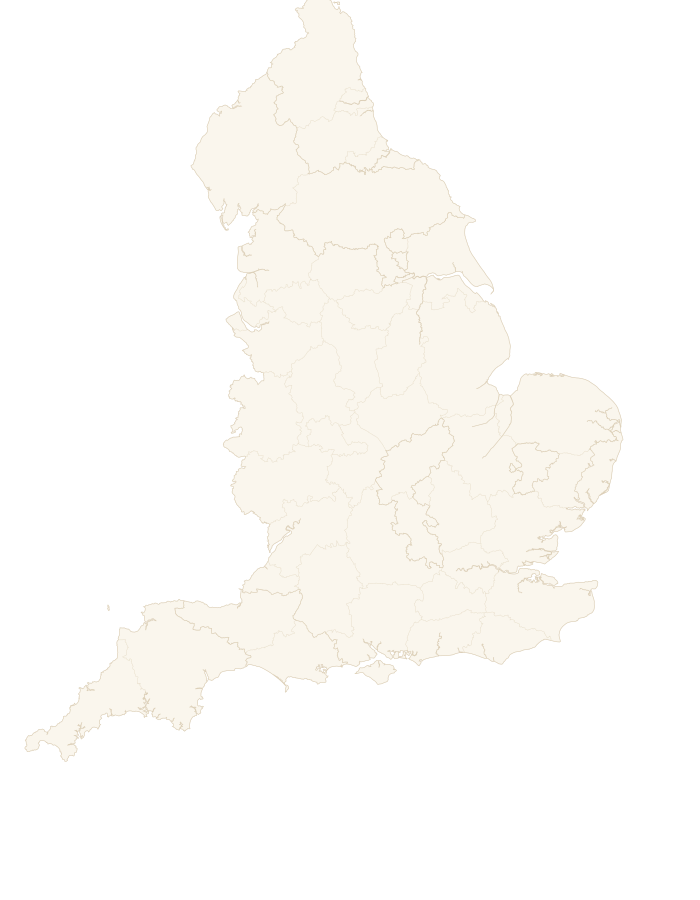
The seat of House of Plantagenet
Seat vacantChief
No one leads the House of Plantagenet community yet. When the movement opens, you can stand for its leadership, or help elect whoever does.
Current mission
No shared goal set yet. Once House of Plantagenet has leadership, it sets the public focus: a restoration, a gathering, a real-world project that helps its own.
The Plantagenet clan is being rebuilt. Join the waiting list for the movement today, and you help decide who leads it and what it does.
Help rebuild the Plantagenet clan →Motto
Dieu et mon droit
“God and my right”
What does the Plantagenet name mean?
From the Old French 'plante genest' or Latin 'planta genista', the broom plant. The name was originally a personal nickname of Geoffrey V, Count of Anjou (1113-1151), who reportedly wore a sprig of broom in his cap; his descendants in the English royal line adopted it as a dynastic name from the 15th century. The senior line ruled England without interruption for 331 years, from Geoffrey's son Henry II in 1154 through Richard III in 1485.
The history of House of Plantagenet
A sprig of broom, and the county behind it
England's longest ruling house began in a county in western France. The later counts of Anjou descended from Geoffrey II, Count of Gatinais, and his wife Ermengarde of Anjou, who in 1060 inherited the title by cognatic kinship from an Angevin family descended from a noble called Ingelger, whose recorded history begins in 870.
The name was a nickname before it was anything else, and it belonged to one man. Plantegenest was attached in the 12th century to Geoffrey, Count of Anjou and Duke of Normandy; one of many popular explanations takes it from the blossom of the common broom, a bright yellow plant called genista in medieval Latin. It was not a surname, and no king of the line used it as one for close on three hundred years.
Geoffrey's marriage was his father's third attempt to bind Anjou to Normandy, and it was the one that worked: he married the Empress Matilda, Henry I's only surviving legitimate child and his heir to the English throne, and Fulk V handed over his titles and left to be King of Jerusalem.
The nine-year-old figurehead, and the crown of 1154
When their son Henry was born in 1133 his grandfather Henry I was reported delighted, saying the boy was the heir to the kingdom. The old king died in December 1135 while Geoffrey and Matilda were in Anjou, and Matilda's cousin Stephen seized the crown, opening the civil war later called the Anarchy. Matilda and her half-brother Robert invaded in 1139, and from the age of nine the young Henry was sent across repeatedly as the male figurehead of a campaign fought to make him king.
Three deaths and an annulment finished the war. Count Geoffrey, who had handed Normandy to his son in 1150, died in 1151. Louis VII of France was granted an annulment from Eleanor of Aquitaine on 18 March 1152, and she married Henry that May, bringing the duchy of Aquitaine with her. Stephen's wife and his elder son Eustace both died in 1153, the Treaty of Wallingford recognised Henry as Stephen's heir, and Henry II acceded late in 1154 to a realm that ran from the Scottish border to the Pyrenees.
Chinon, Loches, and the donjon at Niort
The family's oldest stones stand in France. At Doue-la-Fontaine a Carolingian aula, a hall of 23 by 17 metres with walls 1.8 metres thick, was raised for the Count of Anjou in the 9th or early 10th century. It burnt around 930 to 940, and around 950 Theobald I of Blois fortified the ruin; the castle built round it that year is widely believed the oldest known castle built of stone. At Loches, Fulk III of Anjou raised a square keep in the 11th century, 23.3 by 15.4 metres, walls 2.8 metres thick, four storeys rising 37 metres, each floor a single room.
Chinon was the house's favourite. Theobald I had fortified the outcrop above the Vienne in the 10th century; by the 11th it belonged to the counts of Anjou, and in 1156 Henry II took it from his own brother Geoffrey, Count of Nantes, after Geoffrey's second rebellion. Henry preferred it as a residence, most of the standing structure dates from his reign, and he died there in 1189. William of Newburgh wrote that even before those works nature seemed to vie with human art in fortifying and defending it.
At Niort on the Sevre Niortaise, Henry II began a fortress that Richard the Lionheart finished. Two square keeps survive of it, the southern one 28 metres high; the whole covered a vast area behind a curtain wall of roughly ten towers, with a drawbridge and a dry moat eight metres deep. The hold on all of it broke within a generation of Richard's death: Philip II of France took Loches in 1204 and Chinon in 1205 after a siege of several months. Angevin covers a number of royal houses descended from the counts or dukes of Anjou, and one of them held the Chateau de Tarascon on the Rhone, seat of the Angevin counts of Provence, rebuilt from 1401 and completed under King Rene.
Becket, the sons, and the old king's last defeat
The church was the hardest part of Henry II's inheritance to master. In 1162 he made his friend Thomas Becket Archbishop of Canterbury and found the friend turned opponent. The Constitutions of Clarendon set down sixteen ancient customs governing king, courts and church in writing for the first time; Becket fled into five years of exile, returned, and quarrelled again after the king had his son crowned as coregent by the Archbishop of York. Hearing of Becket's excommunications, Henry said he had nurtured traitors who let their lord be treated with shameful contempt by a low-born clerk. Four of his knights killed Becket in Canterbury Cathedral, and Henry, held complicit across Christian Europe, walked barefoot into the cathedral in penance to be whipped by the monks.
The reign built machinery that outlasted the dynasty: the foundations of the English common law and a unified system of royal justice, a settlement sophisticated enough that the central government could work without the king present. He invaded Ireland in 1171 to bring to heel knights who had colonised it with his permission, and later gave it to his youngest son John.
His sons ruined the end of it. In 1172 Henry gave John the castles of Chinon, Loudun and Mirebeau as a wedding gift, enraging his eighteen-year-old son Henry the Young King, who believed them his; a rebellion by the king's wife and three eldest sons followed, backed by Louis VII and joined by William the Lion, king of Scots, and took eighteen months to subdue. At Le Mans in 1182 Henry gathered his children to divide the inheritance and got more conflict for it, and in 1189 Richard and Philip II pressed the ageing king until he accepted humiliating terms naming Richard sole heir. He died two days later, defeated and miserable.
The crusader, and the king who lost Anjou
Richard I settled the kingdom's affairs and left for the Third Crusade. He deposed the king of Cyprus and sold the island, massacred 2,600 prisoners at Acre, and never took Jerusalem. Going home he was seized by Leopold V of Austria and handed to Emperor Henry VI, who held him from 1192 to 1194 while his mother raised a ransom of 100,000 marks and Philip II overran much of Normandy. He returned, forgave John, left again in 1194 to fight five years for what had been taken, and was close to complete victory when an arrow hit him at a siege; he died ten days later.
John inherited a disputed succession, with Guillaume des Roches leading the magnates of Anjou, Maine and Touraine in declaring for John's nephew Arthur. John won a real victory at Mirebeau, taking the entire rebel leadership, then threw it away by his treatment of the prisoners, many of them kinsmen of his own allies: he kept them, in the words of the Histoire de Guillaume le Marechal, so vilely and in such evil distress that it seemed shameful and ugly to all who saw it. The Thouars, Lusignan and des Roches families rebelled, and John lost Anjou, Maine, Touraine and northern Poitou.
By 1214 he had a plan to win Normandy and Anjou back, drawing the French toward Paris while his nephew the Emperor Otto IV attacked from the north; it failed at Bouvines. The defeat cost him his authority at home, and in 1215 his barons forced him to agree to Magna Carta, which limited royal power; neither side kept to it, the First Barons' War followed, and John died in October 1216 with the war unfinished. The house never recovered the county it was named for. His son Henry III held the claim until December 1259, when he formally surrendered the Angevin territories and took Gascony instead, as duke of Aquitaine and a vassal of the king of France.
Montfort's parliament, and the statutes of Edward I
Henry III was nine when he inherited, and William Marshal, 1st Earl of Pembroke, governed for him, driving the invading Prince Louis out with victories at Lincoln and Sandwich in 1217 and reissuing an amended Magna Carta as the basis of future government. In early 1225 a great council granted a tax of 40,000 pounds for an army that quickly retook Gascony, and the magnates took their price: Henry reissued Magna Carta and the Charter of the Forest, declared them given of his own spontaneous and free will, and confirmed them under the royal seal, which gave those versions far more authority than any before.
His barons, under his brother-in-law Simon de Montfort, forced the Provisions of Oxford on him and then went to war. Montfort took Henry and Prince Edward prisoner at Lewes in 1264 and summoned the assembly recognised as the first Parliament, because it was the first time the cities and boroughs sent representatives. Edward escaped, raised an army, and defeated and killed Montfort at Evesham in 1265.
Edward I's reign turned custom into statute: the Statutes of Mortmain asserted crown rights against feudal privilege, the Statutes of Westminster codified land law, and when Philip IV confiscated Gascony in 1294 and war had to be paid for, Edward summoned the Model Parliament of 1295, which brought barons, clergy, knights and burgesses together for the first time and is the direct ancestor of the Commons.
The same reign pushed the crown across Britain. Llywelyn ap Gruffudd claimed to rule North Wales entirely separate from England, and Edward, who called him a rebel and disturber of the peace, invaded with one of the largest armies an English king had assembled. Llywelyn died in battle, the Statute of Rhuddlan established English authority over Wales, Edward's son was proclaimed the first English Prince of Wales at birth, and vast sums went on a network of new castles. In Scotland he arbitrated the succession after the child queen Margaret died in 1290, ruled for John Balliol, then hollowed out Balliol's authority by hearing appeals against his judgements; when Balliol allied with France in 1295 Edward invaded and deposed him, and he died on the road north to campaign again.
Gaveston, Bannockburn, and the queen who invaded
Edward II's coronation oath in 1307 was the first to bind a king to maintain the laws that the community shall have chosen, aura eslu in the old French of the text, a considerable admission for a Plantagenet to make. Three things undid him: anger at how the wars were financed, his household spending, and his favourite Piers Gaveston. Parliament exiled Gaveston, Edward engineered his return, and the price was the appointment of Ordainers under the king's cousin Thomas, 2nd Earl of Lancaster and a second exile for the favourite; when Gaveston returned again he was abducted and executed after a mock trial. In 1314 Robert the Bruce destroyed Edward's army at Bannockburn, and Edward freed himself of the Ordinances only in 1322, by defeating Lancaster at Boroughbridge and executing him.
The end came from France and from his own household. When Charles IV declared the duchy of Aquitaine forfeit, his sister Queen Isabella was sent to negotiate, and Edward resigned Aquitaine and Ponthieu to his son, who crossed to give homage in his place, and with the heir to England in her hands Isabella refused to return unless the favourites were dismissed. She became the mistress of Roger Mortimer, and the two invaded and captured the king, who abdicated on condition that his son, not Mortimer, would have the throne. No record survives of how he died, though he is popularly believed to have been murdered at Berkeley Castle. Four years later Edward III overthrew the regime by coup and had Mortimer executed.
The claim to France, and the war it opened
Charles IV of France died without a male heir in 1328, and Isabella claimed the French throne for her son on the grounds that he was Philip IV's grandson through her. The precedents ran the other way, and the crown went to Philip of Valois; Edward III paid homage to him as Duke of Aquitaine. In 1337 Philip confiscated Aquitaine and Ponthieu on the pretext that Edward was harbouring his fugitive cousin Robert of Artois, and Edward answered by proclaiming himself king of France.
The war went well for a generation. The English won a naval victory at Sluys and a land victory at Crecy in 1346, which left Edward free to take Calais, and in 1348 he founded the Order of the Garter, the most senior order of chivalry in England. Then the Black Death halted the campaigns, killing perhaps a third of his subjects. The only Plantagenet known to have died of it was Edward's daughter Joan, at Bordeaux.
His eldest son restarted the war with destructive chevauchees out of Bordeaux, and when a much larger French army caught him at Poitiers in 1356 the Black Prince won the day and captured John II of France, who agreed to a ransom of four million ecus. The Treaty of Bretigny was popular enough to be ratified in parliament, though the clauses requiring Edward to renounce the French crown were quietly shifted into a second agreement neither side honoured. At its height Edward held Normandy, Brittany, Anjou, Maine and the coastline from Flanders to Spain: the old Angevin inheritance restored.
The prince spent his last strength in Castile, where victory at Najera on behalf of Peter of Castile left him bankrupt when Peter could not repay his expenses; ill for nearly a decade and often carried in a litter, he came home and died before his father. The long reign had made something new of the dynasty: by its end Middle English, the language of ordinary people, was establishing itself as the language of government, one reason the Oxford Dictionary of National Biography counts Edward III as culturally the first English Plantagenet king.
Richard II deposed, and the Lancastrian case
The Black Prince's ten-year-old son came to the throne as Richard II, holding the powers of kingship in name and governed in practice by councils. Poll taxes raised for the war, on top of a poor economy, produced the Peasants' Revolt of 1381 and brutal reprisals. Older men then moved on the king. Thomas of Woodstock, 1st Duke of Gloucester, and the Earls of Arundel and Warwick became the Lords Appellant when they moved to impeach five royal favourites, and Henry Bolingbroke, John of Gaunt's heir, joined them. The Merciless Parliament left Richard a figurehead until he recovered his power on Gaunt's return from Spain and took it out on them, having Gloucester murdered in captivity at Calais and exiling Bolingbroke.
When Gaunt died in 1399, Richard disinherited his son. Henry invaded with a small force that grew as it marched, met little resistance, deposed the king and was crowned Henry IV; Richard died in captivity early the next year, probably murdered, and the main Plantagenet line ended with him. The dynasty went on, but from that moment the crown was held by a branch, and none of Henry's heirs was free of the charge of usurpation.
Lancastrians argued a right through descent from Edmund Crouchback, whom they claimed, without foundation, had been the elder son of Henry III and passed over for deformity; the heir presumptive by strict descent was Edmund Mortimer, Earl of March, great-grandson of Lionel of Antwerp, who never showed the least interest in the throne. Henry fell back on his Plantagenet blood, divine grace, powerful friends and Richard's misgovernment, and spent his reign putting down rebellion: a Scottish invasion, the rising of Henry Percy, 1st Earl of Northumberland, and Owain Glyndwr's war in Wales.
Henry of Monmouth, and the field between the woods
Henry IV's eldest son was born at Monmouth Castle on the Welsh Marches in the autumn of 1386 and grew up in the wars of an unsettled inheritance: by sixteen he was commanding in the field against Glyndwr, and at the Battle of Shrewsbury in 1403 he fought on through the day with an arrow lodged in his face, a wound a royal surgeon removed only after weeks of careful work. He came to the throne in 1413, at twenty-six, disciplined and austere.
Aware that Charles VI's mental illness had left France unstable, he revived the old Plantagenet claim and crossed the Channel in 1415 to make it good. Harfleur fell after a costly siege, disease ran through his ranks, and he set off to march a weakened, dysentery-ridden army overland to Calais. A far larger and fresher French force moved to cut him off, and on 25 October 1415 the two armies met on a narrow, rain-soaked, newly ploughed field between the woods of Agincourt and Tramecourt. The ground did the work: French men-at-arms packed into the funnel between the woods and weighed down in deep mud were channelled onto the stakes and the arrow-storm of the English and Welsh longbowmen, and the press behind the foundering front ranks turned the field into a trap.
He did not leave the fame idle. Over the following years he took Normandy town by fortified town, and by the Treaty of Troyes in 1420 the French king recognised him as heir to the throne of France and regent of the kingdom. No English king before or since came so close to wearing the second crown, and he never wore it. On campaign again in the late summer of 1422 he was struck down by dysentery, the same camp sickness that had thinned his army before Agincourt, and died at Vincennes near Paris on 31 August, still only thirty-five. He was buried at Westminster Abbey, and the heir he left was nine months old.
The Great Slump, Wigmore, and the duke who took a surname
Henry VI's minority handed the war to his Plantagenet uncles, Bedford, Gloucester and Cardinal Beaufort, and they divided over it; Humphrey of Gloucester was eventually arrested and died in prison. Depopulation after the Black Death had raised wages and held food prices steady, but misgovernment, the loss of France and repeated harvest failures drove the kingdom into the long depression known as the Great Slump: cloth exports fell 35 per cent in four years at the end of the 1440s, the crown's debts reached 372,000 pounds, and the economy did not recover until the 1480s.
The man who would challenge him had been orphaned by the previous reign: Richard of York was four when his father, Richard of Conisburgh, 3rd Earl of Cambridge, was executed for the Southampton Plot in 1415 and his childless uncle Edward, Duke of York, was killed at Agincourt the same year. By 1432 he held the dukedom of York and the earldoms of March and Ulster, which made him the wealthiest and most powerful noble in England, second only to the king. He descended from Edward III in both the male and the female line, and by cognatic primogeniture his claim was arguably the better one. He made that point in 1448 by becoming the first man to take Plantagenet as a surname, turning a three-hundred-year-old nickname for Geoffrey of Anjou into an argument about who ought to be king.
One of his estates carries the story in stone. Wigmore Castle was founded about 1070 by William FitzOsbern, 1st Earl of Hereford; when FitzOsbern's son joined the failed Revolt of the Earls in 1075, William I seized it and gave it to Ranulph de Mortimer. It was the head of the Mortimer barony thereafter, and from 1328 of the earldom of March; that year Roger Mortimer, 1st Earl of March, held a tournament near Wigmore attended by the young king and almost all the magnates of England. When the Mortimer male line failed in 1424 the castle passed to Richard Plantagenet through his mother Anne Mortimer, and his son Edward, Earl of March, was almost certainly based there before his victory at Mortimer's Cross in 1461.
Wakefield, Towton, and the end of the 331 years
When Henry VI suffered a mental breakdown Richard of York was named regent, and the birth of a male heir to the king closed off the succession question; when Henry's sanity returned the court party pushed York out. The quarrel became a war at the skirmish called the First Battle of St Albans. York and the Nevilles fled abroad, the Nevilles came back to win at Northampton and capture the king, and when York joined them he startled Parliament by claiming the crown outright and forcing through the Act of Accord: Henry to remain king for life, York to succeed him. Queen Margaret would not have her son disinherited, and the war went on.
York never wore the crown he claimed. He was killed at the Battle of Wakefield and his head set on Micklegate Bar alongside those of his son Edmund, Earl of Rutland, and Richard Neville, Earl of Salisbury. London declared for his son Edward, Earl of March, and he was crowned after making the claim good at Towton. His marriage to Elizabeth Woodville and his promotion of her family drove Warwick and his own brother Clarence to join Margaret, depose him and put Henry VI back on the throne. Clarence changed sides again at Barnet, where the Neville brothers were killed, and Tewkesbury finished the male line of the Beauforts and killed Edward of Westminster, Prince of Wales; the probable murder of Henry VI followed, extinguishing the House of Lancaster.
By the mid-1470s the House of York looked unassailable, with seven living male princes, and infighting and misfortune took them apart inside a decade. George Plantagenet, 1st Duke of Clarence, plotted against his brother and was executed. Edward IV died suddenly in 1483, and the Three Estates of the Realm declared his two sons illegitimate on the grounds of an alleged prior marriage of the king; the fate of the Princes in the Tower is unclear. Richard III took the throne, and in 1485 he was killed defending it against the invasion of Henry Tudor. It was 331 years since Henry II had come to the crown his grandfather promised him, and the house that had held England longer than any other was out of the succession for good.
Where is Plantagenet?
The blood was not extinguished with the crown. When Henry VII took the throne there were eighteen Plantagenet descendants with arguably better hereditary claims, and he answered by marrying Edward IV's eldest daughter, Elizabeth of York, so that all their children were his cognatic heirs.
The surviving claimants were dangerous and knew it. Margaret of York, Duchess of Burgundy, sister to Edward IV, financed the rebellion of Lambert Simnel in 1487, in which her nephew John de la Pole, 1st Earl of Lincoln, was killed at Stoke Field, and Richard de la Pole, whom Louis XII of France recognised as king of England and who was known as the White Rose, plotted an invasion for years before he was killed at the Battle of Pavia in 1525. Edward, Earl of Warwick, son of Clarence and the last of the legitimate male line, was executed in 1499, and with him that line went extinct. His sister Margaret Pole was restored to the earldom of Salisbury and all the Warwick lands in February 1512, which made her the first woman in 16th-century England, and apart from Anne Boleyn the only one, to hold a peerage title in her own right; in 1886 Leo XIII beatified her for laying down her life for the Holy See.
The name itself was a late arrival and a slow one. Richard of York adopted it in 1448 to advertise his patrilineal descent from Geoffrey of Anjou; using it for every one of Geoffrey's male-line descendants became popular under the Tudors, and only in the late 17th century did it pass into common usage among historians. Even so, writing about 1601, Thomas Wilson counted twelve competitors for a disputed succession, and seven of them came from the older Plantagenet lines.
In 1626 Ranulph Crewe, Chief Justice of the King's Bench, advising the House of Lords on who should inherit the earldom of Oxford, used the occasion to say what had become of the great medieval names. There must be a period and an end to all temporal things, he said, an end of names and dignities: where is Bohun, where is Mowbray, where is Mortimer, and, which is more and most of all, where is Plantagenet? They are entombed in the urns and sepulchres of mortality. He was right about the name and wrong about the blood. Every monarch of England, and later of the United Kingdom, from Henry VII onward has descended from the Plantagenets, and the remains of Richard III, found in 2012, were identified by mitochondrial DNA from a descendant of his sister Anne of York.
Champions of the Plantagenet name
The bearers whose lives are inseparable from this surname. Each has their own page, biography, achievements, geography, connection to the family.
Historic Places, Rebuilt
Explore the streets and seats the Plantagenet name knew, rebuilt with AI as they stood in history.
Castles the Plantagenet held
Strongholds this name held for a decade or more, look one up, or rebuild it to explore.
- Chinon Castle
Property of the counts of Anjou from the 11th century; Henry II rebuilt it and died there in 1189.
- Château de Loches
The great square keep was built in the 11th century by Fulk III, Count of Anjou.
- Wigmore Castle
Passed in 1424 to Richard Plantagenet, 3rd Duke of York, through his mother Anne Mortimer.
- Motte castrale de Doué-la-Fontaine
The Carolingian aula was built for the Count of Anjou in the 9th or early 10th century.
- Château de Tarascon
Seat of the Angevin Counts of Provence from Charles of Anjou; rebuilt from 1401 and completed under King René.
- Donjon de Niort
Begun by Henry II Plantagenet and completed by Richard the Lionheart.
The castles of the homeland
The great strongholds of the homeland, look one up, see what it looked like in its prime, and recreate it to explore.
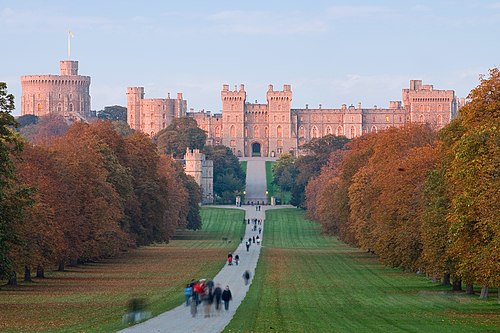 Windsor CastleRestored · prime 1820
 Tower of LondonRestored · prime 1285
 Bamburgh CastleRestored · prime 1904
All castles in England → · Strongest castles in England → · Castles of Europe
Play As Your Clan
Hold a real castle against whatever you choose to send at it, take a ship out in her own service years, or stand at the shoulder of someone the record remembers. The chronicler sets the scene; the deeds are yours.
Notable bearers of the Plantagenet name
- Henry II (1133-1189), founder of the English common law and the Angevin Empire
- Richard I 'the Lionheart' (1157-1199), king of England and crusader
- Edward I 'Longshanks' (1239-1307), conqueror of Wales and lawgiver of England
- Edward III (1312-1377), founder of the Order of the Garter and victor of Crécy
- Henry V (1386-1422), victor of Agincourt