
Croatia · Restored
Čakovec Castle
Stari grad Čakovec
Čakovec Castle (also called Zrinski Castle) is a medieval fortification in the centre of Čakovec, northern Croatia, located in Zrinski Park. The complex combines tall red-brick curtain walls and a white-painted palace block with steep red-tiled roofs, and today houses the Međimurje County Museum. The castle was rebuilt in a Baroque manner in the 18th century and is partly restored and in use.
Its prime
1750
Today
Restored
As it stood in 1750
What Čakovec Castle looked like in its prime.
A compact fortress of red brick curtain walls set on a light stone plinth surrounds a white-painted, two-storey palace with a continuous row of rectangular windows below steep red-tiled roofs. A slender, square white clock tower with grey quoins and a steep red, pyramidal roof rises above one corner. The main entrance is an arched gateway through the brick curtain wall; the ground outside is grassy (former moat now earth-filled) and the site sits within an urban park.
Its story
The story of Čakovec Castle.
The first fortification at Čakovec was built in the 13th century by Count Csák I Hahót, after whom the city is named. Across its more than seven-century history the castle passed through many notable hands, the Counts of Althann, the House of Lacković, the Counts of Celje, the House of Ernušt, the Keglević family and the House of Feštetić among them, and was subjected to several reconstructions.
Its great name is Zrinski. Nikola IV Zrinski, Ban of Croatia and hero of Siget, was granted the castle with the whole of Međimurje by King Ferdinand on 12 March 1546, as compensation for his battles against the Ottomans. The Zrinskis established in the castle a unique book collection, the Bibliotheca Zriniana, and Čakovec was the scene of the Zrinski–Frankopan conspiracy, a significant event in the history of Croatia.
Constructed of hewn stone and red brick, the castle is the biggest fortification in Međimurje County, standing in Zrinski Park not far from the town's central square. Partly restored, its main palace houses the Međimurje County Museum, the atrium doubles as an outdoor theatre in summer, and in 2007 the castle was entered in Croatia's Register of Cultural Goods.
Step inside
6 places to explore in 1750.
The record describes 6 distinct spots at Čakovec Castle, including 3 interiors: gatehouse arch and passage, inner atrium (outdoor theatre), main museum rooms in the palace. Create your own photoreal reconstruction and explore every one, more scenes means more rooms, more angles, and more of the place to stand in.
Build Your Own Castle
Recreate Čakovec Castle with AI to explore it.
The artist rebuilds it as it stood in 1750, a photoreal reconstruction that belongs to you alone. Pay with coins, no subscription needed.
Recreate this castle →Defend this castle →Whose castle
Clans who held Čakovec Castle.
The families that held Čakovec Castle for a decade or more across its history, follow a name to its clan.
Zrinski
Granted to Nikola IV Zrinski, Ban of Croatia, with all Međimurje by King Ferdinand on 12 March 1546; seat of the House of Zrinski.
Lacković
The House of Lacković is recorded among the castle's noble owners.
Celje
The Counts of Celje are recorded among the castle's noble owners.
Ernušt
The House of Ernušt is recorded among the castle's noble owners.
Althann
The Counts of Althann are recorded among the castle's noble owners.
Keglević
The Keglević family is recorded among the castle's noble owners.
Feštetić
The House of Feštetić is recorded among the castle's noble owners.
From the archive
Čakovec Castle on paper: the measured plan and period views.
The survey plan and photographs below are the ground truth this page's reconstructions are checked against, drawn and photographed while the castle was still a working garrison. Every image is public-domain or openly licensed, with its source named.
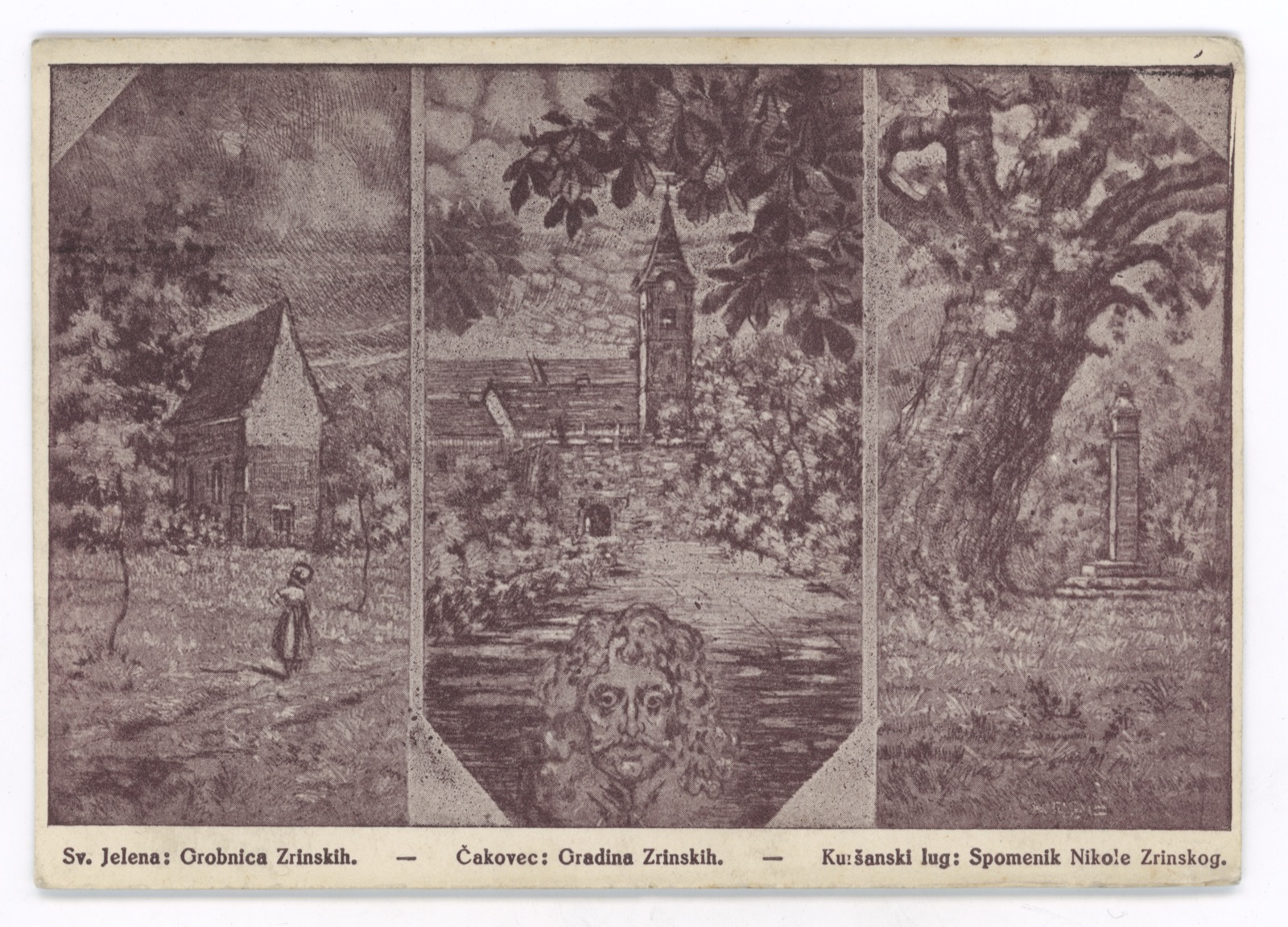
Čakovec
1924 · https://uri.hr/indigo/org:muo (via Europeana)
CC BY-SA
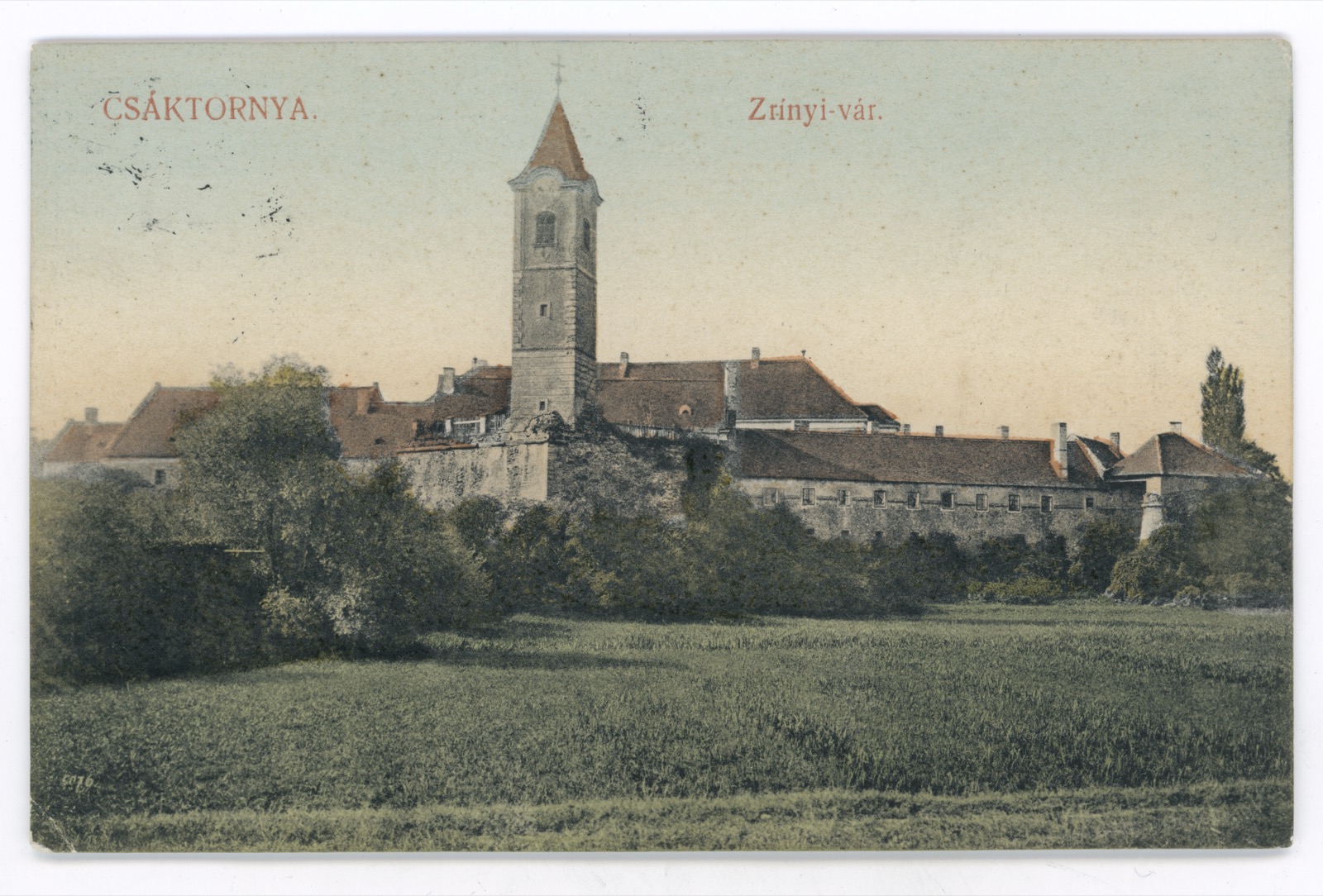
Čakovec - Castle
1908 · https://uri.hr/indigo/org:muo (via Europeana)
CC BY-SA


