Clan Rising
Samobor Castle today

Croatia · Ruin

Samobor Castle

Stari grad Samobor

Samobor Castle is a medieval hilltop fortress on Tepec hill above the town of Samobor, Croatia. Built in the 13th century and expanded through the early modern period, it survives today as a ruin with substantial stretches of curtain wall, towers and the chapel of St. Ana.

Photograph via Wikimedia Commons

First raised

1300

Its prime

1750

Today

Ruin

As it stood in 1750

What Samobor Castle looked like in its prime.

Perched on a rocky hill above the town, the castle reads as an irregular, indented stone complex of three linked parts with broad curtain walls and multiple ruined towers. Walls are of local pale grey stone with many rectangular window and door openings; several tower bases and a semicircular chapel tower remain partly standing. The layout forms an elongated trapezoidal courtyard; most upper floors and roofs are missing, leaving exposed floor levels, stair openings and fragments of the southern three‑storey house.

Its story

The story of Samobor Castle.

Samobor Castle was raised between 1260 and 1264 by supporters of the Czech king Ottokar II of Bohemia, then at war with the Hungarian king Stephen V. Croatian-Hungarian forces under the duke of Okić soon retook it, and he was rewarded with the city of Samobor and the privilege of collecting its local taxes.

The first known owners were the Babonić family, after whom the castle passed to the Hungarian-Croatian kings. In the 15th century it belonged to the Counts of Celje, and at the beginning of the 16th to the Frankopans; then came a run of owners, the counts Tržac, Tahy, Auersperg and Kiepach, with the Counts of Erdödy-Kulmer the last actually to live in it.

Samobor's municipal government bought the castle from the Montecuccoli family in 1902. The ruin on Tepec hill stands only a ten-minute walk from the town centre, with remains of the old moat still visible, along with the massive entrance, most of the walls and the chapel of St Ana.

Step inside

9 places to explore in 1750.

The record describes 9 distinct spots at Samobor Castle, including 2 interiors: semicircular tower with the gothic chapel of st. ana, southern three-storey house with tuscan columned porches. Create your own photoreal reconstruction and explore every one, more scenes means more rooms, more angles, and more of the place to stand in.

Approach from the town along Vugrinščak creekRemains of the castle moat and outer approachMassive entrance and gatehouseElongated central courtyardSoutheastern high guard tower (ruins)Semicircular tower with the Gothic chapel of St. AnaPentagonal tower at the northern endSouthern three-storey house with Tuscan columned porchesWall-walk and battlements

Build Your Own Castle

Recreate Samobor Castle with AI to explore it.

The artist rebuilds it as it stood in 1750, a photoreal reconstruction that belongs to you alone. Pay with coins, no subscription needed.

Recreate this castle →

Castle Siege

Play Castle Siege at Samobor Castle.

A strategy game played on Samobor Castle’s real ground plan: the same surveyed walls shown in the archive below. Post your finite garrison on the battlements between assaults, then hold out as rams, siege towers, trebuchets and sappers arrive in ever-worse waves.

Sign in free to see the garrison muster. One castle costs 150 Clan Coins and is yours forever.

Sign in to take command →

See every castle’s leaderboard →

Whose castle

Clans who held Samobor Castle.

The families that held Samobor Castle for a decade or more across its history, follow a name to its clan.

  • Babonić

    The Babonić family were the castle's first known owners.

  • Celje

    Property of the Counts of Celje during the 15th century.

  • Frankopan

    In the possession of the Frankopan family from the beginning of the 16th century.

  • Erdödy-Kulmer

    The Counts of Erdödy-Kulmer were the last owners actually to live in the castle.

From the archive

Samobor Castle on paper: the measured plan and period views.

The survey plan and photographs below are the ground truth this page's reconstructions are checked against, drawn and photographed while the castle was still a working garrison. Every image is public-domain or openly licensed, with its source named.
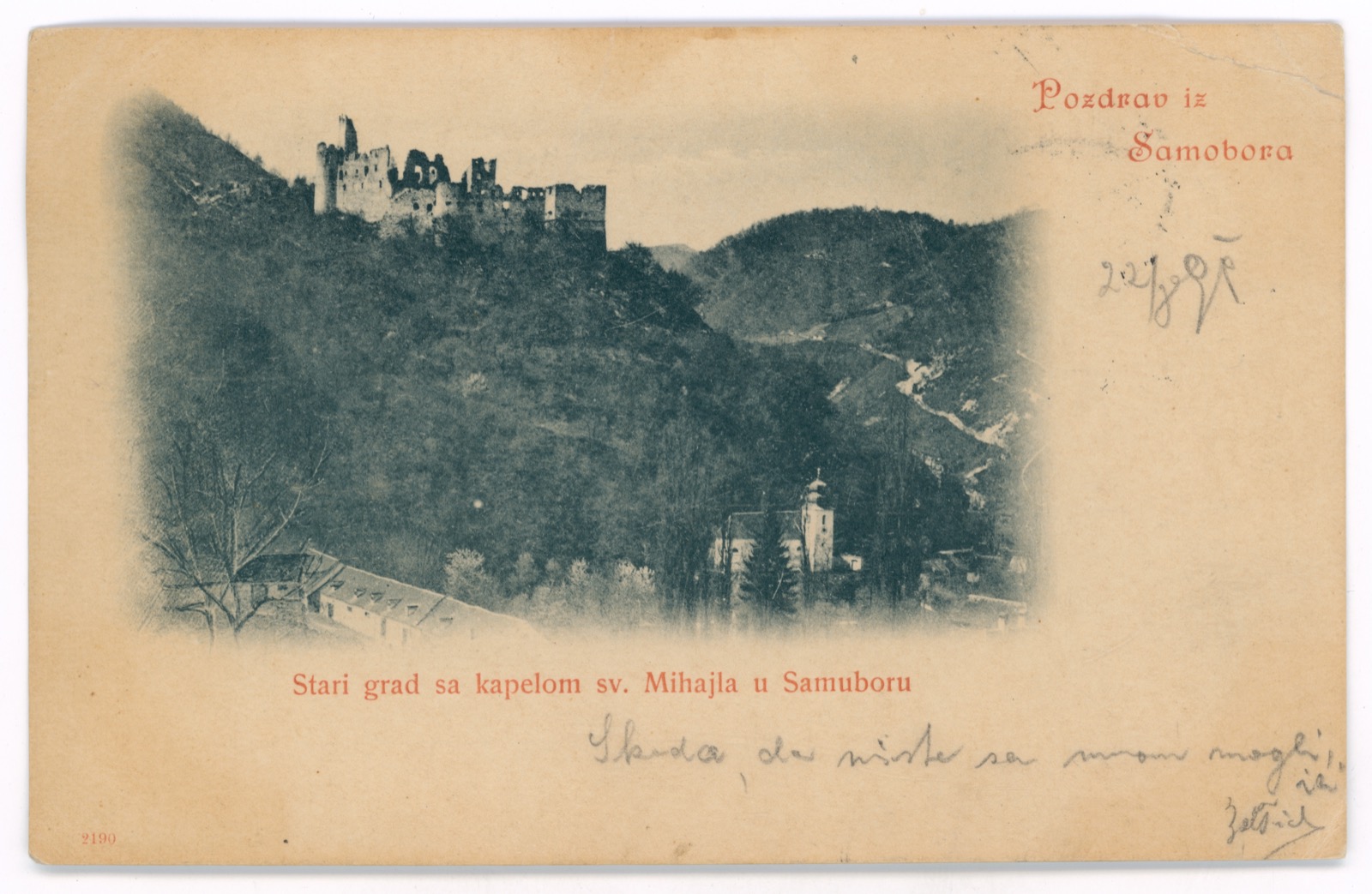
Samobor Castle, Samobor Castle

Samobor Castle

1904 · https://uri.hr/indigo/org:muo (via Europeana)

CC BY-SA
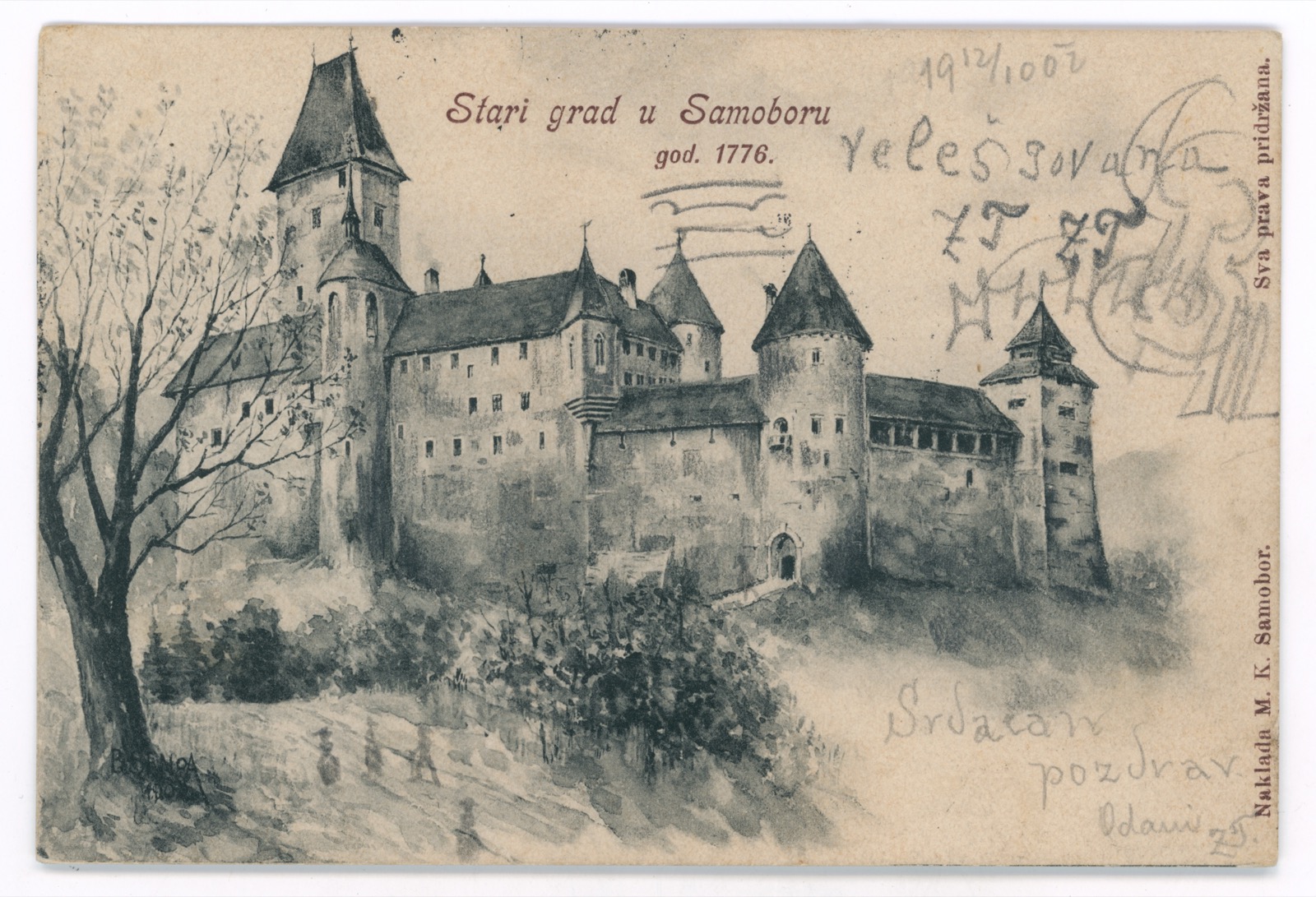
Samobor Castle, Samobor Castle

Samobor Castle

1910 · https://uri.hr/indigo/org:muo (via Europeana)

CC BY-SA

Nearby

Landmarks within reach of Samobor Castle.

Questions about Samobor Castle

What is the history of Samobor Castle?

Samobor Castle began as a 13th-century stone fortress built between 1260 and 1264 by supporters of Ottokar II of Bohemia during his war with Stephen V of Hungary. Croatian-Hungarian forces under the duke of Okić soon retook it. It later passed through royal, noble and aristocratic hands, was expanded in the 16th–18th centuries, and became a ruin after its last residents left at the end of the 18th century.

What is inside Samobor Castle?

Inside Samobor Castle are the remains of a semicircular tower containing the Gothic chapel of St. Ana, and fragments of a southern three-storey house. The house had Tuscan columned porches and a richly equipped interior. Most upper floors and roofs are missing, while exposed floor levels, stair openings and parts of the courtyard remain.

Why was Samobor Castle built, and what was it used for?

Samobor Castle was built as a stone fortress above important medieval routes and the market town of Samobor. Its original purpose was fortification, but extensions through the 16th, 17th and 18th centuries formed a larger courtyard and residential buildings. The changes eventually transformed it from a fortress into a Baroque countryside castle.

Where is Samobor Castle?

Samobor Castle is on Tepec hill above Samobor, above Vugrinščak creek. It stands only a ten-minute walk from the town centre and lies in the north-western corner of the Sava valley. The castle is associated with the town of Samobor in the administrative territorial entity of Samobor.

When was Samobor Castle built?

Samobor Castle was built in the 13th century, with the first fortress raised between 1260 and 1264. The site record gives 1300 as the first-raised year, which also places it in the 13th-century building phase described for the fortress. It was later enlarged and rebuilt through the 16th, 17th and 18th centuries.

Was Samobor Castle ever attacked or besieged?

Samobor Castle was attacked during the conflict between Ottokar II of Bohemia and Stephen V of Hungary. Croatian-Hungarian forces under the duke of Okić soon retook the castle after it had been erected by Ottokar’s supporters. The supplied history does not give a date for this assault beyond the 1260–1264 building period.

Which family or clan held Samobor Castle?

The Babonić family were Samobor Castle’s first known owners. The Counts of Celje held it during the 15th century, and the Frankopan family possessed it from the beginning of the 16th century. The Counts of Erdödy-Kulmer were the last owners actually to live in the castle.

What did Samobor Castle look like in its prime?

At its height, Samobor Castle was an irregular, indented stone complex of three linked parts around an elongated trapezoidal courtyard. Pale grey stone walls, broad curtain walls, ruined towers, a high southeastern guard tower and a northern pentagonal tower shaped its silhouette. A semicircular chapel tower, wall-walk and battlements were also part of the complex.

Is Samobor Castle still standing or is it a ruin?

Samobor Castle is a ruin, although substantial curtain walls, towers and the chapel of St. Ana survive. Most upper floors and roofs are missing, and several towers remain only partly standing. A restoration project exists, but only the chapel walls had been renovated so far; the work used fallen castle stone, cement and slaked lime.
All castles of Croatia · Castles of Europe · the best castles in Europe · explore the finished reconstructions.