Clan Rising
Novigrad Castle today

Croatia · Ruin

Novigrad Castle

Tvrđava Fortica - Stari grad Novigrad

Novigrad Castle (Fortica) is a ruined medieval hilltop fortress above the village of Novigrad in Zadar County, Croatia. Built on a limestone outcrop and repeatedly refortified from the 13th century onward, it served as a local stronghold and Venetian provveditore's residence before falling into ruin.

Photograph via Wikimedia Commons

Its prime

1647

Today

Ruin

As it stood in 1647

What Novigrad Castle looked like in its prime.

Perched on a steep pale limestone crag, the castle presents a long run of coarse stone curtain walls following the cliffline, with an outer retaining/winding wall descending the slope toward the village. The summit is a compact, plateau-like area bounded by continuous masonry walls with irregular rectangular embrasures and a few projecting angular sections; vegetation and Mediterranean pines cling to the rock below and around the walls. At its prime the walls and summit buildings would have been continuous and roofed, forming a small fortified residence.

Its story

The story of Novigrad Castle.

Novigrad Castle, locally called Fortica, crowns a limestone outcrop above the village of Novigrad in Zadar County. By late 1282 Juraj Gusić Kurjaković, count of Krbava, had erected new fortifications and thoroughly reinforced the castle, one of the repeated refortifications the site received from the 13th century onward.

Long a local stronghold, the castle served under Venetian management as the residence of the Venetian governor, the provveditore. It has since fallen into ruin, and the remains of the hilltop fortress still stand above the village.

Step inside

6 places to explore in 1647.

The record describes 6 distinct spots at Novigrad Castle, including 1 interior: provveditore's residence chamber (interior). Create your own photoreal reconstruction and explore every one, more scenes means more rooms, more angles, and more of the place to stand in.

Exterior approach from the villageLower winding retaining wall and rampRocky cliff face at the castle's baseWall walk and battlements along the summitSummit plateau and governor's platformProvveditore's residence chamber (interior)

Build Your Own Castle

Recreate Novigrad Castle with AI to explore it.

The artist rebuilds it as it stood in 1647, a photoreal reconstruction that belongs to you alone. Pay with coins, no subscription needed.

Recreate this castle →Defend this castle →

Whose castle

Clans who held Novigrad Castle.

The families that held Novigrad Castle for a decade or more across its history, follow a name to its clan.

  • Kurjaković

    Held by the Kurjaković counts of Krbava; Juraj Gusić Kurjaković refortified the castle by late 1282.

From the archive

Novigrad Castle on paper: the measured plan and period views.

The survey plan and photographs below are the ground truth this page's reconstructions are checked against, drawn and photographed while the castle was still a working garrison. Every image is public-domain or openly licensed, with its source named.
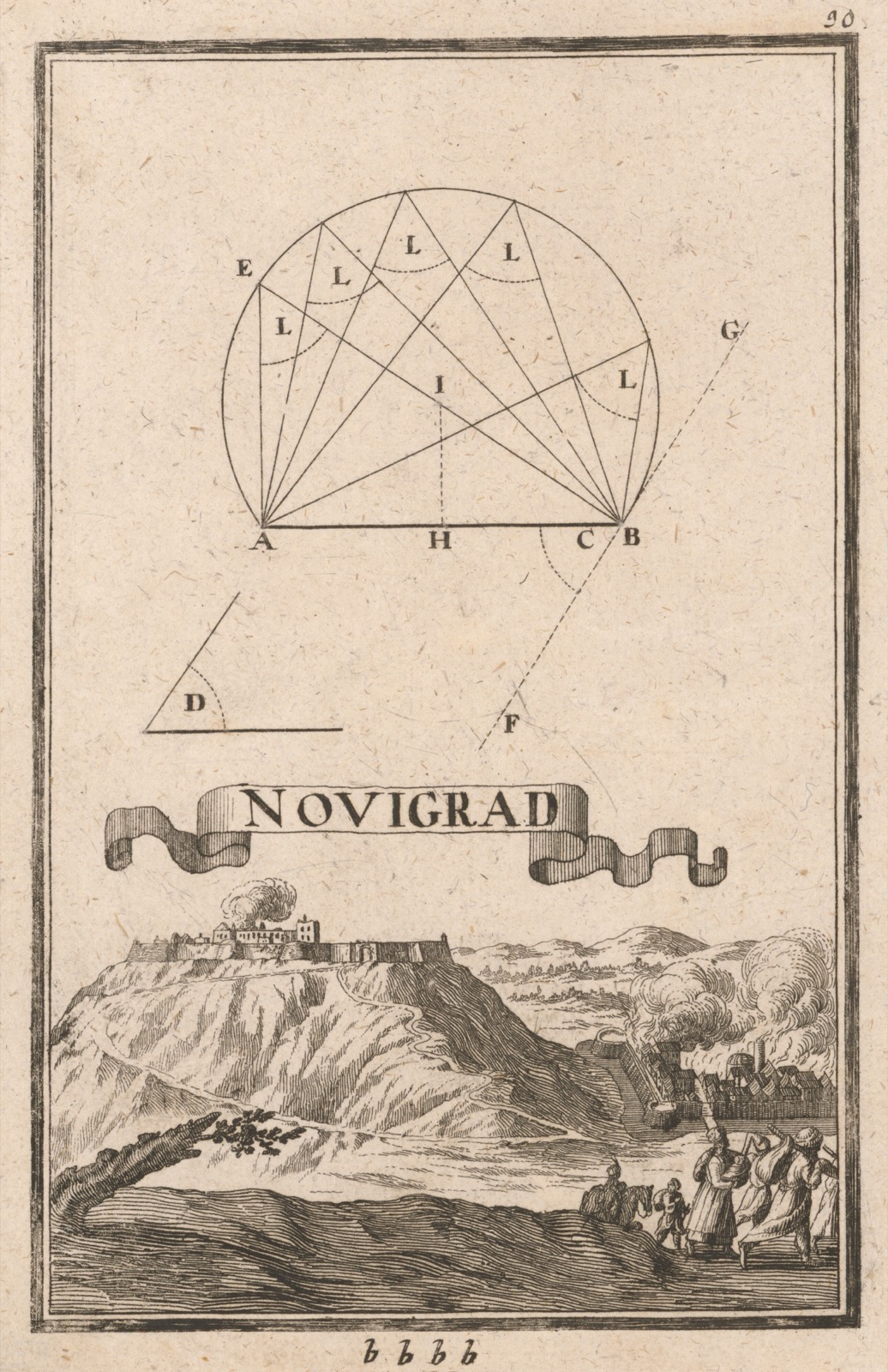
Novigrad, Novigrad Castle

Novigrad

· Slovak national gallery (via Europeana)

Public domain

Questions about Novigrad Castle

What is the history of Novigrad Castle?

Novigrad Castle has a history reaching back to the early 13th century, when an older Roman fortification was reconstructed. By late 1282, Juraj Gusić Kurjaković had thoroughly reinforced it to protect local possessions. It later became a Venetian governor’s residence, was briefly captured by the Ottoman Empire, and returned to Venetian control in 1647 before falling into ruin.

What is inside Novigrad Castle?

The documented interior of Novigrad Castle includes a chamber in the provveditore’s residence. The surviving site also includes the summit plateau and governor’s platform, together with a wall walk and battlements along the summit. These spaces formed part of a fortified residence when the summit buildings were continuous and roofed.

Why was Novigrad Castle built, and what was it used for?

Novigrad Castle was built as a fortified stronghold to protect possessions around Novigrad. It later served as a local stronghold under Venetian management and became the residence of the Venetian governor, or provveditore. Additional fortifications were built during Venetian rule, changing the earlier fortress into a fortified administrative residence.

Where is Novigrad Castle?

Novigrad Castle is above the village of Novigrad in Zadar County. It crowns a limestone outcrop above the village, in the Zadar County region. The fortress is a hilltop site overlooking the settlement rather than a castle within a major city.

When was Novigrad Castle built?

Novigrad Castle was first built in the 13th century, with the English account dating its reconstruction to 1220. It was built by reconstructing an older Roman fortification, and the site was repeatedly refortified from the 13th century onward. A major reinforcement was completed by late 1282.

Was Novigrad Castle ever attacked or besieged?

Novigrad Castle was captured by the Ottoman Empire in 1646 during the Cretan War and held for nine months. The Venetians recaptured it in 1647. The site therefore fell during that assault but returned to Venetian control the following year.

Which family or clan held Novigrad Castle?

Novigrad Castle was held by the Kurjaković counts of Krbava. Juraj Gusić Kurjaković refortified the castle by late 1282, strengthening the fortress to protect their possessions around Novigrad. Their control forms one of the castle’s documented medieval phases.

What did Novigrad Castle look like in its prime?

In its prime, Novigrad Castle was a compact hilltop fortress on a steep, pale limestone crag. Coarse stone curtain walls followed the cliffline, while an outer retaining and winding wall descended towards the village. Continuous masonry walls, irregular rectangular embrasures and projecting angular sections bounded the summit plateau, with Mediterranean pines around the rock.

Is Novigrad Castle still standing or is it a ruin?

Novigrad Castle is a ruin, although its hilltop fortress remains standing above the village. The surviving fabric consists of the limestone outcrop, curtain walls, retaining and winding walls, summit masonry, battlements and related platforms. The site’s summit buildings were once continuous and roofed, but the castle has since fallen into ruin.
All castles of Croatia · Castles of Europe · the best castles in Europe · explore the finished reconstructions.