
Denmark · Ruin
Hammershus
Hammershus is a medieval fortress on the northern tip of Bornholm, Denmark, built in the 13th century and later abandoned in the 18th century. It consists of a large inner castle with a prominent mantel tower and an extended perimeter of curtain walls enclosing rings of fortifications.
First raised
1200
Its prime
1300
Today
Ruin
As it stood in 1300
What Hammershus looked like in its prime.
Hammershus stands on a rocky headland above the Baltic with roughly semicircular grey stone curtain walls forming an extended 750-metre perimeter. A dominant cylindrical 'mantel' tower rises above the inner ward; box-like residential buildings cluster within concentric rings of fortification. Continuous stone wall-walks and parapets encircle the site, while the roofs of halls and chambers sit within the walls. At its prime the complex is intact, with complete towers, battlement walks and enclosed courtyards overlooking a deep southern valley and the sea.
Its story
The story of Hammershus.
Valdemar Sejr, Anders Sunesen and the Rock at Hammeren
Hammershus is thought to have been founded early in the thirteenth century on a rock seventy-four metres above the sea at Bornholm's north-western corner, possibly by agreement between King Valdemar Sejr and Anders Sunesen, archbishop of Lund. It is most likely the castle Jakob Erlandsen meant when Christopher I accused him of breaking the ban on raising new fortifications and he answered that he had merely enlarged one that already stood. What grew on the rock (the castle residence, the great mantel tower, and a ring wall running some 750 metres around the castle ground) became the largest medieval fortification in Scandinavia.
Crown Against Archbishop: Eberstein's Sixteen Months, 1259–1325
The castle changed hands repeatedly in the long quarrel between the Danish crown and the archbishopric of Lund, which used it as a refuge; royal armies took it in 1259, in 1265 under Erik Klipping, and again in 1319 and 1325. Klipping's conquest was undone in 1276, when Hammershus went back to the archbishop, and under Jens Grand and Esger Juul it was once more a piece in the contest between crown and church.
Erik Menved objected to outlaws sheltering there, and in 1319 his marshal Ludvig Albertsen Eberstein succeeded in taking the castle. Eberstein began as the king's captain at Hammershus, but when Christopher II handed it back to the archbishop in 1321 he stayed on as castellan for the see of Lund, and in 1324–25 defended it against the attack and siege of the royal marshal Peder Vendelbo. After sixteen months Eberstein surrendered, and the crown took over the castle, only to return it soon afterwards to Lund, which kept Hammershus until 1522.
Lübeck's Pawn and the Rising of 1658
In 1522 Christian II claimed Hammershus and held Bishop Jens Andersen Beldenak of Funen in custody there. The same year the castle was taken by Lübeck, which repaired it and used it through the years after 1526, when Bornholm was theirs in pawn. Hammershus came back into Danish hands in 1576 and was then left to decay, judged out of date as firearms improved. Its guns were not finished with, however: Bernt Knop, who built the mantel tower, had also strengthened the works, and they drove off two Swedish warships as late as 1645. In June of that year, during the Torstenson War, Swedish forces under Carl Gustaf Wrangel captured the fortress.
The peace of Roskilde in 1658 gave Bornholm to Sweden, which installed Johan Printzenskiöld as governor. That December the island's rebels, led by Jens Pedersen Kofoed, killed him at Rønne (the shot was fired by Villum Clausen) took the castle the following day, and handed the island back to the king of Denmark.
State Prison, Then Quarry
With its military value spent, Hammershus served as a state prison. Corfitz Ulfeldt and his wife Leonora Christina were confined here from 1660; they escaped from the mantel tower, were retaken, held in a dark castle chapel and afterwards shut in the Blue Tower on separate floors. The German Pietist theologian, physician, alchemist and occultist Johann Conrad Dippel was imprisoned at Hammershus from 1719 to 1724. The last castle chaplain had already left in 1648 to become parish priest at Nyker.
In 1743 Hammershus was abandoned as a stronghold and worked as a quarry, its stone carried off for buildings such as the main guardhouse in Rønne. The ruin was placed under protection in 1822, and since the major excavation and restoration work of the late nineteenth century it has been maintained without a break.
Step inside
10 places to explore in 1300.
The record describes 10 distinct spots at Hammershus, including 3 interiors: mantel tower ground chamber, inner courtyard and base residence, inner ring box rooms. Create your own photoreal reconstruction and explore every one, more scenes means more rooms, more angles, and more of the place to stand in.
Build Your Own Castle
Recreate Hammershus with AI to explore it.
The artist rebuilds it as it stood in 1300, a photoreal reconstruction that belongs to you alone. Pay with coins, no subscription needed.
Recreate this castle →Defend this castle →From the archive
Hammershus on paper: the measured plan and period views.
The survey plan and photographs below are the ground truth this page's reconstructions are checked against, drawn and photographed while the castle was still a working garrison. Every image is public-domain or openly licensed, with its source named.
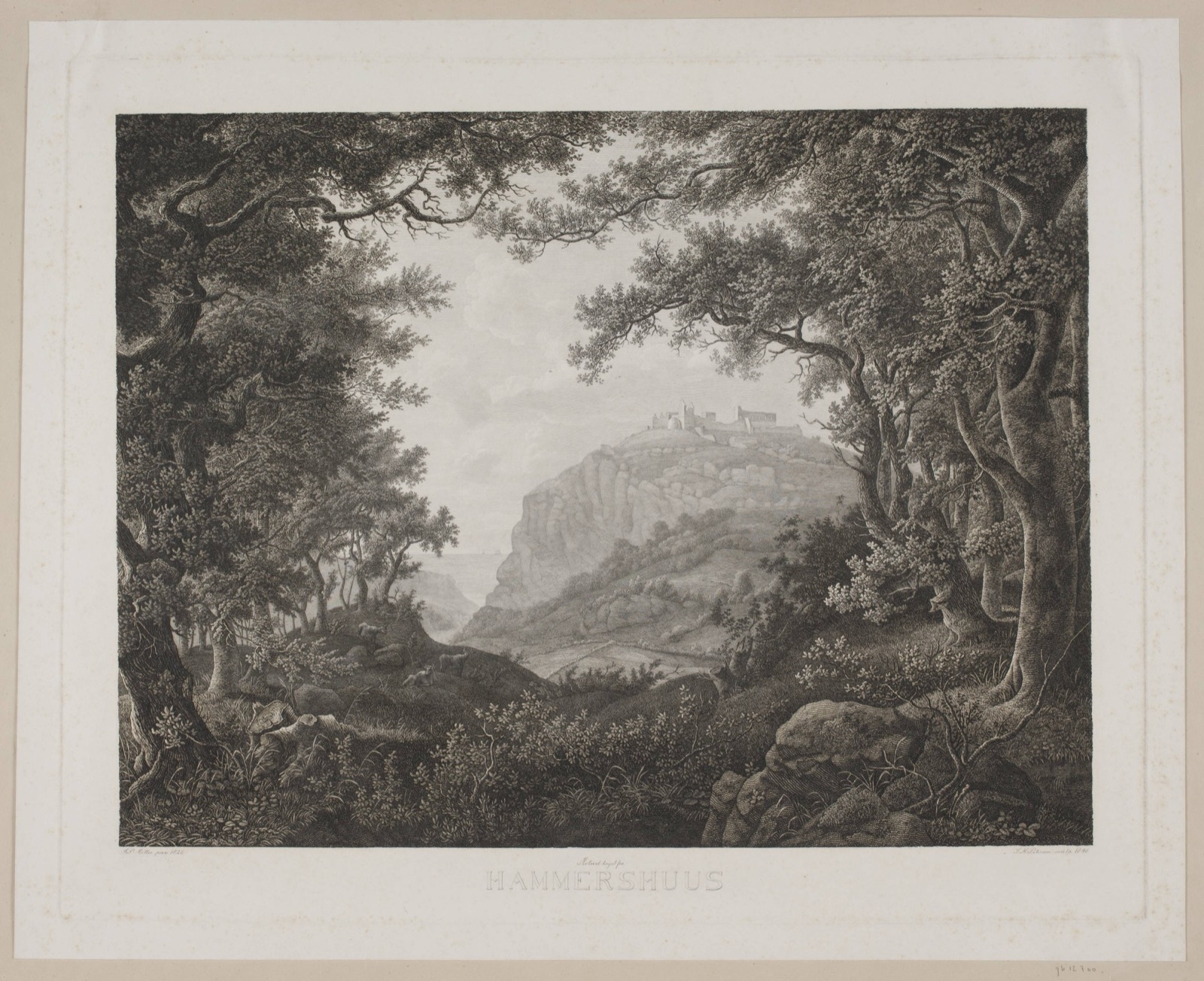
Hammershus
1846 · National Gallery of Denmark (via Europeana)
Public domain
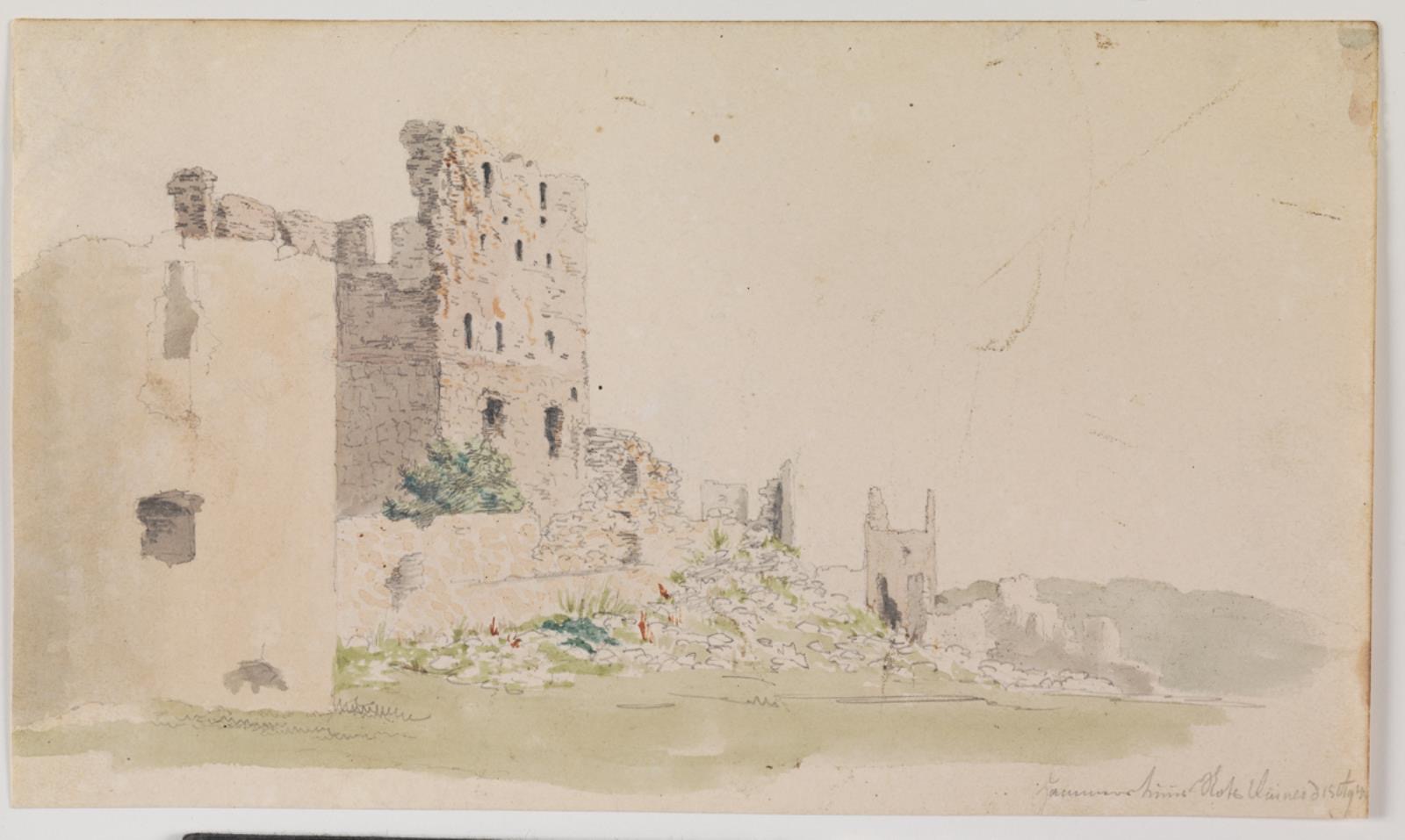
Hammershus. Bornholm
1843 · National Gallery of Denmark (via Europeana)
Public domain
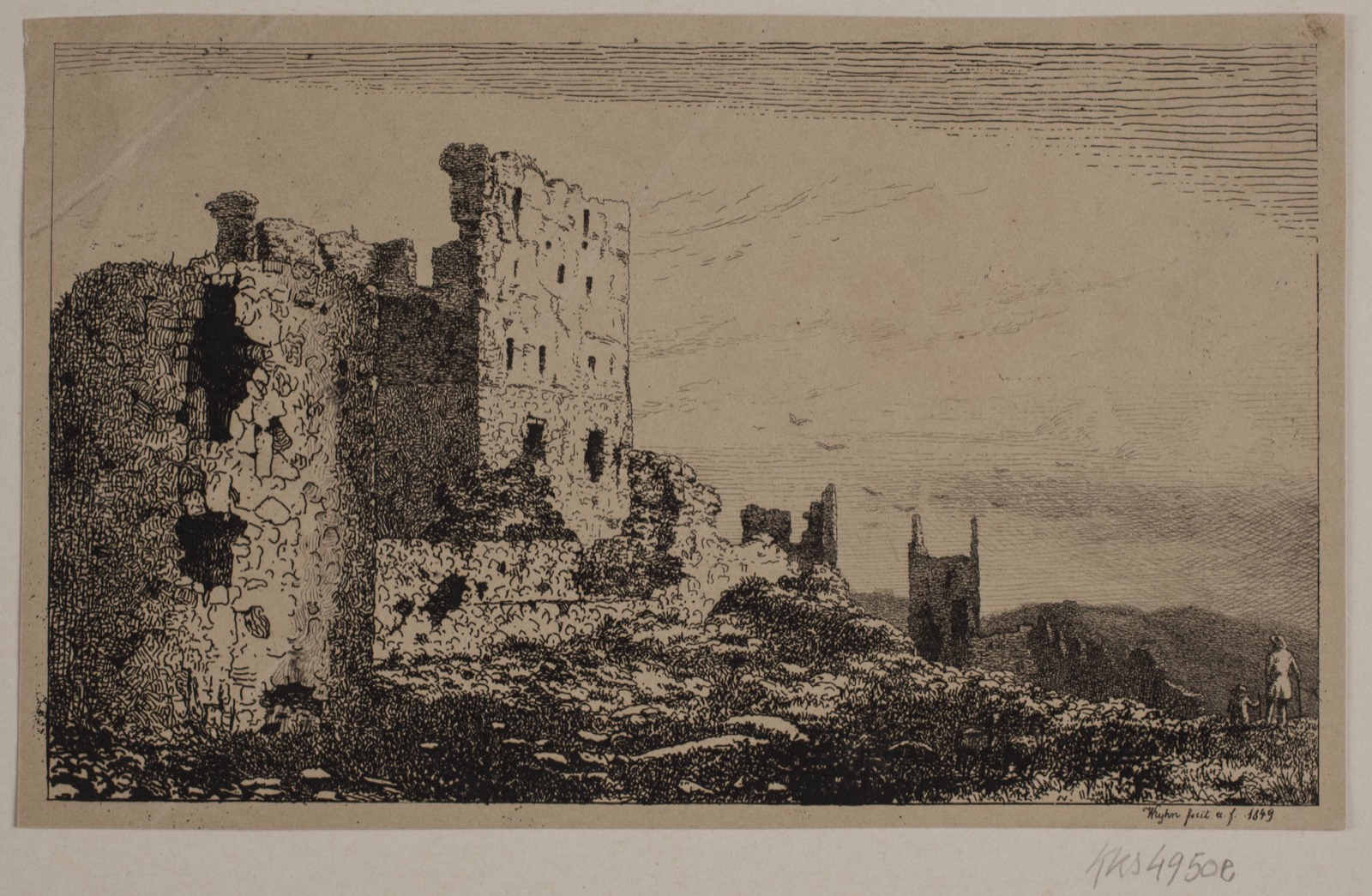
Hammershus på Bornholm
1849 · National Gallery of Denmark (via Europeana)
Public domain


