Clan Rising
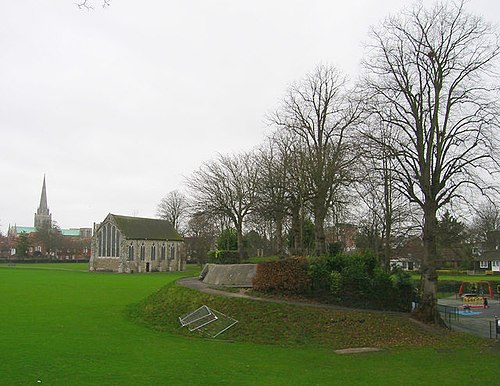
Duffield Castle today

England · Ruin

Duffield Castle

Duffield Castle was a Norman motte-and-bailey castle on a rocky promontory overlooking a river in Duffield, Derbyshire. Built in timber after the Conquest and later rebuilt in stone, it possessed a very large rectangular stone keep; the site was razed in the 13th century and survives as earthworks and foundations managed by the National Trust. The location is a scheduled monument and has been the subject of archaeological excavation.

Photograph via Wikimedia Commons

Its prime

1200

Today

Ruin

As it stood in 1200

What Duffield Castle looked like in its prime.

Sits atop a rocky promontory facing the river, a high earthen motte with the broad rectangular footprint of a massive stone keep at its summit; the keep measures roughly 98 by 95 feet and is built of coursed local stone. Below the motte lie the slighted outlines of a surrounding bailey and ancillary foundations extending over about five acres. The skyline is dominated by the squat, blocky keep massing, low curtain lines and the grassy mound and ditches falling to the riverbank.

Its story

The story of Duffield Castle.

Duffield Castle occupied a rocky promontory facing the river, a naturally defensible spot where Anglo-Saxon remains suggest earlier occupation, possibly by a thane named Siward, alongside quantities of Roman and Romano-British pottery. The Norman castle spread over an estimated five acres and had a massive square stone keep, 31 metres on a side, entered by stairways to the first floor since the ground level had neither windows nor doors.

The castle belonged to the de Ferrers: Robert distinguished himself against the Scots at the Battle of the Standard in 1138 and was made Earl of Derby, and the family held the honour for seven generations until Earl Robert rebelled against Henry III. The de Ferrers lands then went to Prince Edmund, shortly afterwards created Earl of Lancaster. The site, now a scheduled monument, survives as earthworks and foundations.

Step inside

9 places to explore in 1200.

The record describes 9 distinct spots at Duffield Castle, including 4 interiors: west-side stairways and first-floor entrances, ground floor foundations and vaulted substructure, first-floor guardroom / stateroom and more. Create your own photoreal reconstruction and explore every one, more scenes means more rooms, more angles, and more of the place to stand in.

Approach from the riverbankCastle Orchard / Hazlewood Road approachSummit of the motte beside the keepWest-side stairways and first-floor entrancesGround floor foundations and vaulted substructureFirst-floor guardroom / stateroomSecond-floor domestic apartments and kitchenBailey and courtyardExcavation area to the south / southeast

Build Your Own Castle

Recreate Duffield Castle with AI to explore it.

The artist rebuilds it as it stood in 1200, a photoreal reconstruction that belongs to you alone. Pay with coins, no subscription needed.

Recreate this castle →Defend this castle →

Whose castle

Clans who held Duffield Castle.

The families that held Duffield Castle for a decade or more across its history, follow a name to its clan.

  • Ferrers

    Held by the de Ferrers, Earls of Derby from 1138, for seven generations until Earl Robert's rebellion against Henry III cost the family its lands, which passed to Prince Edmund, later Earl of Lancaster.

Questions about Duffield Castle

What is the history of Duffield Castle?

Duffield Castle began as a Norman timber outpost after the Conquest, built to protect the de Ferrers’ northern lands. It was later rebuilt in stone. The castle was destroyed in 1173, rebuilt, and then razed in 1269 after Earl Robert de Ferrers rebelled against Henry III. Its lands passed to Prince Edmund, later Earl of Lancaster.

What is inside Duffield Castle?

Inside Duffield Castle, the surviving archaeological remains include ground-floor foundations and a vaulted substructure. West-side stairways led to first-floor entrances, where there was a guardroom or stateroom and private inner rooms. The second floor contained domestic apartments, kitchens and private retirement rooms, with a chapel considered possible.

Why was Duffield Castle built, and what was it used for?

Duffield Castle was built as an outpost to protect the de Ferrers’ lands further north. Its first structure was probably timber, and it was later rebuilt in stone with a massive keep. The castle occupied a naturally defensible rocky promontory overlooking the river.

Where is Duffield Castle?

Duffield Castle is in Duffield, Derbyshire, on a rocky promontory overlooking the river. The site faces the river and was naturally defensible. Its surviving remains lie within the historic settlement of Duffield.

When was Duffield Castle built?

Duffield Castle was first raised after the Norman Conquest, but the exact year is not recorded. The original castle was probably timber, while the stone rebuilding belongs to a later phase. Its documented prime year is 1200.

Which family or clan held Duffield Castle?

The de Ferrers, Earls of Derby, held Duffield Castle from 1138 for seven generations. Earl Robert’s rebellion against Henry III cost the family its lands, which passed to Prince Edmund, later Earl of Lancaster. The castle therefore changed hands after the de Ferrers’ defeat and dispossession in 1269.

What did Duffield Castle look like in its prime?

In its prime, Duffield Castle had a massive, squat rectangular stone keep on a high earthen motte. The keep measured roughly 98 by 95 feet, or 31 metres on each side, and was built of coursed local stone. Below it were the bailey, low curtain lines, ancillary foundations, grassy ditches and the river-facing slopes.

Is Duffield Castle still standing or is it a ruin?

Duffield Castle is now a ruin, with earthworks and foundations surviving on the site. The castle was literally razed to the ground in 1269, and much of its stone was scavenged for other buildings. The foundations have been marked out, and the location is a scheduled monument.
All castles of England · Castles of Europe · the best castles in Europe · explore the finished reconstructions.