Clan Rising
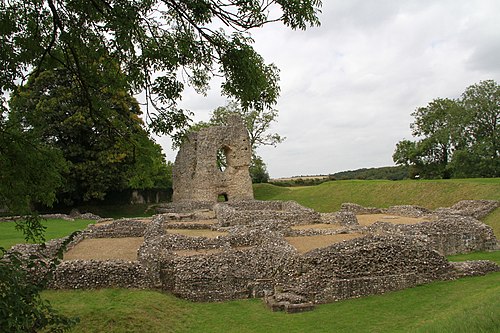
Pilsbury Castle today

England · Ruin

Pilsbury Castle

Pilsbury Castle was a Norman motte-and-bailey castle on a limestone outcrop overlooking the River Dove near the village of Pilsbury in Derbyshire. The earthwork site comprises a central motte with two adjacent bailey enclosures, ditches and other defensive banks; by the 20th century only mounds and earthworks remained and the site is a Scheduled Ancient Monument.

Photograph via Wikimedia Commons

Its prime

1150

Today

Ruin

As it stood in 1150

What Pilsbury Castle looked like in its prime.

A compact motte-and-bailey complex on a limestone outcrop: a conical earthen motte beside two roughly oval baileys about 40 m and 45 m across, all surrounded by steep ditches and packed earth ramparts. At its prime the defences were timber: a palisade around the motte summit and wooden fencing and buildings within the baileys. The site sits above the River Dove valley, with the motte commanding views toward the river crossing and surrounding pasture.

Its story

The story of Pilsbury Castle.

The land around Pilsbury was granted to Henry de Ferrers by King William, and after the area's devastation in the harrying of the North, the motte-and-bailey castle may have been built by Henry to establish control. An alternative reading places its construction under Robert de Ferrers or his father during the Anarchy, when the de Ferrers backed King Stephen while the neighbouring Earl of Chester supported Empress Matilda.

The castle was later abandoned, perhaps destroyed after William de Ferrers' part in the Revolt of 1173–74, or simply given up when the land passed to the Duchy of Lancaster after the sixth Earl was dispossessed. What survives on the limestone outcrop above the River Dove is earthwork: a central motte, two bailey enclosures, ditches and defensive banks, protected as a Scheduled Ancient Monument.

Step inside

7 places to explore in 1150.

The record describes 7 distinct spots at Pilsbury Castle, including the full exterior approach. Create your own photoreal reconstruction and explore every one, more scenes means more rooms, more angles, and more of the place to stand in.

Approach across the pasture to the motteTop of the motte (site of the timber keep)Inner bailey (smaller enclosure)Outer bailey (larger enclosure)Defensive ditch and banksOverlook toward the River Dove and crossingArea of revealed foundations within a bailey

Build Your Own Castle

Recreate Pilsbury Castle with AI to explore it.

The artist rebuilds it as it stood in 1150, a photoreal reconstruction that belongs to you alone. Pay with coins, no subscription needed.

Recreate this castle →Defend this castle →

Whose castle

Clans who held Pilsbury Castle.

The families that held Pilsbury Castle for a decade or more across its history, follow a name to its clan.

  • de Ferrers

    Held by the de Ferrers from King William's grant to Henry de Ferrers until the land passed to the Duchy of Lancaster after the sixth Earl was dispossessed.

Questions about Pilsbury Castle

What is the history of Pilsbury Castle?

Pilsbury Castle was probably built in the 11th century to establish Norman control after the area was devastated during the harrying of the North. An alternative theory places its construction in the 12th century, during the Anarchy, when the de Ferrers supported King Stephen. It was later abandoned, possibly after the Revolt of 1173–74 or when the land passed to the Duchy of Lancaster.

Why was Pilsbury Castle built, and what was it used for?

Pilsbury Castle was built to establish Norman control over the area and to oversee an important River Dove crossing. Its position on high ground along the river routeway gave it command of the crossing and surrounding approach. The castle later became redundant or was abandoned as local circumstances changed, including the rise of nearby Hartington and the depopulation of Pilsbury.

Where is Pilsbury Castle?

Pilsbury Castle is near the village of Pilsbury in Derbyshire, in the Hartington Town Quarter. It stands on a limestone outcrop above the River Dove, overlooking the river valley and a crossing point. The site occupies high ground near the route along the River Dove.

When was Pilsbury Castle built?

Pilsbury Castle was probably built in the 11th century, although an alternative theory places it in the 12th century during the Anarchy. The first-raised year is not recorded, so no exact construction date can be given. Both theories concern the creation of its Norman motte-and-bailey defences.

Which family or clan held Pilsbury Castle?

The de Ferrers held Pilsbury Castle from King William's grant to Henry de Ferrers until the land passed to the Duchy of Lancaster after the sixth Earl was dispossessed. The family’s connection began with Henry de Ferrers and continued through the de Ferrers line. The castle was later abandoned after the change in landholding.

What did Pilsbury Castle look like in its prime?

In its prime, Pilsbury Castle was a compact timber motte-and-bailey complex on a limestone outcrop. A conical earthen motte stood beside two roughly oval baileys, about 40 metres and 45 metres across, with steep ditches and packed-earth ramparts. A timber palisade surrounded the motte summit, while wooden fencing and buildings occupied the baileys.

Is Pilsbury Castle still standing, or is it a ruin?

Pilsbury Castle is a ruin, with only earthworks and mounds surviving above ground. The remains include a central motte, two bailey enclosures, ditches and defensive banks on the limestone outcrop. Archaeological surveys at the beginning of the present century revealed the foundations of the castle, while by the 20th century little remained to see except the mound and earthworks.
All castles of England · Castles of Europe · the best castles in Europe · explore the finished reconstructions.