Estonia · Partial ruin
Haapsalu Castle
Haapsalu piiskopilinnus
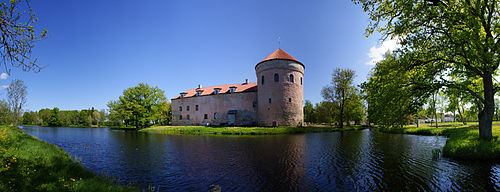
Haapsalu Castle is a medieval episcopal castle with an attached cathedral in Haapsalu, Estonia, founded in the 13th century as the seat of the Bishopric of Ösel-Wiek. The complex combines a large enclosed stone stronghold, a single‑naved cathedral (St. Nicholas), a cylindrical watchtower and extensive curtain walls, with parts later falling into ruin.
First raised
1201
Its prime
1527
Today
Partial ruin
As it stood in 1527
What Haapsalu Castle looked like in its prime.
A vast rectangular stone enclosure of pale-grey limestone covering a large inner ward, with curtain walls 1.2–1.8 m thick rising to around 15 m; the west side is dominated by a tall single‑naved cathedral with a high, narrow Gothic window and a rounded baptistery apse capped by a conical roof. A cylindrical 29‑metre watchtower with a pointed conical cap rises above the roofline; long stretches of curtain wall continue eastward as lower ranges punctured by regular window and embrasure openings. At its prime the roofs, battlements and courtyard buildings formed a continuous defended complex.
Its story
The story of Haapsalu Castle.
A Bishopric Looking for a Seat, 1228-1279
In 1228 Albert, Archbishop of Riga, formed a new diocese out of Läänemaa, Saaremaa and Hiiumaa and named Gottfried of Dünamünde as its bishop. On 1 October that year Henry, King of the Romans, created the bishopric a state of the Holy Roman Empire, and the papal legate Wilhelm of Modena fixed its borders permanently in 1234.
The bishopric's first residence was Lihula Castle, where a stone stronghold was raised with the help of the Livonian Brothers of the Sword. In an attempt to avoid conflict with the Order, the bishop moved to Perona, which the Lithuanians burned ten years later. In the early 1260s the seat was carried to Haapsalu, where an episcopal stronghold and cathedral were begun; the church is dated to 1260 and its consecration to 1279.
The Ring Wall, St Nicholas and the White Lady
The first stage of the fortress is reckoned complete around 1300. A ring wall originally eight metres high was later raised to fifteen with its parapet, and on the western side a watchtower of 29 metres later served as the bell tower. The great eastern forecastle was built in 1507-1508, and under Bishop Johannes IV Kievel (1515-1527) the stronghold reached its final dimensions, more than 30,000 square metres: after the Order's castle at Viljandi, the second largest medieval fortress in Estonia.
The cathedral of St Nicholas stood within the walls, holding the bishop's throne and the chapter of Ösel-Wiek; it is the largest single-naved church in the Baltic countries, its vaults 15.5 metres high. A legend of the castle tells of a canon who brought an Estonian girl inside disguised as a choirboy; when she was found out she was immured in the chapel wall and the canon starved to death in prison. Her image, the White Lady, is said to appear on the chapel's inner wall on full moon nights in August, when the White Lady Days festival is held.
The Livonian War and the Surrender of 1576
In 1559 Frederik II of Denmark bought the bishopric and gave it to his brother, Duke Magnus. War with Sweden broke out in 1563, and in early August the Swedes took Haapsalu. In 1575 Muscovite troops raided Läänemaa and Saaremaa, and on 22 February 1576 Claus von Ungern, in Danish service, gave up Haapsalu to the Russians without a fight. The town was held by Muscovy until 1581, when Karl Henriksson Horn retook Haapsalu and Lihula with the whole of Läänemaa.
The stronghold was severely damaged in the war, the small castle and the outer fortification left partly destroyed. The Swedes rebuilt to the new rules of fortification, cutting a fresh ditch inside the outer walls and raising an earthen rampart behind it for cannon and shelter from bombardment.
From Jacob De la Gardie to Peter I, 1625-1710
By the 17th century the Swedes ruling Estonia no longer used the castle as a defensive building. Gustav II Adolf sold the town of Haapsalu, the castle and the neighbouring land to Count Jacob De la Gardie in 1625, who intended a modern castle out of the dilapidated stronghold. Between 1641 and 1647 the castle was rebuilt as a residence and the cathedral, in ruins since 1563, was restored.
At three in the morning on 23 March 1688 fire broke out. It took the living quarters of the palace, the roof of the church and the organ given by Count Magnus Gabriel De la Gardie in 1658; everything was lost except the church, and the courtyard lay in ruins for a century and a half. In 1710, during the Great Northern War, Estonia fell under Russian rule and the walls were partly demolished at the command of Peter I.
Storm, Soviet Closure and Conservation, 1726-1998
A spring storm on 18 March 1726 carried off the church roof; the diminished congregation could not afford the renovation and moved to the town church. In 1886-1889 the church was renovated and rebuilt, and on 15 October 1889, on the initiative of Leopold Rödder, pastor of St John's, the first service dedicated to St Nicholas was held.
The Soviet occupation closed the church in 1940. Services went on during the Second World War, but in the spring of 1944 intruders broke in and destroyed the altar and altarpiece, the organ, the chairs and the windows. In 1946 the congregation asked the Soviet government to list the cathedral as a protected monument, without success, and the building stood empty for years. A Mother's Altar commemorating Estonian mothers killed during the Soviet occupation was consecrated on Mother's Day 1992.
Of the bishop's castle only the watchtower, the ring wall and the rampart works inside the forecastle walls have survived. Conservation of the ruins began in the 1980s and the church was restored. The site has been listed as an architectural monument since 19 June 1998.
Step inside
9 places to explore in 1527.
The record describes 9 distinct spots at Haapsalu Castle, including 2 interiors: cathedral nave (interior), round baptistery (baptismal chapel). Create your own photoreal reconstruction and explore every one, more scenes means more rooms, more angles, and more of the place to stand in.
Build Your Own Castle
Recreate Haapsalu Castle with AI to explore it.
The artist rebuilds it as it stood in 1527, a photoreal reconstruction that belongs to you alone. Pay with coins, no subscription needed.
Recreate this castle →Defend this castle →From the archive
Haapsalu Castle on paper: the measured plan and period views.
The survey plan and photographs below are the ground truth this page's reconstructions are checked against, drawn and photographed while the castle was still a working garrison. Every image is public-domain or openly licensed, with its source named.
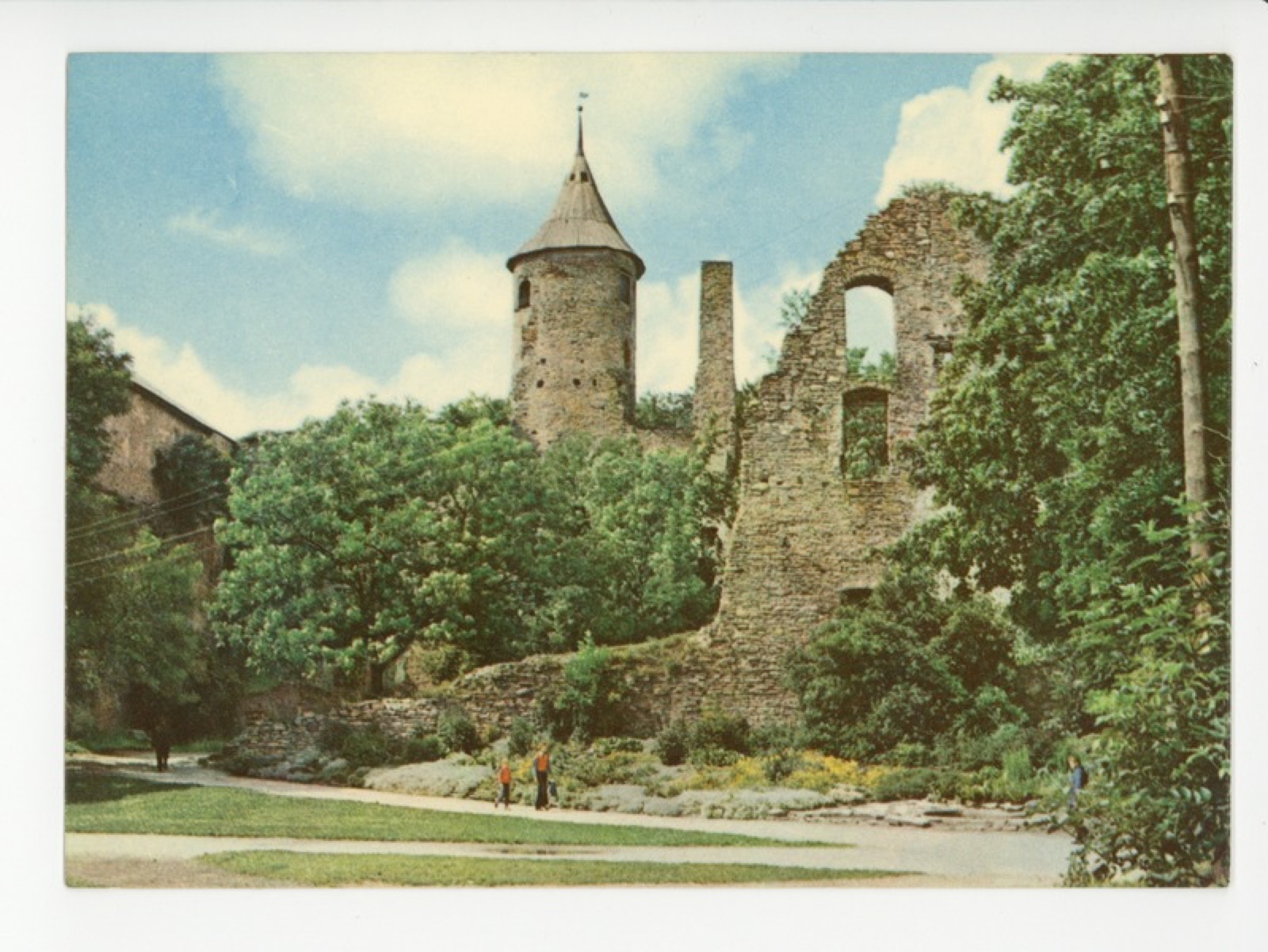
Haapsalu linnuse vahitorn
· Under and Tuglas Literature Centre (via Europeana)
CC0 (no rights reserved)
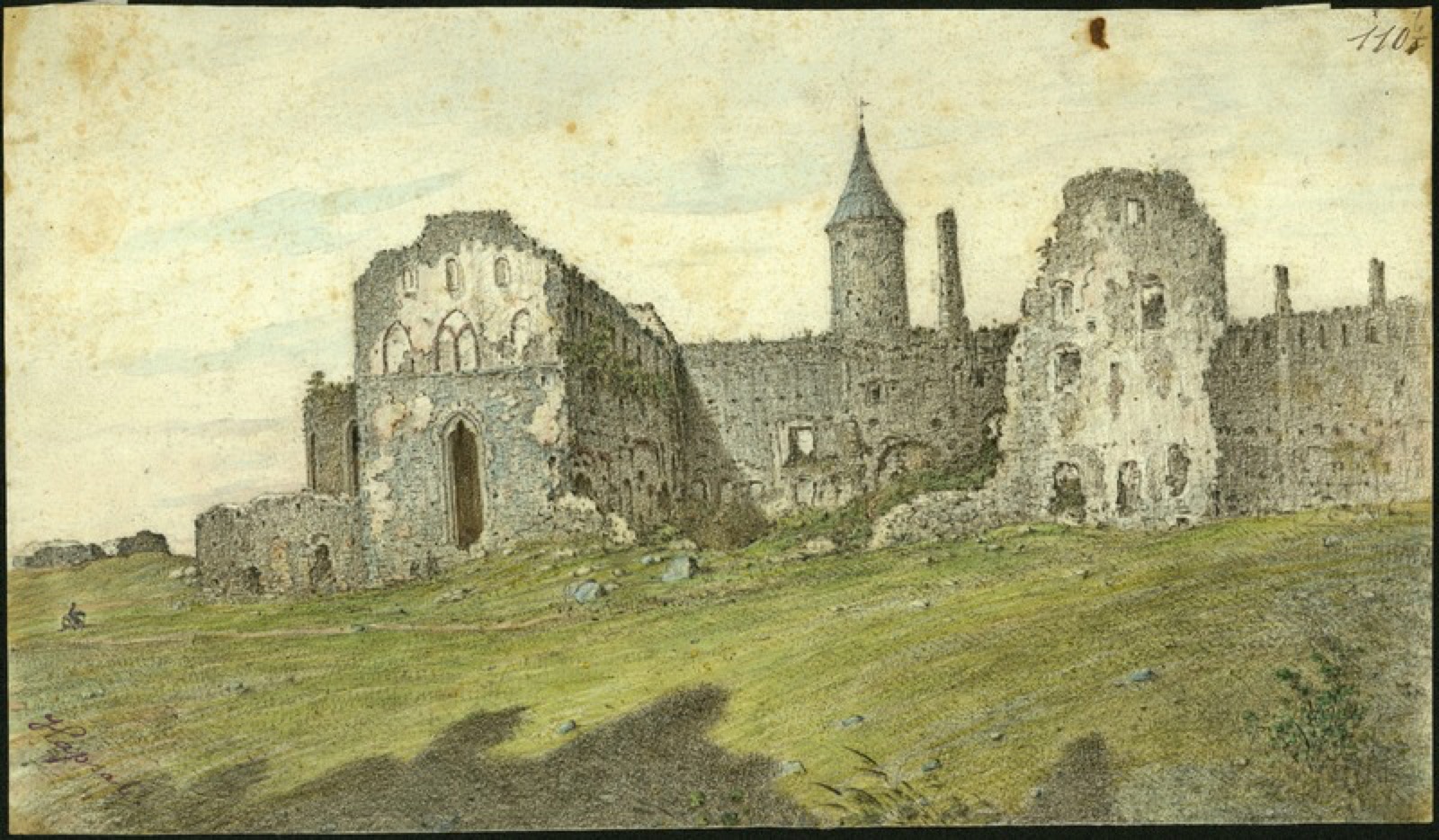
Haapsalu lossi varemed
1830 · Estonian History Museum (via Europeana)
CC0 (no rights reserved)
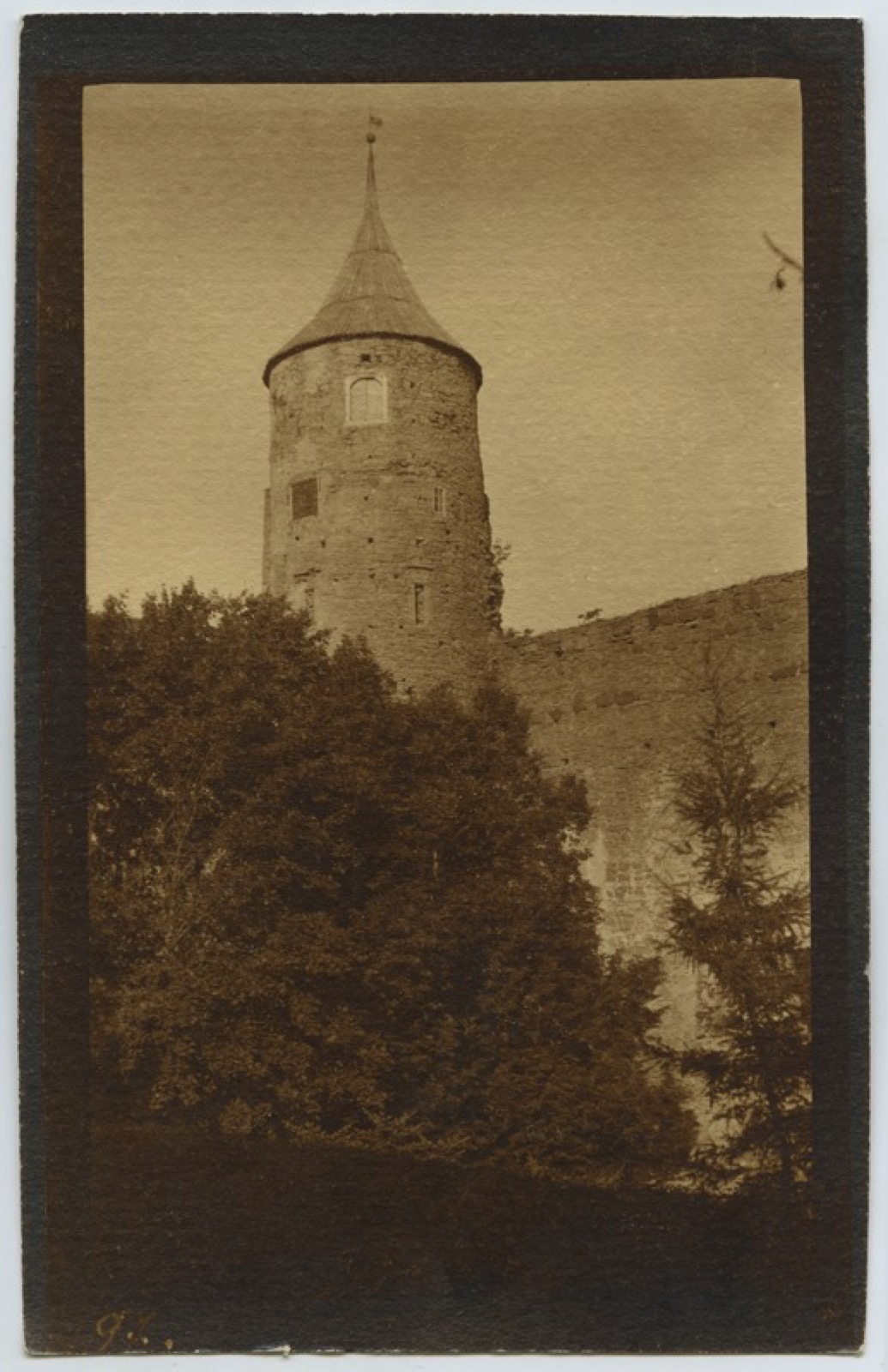
Haapsalu lossi varemed
· Tallinn City Museum (via Europeana)
CC BY