
Estonia · Restored
Koluvere Castle
Koluvere piiskopilinnus
Koluvere Castle is a medieval castle on an artificial island in western Estonia that served as an episcopal residence and later as a noble manor. The site preserves a mix of medieval defensive towers and later manor-era additions and parkland, with interiors redecorated in Rococo and, later, neo-Gothic styles. It remains a prominent historic building set in ponds and trees.
Its prime
1880
Today
Restored
As it stood in 1880
What Koluvere Castle looked like in its prime.
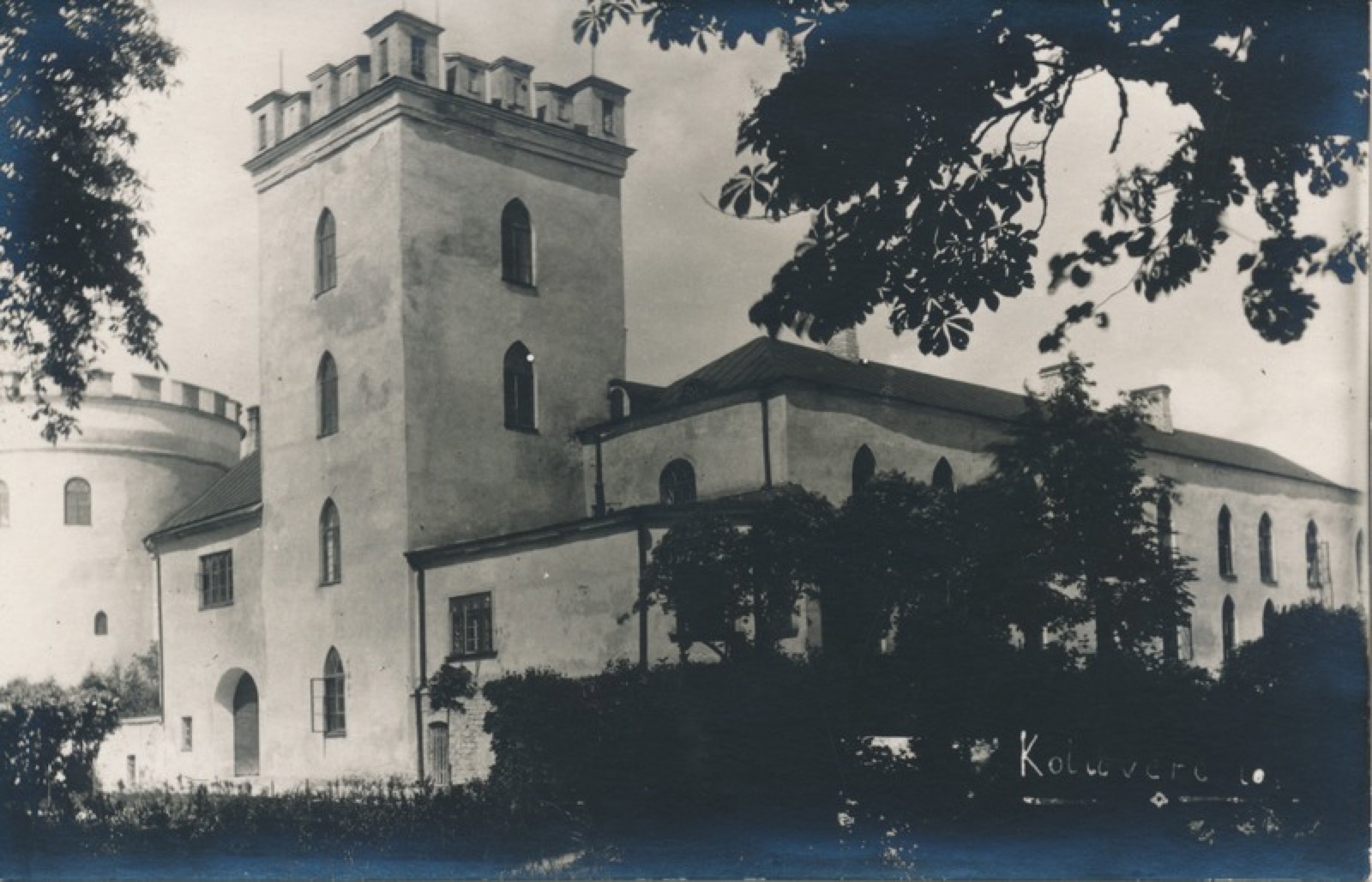
Built on an artificial island in a dammed section of the Liivi river, the castle presents a low rectangular main block with pale plastered stone walls and red tiled roofs, a high square medieval tower at one corner and a large cylindrical 16th-century cannon-tower with conical tile roof at another; the whole sits directly at the waterline and is surrounded by parkland, ponds, an arched park bridge with obelisks and several low ancillary buildings.
Its story
The story of Koluvere Castle.
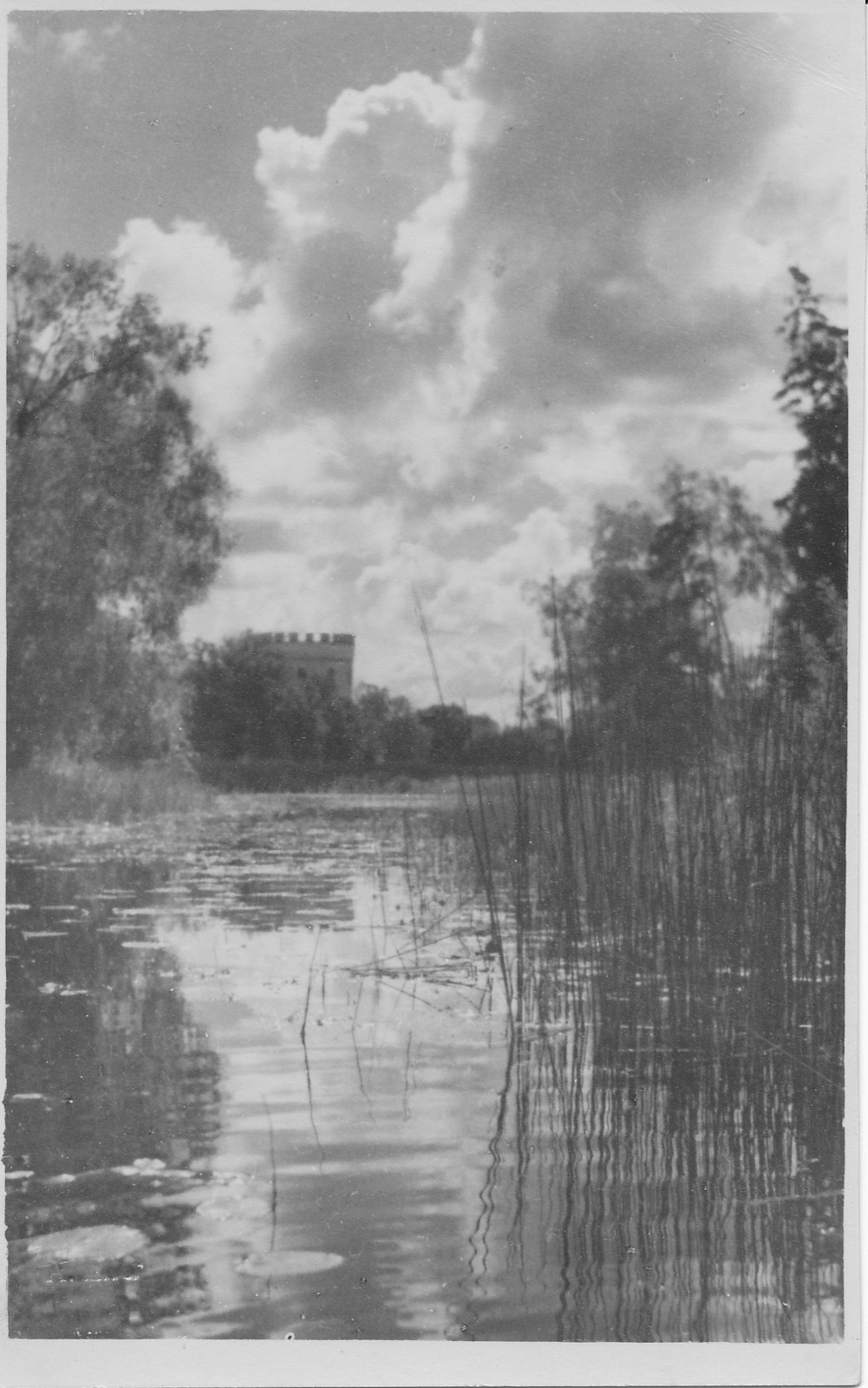
Koluvere Castle rises from an artificial island in a dammed stretch of the Liivi river. Its high square tower probably dates from the early 13th century, one of the oldest castle towers in Estonia, and a large round cannon-tower was added in the 16th century as firearms developed. A sculpted stone bears the arms of Reinhold von Buxhoeveden, bishop of Saare-Lääne 1532–1541, from its episcopal era.
Between 1646 and 1771 the castle belonged to the von Löwen family, under whom it lost its military importance and became a comfortable aristocratic residence, about 1770 the interior was extensively redecorated in Rococo style. In 1771 it passed into the hands of Grigory Orlov, after which it became the property of Empress Catherine the Great.
The 19th century gave the interiors a neo-Gothic appearance and the manor its stables, granaries, a noteworthy neo-Gothic power station and a picturesque park with ponds, a pavilion and an arched bridge adorned with obelisks. Fires damaged the castle in 1840, 1905 and 1963, yet it remains a very fine example of castle architecture in Estonia.
Step inside
10 places to explore in 1880.
The record describes 10 distinct spots at Koluvere Castle, including 2 interiors: rococo parlour (interior), neo-gothic salon (interior). Create your own photoreal reconstruction and explore every one, more scenes means more rooms, more angles, and more of the place to stand in.
Build Your Own Castle
Recreate Koluvere Castle with AI to explore it.
The artist rebuilds it as it stood in 1880, a photoreal reconstruction that belongs to you alone. Pay with coins, no subscription needed.
Recreate this castle →Defend this castle →Whose castle
Clans who held Koluvere Castle.
The families that held Koluvere Castle for a decade or more across its history, follow a name to its clan.
Löwen
Held by the von Löwen family, 1646–1771, who turned the castle into an aristocratic residence.
From the archive
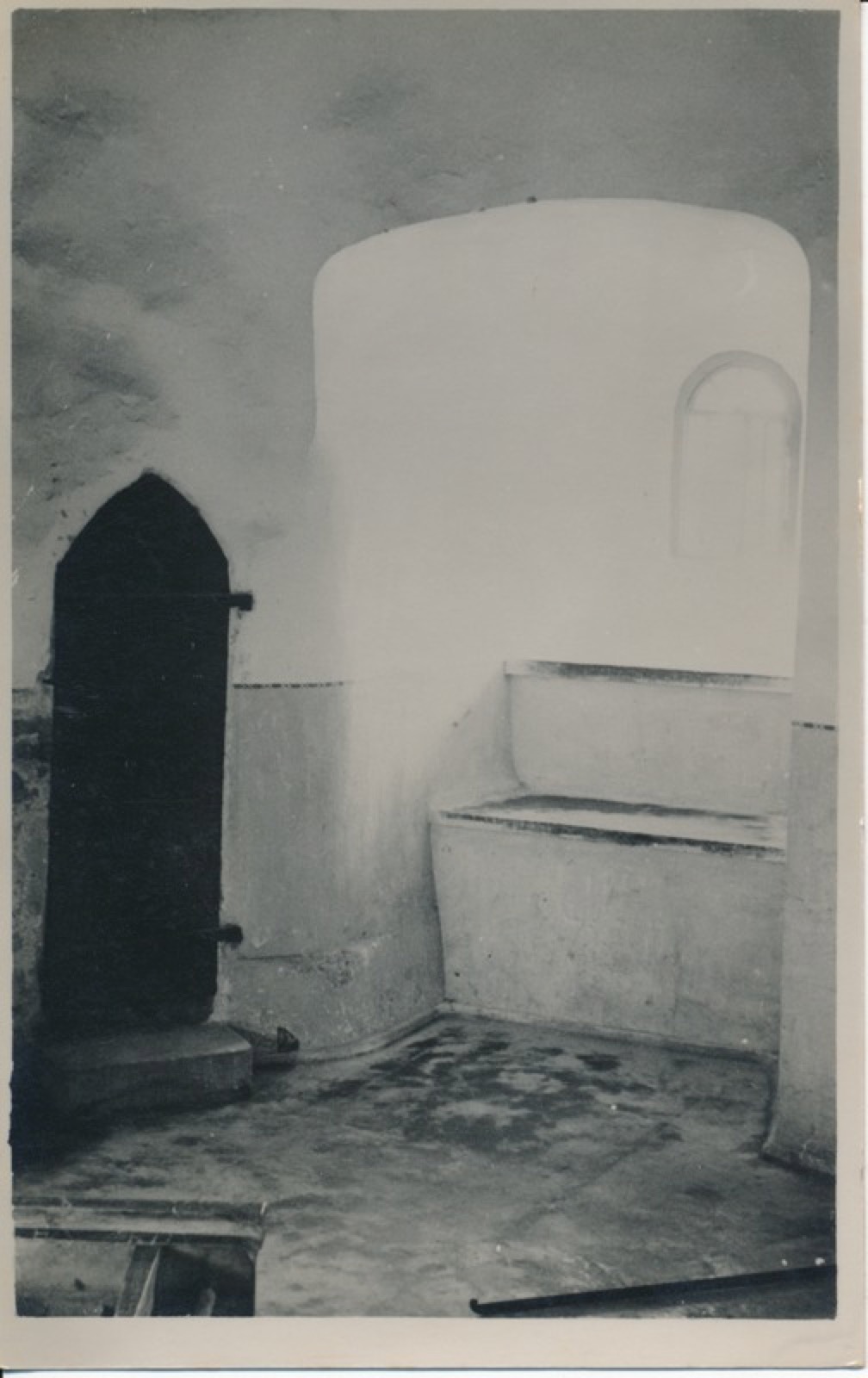
Koluvere Castle on paper: the measured plan and period views.
The survey plan and photographs below are the ground truth this page's reconstructions are checked against, drawn and photographed while the castle was still a working garrison. Every image is public-domain or openly licensed, with its source named.
Koluvere loss
· Rannarotsi Museum (via Europeana)
CC0 (no rights reserved)
Koluvere loss
· Rannarotsi Museum (via Europeana)
CC0 (no rights reserved)
Koluvere loss
· Rannarotsi Museum (via Europeana)
CC0 (no rights reserved)


