
Estonia · Still standing
Toompea Castle
Toompea loss
Toompea Castle is a medieval castle on Toompea hill in central Tallinn, Estonia. Its surviving stone curtain walls and round towers date largely from the crusader and Teutonic periods; the complex today houses the Riigikogu (Estonian parliament).
First raised
1201
Its prime
1346
Today
Still standing
As it stood in 1346
What Toompea Castle looked like in its prime.
A long, high pale-grey limestone curtain wall stretches along the crest of a rocky hill, punctuated by several cylindrical stone towers of varying heights with narrow slit windows and simple coronets. One dominant, very tall round keep stands at a corner of the complex. Attached later-range roofs of red tile sit low behind the battlements. The castle faces a steep, terraced south slope and encloses an inner courtyard; at its prime the walls and towers were complete and continuous.
Its story
The story of Toompea Castle.
Castrum Danorum and the Flag from the Sky, 1219
Toompea hill carried an ancient Estonian stronghold from at least the 9th century. In 1219 it was taken by Danish crusaders under King Valdemar II, and a cherished Danish legend holds that during a critical stage of the fighting, the Battle of Lindanise, the Dannebrog, the flag of Denmark, fell from the sky. The first proper castle that followed was called the Castle of the Danes, castrum danorum in Latin and taani linna in the archaic Estonian of the day, from which the name of the city of Tallinn is possibly derived. Another tradition, recorded in the 19th century, tells the hill's own origin story: the heroine Linda piled it up boulder by boulder with her own hands.
Sword Brothers and Teutonic Knights, 1227–1561
In 1227 the castle passed to the Order of the Brethren of the Sword, who began rebuilding it; the 13th-century reconstruction is to a large extent the castle that can be seen today. It fell back to Denmark just ten years later, in 1237, then was sold to the Teutonic Order in 1346 and stayed in the knights' hands for the rest of the Middle Ages. Because the Teutonic Order was a religious order, the castle came to resemble a monastery, with a chapel, a chapter house and a dormitory for the knights.
The order raised the castle's towers: Pilsticker, the arrow-sharpener; Stür den Kerl, ward off the enemy; Landskrone, crown of the land; and Pikk Hermann (Tall Hermann) 48 metres tall and still dominating the skyline. After the Reformation and the wars of the 16th century the Teutonic Order lost its last possessions in Estonia, and the region was contested by Sweden, Poland and Muscovy. By 1561 northern Estonia was Swedish, and Sweden's rulers turned the medieval fortress into a ceremonial and administrative seat of political power, the purpose it has served ever since.
Catherine II's Governorate Palace, 1767–1773
Sweden lost Estonia to Russia in 1710, and the old western castle stood empty after the Great Northern War. Catherine II's tour of the Baltic governorates in 1764 changed that: the empress ordered a grander, more modern seat for the province, funded by a tax of one to fifteen roubles according to rank. Between 1767 and 1773 the eastern wing was rebuilt as a Baroque and early Neoclassical palace by the architect Johann Schultz of Jena: a work that cost the fortress part of its ring wall, the corner tower Stür den Kerl and the old state-hall building, while the moats before the castle were filled in. The palace housed the administration of the Governorate of Estonia and the living quarters of the imperial governor.
The palace gained a public park (the Governor's Garden, among Tallinn's first), and, in the 19th century, an archive building, while from 1843 a governorate prison designed by Johann Schelbach occupied a wing of the old convent quarter; it was burned down during the revolution of March 1917.
The Riigikogu on the Convent's Ground Plan, 1920–1922
After Estonia won independence in 1918, the new state demolished the ruined convent building of the Teutonic Order and raised its parliament house on the spot between 1920 and 1922, to designs by Eugen Habermann and Herbert Johanson. The plan follows the vanished convent, courtyard and all; the exterior is traditionalist, but the interior is Expressionist, the world's only Expressionist parliament building, and one contemporaries found baffling. A southern wing followed in 1935, to a design reworked by the young architect Alar Kotli for the Ministry of the Interior.
From June 1940 the occupations came in succession (Soviet until 1941, Nazi German from 1941 to 1944, Soviet again thereafter), and Estonia's democratically elected parliament was disbanded. Between 1947 and 1990 the castle housed the Supreme Soviet, the rubber-stamp legislature of occupied Estonia. Today the complex is again the seat of the Riigikogu, and every day at sunrise the flag of Estonia is hoisted to the top of Tall Hermann to the sound of the national anthem, and lowered at sunset.
Step inside
9 places to explore in 1346.
The record describes 9 distinct spots at Toompea Castle, including 3 interiors: chapel interior, chapter house, knights' dormitory. Create your own photoreal reconstruction and explore every one, more scenes means more rooms, more angles, and more of the place to stand in.
Build Your Own Castle
Recreate Toompea Castle with AI to explore it.
The artist rebuilds it as it stood in 1346, a photoreal reconstruction that belongs to you alone. Pay with coins, no subscription needed.
Recreate this castle →Defend this castle →From the archive
Toompea Castle on paper: the measured plan and period views.
The survey plan and photographs below are the ground truth this page's reconstructions are checked against, drawn and photographed while the castle was still a working garrison. Every image is public-domain or openly licensed, with its source named.
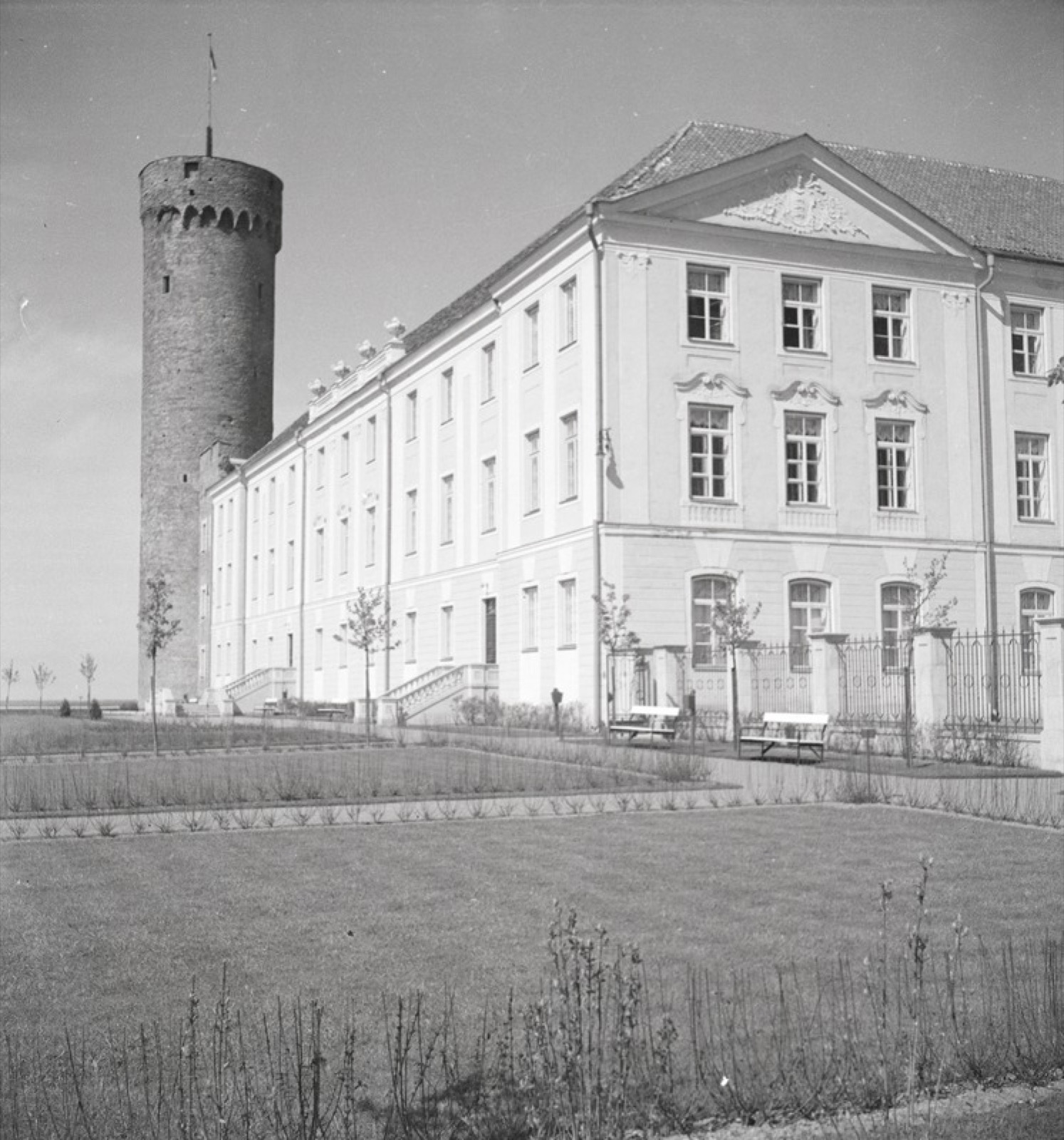
Tallinn, Toompea Castle
· Virumaa Museums (via Europeana)
CC BY
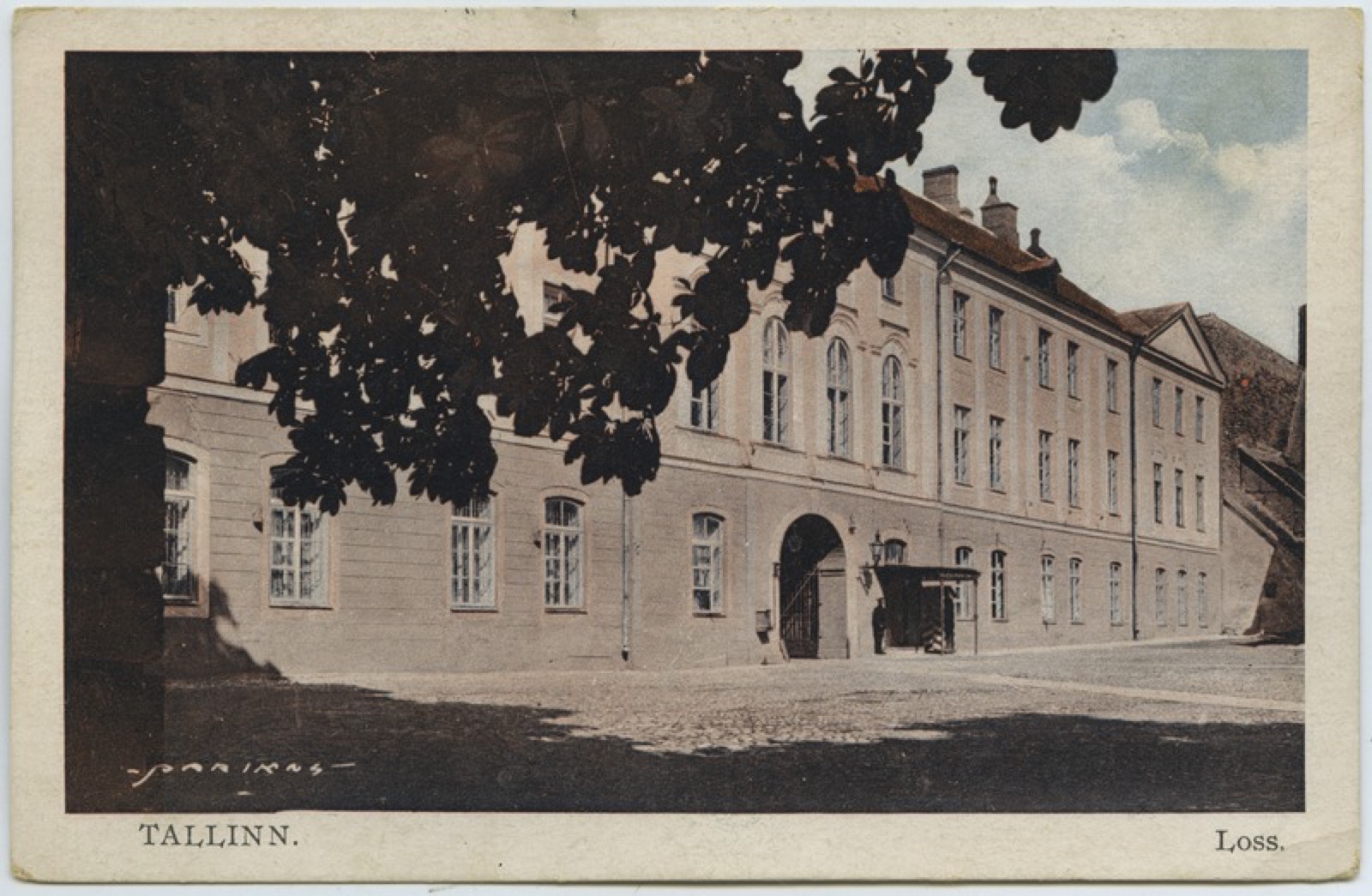
Tallinn, Toompea Castle
· Tallinn City Museum (via Europeana)
CC BY
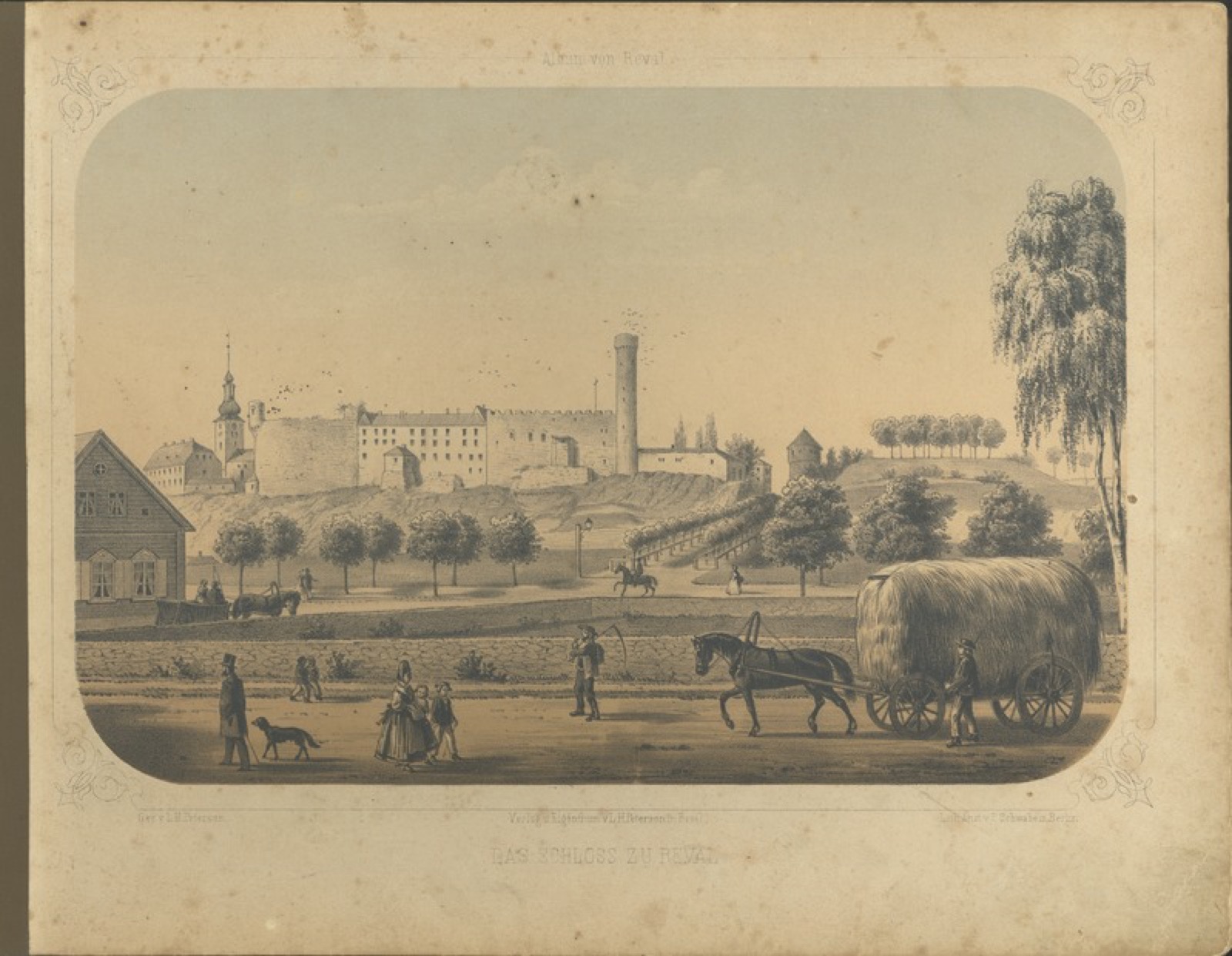
Tallinn Toompea Castle
1860 · Tallinn City Museum (via Europeana)
CC0 (no rights reserved)
Questions about Toompea Castle
What is the history of Toompea Castle?
What is inside Toompea Castle?
Who owns Toompea Castle now?
Why was Toompea Castle built, and what was it used for?
Does anyone live in Toompea Castle now?
Where is Toompea Castle?
When was Toompea Castle built?
Was Toompea Castle ever attacked or besieged?
What did Toompea Castle look like in its prime?
Is Toompea Castle still standing, or is it a ruin?
More castles of Estonia


Explore the city
