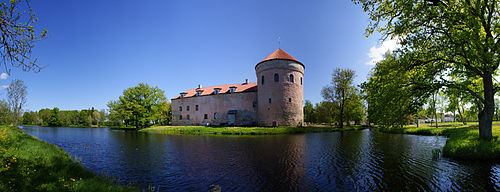
Estonia · Restored
Hermann Castle
Narva Hermanni linnus
Hermann Castle (Narva Castle) is a medieval fortress on the eastern bank of the Narva River in northeastern Estonia. Originating as a 13th-century Danish stronghold, it was rebuilt in stone from the 14th century and expanded by the Livonian Order into a convent-style castle with a central courtyard and a prominent Hermann Tower.
Its prime
1500
Today
Restored
As it stood in 1500
What Hermann Castle looked like in its prime.
A massive rectangular stone fortress set on the riverbank, dominated by a tall square keep (Hermann Tower) with a white upper stage and steep red-tiled gabled roof; the main body is a large, blocky curtain of light-beige/grey masonry with small slit windows and arched openings at the waterline. Earthen glacis and ramparts slope down from the walls to a quay; a small round corner tower with a conical roof punctuates one corner and a central enclosed courtyard lies within the massive wings.
Its story
The story of Hermann Castle.
A Danish Border Post at the Narva Crossing
Denmark, having conquered northern Estonia in the thirteenth century, planted a timber border stronghold where the Narva river met an old road. It is first mentioned in writing in the mid-1250s, though an earlier Danish work, possibly raised in the 1220s just after the conquest of Virumaa, is thought to have stood on the far bank; the western shore it later moved to is said to have carried an Estonian stronghold before it. Under the stronghold's protection the older settlement grew into the town of Narva, which historians of Narva reckon may have been the only town in Estonia to develop out of a village rather than around a castle.
In 1277 the Danish king's representative Eylard de Oberge styled himself commandant of Estonia, Narva and Reval: capitaneus per Estoniam, Narwiam atque Revaliam. The wooden castle did not survive the century. In 1294 a force under the prince of Novgorod burned it.
Stone in Place of Timber, and the Massacre of 1342
The oldest parts of the standing castle date from about 1300, when conflicts with Novgorod and Pskov pushed the Danish rulers to replace the timber fort with a small castellum-like building with a tower at the north-western corner, the forerunner of the Hermann Tower. A small forecourt was added on the north side early in the century and a large western forecourt in 1341–42, where townspeople were allowed to shelter in war, Narva having no wall of its own under Danish rule.
On 1 April 1342 Russian troops burned castle and town for the second time, breaking into the castle during Mass and killing the townspeople. Both were rebuilt fast: on 25 July 1345 King Valdemar IV Atterdag confirmed Narva's Lübeck town rights, which the town is thought to have held already under Valdemar III.
The Order's Convent Castle and the Tower Facing Ivangorod
In August 1346 Valdemar IV sold northern Estonia, Narva included, to the Livonian branch of the Teutonic Order, which rebuilt the castellum as a convent building to suit itself: a well-dansker on the river side, a second in the west wall, and a timber gallery joining the wings around the inner courtyard. Later additions broadly followed that fourteenth-century ground plan.
When Muscovy raised the fortress of Ivangorod directly across the river in 1492, the Order answered by heightening the Hermann Tower, at the end of the fifteenth century and again in the sixteenth, to keep watch on the far bank. The Order also walled the town: roughly a kilometre of curtain behind a moat, with at least seven towers and four gates plated with iron and fronted by drawbridges. Late in the Order's rule the gates were given foregates and several towers were adapted as cannon rondels. The wall itself was ordered demolished in 1777.
Bombardment from Ivangorod, 1558
The shelling of Narva from Ivangorod began on 1 April 1558. On 11 May a great fire broke out in the town and Russian troops used the confusion to take it, but the castle held; terms were reached with its defenders and they were allowed to leave freely. From 1559 to 1581 the castle was held by the Muscovite tsardom. On 6 September 1581 Swedish forces under Pontus De la Gardie took Narva and seized the castle, and Ingria after it.
Seat of the Swedish Governors, and the Long Restoration
The Swedes converted the refectory in the west wing of the old convent building into the governor's residence, breaking large new windows through the walls, and in 1586 built the Great Stone Hall in the western court. Gunpowder exploded in the Hermann Tower in 1593; the tower was repaired in 1638, the year an arsenal was raised in the western forecourt. The peace of Stolbovo in 1617 secured Ingria for Sweden, the governor of Ingria sat in the castle, and from 1651 to 1706 Narva was the centre of the Ingrian general-governorate. Around it the Swedes laid out a bastion system: eight were planned and six completed, along with the bastion-like work Spes in front of the castle's southern wall, while the half-bastion Justitia intended for the north-eastern corner was never built.
The castle's archive was sold to a local herring merchant early in the nineteenth century. A restoration to the design of the military architect Modest Rezvoi was cut short by the Crimean War, and the western court took a garrison bathhouse in the 1850s and the Nicholas church-riding hall in the 1860s. A unit of the 1st Infantry Regiment was quartered here under the Estonian republic. The castle was badly damaged in the Second World War; restoration has run since the 1950s, the convent building's east wing opened as a permanent exhibition in 2020, and an eight-year renovation costing close to six million euros finished in 2024.
Step inside
7 places to explore in 1500.
The record describes 7 distinct spots at Hermann Castle, including 1 interior: central courtyard. Create your own photoreal reconstruction and explore every one, more scenes means more rooms, more angles, and more of the place to stand in.
Build Your Own Castle
Recreate Hermann Castle with AI to explore it.
The artist rebuilds it as it stood in 1500, a photoreal reconstruction that belongs to you alone. Pay with coins, no subscription needed.
Recreate this castle →Defend this castle →From the archive
Hermann Castle on paper: the measured plan and period views.
The survey plan and photographs below are the ground truth this page's reconstructions are checked against, drawn and photographed while the castle was still a working garrison. Every image is public-domain or openly licensed, with its source named.
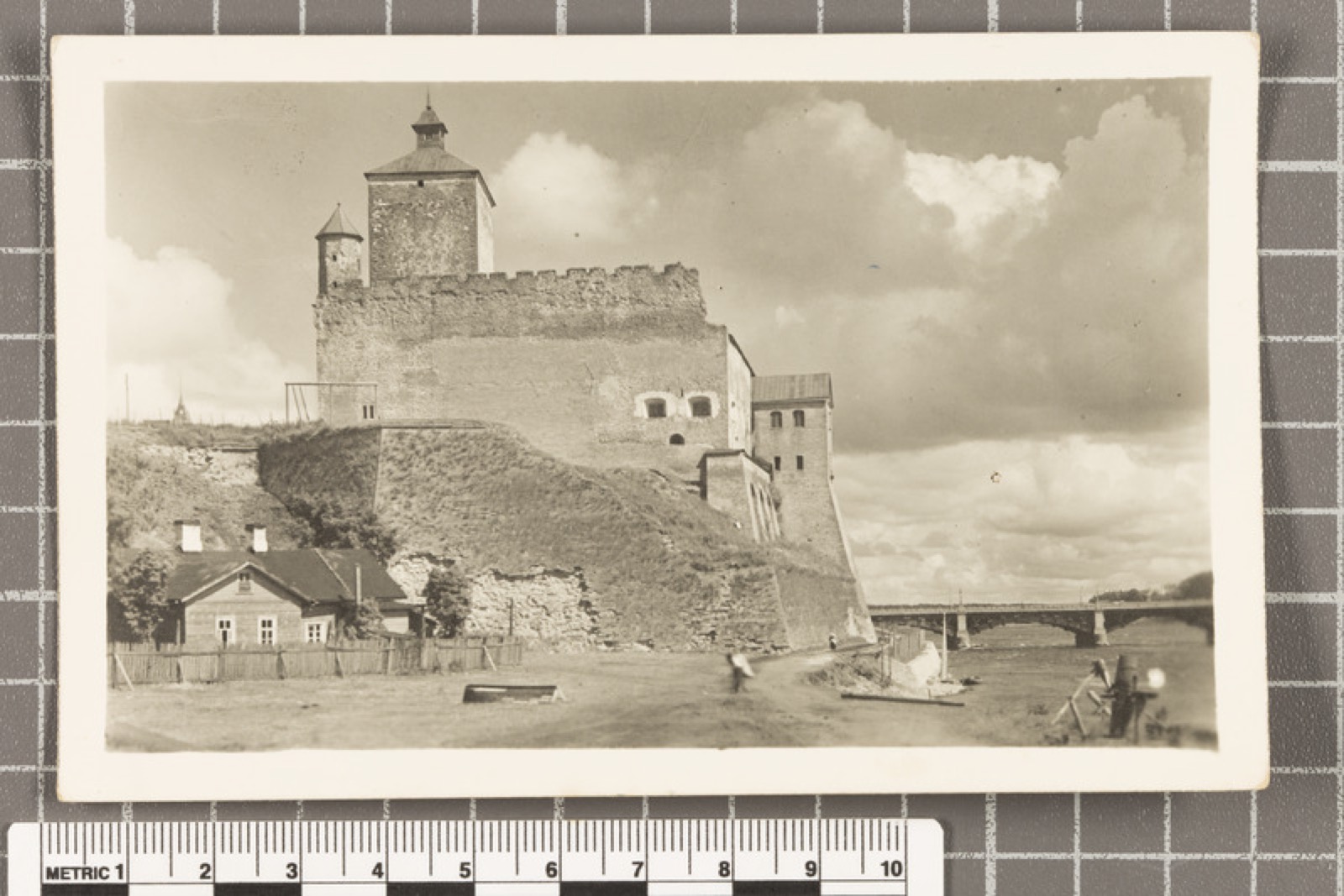
Narva Hermann Castle
· Estonian War Museum (via Europeana)
CC0 (no rights reserved)
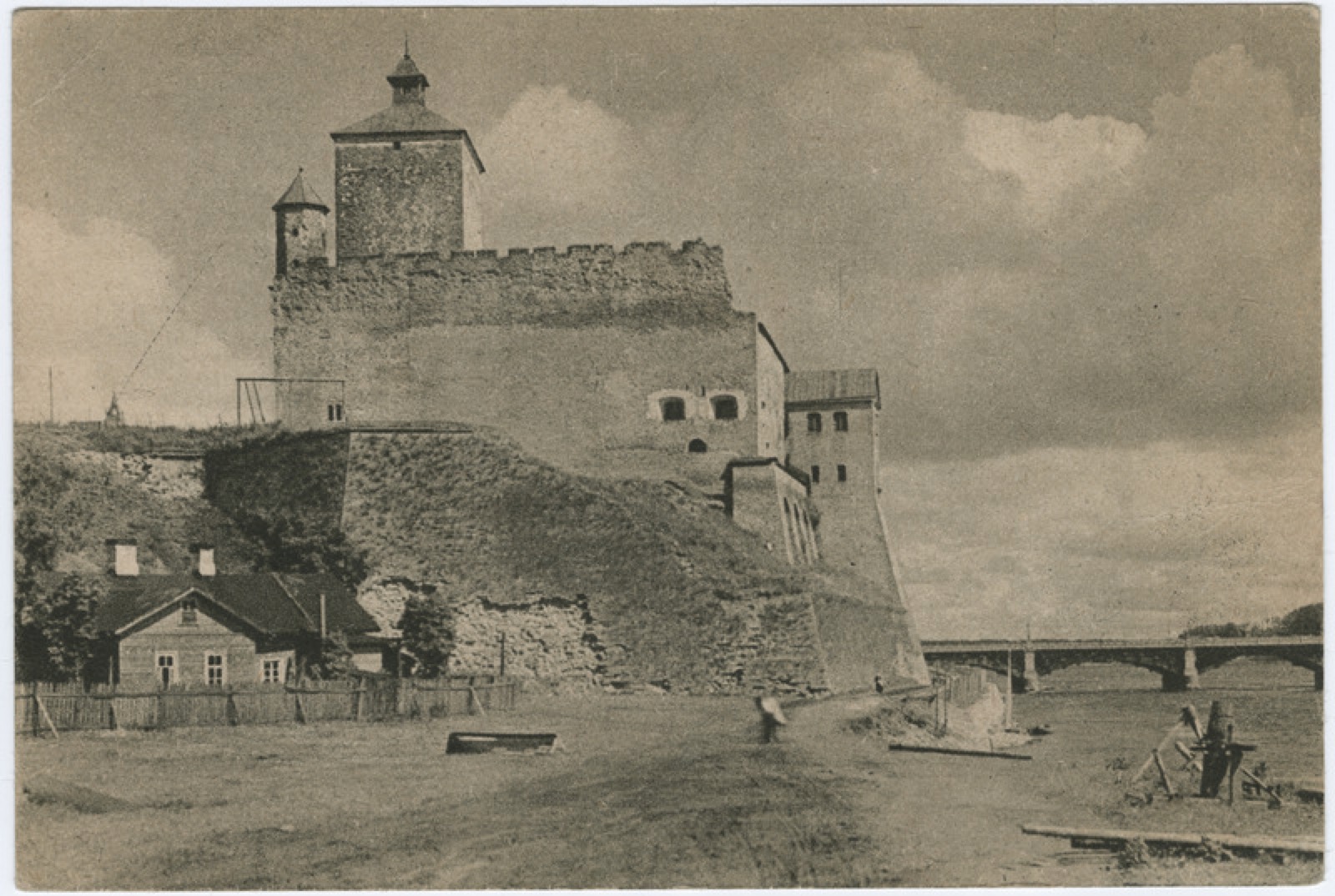
Narva Hermanni linnus
· Estonian History Museum (via Europeana)
CC BY
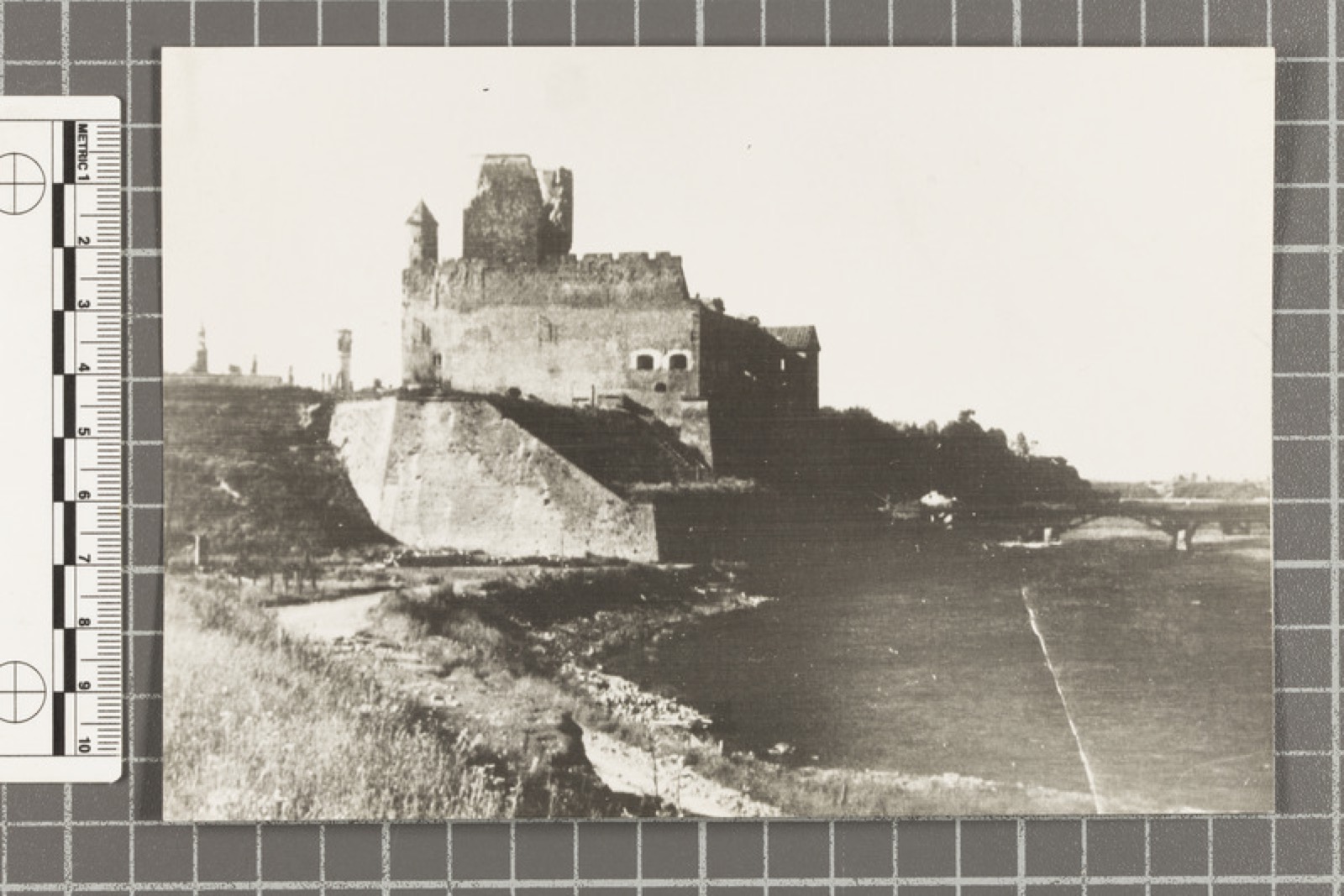
Narva Hermanni kindlus
· Estonian War Museum (via Europeana)
CC0 (no rights reserved)