France · Restored
Citadel of Besançon
Citadelle de Besançon
The Citadel of Besançon is a 17th-century Vauban fortress occupying a limestone promontory above an oxbow of the Doubs river in Besançon, France. Built and completed in the late 17th–early 18th century, the citadel is a well-preserved tourist site housing several museums and historic military buildings.
First raised
1668
Its prime
1711
Today
Restored
As it stood in 1711
What Citadel of Besançon looked like in its prime.
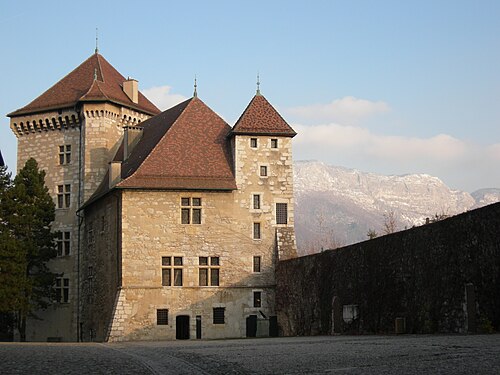
Perched on a limestone ridge within an oxbow of the Doubs, the Citadel is a sprawling rectangular fortress of contiguous bastioned fronts and thick pale limestone curtain walls up to 15–20 m high. Three successive enclosed fronts (Saint Stephen's, Royal Front, Relief Front) cross the plateau; the Royal Front is flanked by two surveillance towers called the king and queen. Brick-topped parapets and a continuous walkway crown the walls; inner courtyards contain long barrack ranges and a central cadet school.
Its story
The story of Citadel of Besançon.
Caesar's Rock and the Spanish First Stone, 1668–1674
In Gallo-Roman times Mount Saint-Étienne served as an acropolis, with a wall enclosing a temple probably dedicated to Jupiter Capitolinus, and Caesar wrote of Vesontio in 58 BC that a wall round the mountain turned it into a citadel joined to the town.
Vauban drew the plan for a modern citadel in March 1668, and the first stone was laid on 29 September that year, while Besançon still belonged to the Spanish crown. The Spanish Habsburgs then built for six years under Prosper-Ambroise de Precipiano, with the Flemish engineer Cornelius Verboom; their masonry survives inside the Royal Front and the Relief Front. Louis XIV's armies took Franche-Comté and Besançon in 1674.
Vauban Builds for Louis XIV, 1674–1711
The Treaty of Nijmegen, signed on 10 August 1678, attached Besançon and its region to France for good. Louis XIV made the city a link in the defence of eastern France and set Vauban to continue the work with several hundred labourers. The first line of defence, the Saint Stephen's Front, rose where the church of Saint Stephen had stood, a cathedral and cloister going back to the fifth century: burnt out during the siege of March 1674 by one account, razed by Vauban for the defences by another.
The main works Vauban had set for the citadel were finished in 1683, with a second front facing the town, and the chapel dedicated to Saint Stephen was consecrated the same year. A cadet school was raised in the courtyard in 1682 on the orders of Louvois, with barracks for up to 600 cadets. In 1692 Vauban had a well cut 132 metres through the rock to the water table, but the water proved brackish and undrinkable, so the garrison fell back on cisterns of rainwater. The city's fortifications as a whole were complete in 1695 after twenty years, and by 1711 the citadel ranked among the strongest of the period. The cost was such that the king is said to have asked whether the walls were built of stone or of gold.
Garrison, State Prison and Blockade, Louis XIV to the Great War
The citadel housed garrison troops and state prisoners: the accomplices of La Voisin, accused in the poisoning scandals of Louis XIV's court, deserters from the armies of Louis XIV and Louis XV, and Royalists during the Revolution; Austrian and Spanish prisoners of war were held during the First Empire. Advances in artillery through the nineteenth century left the works more vulnerable, but the citadel came through its blockades: the Austrians in 1814 and the Prussians in 1871 did it little damage. In the First World War Besançon lay behind the front, and the citadel's role was logistical.
Occupation, the Fusillés and Dépôt 85, 1940–1948
German troops occupied the citadel without a fight in June 1940. Between 28 April 1941 and 18 August 1944 one hundred members of the Resistance, condemned to death, were shot between the well and the chapel. Most were French; the others came from Spain, Italy, Switzerland, the Netherlands, Poland and Luxembourg. The citadel also held British subjects as prisoners.
Sixteen were shot on Sunday 26 September 1943, thirteen of them from the Resistance group named for Guy Môquet. Among them was Henri Fertet, who was not yet seventeen. He wrote to his parents that day: "Farewell, death calls me. I want no blindfold, and not to be tied." He signed himself a condemned man of sixteen. A memorial of four stakes commemorates les fusillés.
American troops retook the citadel on 7 September 1944 after heavy fighting. In October 1944 it became Dépôt 85, one of the French camps for Axis prisoners of war taken from the Liberation onward; thousands passed through until the camp closed in the spring of 1948, and more than 400 died there.
From Army Store to World Heritage
Militarily obsolete, the citadel served the army as a store. Its buildings were classified as a historic monument on 8 June 1942, with the Rivotte gate bastion and the glacis following in 1944. On 28 May 1959 the keys were handed to the mayor, Jean Minjoz, and the army ceded the monument to the city on 21 June 1960.
Besançon, the owner ever since, gave it to tourism, culture and remembrance. The Musée comtois has occupied the Royal Front since 1960; the Museum of the Resistance and Deportation was founded in 1971 at the initiative of Denise Lorach, a former deportee, its site chosen partly because a hundred Resistance members had been shot there. A natural history museum with a zoo is the site's third. On 7 July 2008 UNESCO listed the citadel and the city's ramparts among twelve fortifications representative of Vauban's work, and eight restoration campaigns have run since 2007 under the State-Region plan. Between 200,000 and 300,000 visitors come each year.
Step inside
11 places to explore in 1711.
The record describes 11 distinct spots at Citadel of Besançon, including 4 interiors: inner parade courtyard with cadet school, chapel of saint stephen (interior portal and nave), powder magazine and reinforced store and more. Create your own photoreal reconstruction and explore every one, more scenes means more rooms, more angles, and more of the place to stand in.
Build Your Own Castle
Recreate Citadel of Besançon with AI to explore it.
The artist rebuilds it as it stood in 1711, a photoreal reconstruction that belongs to you alone. Pay with coins, no subscription needed.
Recreate this castle →Defend this castle →