Clan Rising
Hardenburg today

Germany · Ruin

Hardenburg

Hardenburg is a large medieval castle ruin on the eastern edge of the Palatinate Forest above Bad Dürkheim in Rhineland-Palatinate, Germany. It was the seat of the Counts of Leiningen and today survives as an extensive ruined fortress perched over the town.

Photograph via Wikimedia Commons

First raised

1205

Its prime

1725

Today

Ruin

As it stood in 1725

What Hardenburg looked like in its prime.

Massive red‑brown sandstone curtain walls and towers sit on a wooded rocky spur above a small town, forming an irregular multi‑ward silhouette. A large cylindrical tower anchors the western flank, with a long rectangular residential range and broken walllines enclosing a broad central courtyard; secondary round bastions and a gate passage occupy the eastern approach. Stone walkways and battlements run along the ramparts; in its prime the fabric stood continuously intact, enclosing the terraces and inner courts.

Its story

The story of Hardenburg.

The Hardenburg stands on the eastern edge of the Palatinate Forest above the town of Bad Dürkheim in Rhineland-Palatinate, and even as a ruin it counts among the mightiest castles of the Palatinate. The medieval fortress was the seat of the Counts of Leiningen, whose residence it remained into the 18th century.

In 1725 the Counts of Leiningen left the castle and moved their residence to Schloss Dürkheim. The Hardenburg was never a seat again, and survives today as an extensive ruined fortress perched over the town, its scale still legible in the remains.

Step inside

8 places to explore in 1725.

The record describes 8 distinct spots at Hardenburg, including 1 interior: gatehouse and entrance passage. Create your own photoreal reconstruction and explore every one, more scenes means more rooms, more angles, and more of the place to stand in.

Southern approach and overlookWestern cylindrical tower (bergfried) exteriorGatehouse and entrance passageCentral courtyard / inner wardResidential range (palas) exteriorCurtain wall walkway and battlementsEastern round bastion and terracesView from the ramparts to town and forest

Build Your Own Castle

Recreate Hardenburg with AI to explore it.

The artist rebuilds it as it stood in 1725, a photoreal reconstruction that belongs to you alone. Pay with coins, no subscription needed.

Recreate this castle →

Castle Siege

Play Castle Siege at Hardenburg.

A strategy game played on Hardenburg’s real ground plan: the same surveyed walls shown in the archive below. Post your finite garrison on the battlements between assaults, then hold out as rams, siege towers, trebuchets and sappers arrive in ever-worse waves.

Sign in free to see the garrison muster. One castle costs 150 Clan Coins and is yours forever.

Sign in to take command →

See every castle’s leaderboard →

Whose castle

Clans who held Hardenburg.

The families that held Hardenburg for a decade or more across its history, follow a name to its clan.

  • Leiningen

    Residence of the Counts of Leiningen until 1725, when the family moved to Schloss Dürkheim.

From the archive

Hardenburg on paper: the measured plan and period views.

The survey plan and photographs below are the ground truth this page's reconstructions are checked against, drawn and photographed while the castle was still a working garrison. Every image is public-domain or openly licensed, with its source named.
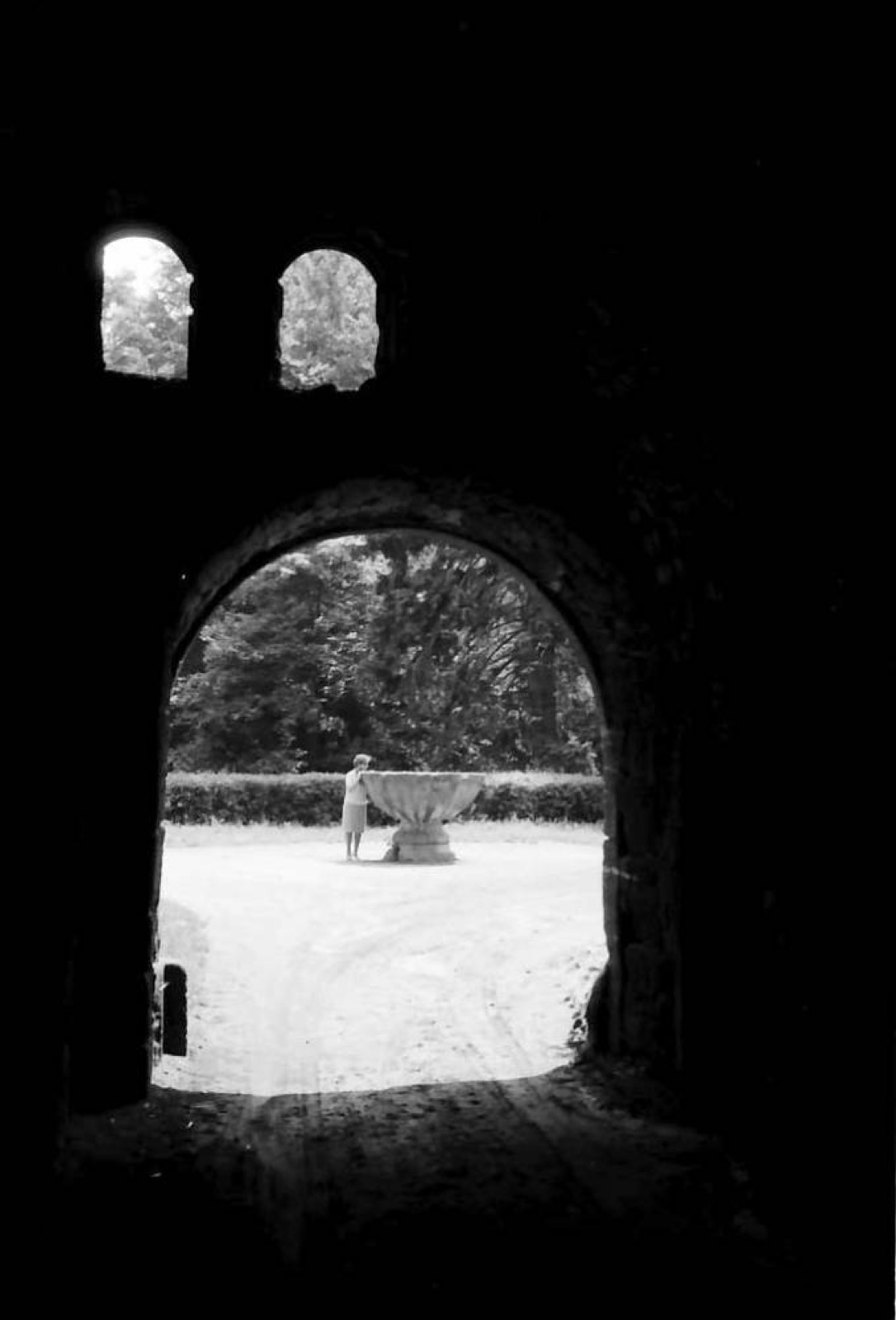
Hardenburg: Burgtor und Schale, Burg Hardenburg, Hardenburg

Hardenburg: Burgtor und Schale, Burg Hardenburg

· State Archives of Baden-Württemberg (via Europeana)

CC BY
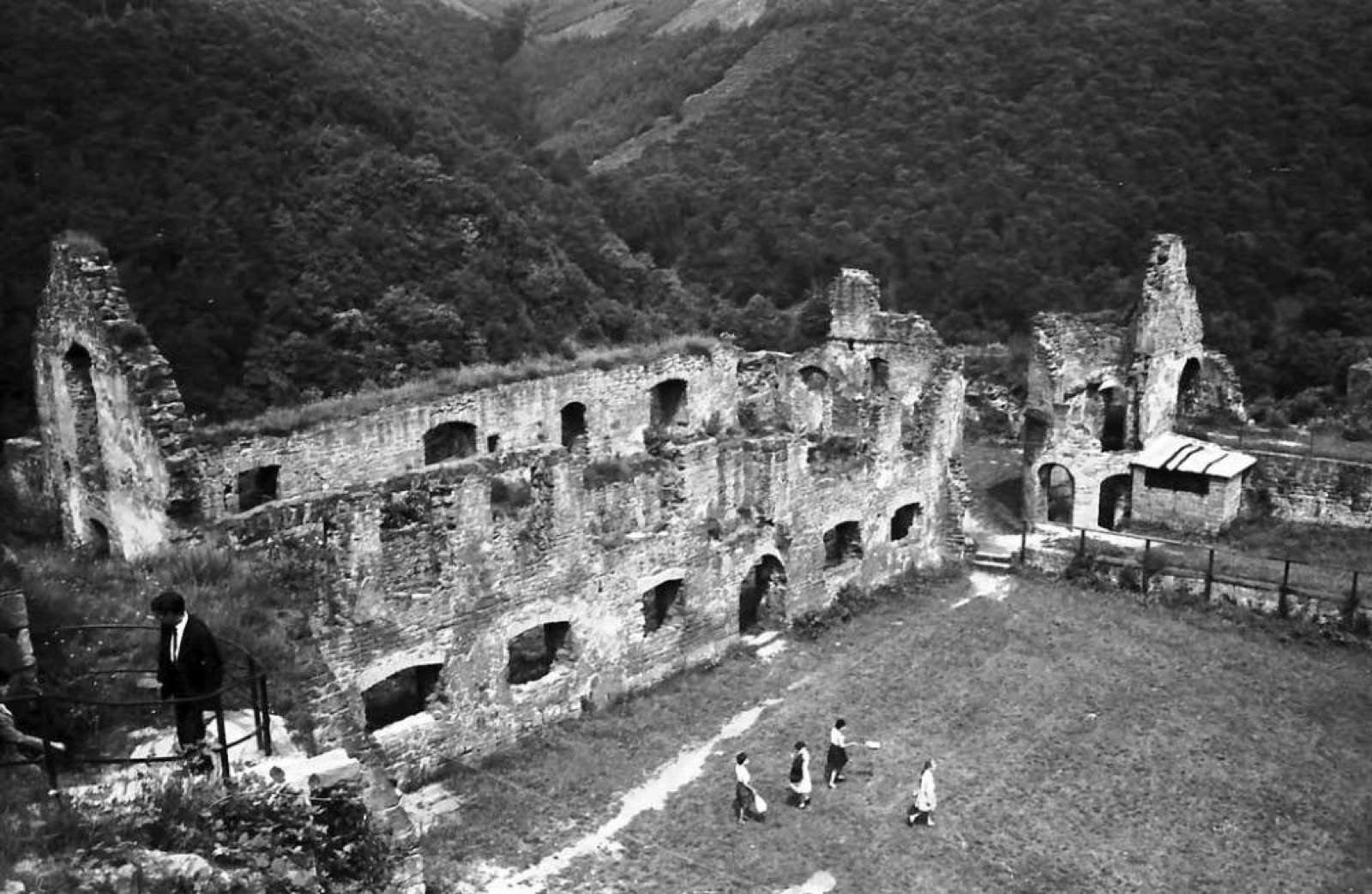
Hardenburg: Burg Hardenburg, Ruine am Burghof, Hardenburg

Hardenburg: Burg Hardenburg, Ruine am Burghof

· State Archives of Baden-Württemberg (via Europeana)

CC BY
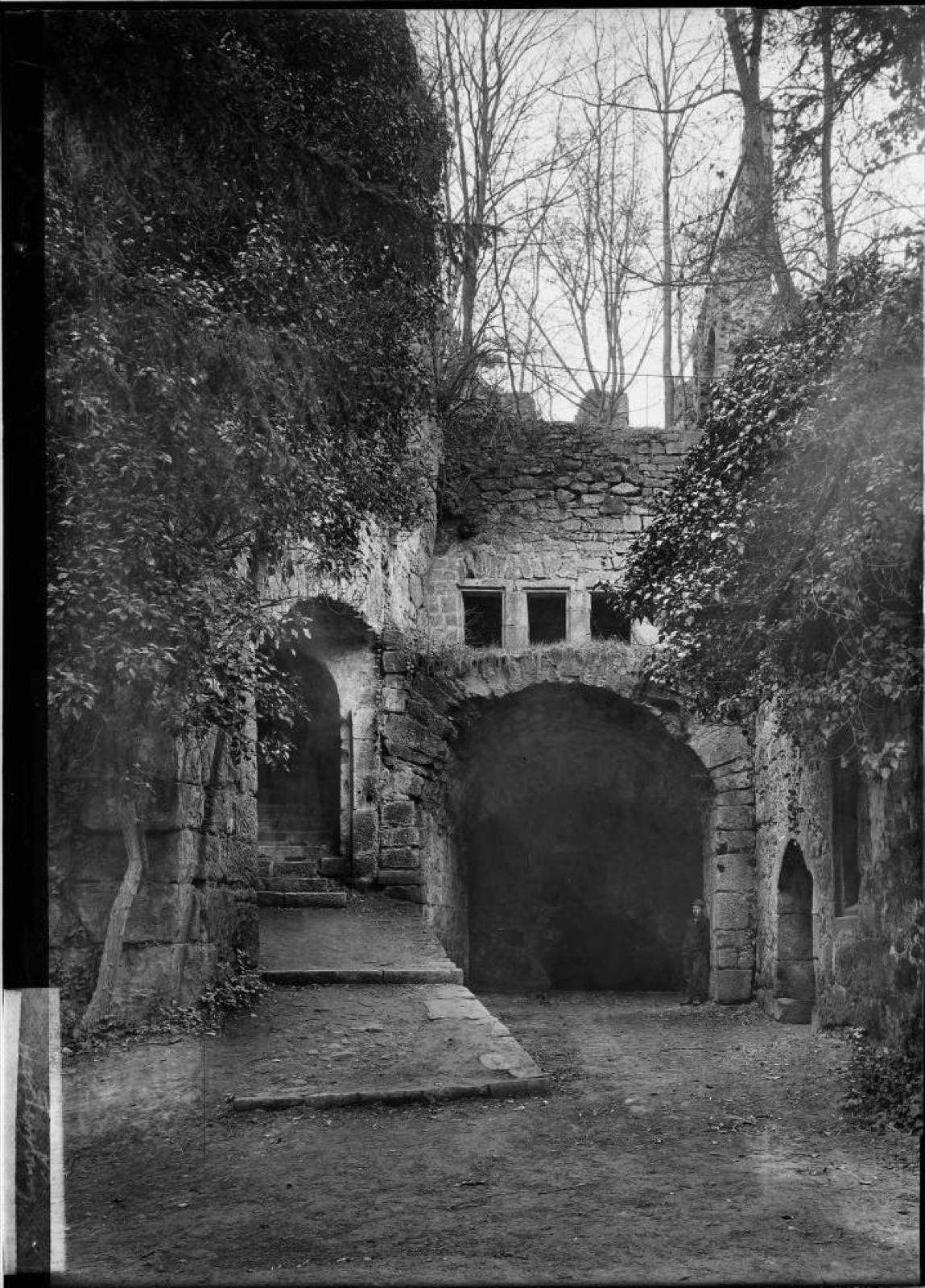
Hardenburg Burgruine, Hardenburg

Hardenburg Burgruine

· State Archives of Baden-Württemberg (via Europeana)

CC BY

Questions about Hardenburg

What is the history of Hardenburg?

Hardenburg was built in the early 13th century as a fortress and became the residence of the Counts of Leiningen. It was expanded and strengthened against artillery in the late 15th and early 16th centuries, then developed into a residential palace. In 1725 the counts moved to Schloss Dürkheim, and French revolutionary troops set fire to its residential buildings in 1794.

Why was Hardenburg built, and what was it used for?

Hardenburg was raised as a fortress by the Counts of Leiningen and later served as their main residence. From 1560 to 1725 it was expanded into a residential palace, while its towers and other defences protected it against attacks and artillery. After the counts moved to Schloss Dürkheim, it ceased to be a residence and declined into a ruin.

Where is Hardenburg?

Hardenburg is in the Palatinate Forest, above the town of Bad Dürkheim in Rhineland-Palatinate. It stands on the eastern edge of the forest, on a roughly 200-metre-long rocky ridge above the Isenach valley. The castle overlooks the town and the surrounding forest.

When was Hardenburg built?

Hardenburg was first raised in 1205, placing its foundation in the early 13th century. The surviving historical account gives a construction period between 1205 and 1214, rather than a single completed-build date. Later expansions and fortifications substantially enlarged the medieval fortress.

Was Hardenburg ever attacked or besieged?

Hardenburg was besieged in 1512 by Ludwig V, Elector of the Palatinate, after the imperial ban against Count Emich IX. The Leiningen family surrendered the castle before it was damaged and received it back in 1519. During the War of the Palatine Succession, French troops destroyed the fortifications in 1692, but the castle survived the war.

Which family or clan held Hardenburg?

The Counts of Leiningen held Hardenburg until 1725. It was their residence until the family moved to Schloss Dürkheim, after which Hardenburg was never again a seat. The relevant line was the Leiningen-Dagsburg-Hardenburg family.

What did Hardenburg look like in its prime?

In its prime, Hardenburg had massive red-brown sandstone curtain walls and towers arranged in an irregular multi-ward silhouette. A large cylindrical tower anchored the western side, while a long rectangular residential range enclosed a broad central courtyard. Round bastions, terraces, a gate passage, rampart walkways and battlements completed the fortified layout.

Is Hardenburg still standing or is it a ruin?

Hardenburg is now an extensive castle ruin. Its residential buildings were burned by French revolutionary troops in 1794, leaving remains such as stair towers, windows and elegant portals. The large cellars with wide rib vaults built in 1509 have survived, and the site underwent conservation work from 2008 to 2012.

Who built Hardenburg?

Hardenburg was built by the Counts of Leiningen, with Count Friedrich II of Leiningen regarded as its founder. They constructed it between 1205 and 1214, on land belonging to Limburg Abbey. No separate architect is identified in the supplied material.

Can you visit Hardenburg?

Hardenburg can be visited as a public cultural site. The ruin is open for daily visits except in December and on the first working day of each month, and visits are without a guide. A visitor centre with archaeological finds, a film presentation and multimedia guidance occupies the restored gate roundel.

What is inside Hardenburg and what can you see there?

Inside Hardenburg, visitors can see the gatehouse and entrance passage, as well as the central courtyard and inner ward. The surviving residential remains include stair towers, windows and elegant portals, while the large cellars retain wide rib vaults built in 1509. A visitor centre occupies the gate roundel.
All castles of Germany · Castles of Europe · the best castles in Europe · explore the finished reconstructions.