
Germany · Ruin
Regenstein Castle
Burg Regenstein
Regenstein Castle (Burg Regenstein) is a medieval hill castle sited atop a high rocky crag in the Harz region of Germany. The site consists of an irregular plateau fortified by curtain walls and a number of towers and courtyard buildings; it survives today as a ruin. The ruin crowns steep, jagged cliffs that fall to the surrounding valley farmland.
Its prime
1400
Today
Ruin
As it stood in 1400
What Regenstein Castle looked like in its prime.
Perched on a jagged rocky crag, the castle occupies an irregular flat summit encircled by stone curtain walls pierced by several round and rectangular towers. Sheer, stratified cliff faces drop away from the plateau on multiple sides; paths and terraces cut into the rock lead up to the gates. Within the walls are low roofed buildings clustered against the inner curtain, stairways and narrow slit windows in the towers, and an open central bailey visible from below.
Its story
The story of Regenstein Castle.
A Count of Regenstein, Conrad, son of Count Poppo I of Blankenburg of the House of Reginbodonen, is first mentioned in 1162. Built in the early and high Middle Ages on a 294-metre sandstone rock towering over the surrounding country, the castle was once counted relatively impregnable; several rooms carved into the rock survive, along with the ruins of the keep and remnants of a more recent fortress around them.
The castle owes its renown chiefly to Count Albert II of Regenstein (1310–1349), whose disputes in the 1330s with the surrounding towns, the Bishop of Halberstadt and the Abbess of Quedlinburg were romantically recounted in Gottfried August Bürger's ballad Der Raubgraf, "The Robber Count", and in Julius Wolff's novel of the same name. In the 15th century the Regenstein counts moved to Blankenburg Castle, and the male line ended with Count John Ernest of Regenstein in 1599.
In 1643, after several changes of ownership, Regenstein was enfeoffed by Archduke Leopold William of Austria, as Bishop of Halberstadt, to the Lower Bavarian count William of Tattenbach, whose family took the title Count of Reinstein-Tattenbach. After John Erasmus, Count of Reinstein-Tattenbach, was beheaded in Austria in 1671 for his part in the magnate conspiracy, Elector Frederick William of Brandenburg confiscated the county. The ruin now hosts an annual knights' tournament and garrison festival.
Step inside
7 places to explore in 1400.
The record describes 7 distinct spots at Regenstein Castle, including 3 interiors: summit inner bailey (central courtyard), cylindrical tower and interior levels, rock-cut galleries and lower cliff chambers. Create your own photoreal reconstruction and explore every one, more scenes means more rooms, more angles, and more of the place to stand in.
Build Your Own Castle
Recreate Regenstein Castle with AI to explore it.
The artist rebuilds it as it stood in 1400, a photoreal reconstruction that belongs to you alone. Pay with coins, no subscription needed.
Recreate this castle →Defend this castle →Whose castle
Clans who held Regenstein Castle.
The families that held Regenstein Castle for a decade or more across its history, follow a name to its clan.
Regenstein
Seat of the counts of Regenstein, first recorded 1162; the male line ended in 1599.
Tattenbach
Enfeoffed to Count William of Tattenbach in 1643; confiscated from the family after 1671.
From the archive
Regenstein Castle on paper: the measured plan and period views.
The survey plan and photographs below are the ground truth this page's reconstructions are checked against, drawn and photographed while the castle was still a working garrison. Every image is public-domain or openly licensed, with its source named.
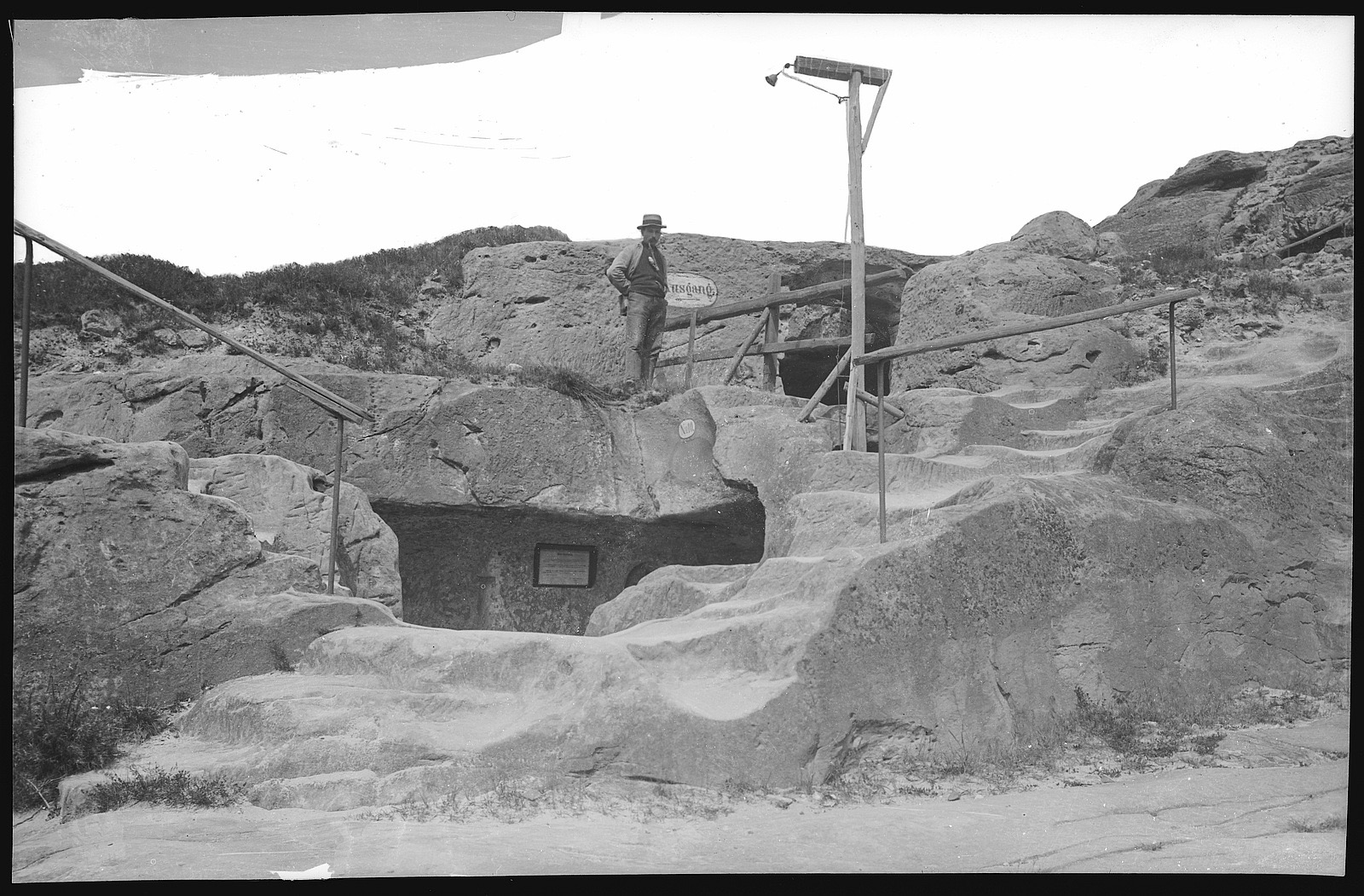
Burg Regenstein
· Deutsche Fotothek (via Europeana)
Public domain
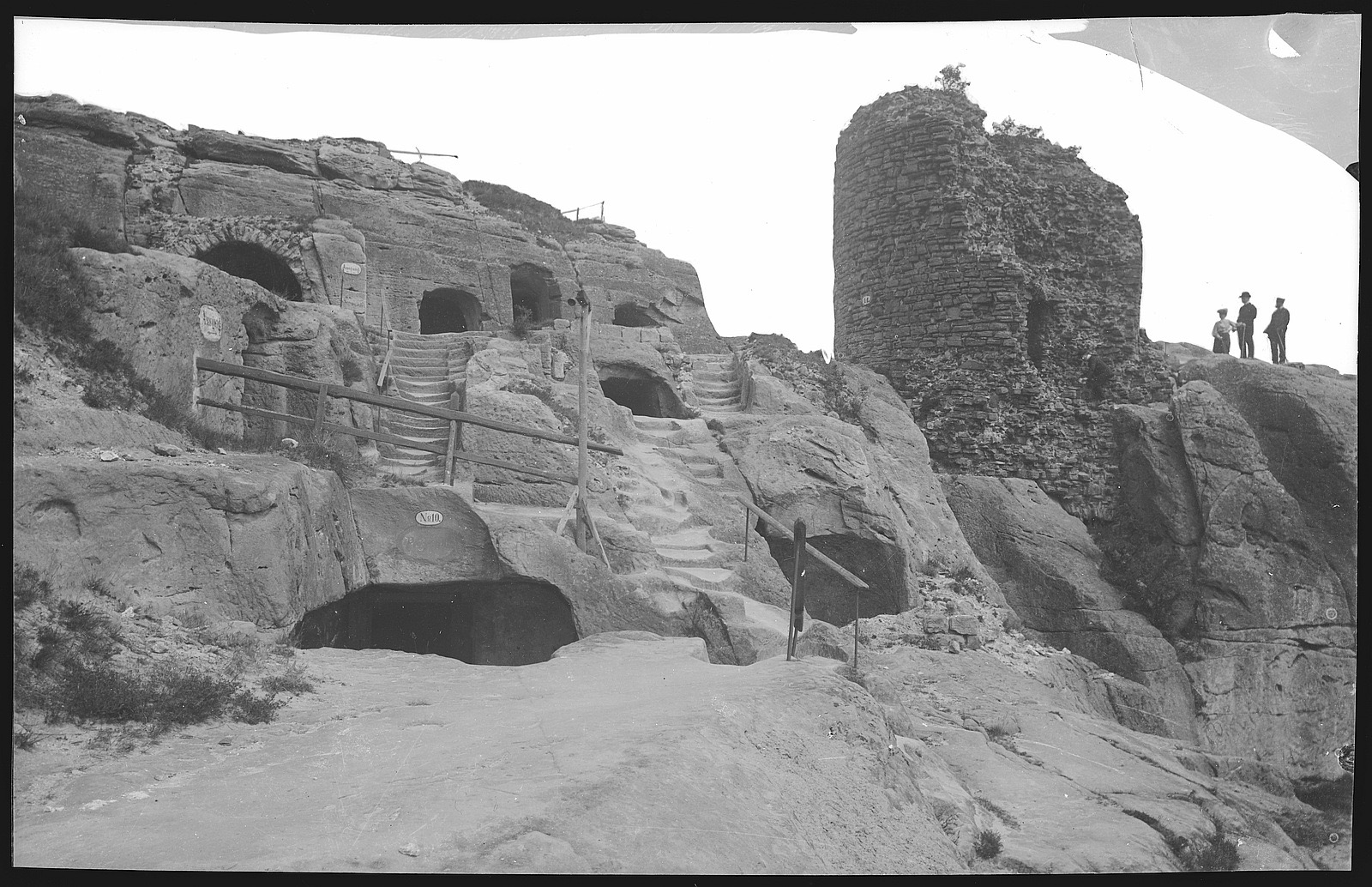
Burg Regenstein
· Deutsche Fotothek (via Europeana)
Public domain
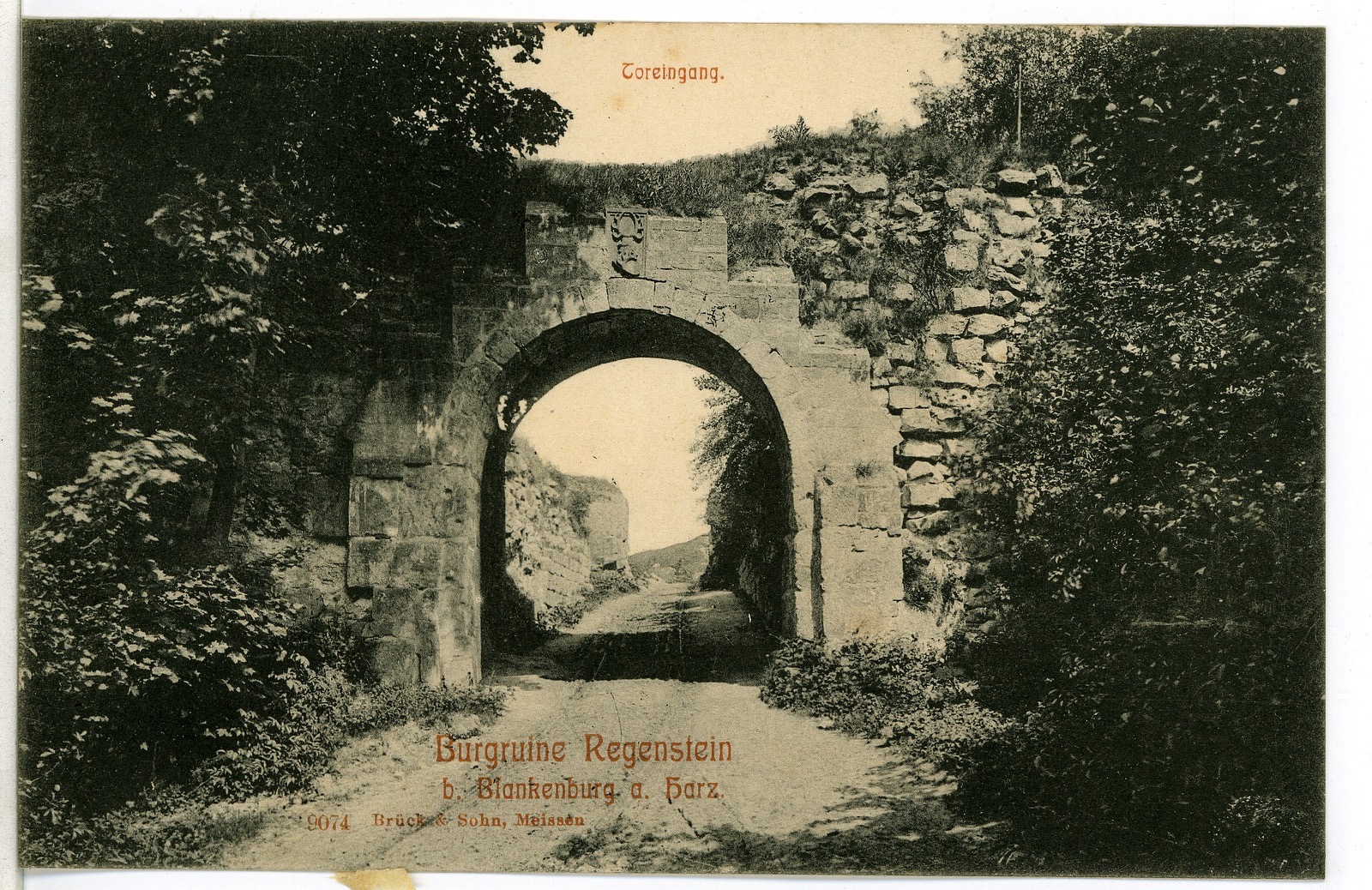
Regenstein Castle
· Deutsche Fotothek (via Europeana)
Public domain


