
Germany · Restored
Reichenstein Castle
Burg Reichenstein
Reichenstein Castle (Burg Reichenstein), also called Falkenburg, is a historic hilltop castle in the Upper Middle Rhine Valley UNESCO site above Trechtingshausen, Germany. It occupies a wooded mountain spur on the eastern slope of the Bingen Forest and comprises a compact medieval-looking keep, curtain walls and an adjacent long residential/service range.
First raised
1100
Its prime
1100
Today
Restored
As it stood in 1100
What Reichenstein Castle looked like in its prime.
Perched on a wooded mountain spur on the eastern slope of the Bingen Forest, the castle presents a compact, rectangular main block with crenellated parapets and small round and square towers, plus a taller cylindrical tower flying a flag. Dark grey local sandstone walls are pierced by narrow window openings; a small annex with a distinctive orange-tiled roof adjoins the west end. A curtain wall follows the spur with an arched gate into a paved inner ward; a separate ruined square watchtower stands higher on the slope behind the main enceinte.
Its story
The story of Reichenstein Castle.
Kornelimünster's Castellan and King Rudolf's Siege, 1213 to 1290
Reichenstein, also called the Falkenburg, is a hill castle on a mountain spur on the eastern slope of the Bingen Forest, above Trechtingshausen in the Mainz-Bingen district; Bingen itself lies about five kilometres to the south-east as the crow flies. The fabric goes back to around 1100. It first appears in the written record in 1213, when the imperial abbey of Kornelimünster near Aachen installed Philipp III of Bolanden here as castellanus and Vogt.
A first capture in 1253 is doubted, and by some accounts denied outright. What is firmly attested is the siege of 1282, when King Rudolf of Habsburg took the castle and destroyed it; a ban on rebuilding was then laid on the site. From 1290 the ruin was held by the Counts Palatine.
Electoral Mainz and the Rival Archbishop, 1344 to 1397
In 1344 the Counts Palatine gave up their claim in favour of Electoral Mainz, and a rapid rebuilding followed. A double ring wall enclosed a rectangular residential tower and the inner courtyard of the main castle, with an outer bailey set in front of it to the north.
In 1396 the cathedral chapter of Mainz elected Gottfried of Leiningen as archbishop. The following year the Pope disregarded that election and named Johann II of Nassau instead, and Gottfried shut himself up in Reichenstein. Only after stubborn negotiation did he renounce the bishop's chair, taking the office of cathedral provost of Mainz in compensation. His climbdown spared the castle a fresh assault and the further destruction that might have come with it.
Abandonment, the Blast of 1689 and the Ruin's Buyers, 16th Century to 1889
From the sixteenth century onwards the castle was left to decay, and what remained of it was blown up in 1689 during the War of the Palatine Succession.
In 1834 Franz Wilhelm von Barfus bought the ruin and converted one of its towers into a residence. His heirs sold the castle in 1877 to the Freiherr von Rehfuß, who passed it on in 1889 to the consul Chosodowsky.
The Kirsch-Puricelli Rebuilding and the Castle Today, 1899 to the Present
Reichenstein owes its present shape to Baron Nikolaus von Kirsch-Puricelli, a wealthy industrialist and owner of the Rheinböllerhütte ironworks, who had it rebuilt between 1899 and 1902 to plans by the Regensburg architect Georg Strebel as a neo-Gothic residence in the Tudor manner. Further dwellings and a lookout tower went up on the ground of the old outer bailey. Reichenstein was the last castle in the Upper Middle Rhine Valley to be rebuilt in the spirit of Rhine Romanticism.
The family sold up in the 1990s. In 2014 the media proprietor Lambert Lensing-Wolff, a descendant of the Kirsch-Puricellis, bought Reichenstein as a weekend seat and runs a museum and a hotel with restaurant in it. The museum fills the surviving rooms with a large collection of historical weapons and armour, together with cast-iron fireback plates from the Stromberger Neuhütte and the Rheinböllerhütte; the restaurant occupies the outer bailey buildings, the hotel has operated since the end of 2015, and weddings are held in the castle chapel. The castle is a listed cultural monument and stands within the UNESCO World Heritage Site of the Upper Middle Rhine Valley.
Step inside
7 places to explore in 1100.
The record describes 7 distinct spots at Reichenstein Castle, including 1 interior: southwest chapel annex. Create your own photoreal reconstruction and explore every one, more scenes means more rooms, more angles, and more of the place to stand in.
Build Your Own Castle
Recreate Reichenstein Castle with AI to explore it.
The artist rebuilds it as it stood in 1100, a photoreal reconstruction that belongs to you alone. Pay with coins, no subscription needed.
Recreate this castle →Defend this castle →From the archive
Reichenstein Castle on paper: the measured plan and period views.
The survey plan and photographs below are the ground truth this page's reconstructions are checked against, drawn and photographed while the castle was still a working garrison. Every image is public-domain or openly licensed, with its source named.
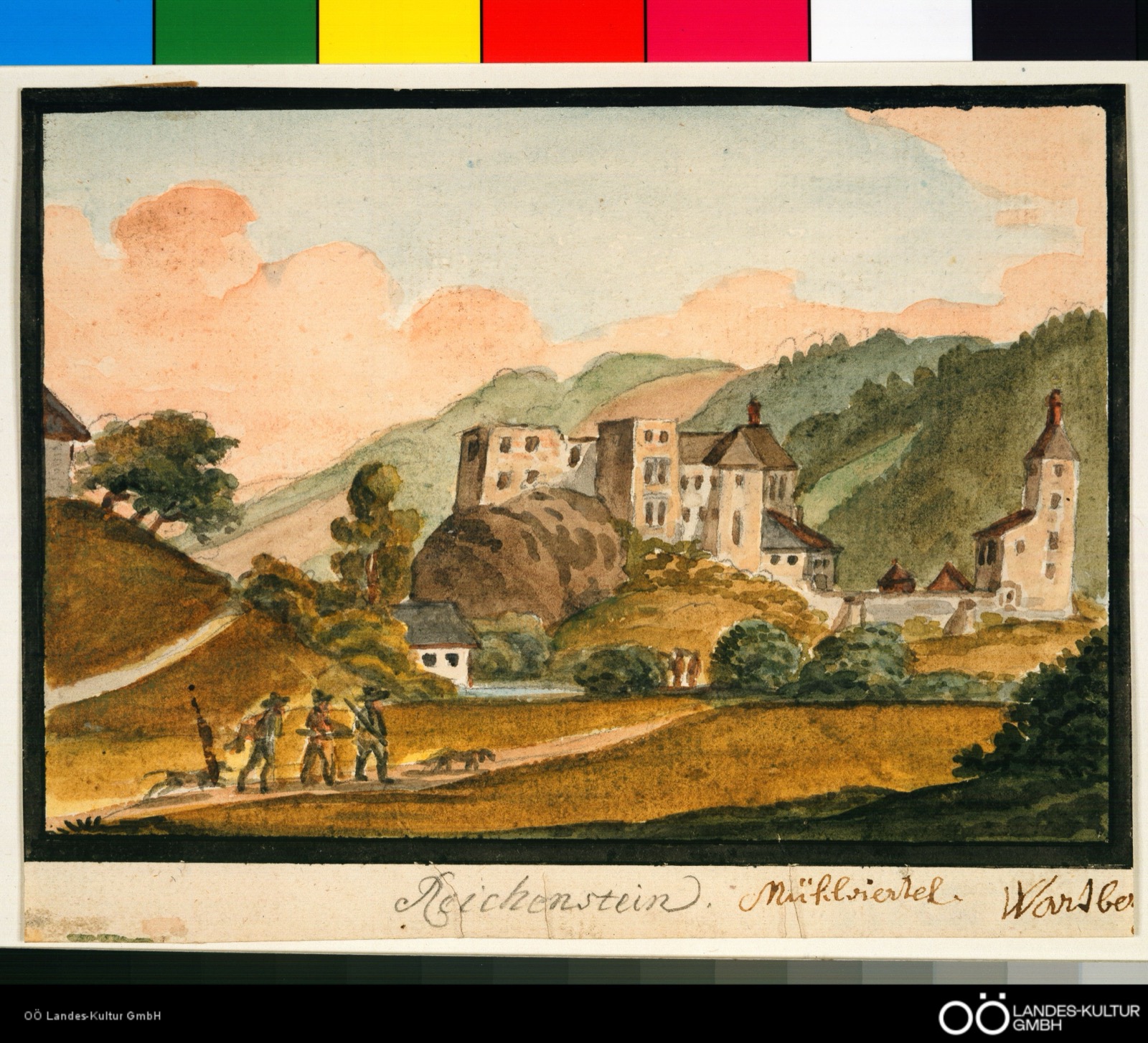
Reichenstein
· OÖ Landes-Kultur GmbH (via Europeana)
CC BY-SA
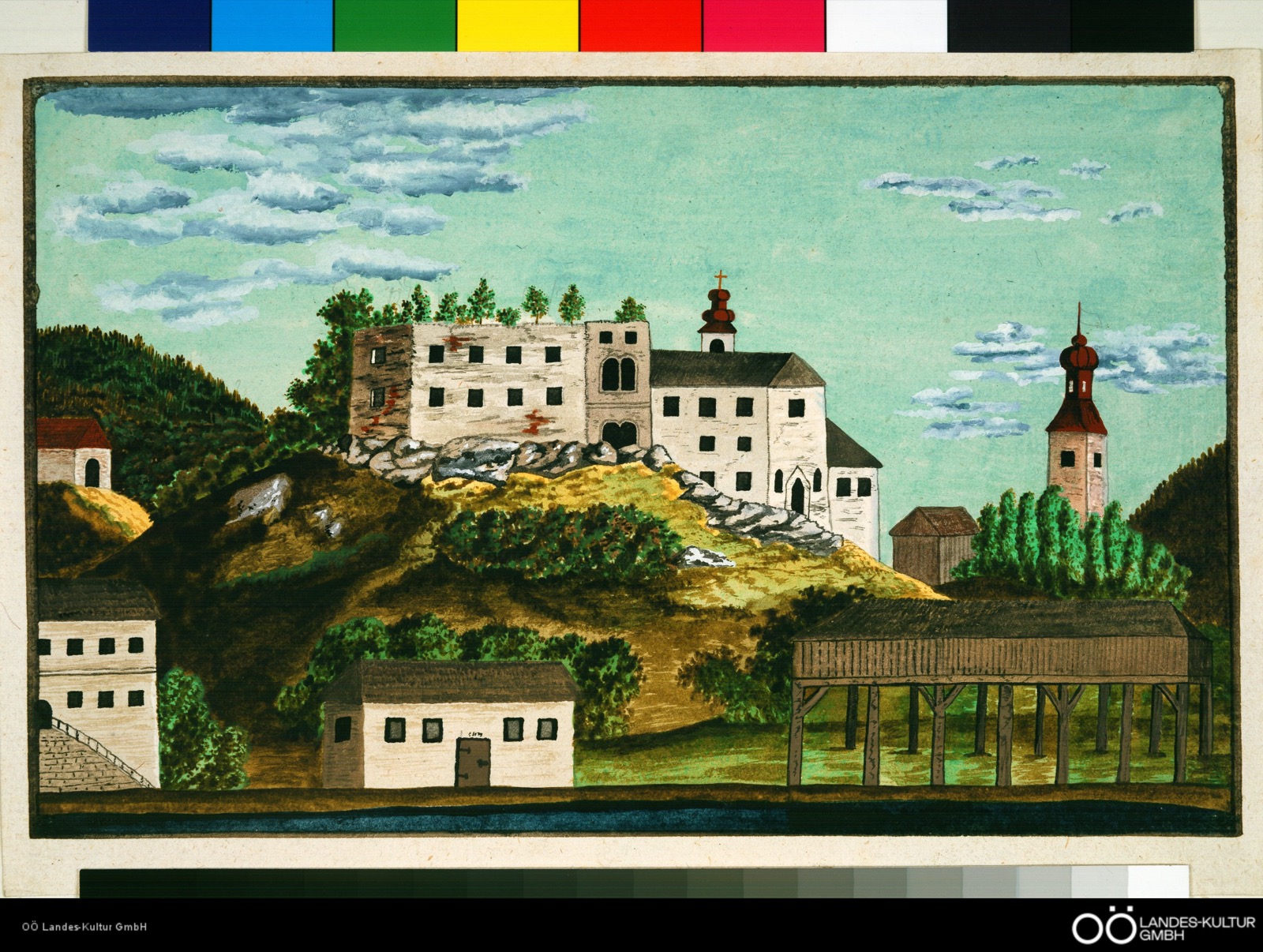
Reichenstein
· OÖ Landes-Kultur GmbH (via Europeana)
CC BY-SA
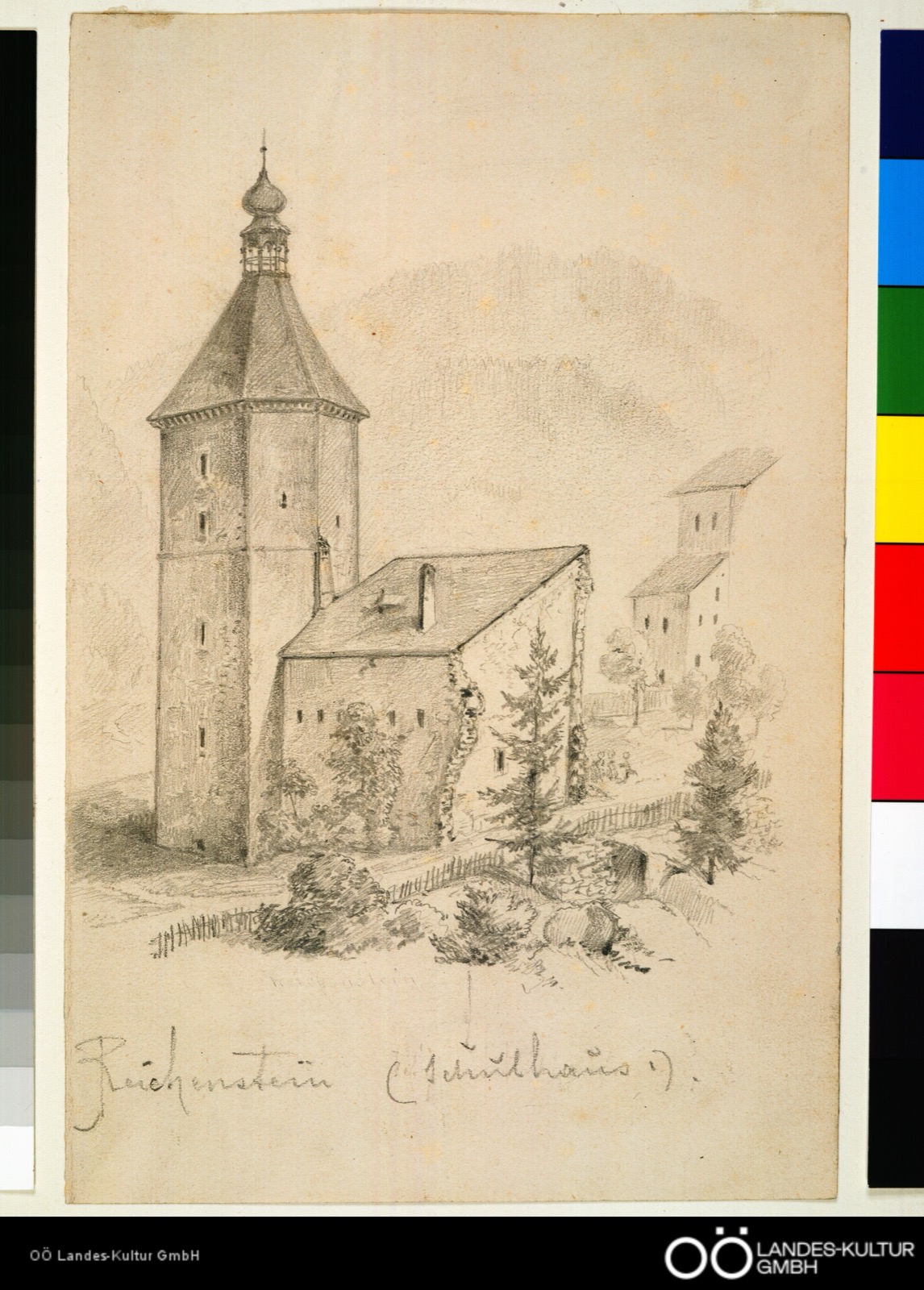
Reichenstein Schulhaus
· OÖ Landes-Kultur GmbH (via Europeana)
CC BY-SA


