Clan Rising
Stein Castle today

Germany · Restored

Stein Castle

Burg Stein (Sachsen)

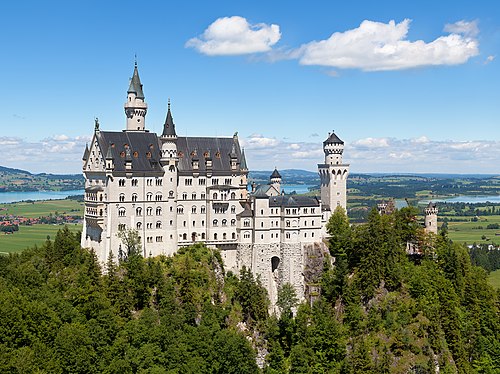
Stein Castle (Burg Stein) is a Saxon hill castle on a rocky promontory above the Zwickauer Mulde at the village of Stein, Hartenstein, Saxony. Originating around 1200, its preserved fabric includes an upper ward with a round bergfried and palas and a lower ward with curtain walls; it has served as a fortified residence and today houses a museum after 20th-century renovations.

Photograph via Wikimedia Commons

First raised

1200

Its prime

1702

Today

Restored

As it stood in 1702

What Stein Castle looked like in its prime.

Stein Castle crowns a rocky outcrop on the southern bank of the Zwickauer Mulde, its mass arranged in an upper ward with a tall cylindrical bergfried set on exposed hornblende rock, and a palas block with steep gabled roofs and red-painted rendered façades. A lower ward of grey rubble curtain walls with crenellations descends to the river, punctuated by a slender pointed round tower and a projecting timber oriel balcony; mature trees rise behind the site and a weir lies upstream.

Its story

The story of Stein Castle.

Burg Stein stands on a rocky promontory above the Zwickauer Mulde at the village of Stein, near Hartenstein in Saxony. Originating around 1200, it probably served at first as an outer ward of Hartenstein Castle; its first known owner was Lord Heidenreich of Grünhain, 'Heidenricus miles de lapide', knight of the rock castle, a member of the lesser nobility.

The castellans of the 14th century were notorious robber barons. In 1701–02 the Barony of Stein became independent of the County of Hartenstein and the castle became a lordly residence and the seat of the barony; in 1740 the House of Wettin obliged the lords of Schönburg to recognise Saxon suzerainty over their hitherto imperially immediate baronies, Stein among them.

The castle remained with the princely Schönburg family until 1945, when their estate was confiscated in the East German socialist land reform. Its preserved fabric, an upper ward with round bergfried and palas, a lower ward with curtain walls, was renovated in the 20th century and today houses a museum.

Step inside

10 places to explore in 1702.

The record describes 10 distinct spots at Stein Castle, including 1 interior: great hall of the palas. Create your own photoreal reconstruction and explore every one, more scenes means more rooms, more angles, and more of the place to stand in.

Riverside approach (panorama)Curtain wall and lower ward along the MuldePalas façade with timber balconyPointed round southwest towerBergfried rising from the rockView from the bergfried summitGreat hall of the palasPrince's Cave (nearby recess)Weir and mill site upstreamFord and ferry approach

Build Your Own Castle

Recreate Stein Castle with AI to explore it.

The artist rebuilds it as it stood in 1702, a photoreal reconstruction that belongs to you alone. Pay with coins, no subscription needed.

Recreate this castle →Defend this castle →

Whose castle

Clans who held Stein Castle.

The families that held Stein Castle for a decade or more across its history, follow a name to its clan.

  • Schönburg

    Held by the lords, later Princes, of Schönburg until their estate was confiscated in the 1945 East German land reform.

From the archive

Stein Castle on paper: the measured plan and period views.

The survey plan and photographs below are the ground truth this page's reconstructions are checked against, drawn and photographed while the castle was still a working garrison. Every image is public-domain or openly licensed, with its source named.
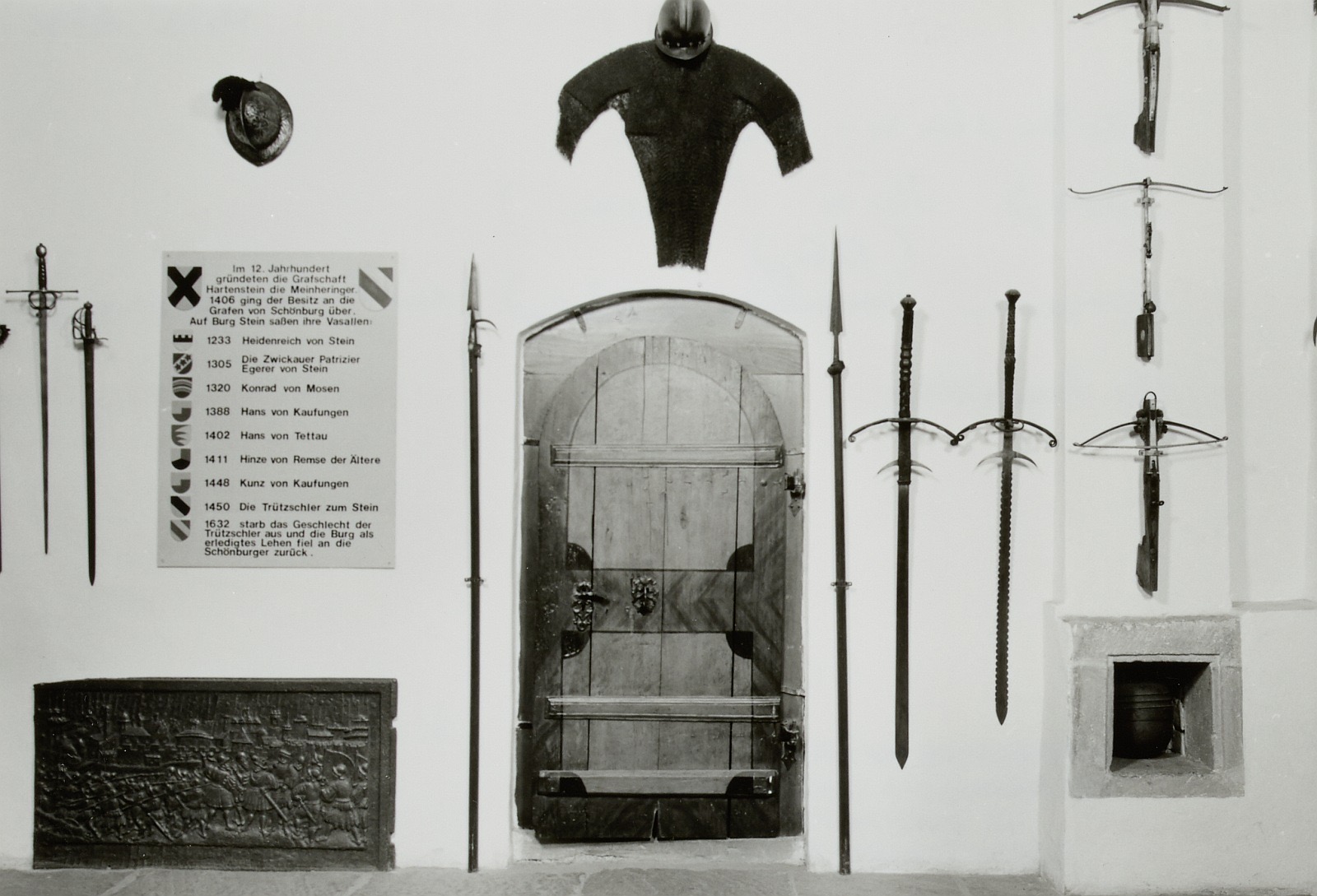
Stein Castle, museum, anteroom with exhibits, Stein Castle

Stein Castle, museum, anteroom with exhibits

· Deutsche Fotothek (via Europeana)

CC BY-SA
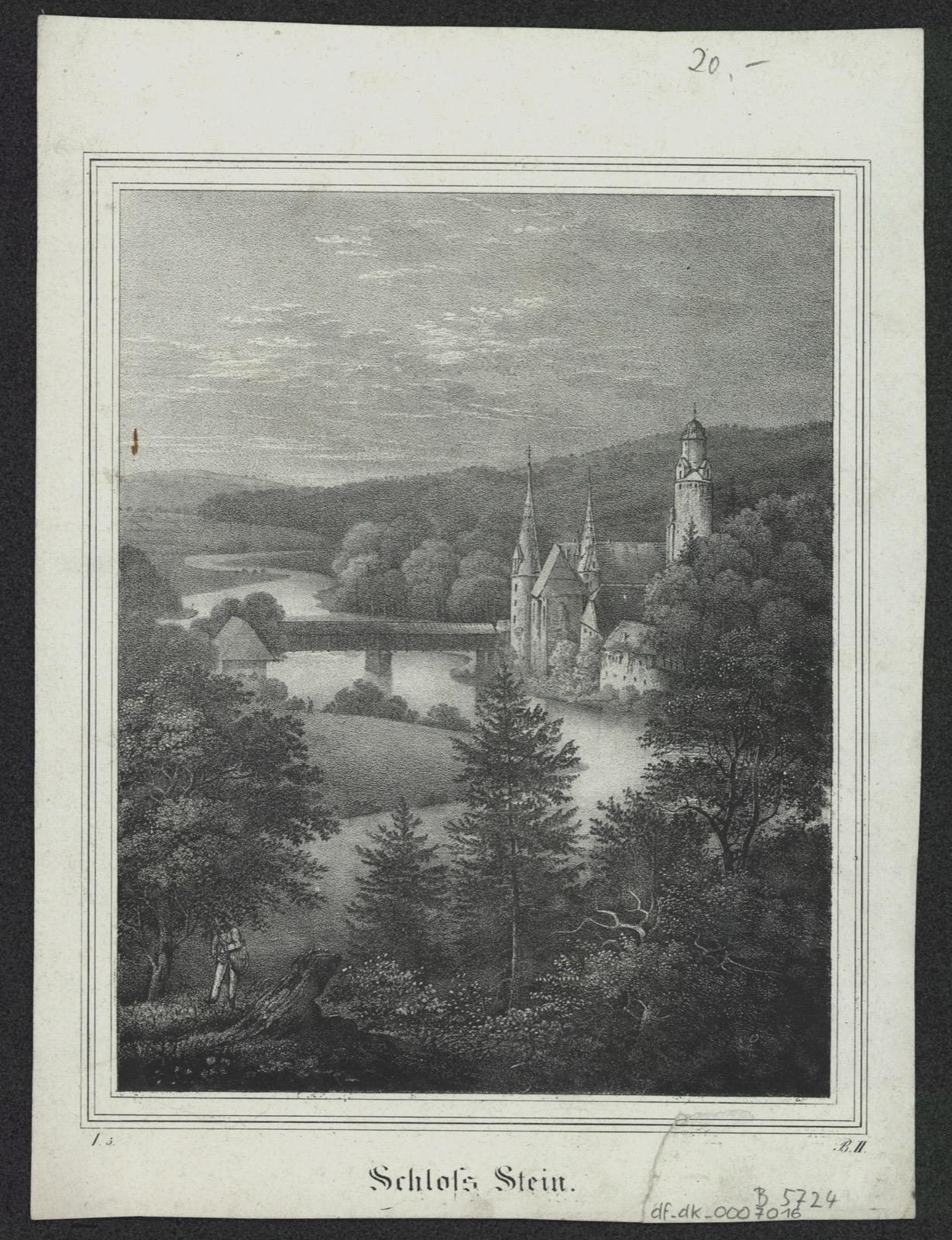
Ansicht von Schloss Stein in Hartenstein, Lithographie, 1835, Stein Castle

Ansicht von Schloss Stein in Hartenstein, Lithographie, 1835

· Deutsche Fotothek (via Europeana)

CC BY-SA
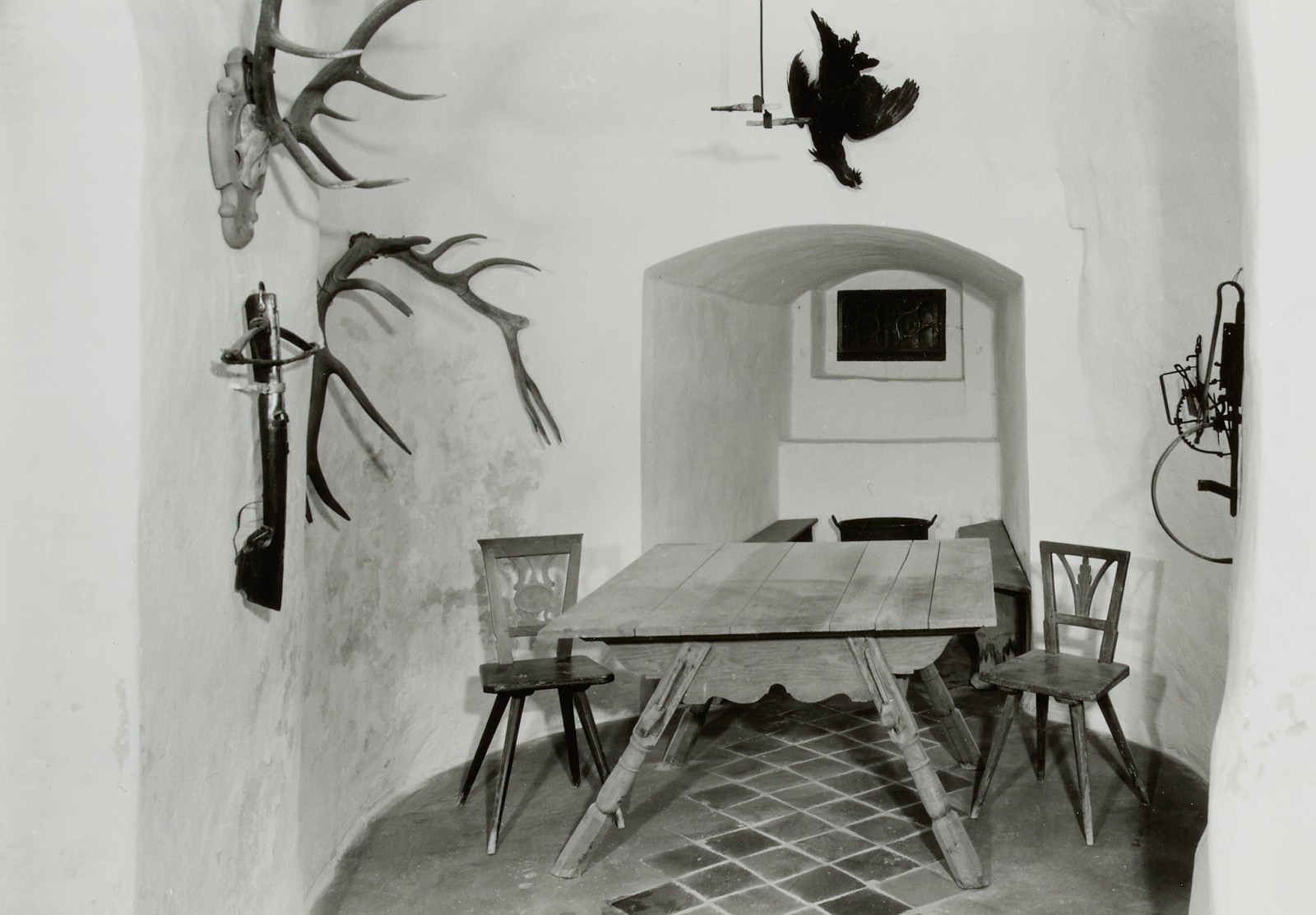
Burg Stein, Inneres, Museum, Ausstellung im Erdgeschoss, Stein Castle

Burg Stein, Inneres, Museum, Ausstellung im Erdgeschoss

· Deutsche Fotothek (via Europeana)

CC BY-SA

Questions about Stein Castle

What is the history of Stein Castle?

Stein Castle began in the 13th century as a fortified site on the Zwickauer Mulde, probably serving as an outer ward of Hartenstein Castle. Its castellans became notorious robber barons, and it was besieged by its socage farmers in 1525. The Barony of Stein became independent in 1701–02, and a great fire later destroyed the lower ward, which was rebuilt and renovated.

What is inside Stein Castle?

Inside Stein Castle are the great hall of the palas, the upper ward’s castle and local history museum, and former residential rooms displaying weapons, armour, torture instruments, hunting objects and everyday items. The lower ward contains a festival hall and a Gothic tower vault used for events. Private residential rooms also occupy part of the lower ward.

Why was Stein Castle built, and what was it used for?

Stein Castle was built as a fortified site protecting a river crossing and nearby settlements, probably also functioning as an outer ward of Hartenstein Castle. Its role later changed: when the Barony of Stein became independent in 1701–02, the castle became a lordly residence and seat of the barony. It now houses a museum.

Does anyone live at Stein Castle?

Yes, people live at Stein Castle: the lower ward contains private residential rooms of the Princes’ family, alongside the castle and local history museum. The museum occupies the Romanesque upper ward, while the lower ward also houses the forestry administration and rooms used for concerts, weddings and other events.

Where is Stein Castle?

Stein Castle is in the village of Stein, in the municipality of Hartenstein, Saxony, southeast of Zwickau. It stands on a rocky promontory on the southern bank of the Zwickauer Mulde, about 500 metres south-west of Hartenstein. A weir lies directly above the castle on the river.

When was Stein Castle built?

Stein Castle was first raised around 1200, placing its origins in the 13th century. The upper ward is the oldest part, with Romanesque influences, while the pointed south-west tower may date from the 14th century and other lower-ward sections from the end of the 15th century. The bergfried received an additional storey in the 16th century.

Was Stein Castle ever attacked or besieged?

Yes, Stein Castle was besieged in 1525 by its socage farmers during the Great Peasants’ Revolt. They attacked while their lord, Ernest II of Schönburg, was absent. The siege ended when Ernest returned with troops from the Battle of Frankenhausen; the castle did not fall, and the farmers were severely punished.

Which family or clan held Stein Castle?

Stein Castle was held by the lords, later Princes, of Schönburg until their estate was confiscated in the 1945 East German land reform. The Schönburgs received Stein Castle in 1406, initially as a pledge from the burgraves of Meissen. The castle later became the centre of the independent Barony of Stein in 1701–02.

What did Stein Castle look like in its prime?

In its main form, Stein Castle has an upper ward with a tall cylindrical bergfried rising from exposed hornblende rock and a palas with steep gabled roofs and red-rendered façades. A lower ward descends towards the river, formed by grey rubble curtain walls with crenellations. A pointed round tower and projecting timber oriel balcony add distinctive details.

Is Stein Castle still standing, or is it a ruin?

Stein Castle is still standing and has been restored rather than reduced to a ruin. Its preserved fabric includes the upper ward, round bergfried, palas and lower-ward curtain walls. The lower ward was destroyed by a great fire and later partially rebuilt, with renovation recorded in 1846; the castle was also extensively renovated after 1996.

Can you visit Stein Castle?

Yes, Stein Castle can be visited because it houses a castle and local history museum that remains publicly accessible. The museum is in the upper ward, while the lower ward includes private rooms and administrative spaces. The bergfried itself cannot be visited, and the castle is only partly accessible to the public.
All castles of Germany · Castles of Europe · the best castles in Europe · explore the finished reconstructions.