
Italy · Restored
Juval Castle
Castel Juval
Juval Castle is a medieval hilltop castle above the village of Naturns in South Tyrol, northern Italy, overlooking the entrance to the Schnalstal. Built in the 13th century and extended through the late medieval period, it sits on a rocky promontory and today houses part of the Messner Mountain Museum during parts of the year.
First raised
1250
Its prime
1500
Today
Restored
As it stood in 1500
What Juval Castle looked like in its prime.
Perched on a rocky promontory above a wooded alpine slope, the castle comprises pale plastered curtain walls and several towers: a tall rectangular crenellated tower to the northwest, a compact multi-storey residential block with a steep tiled roof at the centre, and smaller square towers with low pyramidal tiled roofs to the east; crenellated parapets run along irregular stone walls set directly onto exposed bedrock, with mountains rising behind.
Its story
The story of Juval Castle.
Juval Castle takes its name from the Latin name of its mountain, Mons Jovis, the mountain of Jupiter. Probably constructed about thirty years before its first recorded mention in 1278, when it was owned by Hugo of Montalban, it was acquired by the lords of Starkenberg in 1368 and passed to Sinkmoser in 1540; the period from its construction to the mid-1500s was the castle's heyday.
After several further changes of ownership the castle was sold in 1813 to a local farmer, Josef Blaas, and passed down through the Blaas family until the Second World War, when it was taken over by the Nazis. A later restoration was presided over by the Vinschgau architect Karl Spitaler.
From 1983 to 2025 Juval was the summer residence of the mountaineer Reinhold Messner, who partially converted it into a museum displaying Tibetan art and a collection of masks from five continents, one of the venues of the Messner Mountain Museum, closed in the summer months when Messner is in residence. Private visitors reach the castle only on foot, an hour-long walk, or by a special bus service.
Step inside
7 places to explore in 1500.
The record describes 7 distinct spots at Juval Castle, including 1 interior: interior chamber (gallery space). Create your own photoreal reconstruction and explore every one, more scenes means more rooms, more angles, and more of the place to stand in.
Build Your Own Castle
Recreate Juval Castle with AI to explore it.
The artist rebuilds it as it stood in 1500, a photoreal reconstruction that belongs to you alone. Pay with coins, no subscription needed.
Recreate this castle →Defend this castle →Whose castle
Clans who held Juval Castle.
The families that held Juval Castle for a decade or more across its history, follow a name to its clan.
Montalban
Owned by Hugo of Montalban at the castle's earliest record in 1278.
Starkenberg
Acquired by the lords of Starkenberg in 1368, held until it passed to Sinkmoser in 1540.
Sinkmoser
Passed to Sinkmoser in 1540, at the end of the castle's heyday.
From the archive
Juval Castle on paper: the measured plan and period views.
The survey plan and photographs below are the ground truth this page's reconstructions are checked against, drawn and photographed while the castle was still a working garrison. Every image is public-domain or openly licensed, with its source named.
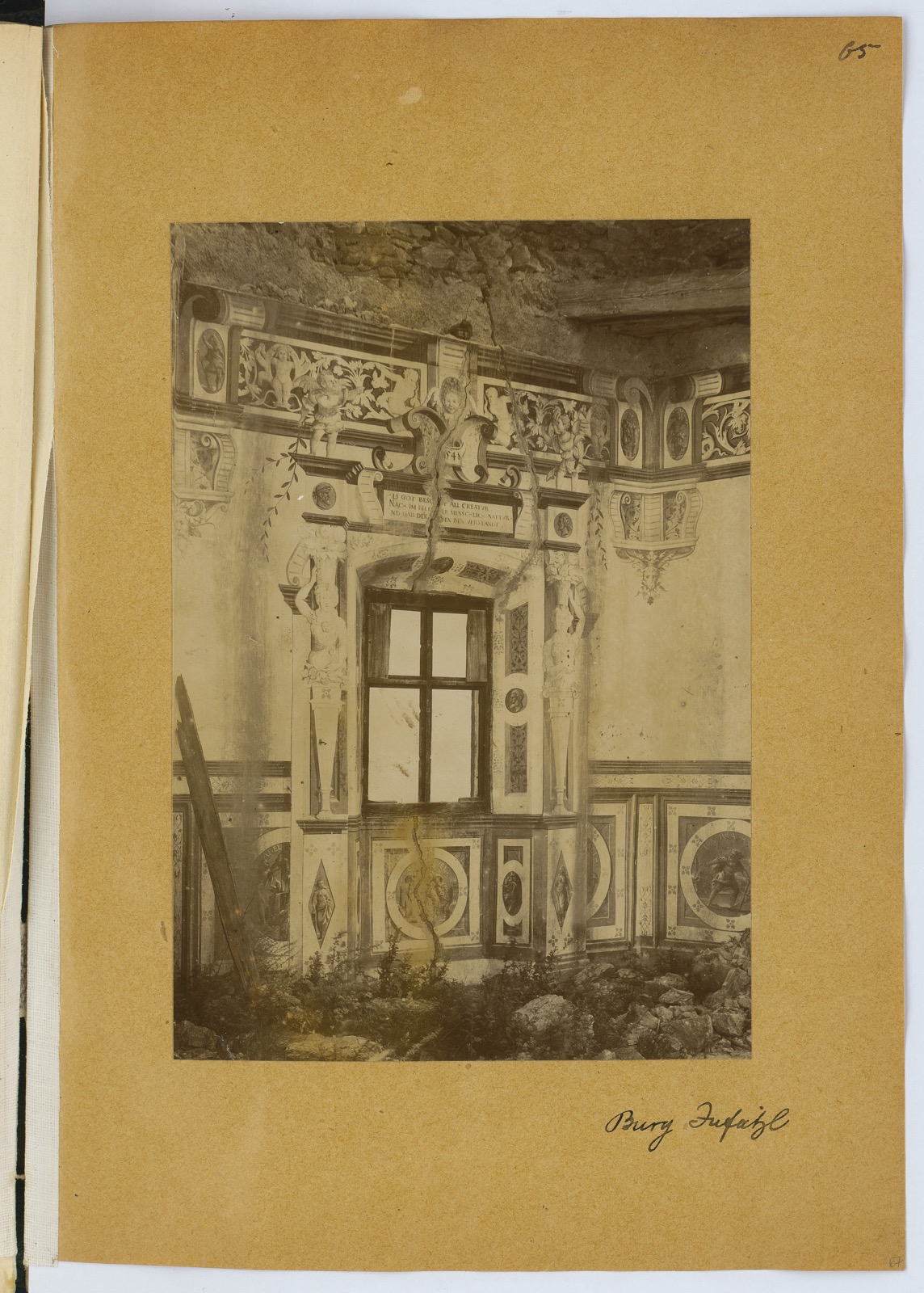
Schloss Juval, Kastelbell-Tschars: Maskensaal, Detailansicht (aus: Skizzen- und Fotoalbum 14)
· Museum of Architecture at Berlin Institute of Technology (via Europeana)
CC0 (no rights reserved)
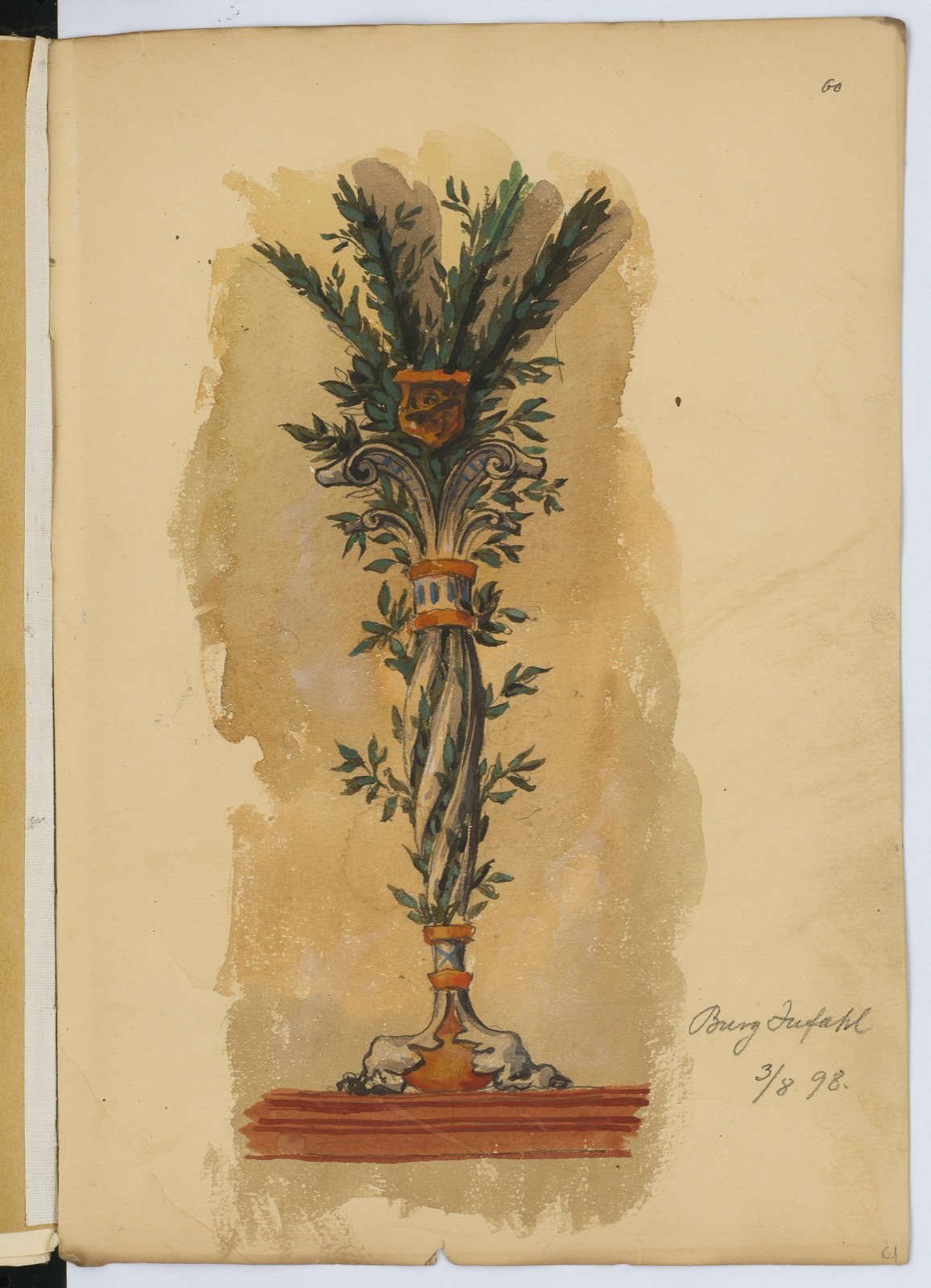
Schloss Juval, Kastelbell-Tschars: Wandfresko, Fragment (aus: Skizzen- und Fotoalbum 14)
· Museum of Architecture at Berlin Institute of Technology (via Europeana)
CC0 (no rights reserved)
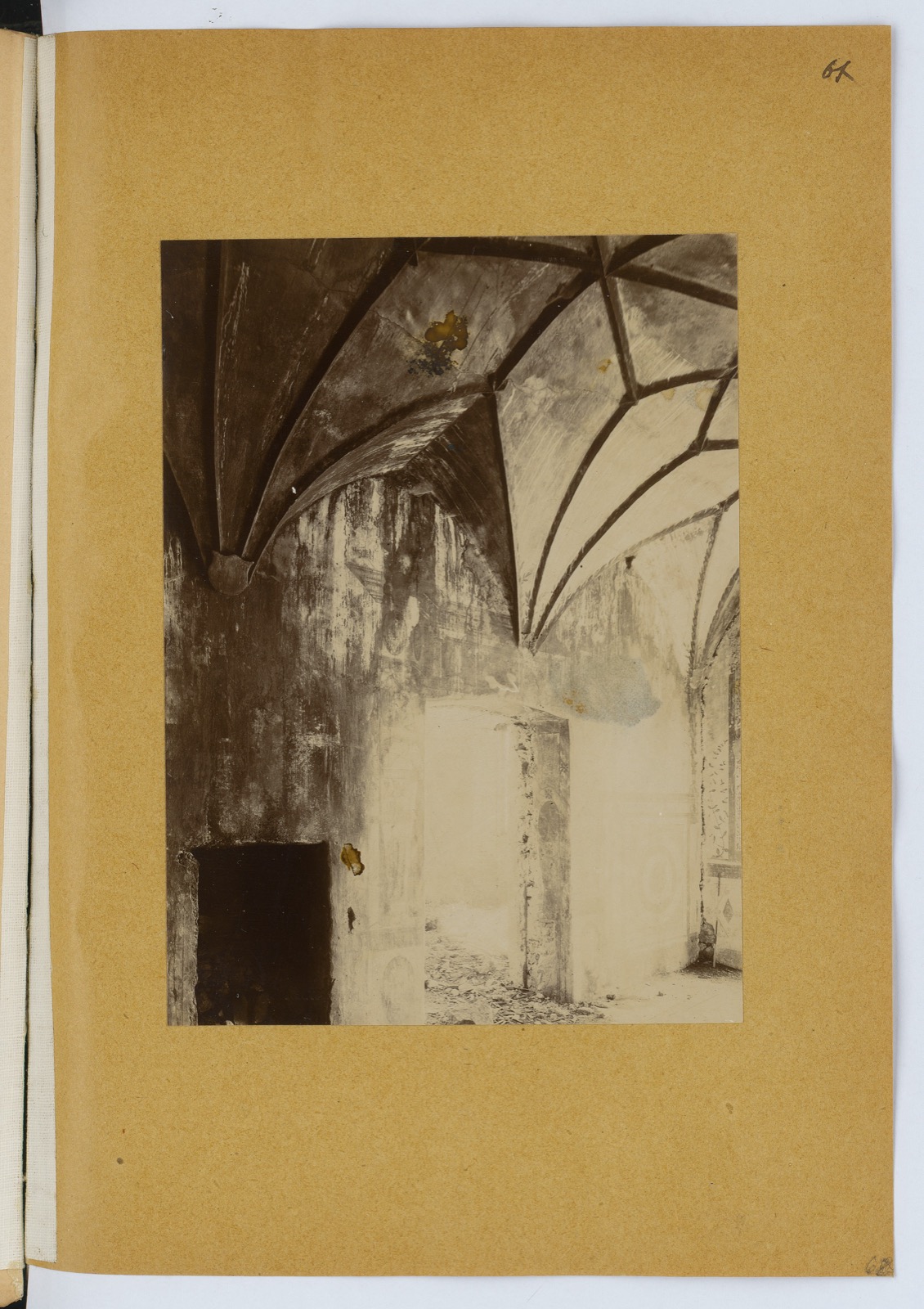
Schloss Juval, Kastelbell-Tschars: Eingangsbereich (aus: Skizzen- und Fotoalbum 14)
· Museum of Architecture at Berlin Institute of Technology (via Europeana)
CC0 (no rights reserved)


