
Luxembourg · Partial ruin
Bourscheid Castle
Bourscheid Castle is a medieval hilltop fortress near the village of Bourscheid in north-eastern Luxembourg, perched on a rocky promontory about 150 metres above the River Sûre. The complex comprises an outer circular curtain wall with multiple round watchtowers, an upper and lower castle with domestic ranges, and a prominent rectangular keep; it was extended through the 14th–16th centuries and today survives as a largely open-air, visitable ruin.
First raised
1001
Its prime
1600
Today
Partial ruin
As it stood in 1600
What Bourscheid Castle looked like in its prime.
Perched on a high rocky spur above a meandering river, the castle presents an oval plan enclosed by a continuous grey-stone curtain wall punctuated by cylindrical watchtowers (eleven in the outer circuit). Several outer towers are capped with steep conical roofs; a taller rectangular keep with crenellated top dominates the upper ward. Multiple stepped terraces and inner ranges of stone buildings with gabled roofs fill the courtyards, and 16th-century artillery bastions project from the wall faces. At its prime the roofs, battlements and chimneys were intact.
Its story
The story of Bourscheid Castle.
A Refuge Above the Sûre and Bertram's Fall, c.1000–1095
The rock above the Sûre carried buildings long before the castle: archaeological evidence on the site reaches back to Roman times. The stone castle itself went up around the year 1000, on earlier foundations and in place of an older timber fortification, a dating supported both by written sources and by the excavations carried out between 1986 and 1992. It sits on a spur enclosed by the river, some 150 metres above the water and rising to 379.8 metres above sea level at its highest point, in what was then the County of Luxembourg within the Holy Roman Empire.
It was first intended as a refuge for the inhabitants of the village that shares its name, but its position turned it into a strategic military post of the Count of Luxembourg. The earliest record of it, in 1095, names it as the property of Bertram von Bourscheid, bailiff of the Abbey of Echternach, who administered the castle on the abbey's behalf. That same document sets out Bertram's removal from office, on the grounds that he had "spread his wings too far".
The Lords of Bourscheid and the Ring Walls, 1095–1512
The lords of Bourscheid held the castle until 1512, and they were found at the highest ranks of the Count of Luxembourg's retinue. Their upper castle, raised between 1000 and 1300, contained the keep, the palas with its knights' hall and the lord's chambers, the kitchen and the chapel. The walls enclose 12,000 square metres, which makes the complex the largest in Luxembourg by area.
The defences grew through the later Middle Ages. The lower castle was extended in the 14th century and given a double ring wall with a zwinger and six towers; the outer wall dates from 1350, and the Stolzembourg house was built in 1384 once the new ring wall was finished. The courtyard followed in 1477. Behind a gateway of the end of the 15th century, a ditch covered by four towers barred the way to the upper and lower castles, and the southern and eastern towers were added in 1498.
Co-Lords, the Metternichs and the Sale of 1753, 1512–1795
Bernhard IV of Bourscheid left the lordship to his two sisters, Maria von dem Weiher zu Nickenich and Wilhelma von der Neuerburg, and from them it passed into the hands of numerous co-lords drawn from the Metternich-Zievel, Zant von Merl, Ahr and Schwartzenburg families. Building work went on under them: the upper part of the castle had been extended in the 15th century, the great fireplace and tall chimney were finished about a hundred years later, artillery bastions were raised in the 16th century, and the chapel was enlarged for the last time in the 17th.
In 1626 Hans Gerhard von Metternich gathered all the shares into his own hand, and the lordship descended through three further generations of his family until his great-grandson Hugo Franz Wolf von Metternich sold it, for financial reasons, to Demoiselle Constance de Mathelin de Rolley in 1753. Metternich's niece Maria Theresia von Eltz-Rodendorf went to law against the sale; in 1762 four-fifths of the lordship were awarded to her, and in 1795 she acquired the remaining fifth.
Revolution, the Auction of 1812 and the Fallen Chapel, 1795–1936
The French Revolution put an end to the feudal power the lordship carried. Schenk von Schmidtburg, who acquired the castle at the end of the 18th century, undertook some repair work but was unable to prevent further degradation.
After the auction of 1812 the complex fell into decay. The chapel collapsed during the 19th century, and there was talk of demolishing what was left of the building. It became a listed site in 1936.
The State and the Amis du Château, since 1972
In 1972, urged on by an association called the Friends of the Castle of Bourscheid, the State acquired the building and undertook extensive repairs. The castle has belonged to the State of Luxembourg since then, and is managed by the Amis du Château de Bourscheid.
Apart from the keep and the cellar beneath the palas, the upper castle and the two castle-guard houses survive only as ruins. The castle is open to visitors all year round and remains a predominantly open-air ruin. Publication of the Bourscheid historical archives has since filled in the detail of the castle and of the people who lived in it.
Step inside
10 places to explore in 1600.
The record describes 10 distinct spots at Bourscheid Castle, including 3 interiors: stolzembourg house (1384), interior room, chapel interior (pre-collapse), great hall with fireplace and chimney. Create your own photoreal reconstruction and explore every one, more scenes means more rooms, more angles, and more of the place to stand in.
Build Your Own Castle
Recreate Bourscheid Castle with AI to explore it.
The artist rebuilds it as it stood in 1600, a photoreal reconstruction that belongs to you alone. Pay with coins, no subscription needed.
Recreate this castle →Defend this castle →Whose castle
Clans who held Bourscheid Castle.
The families that held Bourscheid Castle for a decade or more across its history, follow a name to its clan.
Metternich
Held by the House of Metternich from 1626 until the French Revolution ended its feudal power.
Schenk von Schmidtburg
Acquired by Schenk von Schmidtburg at the end of the 18th century, who undertook repairs on the declining castle.
From the archive
Bourscheid Castle on paper: the measured plan and period views.
The survey plan and photographs below are the ground truth this page's reconstructions are checked against, drawn and photographed while the castle was still a working garrison. Every image is public-domain or openly licensed, with its source named.
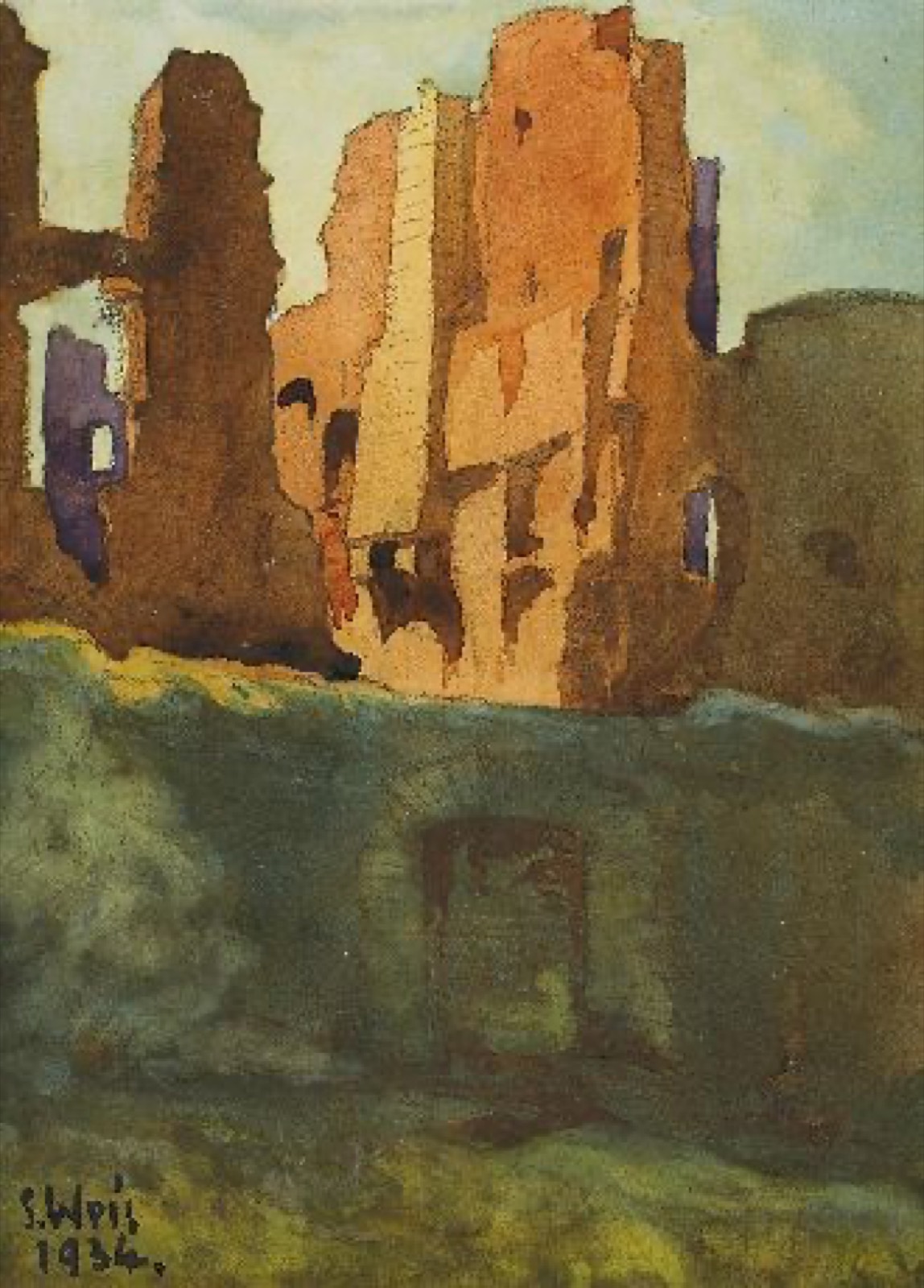
Château de Bourscheid
· National Museum of Archaeology, History and Art (via Europeana)
Public domain
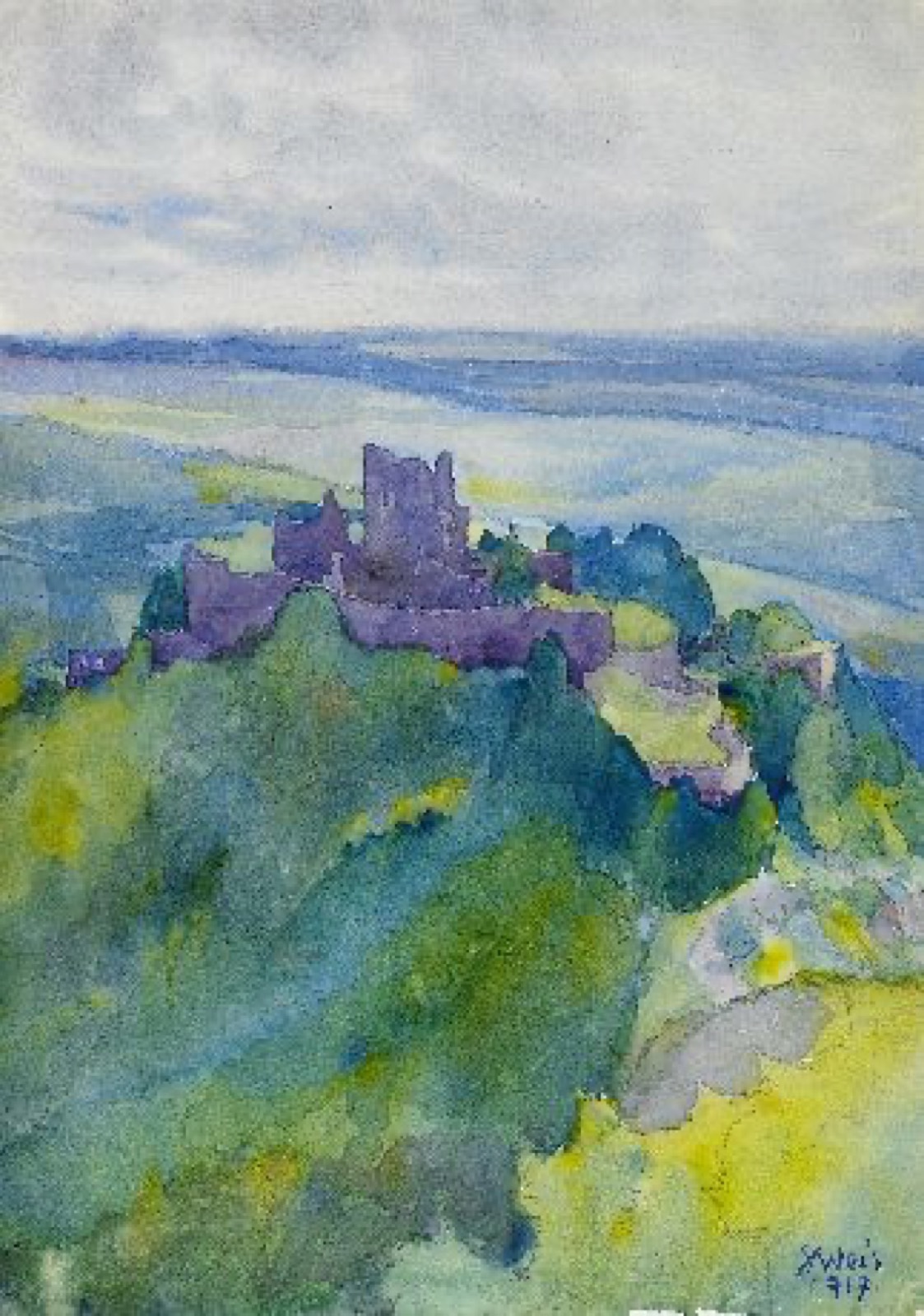
Château de Bourscheid
· National Museum of Archaeology, History and Art (via Europeana)
Public domain
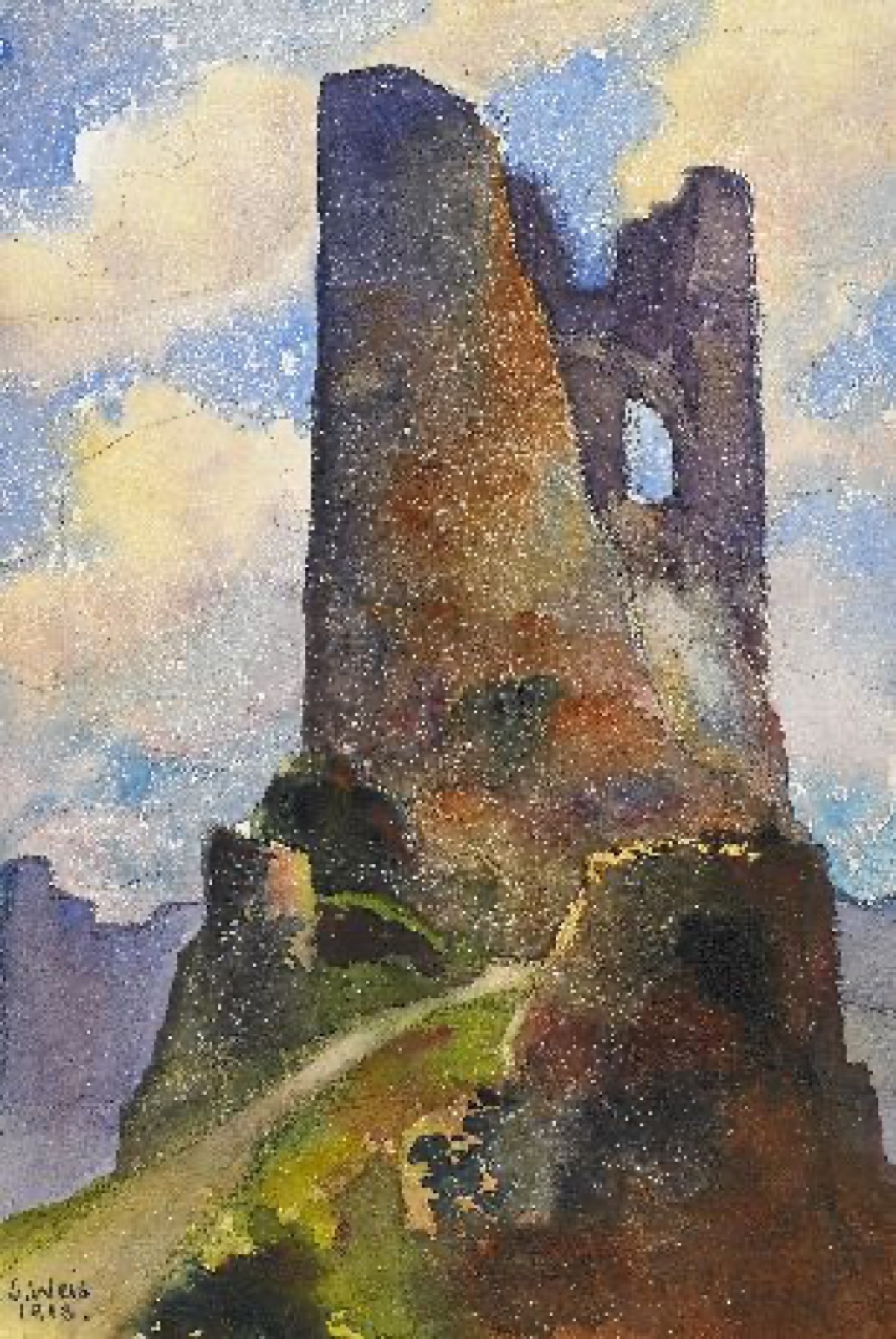
Château de Bourscheid
· National Museum of Archaeology, History and Art (via Europeana)
Public domain


