Clan Rising
Schengen Castle today

Luxembourg · Still standing

Schengen Castle

Schengen Castle is a manor-house style castle in the village of Schengen in south‑east Luxembourg, incorporating a medieval round tower. The original 14th‑century fortress was largely demolished in 1812 and replaced by a 19th‑century residential manor; the round tower remained. In the 20th and early 21st centuries it has been used by religious orders and as a hotel and conference centre.

Photograph via Wikimedia Commons

First raised

1900

Its prime

1871

Today

Still standing

As it stood in 1871

What Schengen Castle looked like in its prime.

A three‑storey rectangular manor with a steep slate mansard roof, central triangular pediment and decorative iron roof cresting, faced in pale grey‑beige stone with regular tall rectangular windows set in golden stone surrounds. To the left a large cylindrical medieval tower rises with a tall conical slate roof and ivy climbing its rough rendered walls. Formal parterre gardens and gravel drives lie in front, with mature deciduous and evergreen trees framing the building.

Its story

The story of Schengen Castle.

Schengen Castle dates from 1390, but the original fortress was largely demolished in 1812 and the castle almost completely rebuilt in the nineteenth century as a residential manor, keeping the medieval round tower. It stands in the village of Schengen in Luxembourg's south-east, close against the borders with France and Germany.

From 1939 the castle was occupied by the congregation of Saint Elizabeth; in April 2010 it opened as a hotel and conference centre, with meeting facilities for up to 100 participants in the castle and its surrounding buildings. In 2016 the company Regus bought it, and it has stood unoccupied since.

Step inside

6 places to explore in 1871.

The record describes 6 distinct spots at Schengen Castle, including the full exterior approach. Create your own photoreal reconstruction and explore every one, more scenes means more rooms, more angles, and more of the place to stand in.

Approach along gravel driveFormal parterre gardenMain entrance steps and porchMedieval round tower (exterior)Roofline and pediment detailTree‑framed side view

Build Your Own Castle

Recreate Schengen Castle with AI to explore it.

The artist rebuilds it as it stood in 1871, a photoreal reconstruction that belongs to you alone. Pay with coins, no subscription needed.

Recreate this castle →Defend this castle →

From the archive

Schengen Castle on paper: the measured plan and period views.

The survey plan and photographs below are the ground truth this page's reconstructions are checked against, drawn and photographed while the castle was still a working garrison. Every image is public-domain or openly licensed, with its source named.
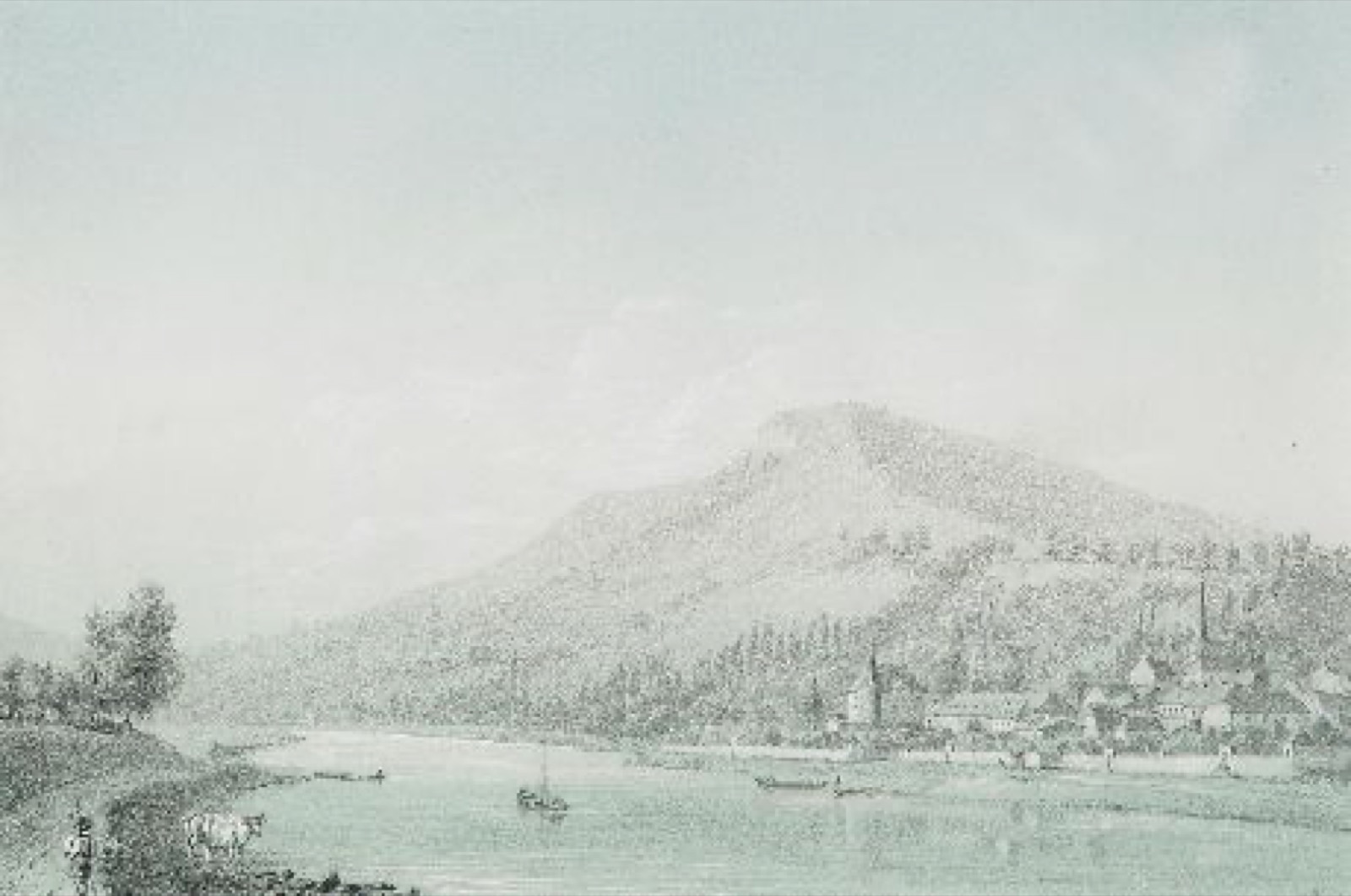
Schengen, Schengen Castle

Schengen

· National Museum of Archaeology, History and Art (via Europeana)

Public domain

Nearby

Landmarks within reach of Schengen Castle.

Questions about Schengen Castle

What is the history of Schengen Castle?

Schengen Castle began as a 14th-century fortified castle. Jean-Nicolas Collart acquired it in 1793 and demolished most of it in 1812, using much of the existing material to build the present residential manor; only the round tower remained. From 1939 it was occupied by the congregation of Saint Elizabeth, and it became a hotel and conference centre in April 2010 before being sold to Regus in 2016.

Who owns Schengen Castle now?

Euro-Immo Guy Rollinger owns Schengen Castle. This current ownership dates from 2020; the castle had previously been sold to Regus in 2016 after its period as a hotel and conference centre.

Why was Schengen Castle built, and what was it used for?

Schengen Castle was originally built as a fortified castle and later served as a residential manor. Its use changed again: from 1939 it was occupied by the congregation of Saint Elizabeth, then opened as a hotel and conference centre in April 2010. It has stood unoccupied since 2016.

Does anyone live in Schengen Castle now?

No one lives in Schengen Castle now: it has stood unoccupied since 2016. Before that, the congregation of Saint Elizabeth occupied it from 1939, and it later operated as a hotel and conference centre until it was sold in 2016.

Where is Schengen Castle?

Schengen Castle is in the village of Schengen in south-east Luxembourg, close to the borders with France and Germany. Its setting is on the Luxembourg side, with France and Germany close by. Schengen is also the castle’s administrative locality.

When was Schengen Castle built?

Schengen Castle was first established in the 14th century, although the present residential manor dates from the 19th century. The original fortress was largely demolished in 1812, leaving the medieval round tower; the later building therefore represents substantial rebuilding rather than an unchanged medieval castle.

What did Schengen Castle look like in its prime?

Schengen Castle is a three-storey rectangular manor with a steep slate mansard roof, a central triangular pediment and decorative iron roof cresting. Pale grey-beige stone, tall rectangular windows with golden stone surrounds and a large cylindrical medieval tower with a conical slate roof define its exterior. Formal parterre gardens and gravel drives lie in front.

Is Schengen Castle still standing or is it a ruin?

Schengen Castle is still standing and intact, not a ruin. The medieval fortress was largely demolished in 1812, but its round tower survived; the castle was almost completely rebuilt as a 19th-century residential manor, so most of the visible building belongs to the later structure.
All castles of Luxembourg · Castles of Europe · the best castles in Europe · explore the finished reconstructions.