Clan Rising
Brandenbourg Castle today

Luxembourg · Ruin

Brandenbourg Castle

Brandenbourg Castle is a medieval stone castle ruin on a rocky promontory above the village of Brandenbourg in north-eastern Luxembourg. The site retains a tall rectangular keep, curtain walls enclosing an inner ward and a lower bailey, and surviving traces of towers, a chapel and vaulted cellars. The state has carried out consolidation and archaeological work while the ruin remains open to the public.

Photograph via Wikimedia Commons

First raised

1000

Its prime

1550

Today

Ruin

As it stood in 1550

What Brandenbourg Castle looked like in its prime.

Sited on a narrow rocky promontory 70 metres above the village, the castle is an elongated enclosure of grey-brown masonry with continuous curtain walls and projecting round and angular wall-towers. A tall rectangular stone keep rises above the inner ward with multiple floors and a defined roofline. The layout includes a lower bailey cut into the slope, inner courtyard, and vaulted cellar ranges beneath the main buildings; at its prime all walls, towers and roofs stood complete.

Its story

The story of Brandenbourg Castle.

Brandenbourg Castle stands on a promontory some 70 metres above the village of Brandenbourg in north-eastern Luxembourg, on a site with a history going back to the 9th and 10th centuries, when a wooden fort stood here. The 13th-century keep once had four floors; three remain, standing 11.9 metres high.

During the 15th and 16th centuries, under the House of Salm, the castle was expanded, a bailey, two towers, vaulted cellars and curtain walls were added. Around 1687 the French destroyed the external walls, and the castle subsequently fell increasingly into ruin.

It is now owned by the du Fays-van Delft family, who in 1997 signed an emphyteutic lease with the State of Luxembourg permitting the state to carry out consolidation and archaeological excavation. The ruin is open to the public daily, closed only from November to March.

Step inside

9 places to explore in 1550.

The record describes 9 distinct spots at Brandenbourg Castle, including 3 interiors: keep upper floor and roof terrace, chapel interior, vaulted cellars. Create your own photoreal reconstruction and explore every one, more scenes means more rooms, more angles, and more of the place to stand in.

Approach from the village roadOuter bailey / lower courtyardCurtain wall and battlementsRound end tower (exterior)Rectangular keep (exterior)Keep upper floor and roof terraceChapel interiorVaulted cellarsInner ward / central courtyard

Build Your Own Castle

Recreate Brandenbourg Castle with AI to explore it.

The artist rebuilds it as it stood in 1550, a photoreal reconstruction that belongs to you alone. Pay with coins, no subscription needed.

Recreate this castle →

Castle Siege

Play Castle Siege at Brandenbourg Castle.

A strategy game played on Brandenbourg Castle’s real ground plan: the same surveyed walls shown in the archive below. Post your finite garrison on the battlements between assaults, then hold out as rams, siege towers, trebuchets and sappers arrive in ever-worse waves.

Sign in free to see the garrison muster. One castle costs 150 Clan Coins and is yours forever.

Sign in to take command →

See every castle’s leaderboard →

Whose castle

Clans who held Brandenbourg Castle.

The families that held Brandenbourg Castle for a decade or more across its history, follow a name to its clan.

  • Salm

    The House of Salm held Brandenbourg in the 15th and 16th centuries, adding the bailey, two towers, vaulted cellars and curtain walls.

  • du Fays-van Delft

    Current owners of the castle; a 1997 emphyteutic lease lets the State of Luxembourg conserve and excavate the ruin.

From the archive

Brandenbourg Castle on paper: the measured plan and period views.

The survey plan and photographs below are the ground truth this page's reconstructions are checked against, drawn and photographed while the castle was still a working garrison. Every image is public-domain or openly licensed, with its source named.
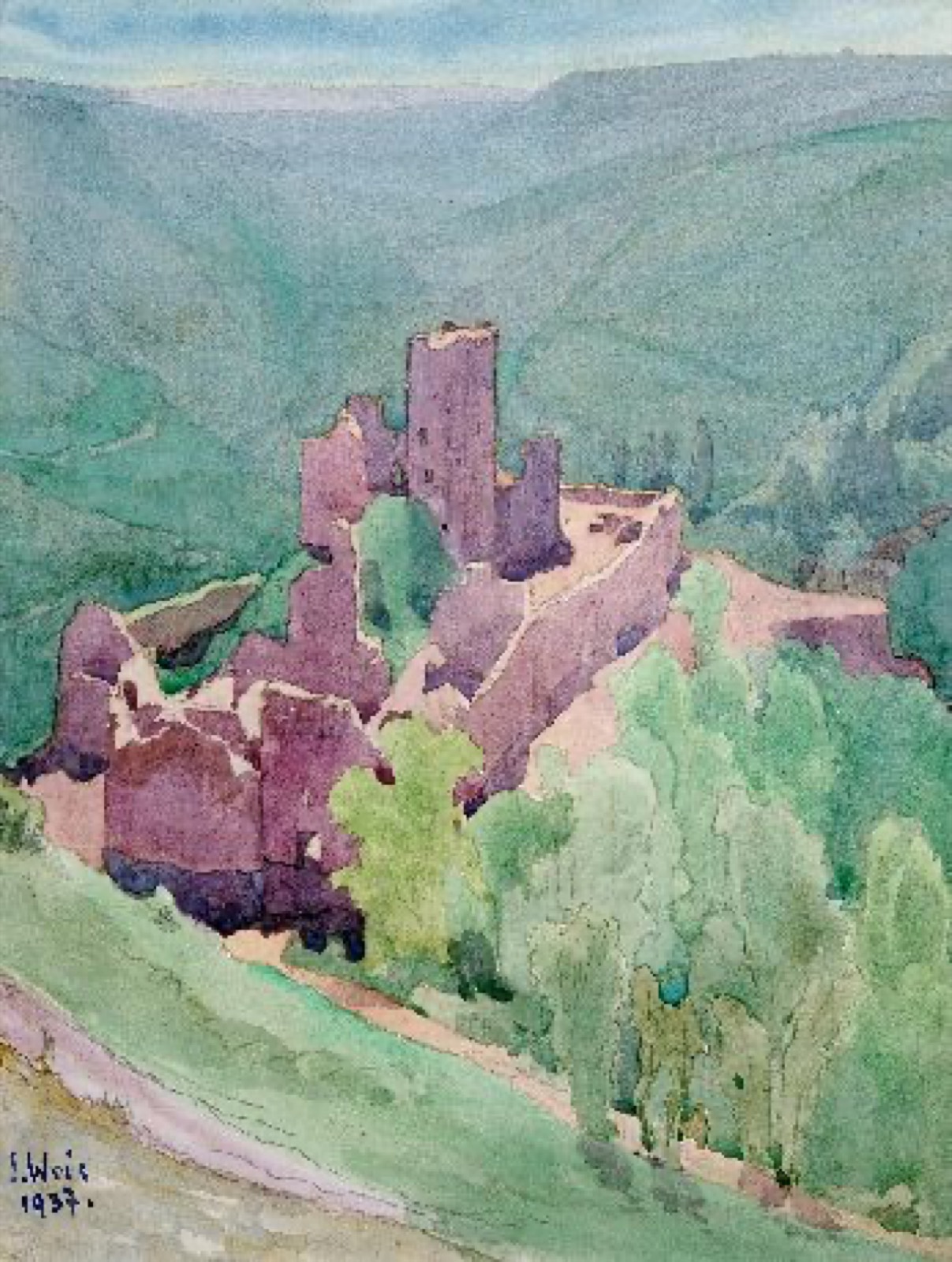
Les ruines du château de Brandenbourg, Brandenbourg Castle

Les ruines du château de Brandenbourg

· National Museum of Archaeology, History and Art (via Europeana)

Public domain
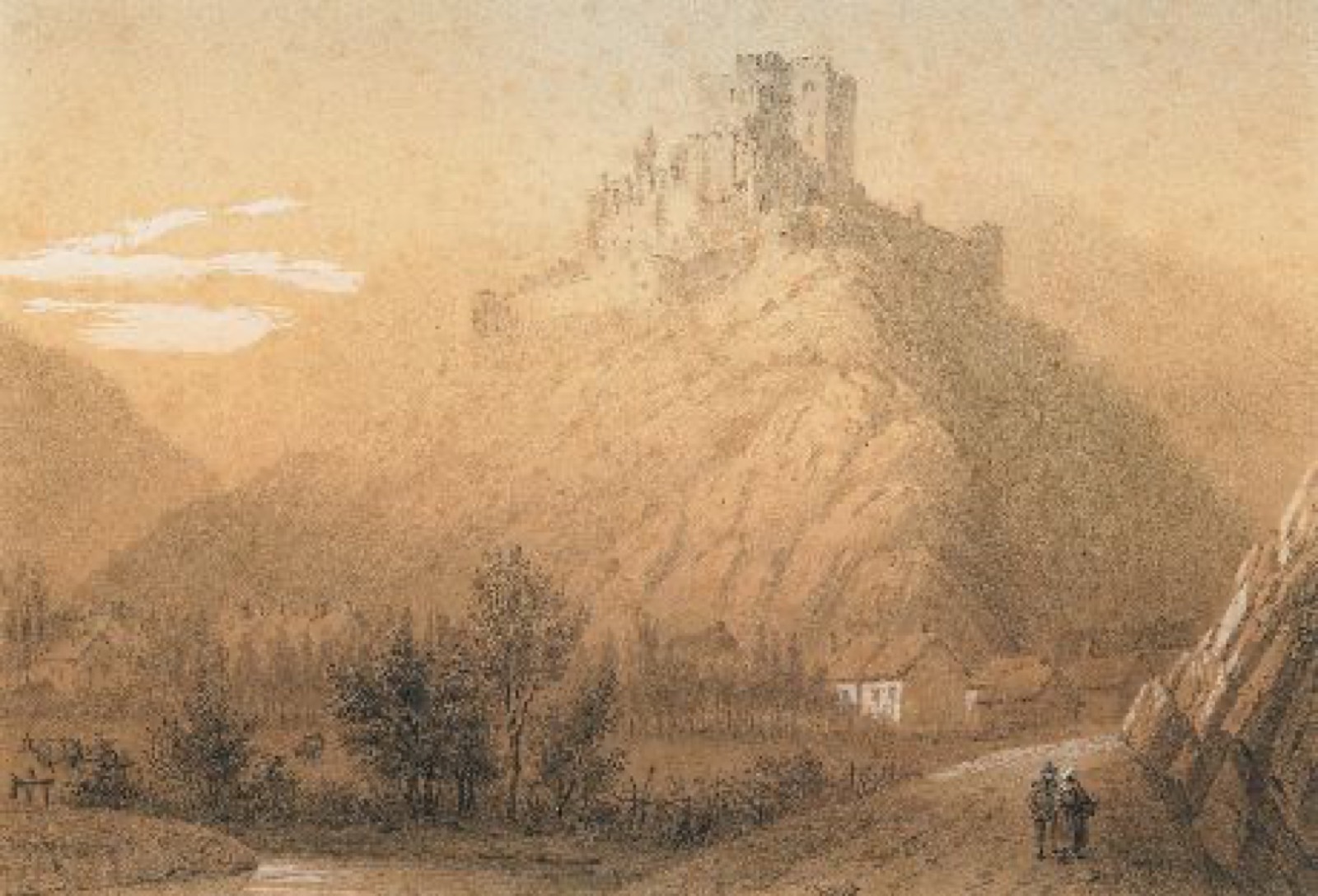
Les ruines du château de Brandenbourg, Brandenbourg Castle

Les ruines du château de Brandenbourg

· National Museum of Archaeology, History and Art (via Europeana)

Public domain

Questions about Brandenbourg Castle

What is the history of Brandenbourg Castle?

Brandenbourg Castle’s history reaches back to a wooden fort on the site in the 9th and 10th centuries. Stone buildings were added in the 13th century, followed by major expansion under the House of Salm in the 15th and 16th centuries. Anton of Burgundy’s forces threatened the castle in 1413, and French troops destroyed its external walls around 1687, after which it increasingly fell into ruin.

What is inside Brandenbourg Castle?

Inside Brandenbourg Castle, visitors can see the keep’s surviving upper floor and roof terrace, the chapel interior and vaulted cellars. The castle also retains an inner courtyard and lower bailey. The keep once had four floors, but three remain and stand 11.9 metres high.

Why was Brandenbourg Castle built, and what was it used for?

Brandenbourg Castle was built as a strategically placed fortified site beside two important routes: one from the River Sûre into the Ardennes and another from Bourscheid to Vianden. Its defensive role expanded over time with a bailey, towers, vaulted cellars and curtain walls. It was later abandoned as medieval fortifications lost their military effectiveness.

Where is Brandenbourg Castle?

Brandenbourg Castle is in the village of Brandenbourg, in the municipality of Tandel in north-eastern Luxembourg. It stands on a rocky promontory about 70 metres above the village. The site lies above the crossroads of routes from the River Sûre to the Ardennes and from Bourscheid to Vianden.

When was Brandenbourg Castle built?

Brandenbourg Castle was first raised around the turn of the first millennium, with origins in the 9th or 10th century. The first stone buildings date from the 13th century, so the surviving castle developed in several phases rather than being built at one time.

Was Brandenbourg Castle ever attacked or besieged?

Yes, Brandenbourg Castle was attacked in 1413 when Anton of Burgundy threatened it with his troops. The castle surrendered despite its defensive strength in order to avoid destruction. French forces later destroyed its external walls around 1687.

Which family or clan held Brandenbourg Castle?

The House of Salm held Brandenbourg Castle in the 15th and 16th centuries. During its tenure, the castle was expanded with a bailey, two towers, vaulted cellars and curtain walls. The du Fays-van Delft family are its current owners.

What did Brandenbourg Castle look like in its prime?

In its prime, Brandenbourg Castle was an elongated enclosure of grey-brown masonry on a narrow rocky promontory. Continuous curtain walls and projecting round and angular towers surrounded a tall rectangular keep with several floors and a defined roofline. The complex also included an inner courtyard, a lower bailey and vaulted cellar ranges.

Is Brandenbourg Castle still standing, or is it a ruin?

Brandenbourg Castle is now a ruin, but substantial fabric survives. The tall rectangular keep, three of its former four floors, curtain walls, inner ward, lower bailey, towers, chapel traces and vaulted cellars remain. Consolidation and archaeological work have been carried out while the ruin has been left standing.

Can you visit Brandenbourg Castle?

Yes, Brandenbourg Castle is open to the public. It remains a ruin rather than a restored residence, and the State of Luxembourg has carried out consolidation and archaeological excavation work under a 1997 emphyteutic lease. The site is closed from November to March.

Who owns Brandenbourg Castle now?

Brandenbourg Castle is currently owned by the du Fays-van Delft family. In 1997, the owners signed an emphyteutic lease with the State of Luxembourg, allowing the state to carry out consolidation and archaeological excavation work on the ruin.
All castles of Luxembourg · Castles of Europe · the best castles in Europe · explore the finished reconstructions.