
Norway · Restored
Fredriksten
Fredriksten festning
Fredriksten is a fortress overlooking the town and harbour of Halden in southeastern Norway, originally built by Denmark–Norway in the 17th century and expanded through the late 17th and early 18th centuries. The fortress retained its full defensive complex into the early 18th century and played a central role in several sieges during the Great Northern War. Today the preserved ramparts and inner works house museums and cultural facilities.
First raised
1660
Its prime
1718
Today
Restored
As it stood in 1718
What Fredriksten looked like in its prime.
Multi-terraced star-shaped fortress set on a bare rocky crag above the town and harbour. Successive thick stone curtain walls and angular bastions step up the slope in terraces, masonry ranging from pale grey to weathered brown granite. A low citadel with an arched gateway occupies a mid-terrace, higher ramparts and outerworks rise to an upper plateau with a small white tower. At prime the works are continuous and intact, with flagstaffs on the ramparts and connecting paved approaches.
Its story
The story of Fredriksten.
After Roskilde: Three Swedish Attacks on Halden, 1658–1660
The Treaty of Roskilde of 1658 ceded Bohuslän to Sweden and with it the border fortress of Bohus, and Denmark–Norway needed a replacement. In September 1658 the new Swedish governor of Bohuslän crossed into Norway with 1,500 men and attacked Halden; the inhabitants put up a vigorous defence and the Swedes fell back. They returned in February 1659 against a strengthened garrison under Tønne Huitfeldt and were repulsed again. Huitfeldt began building fortifications at once, and the citadel of his new system, Cretzenstein, was later renamed Fredriksten after Frederick III; the fortress proper was begun in 1661.
The third attack came in January 1660, Halden being intended as the base for a Swedish advance on Akershus. Huitfeldt answered the demand for surrender by saying his 2,100-man garrison would defend the place to the last man. The storm failed and the Swedes settled to a regular siege; under heavy bombardment the inhabitants asked the commandant to give in, but Huitfeldt, putting his faith in his garrison, held out. On 22 February 1660 the Swedes withdrew to Bohuslän, where they learned that Charles X Gustav had died.
Gyldenløve's War and the Outer Works, 1673–1701
In 1673 Denmark sent Ulrik Frederik Gyldenløve to Norway as statholder to organise its forces and defences; in the summer of 1675 some 1,800 men were at work on Akershus, Fredrikstad and Fredrikshald. When the Gyldenløve War broke out that year, 4,000 men were concentrated at Fredrikshald under General Russenstein. Norwegian troops reoccupied Bohuslän in 1676, and in July 1677 Gyldenløve took Marstrand and joined General Løvenhjelm in defeating 8,000 Swedes under de la Gardie. No Swedish force crossed the frontier, so no major defensive action was needed at Fredriksten. The fortress was expanded again between 1682 and 1701, the work of 1684–89 under Major-General Ernst von Tettau, and gained three outer works: Gyldenløve, Overberget and Stortårnet.
Charles XII Before the Walls, 1716–1718
Early in 1716 the Norwegian army was weakened by the withdrawal of 5,000 of its best troops to Denmark, and the troops left in Østerdal and Gudbrandsdal were ordered to the border. Charles XII crossed at Basmo on 8 March. Norwegian scorched earth and guerrilla raids on his supply lines left him short of provisions, while the fortresses still in Norwegian hands behind him threatened his retreat. He took Christiania but, without heavy siege artillery, could not take Akershus, and turned back to capture Fredriksten. His troops stormed the town on 4 July and carried it, but the citizens set fire to their own houses; unable to take the fortress, Charles withdrew to await siege guns. Tordenskjold then captured or destroyed the entire Swedish transport fleet at Dynekilen in Bohuslän. Charles retreated across the Svinesund, burning the bridges behind him; by 12 July all Swedish troops had left the area.
Charles attacked again in the autumn of 1718, meaning to take Halden first so as to sustain a siege of Akershus. The 1,400-strong garrison fought ferociously, but on 8 December the forward work of Fort Gyldenløve fell. The Swedish trenches had almost reached the main walls when, on the evening of 11 December, 30 November in the Swedish calendar, a bullet struck and killed Charles XII as he inspected the work. His death effectively ended the attack on Fredriksten; the invasion was called off and the war moved to its conclusion. A memorial stands where the king fell, in the park named in his memory before the fortress.
The Theatre War and the Bombardment of 1814
In 1788 the fortress was the staging area for a mock attack on Sweden during the Theatre War. In 1814 it was bombarded but not captured: the advancing Swedish forces of Charles John passed it, leaving a force to compel its surrender, but the fortress and its commander kept the ground. Six times besieged in its history, the fortress was never taken; it was turned over to Sweden after the Convention of Moss.
Decommissioned in 1905, a Heritage Site at Halden
After the Karlstad Convention of 1905 Fredriksten was decommissioned as a war fortress and its modern armament removed, though one turret gun has since been put back. The site still hosted military units afterwards. Protected under Norwegian cultural heritage law, the fortress is open to all: the fortress flag of 1814, carried off by Swedish troops and not returned until 1964, is kept in the museum in the inner fortress, museums and art exhibitions occupy the works, outdoor concerts run through the summer season, and the fortress was chosen as the millennium site for Østfold county.
Step inside
8 places to explore in 1718.
The record describes 8 distinct spots at Fredriksten, including 1 interior: inner fortress courtyard. Create your own photoreal reconstruction and explore every one, more scenes means more rooms, more angles, and more of the place to stand in.
Build Your Own Castle
Recreate Fredriksten with AI to explore it.
The artist rebuilds it as it stood in 1718, a photoreal reconstruction that belongs to you alone. Pay with coins, no subscription needed.
Recreate this castle →Defend this castle →From the archive
Fredriksten on paper: the measured plan and period views.
The survey plan and photographs below are the ground truth this page's reconstructions are checked against, drawn and photographed while the castle was still a working garrison. Every image is public-domain or openly licensed, with its source named.
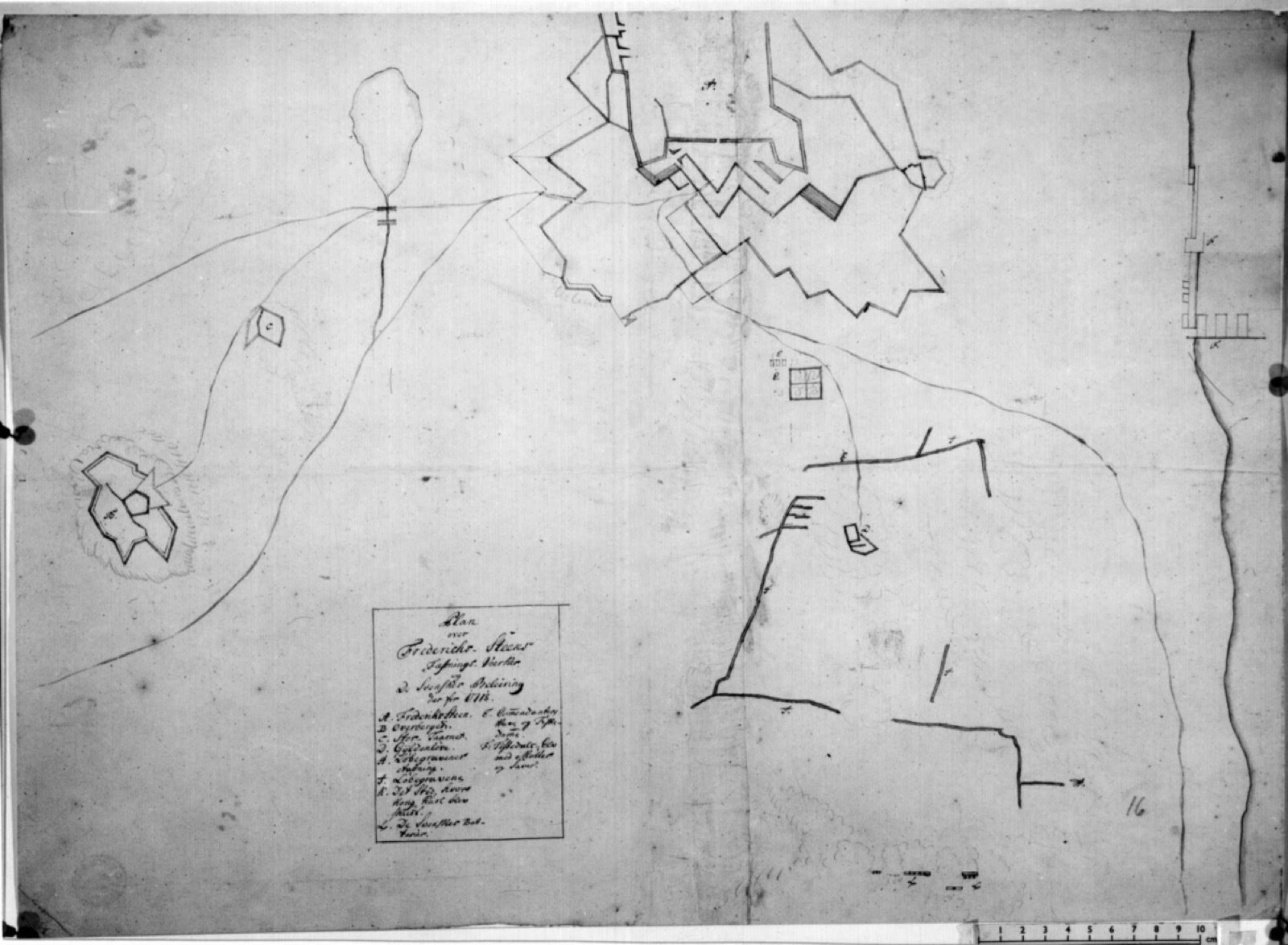
Fredriksten festning
· The Norwegian Museum of Cultural History (via Europeana)
Public domain
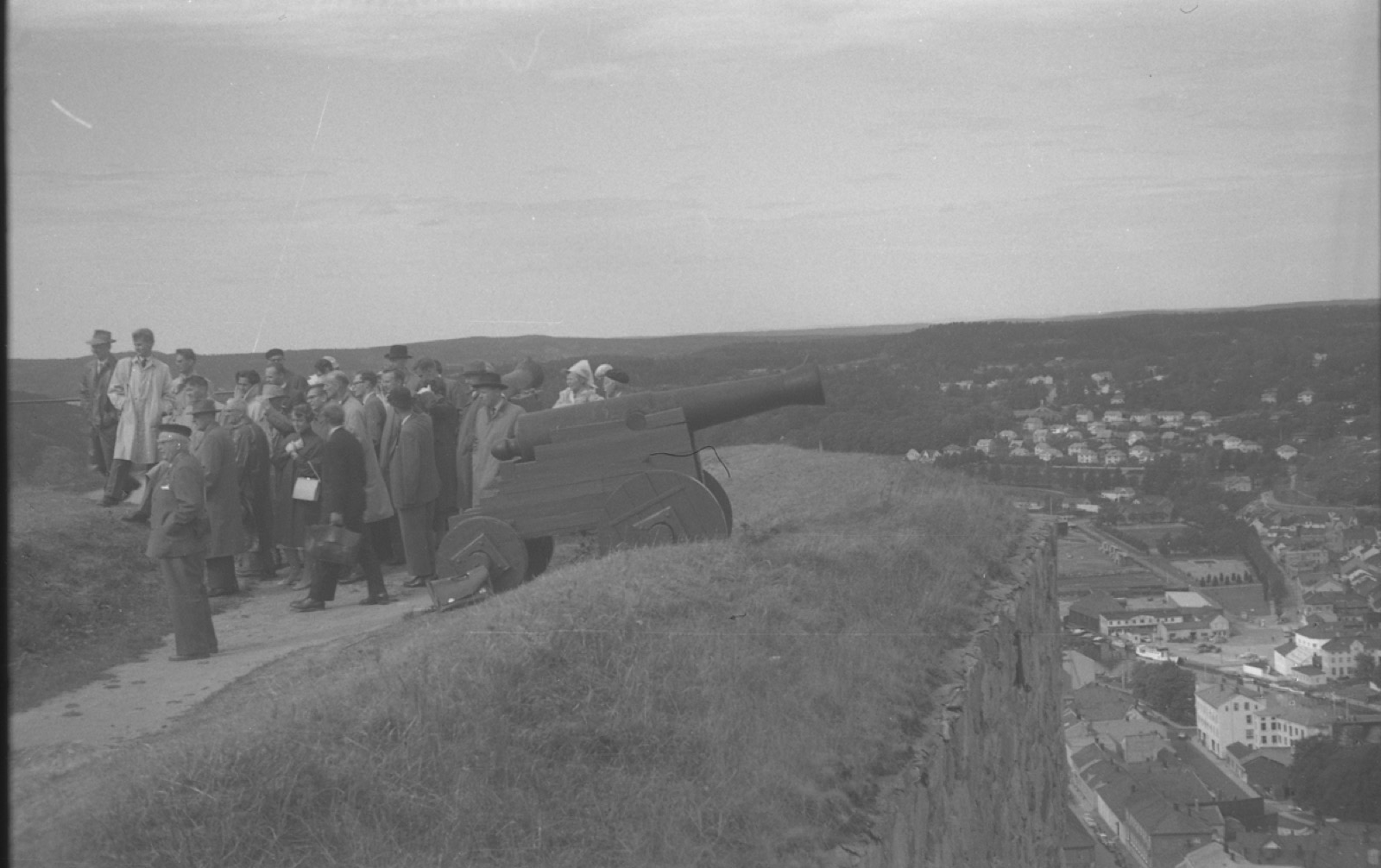
Fredriksten Halden
· Glomdal Museum (via Europeana)
CC BY-SA
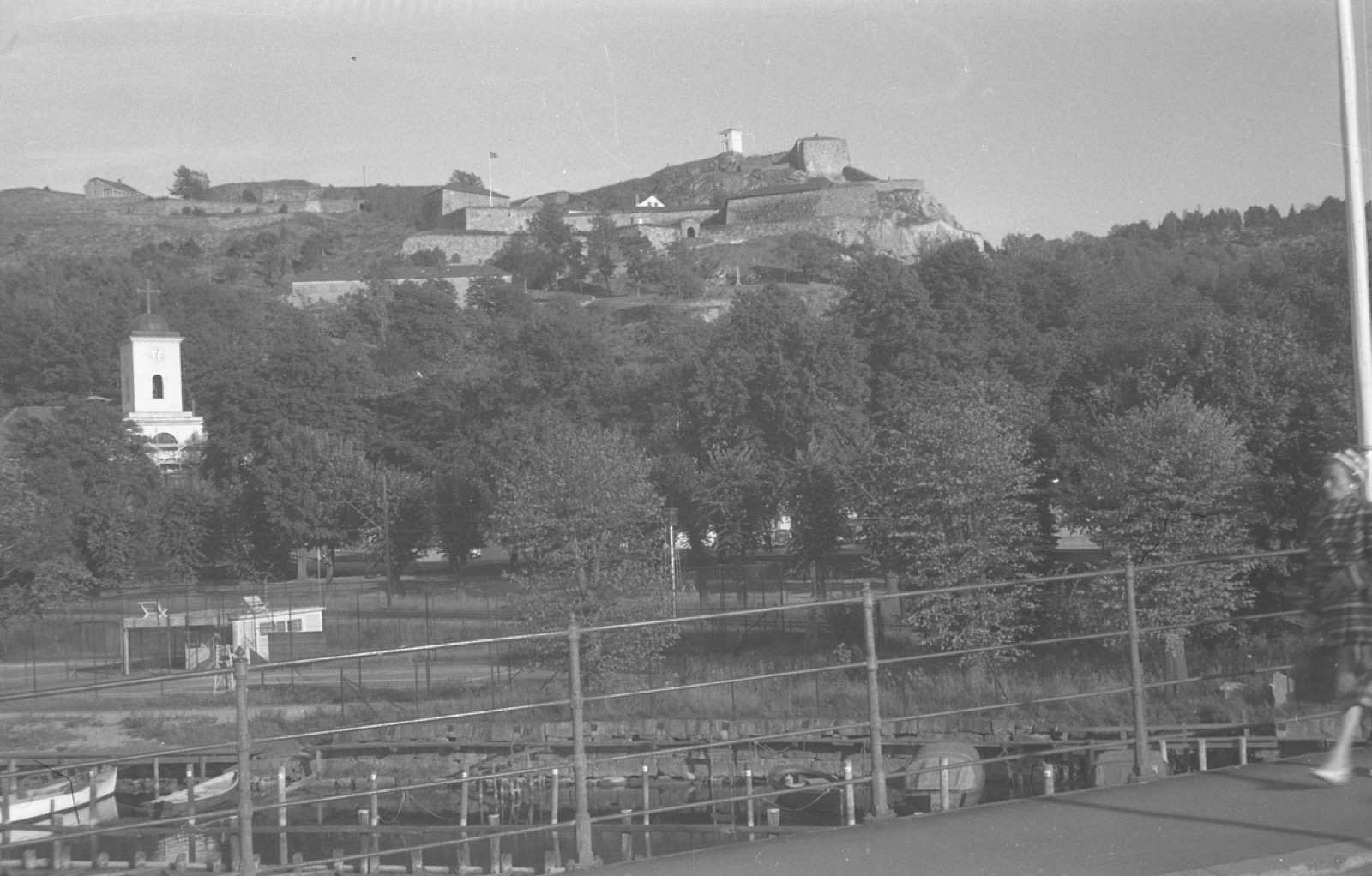
Fredriksten festning Halden
· Glomdal Museum (via Europeana)
CC BY-SA


