Clan Rising
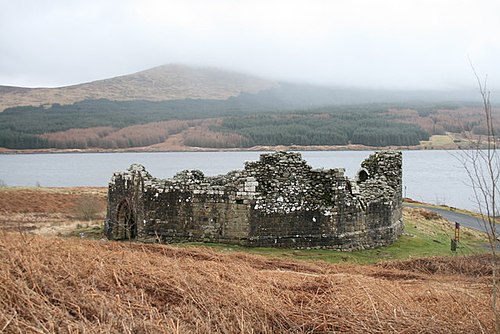
Dunnideer Castle today

Scotland · Ruin

Dunnideer Castle

Dunnideer Castle is a medieval ruined tower house near Insch in Aberdeenshire, Scotland, built around 1260 on a prehistoric vitrified hillfort. Only a crumbling rectangular stone shell survives today; the site is a scheduled monument open to the public. Archaeological work has shown the medieval masonry reused stone from the earlier Iron Age fort.

Photograph via Wikimedia Commons

First raised

1260

Its prime

1560

Today

Ruin

As it stood in 1560

What Dunnideer Castle looked like in its prime.

Rectangular tower-house footprint approximately 15 by 12.5 metres, rising as a rubble-stone shell with walls about 1.9 metres thick; now roofless and missing large sections of wall, leaving an irregular central aperture through an upper wall. The surviving masonry is coarse, darkened by weathering and visibly recycled from earlier vitrified hillfort stone. The structure sits alone on a grassy hilltop with low surrounding earthworks and a smaller detached masonry stump nearby.

Its story

The story of Dunnideer Castle.

Dunnideer Castle, near Insch in Aberdeenshire, was built around 1260 on the summit of a prehistoric vitrified hillfort dating to approximately 250 BC, and its masons reused stone from the Iron Age fort in the medieval walls. The tower measured 15 by 12.5 metres with walls 1.9 metres thick, and likely featured a first-floor hall with multiple storeys above.

Today only a crumbling rectangular shell of the tower house survives. The site is a scheduled monument and is open to the public.

Step inside

6 places to explore in 1560.

The record describes 6 distinct spots at Dunnideer Castle, including 1 interior: first-floor hall (internal level). Create your own photoreal reconstruction and explore every one, more scenes means more rooms, more angles, and more of the place to stand in.

Approach from grassy hillTower base and footingsFirst-floor hall (internal level)Central upper aperture / upper wallWestern detached rubble stumpVitrified hillfort ramparts and panorama

Build Your Own Castle

Recreate Dunnideer Castle with AI to explore it.

The artist rebuilds it as it stood in 1560, a photoreal reconstruction that belongs to you alone. Pay with coins, no subscription needed.

Recreate this castle →Defend this castle →

Nearby

Landmarks within reach of Dunnideer Castle.

Questions about Dunnideer Castle

What is the history of Dunnideer Castle?

Dunnideer Castle was built in the 13th century as a medieval fortification on an earlier prehistoric vitrified hillfort. The Iron Age settlement, dating to approximately 250 BC, was later repurposed, with its stone reused in the castle walls. The tower is now a crumbling stone shell and a scheduled monument managed by Historic Environment Scotland.

Why was Dunnideer Castle built, and what was it used for?

Dunnideer Castle was built as a medieval fortification. It occupied the summit of an earlier vitrified hillfort, reusing stone from the Iron Age settlement in its medieval walls. The tower likely contained a first-floor hall with multiple storeys above, indicating that it also provided an organised residential space within the fortified structure.

What is inside Dunnideer Castle?

The documented interior of Dunnideer Castle includes a first-floor hall. The tower likely had multiple storeys above this level, although only the ruined shell survives. No other rooms or interior fittings are described.

Where is Dunnideer Castle?

Dunnideer Castle is near Insch in Aberdeenshire. It stands on a grassy hilltop, with views across Aberdeenshire and low surrounding earthworks. The site is associated with a prehistoric vitrified hillfort on the same summit.

When was Dunnideer Castle built?

Dunnideer Castle was built around 1260, in the 13th century. The tower was raised on the summit of a prehistoric vitrified hillfort dating to approximately 250 BC, and its builders reused stone from the earlier fort.

What did Dunnideer Castle look like in its prime?

At its prime, Dunnideer Castle was a rectangular tower house measuring approximately 15 by 12.5 metres. Its rubble-stone walls were about 1.9 metres thick, and the darkened masonry incorporated recycled stone from the earlier vitrified hillfort. It stood alone on a grassy hilltop with surrounding earthworks and a detached masonry stump nearby.

Is Dunnideer Castle still standing or is it a ruin?

Dunnideer Castle is a ruin, with only a crumbling rectangular stone shell surviving. It is roofless and missing large sections of wall, leaving an irregular central aperture through an upper wall. The surviving masonry is coarse and weathered, and the site is a scheduled monument.

Can you visit Dunnideer Castle?

Dunnideer Castle is open to the public. The ruined tower house is a scheduled monument, and the site offers panoramic views of Aberdeenshire. It is not described as a private residence or as a building with current residential use.
All castles of Scotland · Castles of Europe · the best castles in Europe · explore the finished reconstructions.