Scotland · Restored
Ethie Castle
Caisteal Àthaidh
Ethie Castle is a 14th-century sandstone keep-style castle about 3 miles north of Arbroath in Angus, Scotland. Built around 1300 and later associated with Cardinal David Beaton and the Carnegie family, the building has been restored and today serves as the seat of the Forsyth clan.
Its prime
1546
Today
Restored
As it stood in 1546
What Ethie Castle looked like in its prime.
A compact red sandstone keep and attached ranges rising above a wooded rise, dominated by a cylindrical corner stair-turret capped with a conical roof and metal finial. The main block shows steep slate roofs and a low battlemented parapet with small, regularly spaced square windows and a few roof dormers; the masonry is warm red ashlar. The castle sits amid trees with an open meadow in the foreground and the roofline and turret visible above the treeline.
Its story
The story of Ethie Castle.
Ethie Castle, a 14th-century sandstone castle about three miles north of the fishing town of Arbroath in Angus, was built around 1300. It passed through the hands of the de Maxwell family and into the ownership of David Beaton, Scotland's last Cardinal, who was murdered in 1546.
In 1665 the castle was purchased by the Carnegie family, who later became the Earls of Northesk. The 7th Earl, a Vice Admiral, commanded with Nelson at Trafalgar in 1805, and as a tribute was entitled to incorporate Trafalgar into his arms, still to be seen set in a dormer at Ethie. Sir Walter Scott, a close friend of William Carnegie, 8th Earl of Northesk, frequently stayed at the castle.
In 1927 the castle and grounds were bought by the Glasgow artist and antique collector William Cunningham Hector. It was later restored by Alistair Forsyth, chief of Clan Forsyth, and now serves as that clan's seat.
Step inside
8 places to explore in 1546.
The record describes 8 distinct spots at Ethie Castle, including 4 interiors: cardinal's sitting room, secret spiral staircase to the great hall, great hall (upper chamber) and more. Create your own photoreal reconstruction and explore every one, more scenes means more rooms, more angles, and more of the place to stand in.
Build Your Own Castle
Recreate Ethie Castle with AI to explore it.
The artist rebuilds it as it stood in 1546, a photoreal reconstruction that belongs to you alone. Pay with coins, no subscription needed.
Recreate this castle →Defend this castle →Whose castle
Clans who held Ethie Castle.
The families that held Ethie Castle for a decade or more across its history, follow a name to its clan.
Passed through the hands of the de Maxwell family before coming to Cardinal David Beaton.
Carnegie
Purchased in 1665 by the Carnegie family, later Earls of Northesk.
Forsyth
Restored by clan chief Alistair Forsyth; now the seat of Clan Forsyth.
From the archive
Ethie Castle on paper: the measured plan and period views.
The survey plan and photographs below are the ground truth this page's reconstructions are checked against, drawn and photographed while the castle was still a working garrison. Every image is public-domain or openly licensed, with its source named.
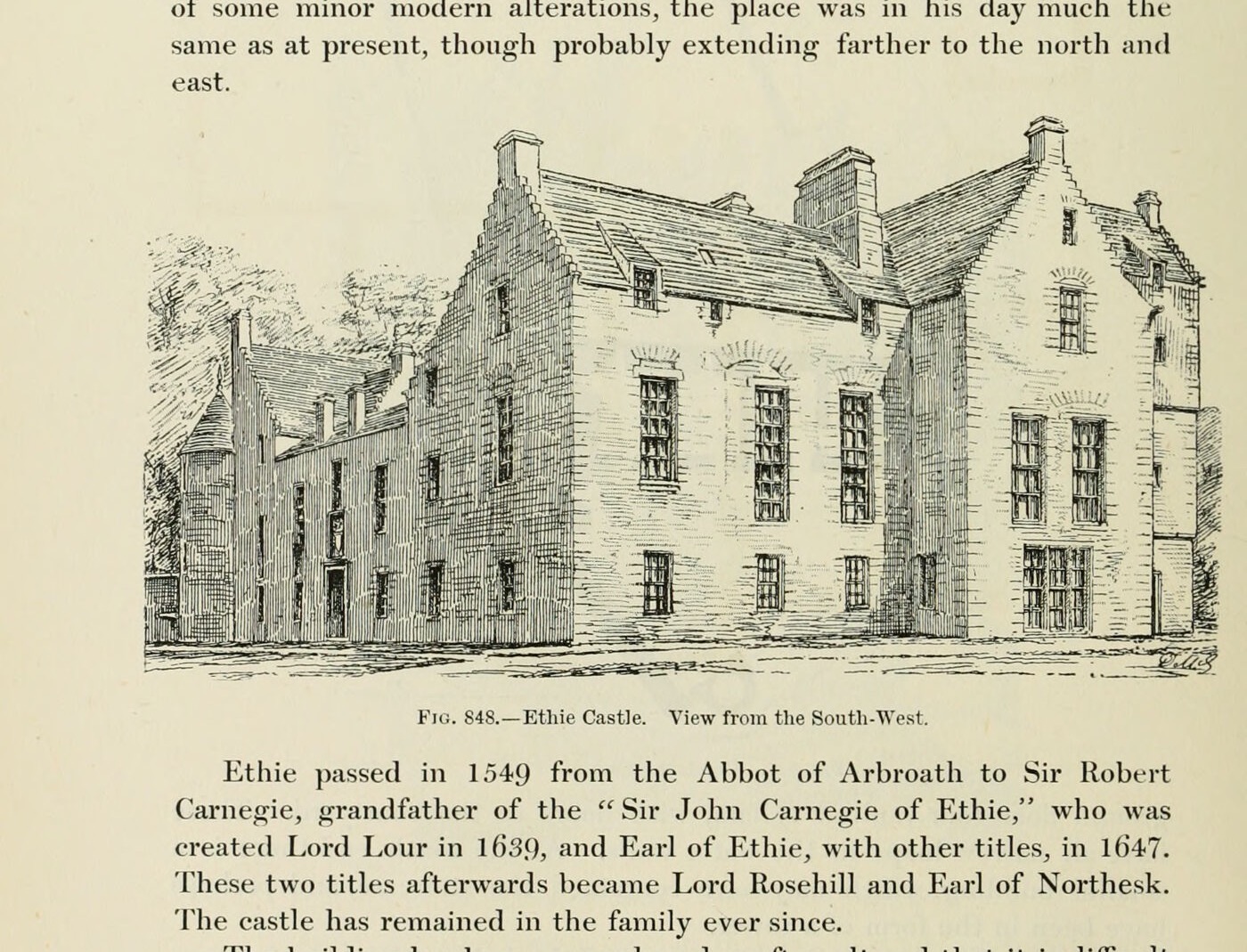
Fig. 848. Ethie Castle. View from the South-West.
1887 · MacGibbon & Ross, vol. 2 (1887)
Public domain
Nearby