Scotland · Demolished
Hessilhead
Hessilhead Castle was an oblong two-part stone castle near Beith in North Ayrshire, Scotland, long associated with the Montgomerie family. The medieval west keep received a larger 17th-century east addition by Francis Montgomerie; the roof was later removed and the building fell to ruin and was demolished in the 20th century.
Its prime
1700
Today
Demolished
As it stood in 1700
What Hessilhead looked like in its prime.
An oblong, two-part stone house: an older rectangular medieval west keep abutting a larger 17th-century east addition, forming a single elongated block roughly 74 by 38 feet. Both parts sit on thick masonry foundations with vaulted ground floors; after the 1680s enlargement the whole was finished with slated pitched roofs. The exterior is coursed local stone with modest, vertically placed openings; the building stands within an arranged landscape of lawns, specimen trees, plantations and straight rides.
Its story
The story of Hessilhead.
Hessilhead Castle stood near Beith in North Ayrshire, within the Barony of Hessilhead in the Lordship of Giffen. The lands were long held by the Eglintoun family, first recorded under Eglin, Lord of Eglintoun, in the reign of Malcolm Canmore, until Elizabeth de Eglintoun, sole heir, married Sir John de Montgomerie of Eaglesham; when her father Hugh Eglintoun of that Ilk died soon after 1378, the Montgomeries inherited.
Hessilhead's history is thereafter bound up with the Montgomeries: John was slain at Flodden in 1513, and the estate passed to his son Hugh, who died in 1556. The castle grew into an oblong two-part house, a 15th–17th-century keep to the west, with a larger east addition built by Francis Montgomerie, who bought the estate in 1680.
In its later days Hessilhead was occupied by the family of Lord Glasgow. After they left, a proprietor named Carmichael sold the materials from the castle, removed parts of the walls, and cut down and sold an impressive old yew tree; the ruin was demolished in the 20th century.
Step inside
7 places to explore in 1700.
The record describes 7 distinct spots at Hessilhead, including 1 interior: vaulted ground-floor chamber. Create your own photoreal reconstruction and explore every one, more scenes means more rooms, more angles, and more of the place to stand in.
Build Your Own Castle
Recreate Hessilhead with AI to explore it.
The artist rebuilds it as it stood in 1700, a photoreal reconstruction that belongs to you alone. Pay with coins, no subscription needed.
Recreate this castle →Defend this castle →Whose castle
Clans who held Hessilhead.
The families that held Hessilhead for a decade or more across its history, follow a name to its clan.
Eglinton
The de Eglintoun family held the lands from the reign of Malcolm Canmore until soon after 1378.
Montgomerie
The Montgomeries held Hessilhead from c.1378; Francis Montgomerie, who bought the estate in 1680, built the east addition.
From the archive
Hessilhead on paper: the measured plan and period views.
The survey plan and photographs below are the ground truth this page's reconstructions are checked against, drawn and photographed while the castle was still a working garrison. Every image is public-domain or openly licensed, with its source named.
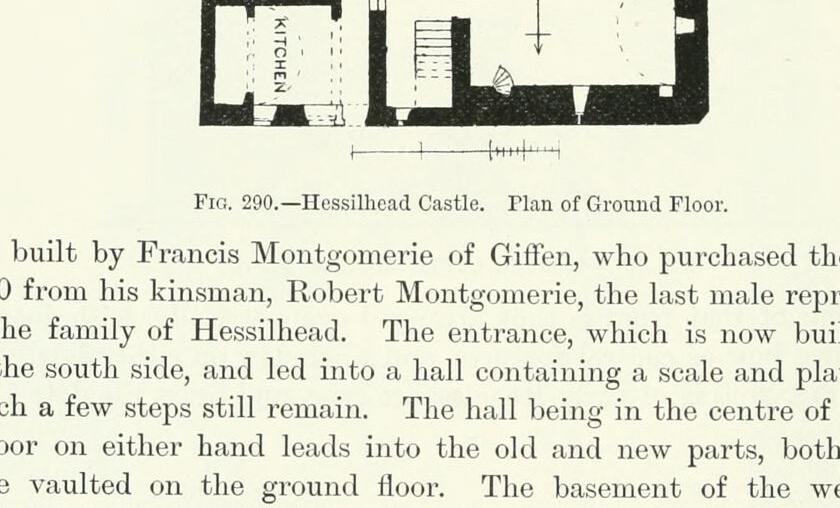
Fig. 290. Hessilhead Castle. Plan of Ground Floor.
1889 · MacGibbon & Ross, vol. 3 (1889)
Public domain
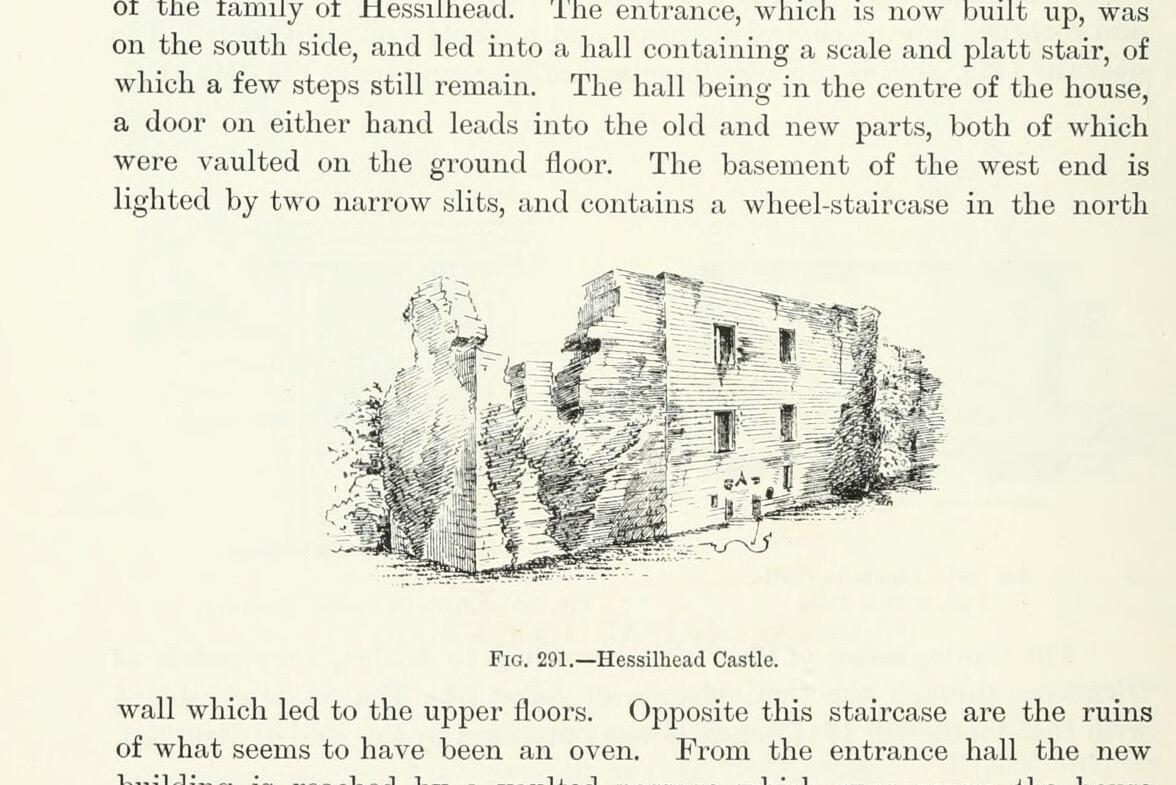
Fig. 291. Hessilhead Castle.
1889 · MacGibbon & Ross, vol. 3 (1889)
Public domain
Nearby