Clan Rising
Lauriston Castle today

Scotland · Restored

Lauriston Castle

Lauriston Castle is a privately owned country house and former fortress on a clifftop near St Cyrus in Aberdeenshire, Scotland. The site preserves elements from a medieval courtyard castle and a corner tower together with a large Georgian Palladian mansion and estate landscaping.

Photograph via Wikimedia Commons

Its prime

1789

Today

Restored

As it stood in 1789

What Lauriston Castle looked like in its prime.

At its prime the site combined a low-walled medieval courtyard with a single round corner tower set on the cliff edge, alongside a large three-storey Georgian Palladian mansion (1765–89) with a symmetrical centre block and hipped rooflines. A freestanding cylindrical doocot tower stood near the house and a two-acre walled garden lay within the policies. The whole ensemble sat on a grassy clifftop about a mile inland from the North Sea, with designed walks and cascades in the surrounding parkland.

Its story

The story of Lauriston Castle.

Lauriston Castle stands on a clifftop near the Aberdeenshire village of St Cyrus, just over a mile from the North Sea. Once a royal fortress, it can claim to be one of the oldest privately owned and inhabited castles in the region; by tradition the site was the stronghold of Giric, Gregory the Great, one of the last of the Pictish kings (878–889).

For nearly 450 years Lauriston was held by the Stratons, whose arms of 1292 are among the earliest recorded in Scotland. An Alexander Straton is the final signatory of the Declaration of Arbroath, the famous letter of 1320 from the nation's earls and barons to Pope John XXII.

Local history preserves a grim tale of the Mearns barons: exasperated by the high-handed Sheriff John Melville of Glenbervie, and taking the Regent Albany's outburst, that he would not mind if they "biled the loon and suppit the bree", as royal licence, they lured Melville to a hunting party, tipped him into a cauldron of boiling water and supped the broth. Today a Georgian Palladian mansion adjoins the surviving elements of the medieval courtyard castle and its corner tower.

Step inside

8 places to explore in 1789.

The record describes 8 distinct spots at Lauriston Castle, including 1 interior: great hall (interior). Create your own photoreal reconstruction and explore every one, more scenes means more rooms, more angles, and more of the place to stand in.

Approach from the drive and clifftopCliff-edge corner tower (exterior)Central courtyardGreat Hall (interior)Doocot towerPalladian mansion façadeTwo-acre walled gardenWaterfall and estate walk

Build Your Own Castle

Recreate Lauriston Castle with AI to explore it.

The artist rebuilds it as it stood in 1789, a photoreal reconstruction that belongs to you alone. Pay with coins, no subscription needed.

Recreate this castle →Defend this castle →

Whose castle

Clans who held Lauriston Castle.

The families that held Lauriston Castle for a decade or more across its history, follow a name to its clan.

  • Straton

    Held by the Stratons for nearly 450 years; their arms of 1292 are among the earliest recorded in Scotland.

From the archive

Lauriston Castle on paper: the measured plan and period views.

The survey plan and photographs below are the ground truth this page's reconstructions are checked against, drawn and photographed while the castle was still a working garrison. Every image is public-domain or openly licensed, with its source named.
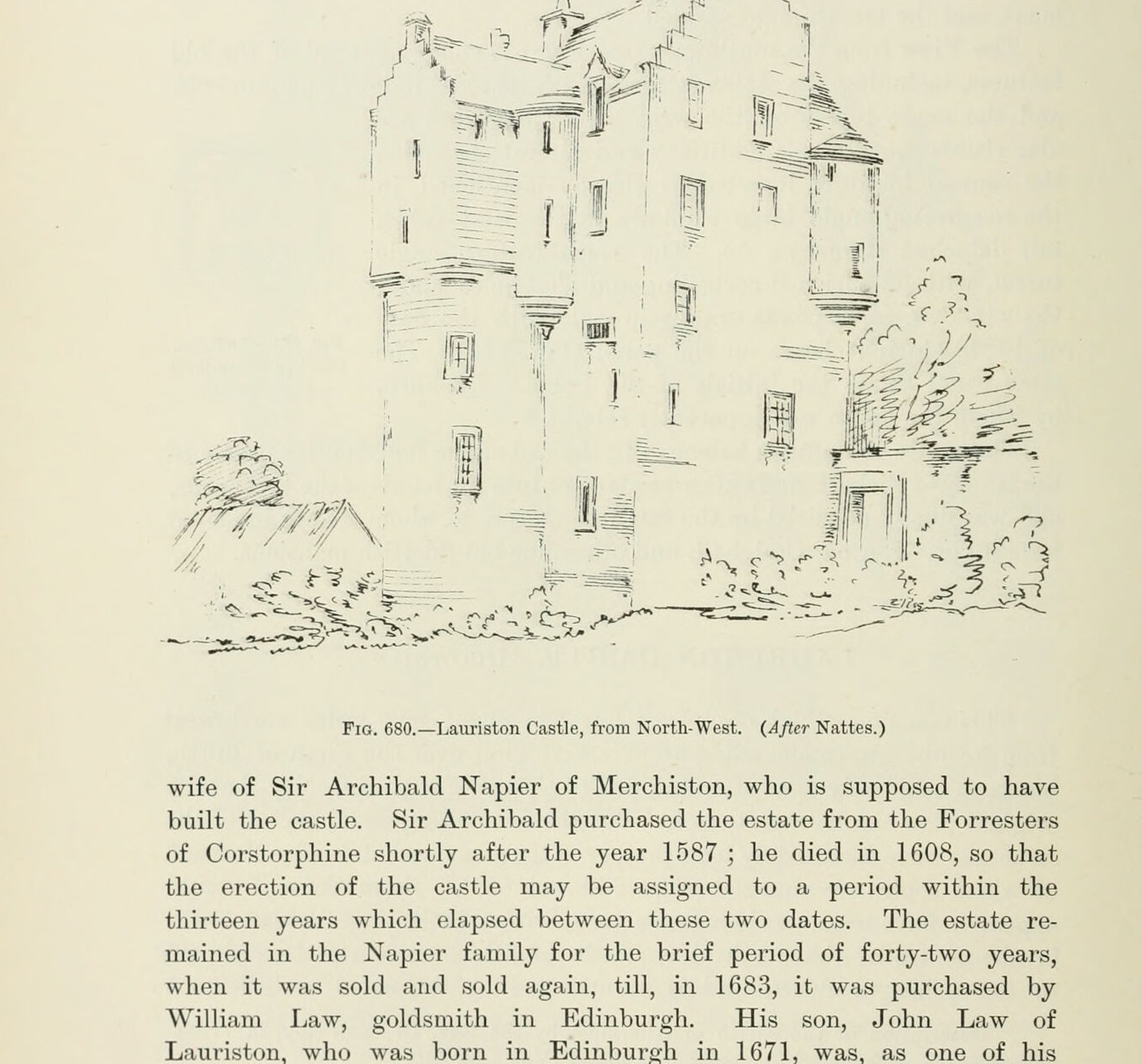
Fig. 680. — Lauriston Castle, from North-West. (After Nattes.), Lauriston Castle

Fig. 680. — Lauriston Castle, from North-West. (After Nattes.)

1892 · MacGibbon & Ross, vol. 4 (1892)

Public domain
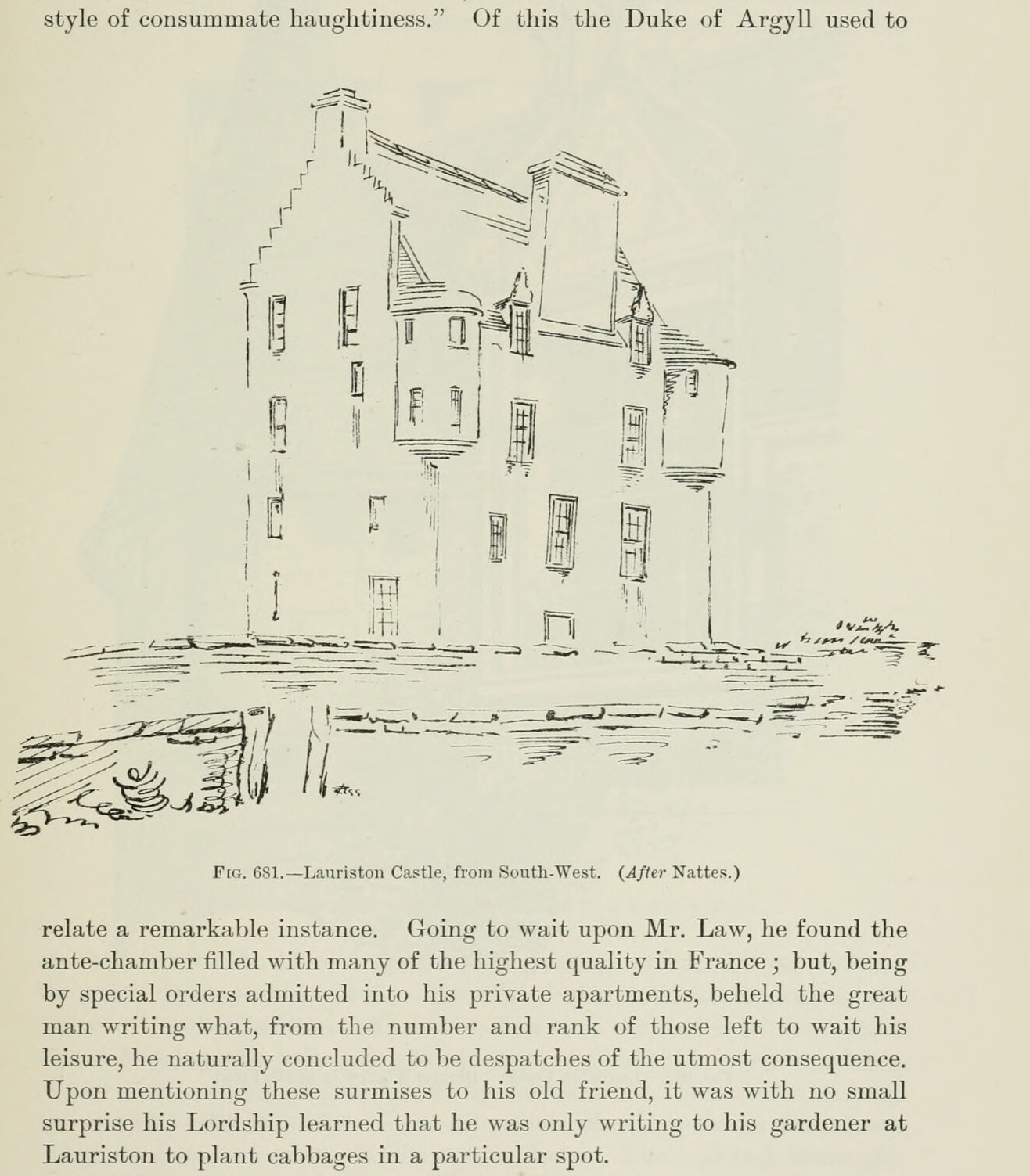
Fig. 681.—Lauriston Castle, from South-West. (After Nattes.), Lauriston Castle

Fig. 681.—Lauriston Castle, from South-West. (After Nattes.)

1892 · MacGibbon & Ross, vol. 4 (1892)

Public domain
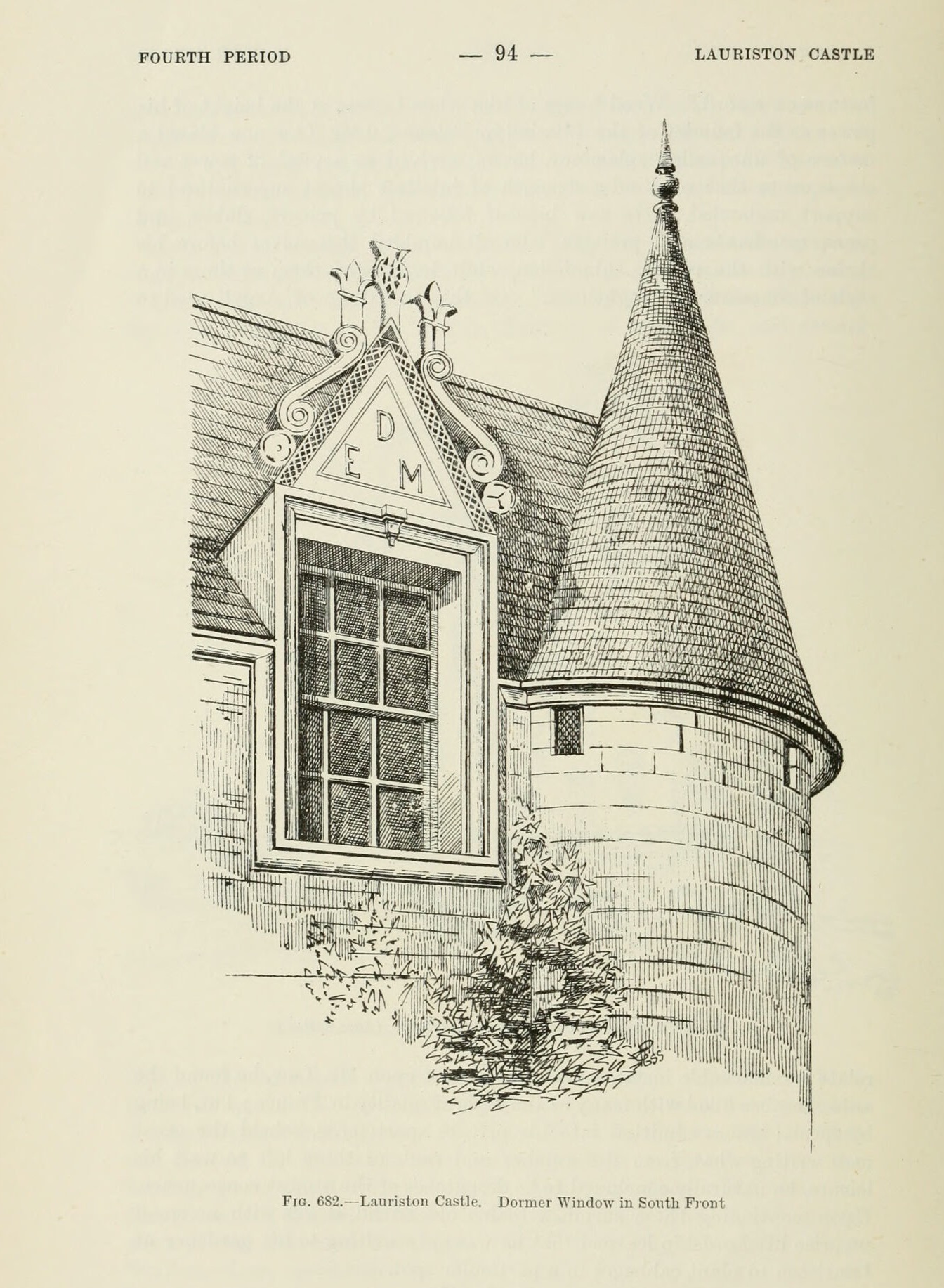
Fig. 682.—Lauriston Castle. Dormer Window in South Front, Lauriston Castle

Fig. 682.—Lauriston Castle. Dormer Window in South Front

1892 · MacGibbon & Ross, vol. 4 (1892)

Public domain

Nearby

Landmarks within reach of Lauriston Castle.

Questions about Lauriston Castle

What is the history of Lauriston Castle?

Lauriston Castle’s documented history begins with a first charter dated 1243, when it developed as a courtyard castle. It was fought over during Scotland’s Wars of Independence and strengthened by King Edward III in 1336. A corner tower later became part of a laird’s house, which was absorbed into the Georgian mansion dated 1765–89; the Stratons held Lauriston for nearly 450 years before selling it in 1695.

What is inside Lauriston Castle?

Lauriston Castle contains the Great Hall and the Doocot Tower, both rebuilt in the late 1980s. The surviving complex also includes the medieval courtyard elements, the corner tower and the Georgian Palladian mansion. The Great Hall is the specifically documented interior space.

Why was Lauriston Castle built, and what was it used for?

Lauriston Castle was built and developed for defensive use as a royal fortress and courtyard castle. It was later adapted as a laird’s residence and then absorbed into a large Georgian Palladian mansion dated 1765–89. Its surrounding estate was subsequently developed as a Picturesque designed landscape with waterfalls, walks and a two-acre walled garden.

Where is Lauriston Castle?

Lauriston Castle is on a clifftop near St Cyrus in Aberdeenshire, just over a mile inland from the North Sea coast. St Cyrus is the nearest named village, and Aberdeenshire is the surrounding administrative area. The site lies in the north-east of Scotland.

Which family or clan held Lauriston Castle?

Lauriston Castle was held by the Straton family for nearly 450 years. Their arms of 1292 are among the earliest recorded in Scotland. Alexander Straton was the final signatory of the Declaration of Arbroath, the letter of 1320 to Pope John XXII.

What did Lauriston Castle look like in its prime?

At its prime, Lauriston Castle combined a low-walled medieval courtyard with a single round corner tower on the cliff edge. Beside these stood a large three-storey Georgian Palladian mansion, built between 1765 and 1789, with a symmetrical centre block and hipped rooflines. The estate also included a cylindrical doocot tower and a two-acre walled garden.

Is Lauriston Castle still standing, or is it a ruin?

Lauriston Castle is still standing and has been restored. The surviving complex includes elements of the medieval courtyard castle and corner tower, together with the Georgian Palladian mansion. The Great Hall and Doocot Tower were rebuilt in the late 1980s after part of the mansion was demolished following its use as RAF barracks during the Second World War.

Does anyone live in Lauriston Castle?

Lauriston Castle is described as privately owned and inhabited. The supplied material does not name its current owner or identify the people who live there. It was used as RAF barracks during the Second World War before later restoration work.
All castles of Scotland · Castles of Europe · the best castles in Europe · explore the finished reconstructions.