Clan Rising
Innerwick Castle today

Scotland · Ruin

Innerwick Castle

Innerwick Castle is a ruined medieval stronghold on a sandstone crag above Thornton Glen in East Lothian, Scotland. Built in the 14th century and extended later, it was besieged and damaged in the 16th century and today survives as fragmentary masonry on the cliff-edge.

Photograph via Wikimedia Commons

Its prime

1540

Today

Ruin

As it stood in 1540

What Innerwick Castle looked like in its prime.

Perched on the lip of a steep sandstone glen, the castle sits directly atop a layered red-tinged rock outcrop with its masonry bonded into the crag. The remains show a compact plan of coursed rubble and dressed stone, a surviving multi-storey tower or tower-stump at one end, and low stretches of curtain wall with narrow vertical window-slits and breaches; roofs and timber floors are absent today and vegetation clings to exposed stone faces, trees filling the glen below.

Its story

The story of Innerwick Castle.

Innerwick Castle was built in the 14th century on the edge of a precipitous glen above the Thornton Burn, five miles from Dunbar. A stronghold of the Stewarts and of the Hamilton family, it was besieged in 1406 by Robert Stewart, Duke of Albany, to expel the forces of the Earl of Northumberland, timber beams were bought for the assault, perhaps to make a siege engine or effect access.

During the war of the Rough Wooing, James Hamilton of Innerwick was captured by the English and held for ransom by Ralph Eure, and in September 1547 the castle, by then extended several times, was captured and destroyed by Edward Seymour, 1st Duke of Somerset. Mary of Guise mentioned the house in a letter of April 1560, while French forces were fighting the English at the siege of Leith.

A later owner, James Maxwell of Innerwick, became Earl of Dirleton, and the land around the castle was sold to the Nisbets in 1663. The castle survives as fragmentary masonry on its sandstone crag above Thornton Glen.

Step inside

6 places to explore in 1540.

The record describes 6 distinct spots at Innerwick Castle, including 2 interiors: tower interior and stair, basement vaults and cellars. Create your own photoreal reconstruction and explore every one, more scenes means more rooms, more angles, and more of the place to stand in.

Approach from the glenCliff-top platform (exterior)Eastern tower (exterior)Tower interior and stairBasement vaults and cellarsView over Thornton Glen

Build Your Own Castle

Recreate Innerwick Castle with AI to explore it.

The artist rebuilds it as it stood in 1540, a photoreal reconstruction that belongs to you alone. Pay with coins, no subscription needed.

Recreate this castle →Defend this castle →

Whose castle

Clans who held Innerwick Castle.

The families that held Innerwick Castle for a decade or more across its history, follow a name to its clan.

  • Stewart

    Innerwick was a stronghold of the Stewarts.

  • Hamilton

    A stronghold of the Hamiltons; James Hamilton of Innerwick was captured by the English during the Rough Wooing.

  • Nisbet

    The land around the castle was sold to the Nisbets in 1663.

From the archive

Innerwick Castle on paper: the measured plan and period views.

The survey plan and photographs below are the ground truth this page's reconstructions are checked against, drawn and photographed while the castle was still a working garrison. Every image is public-domain or openly licensed, with its source named.
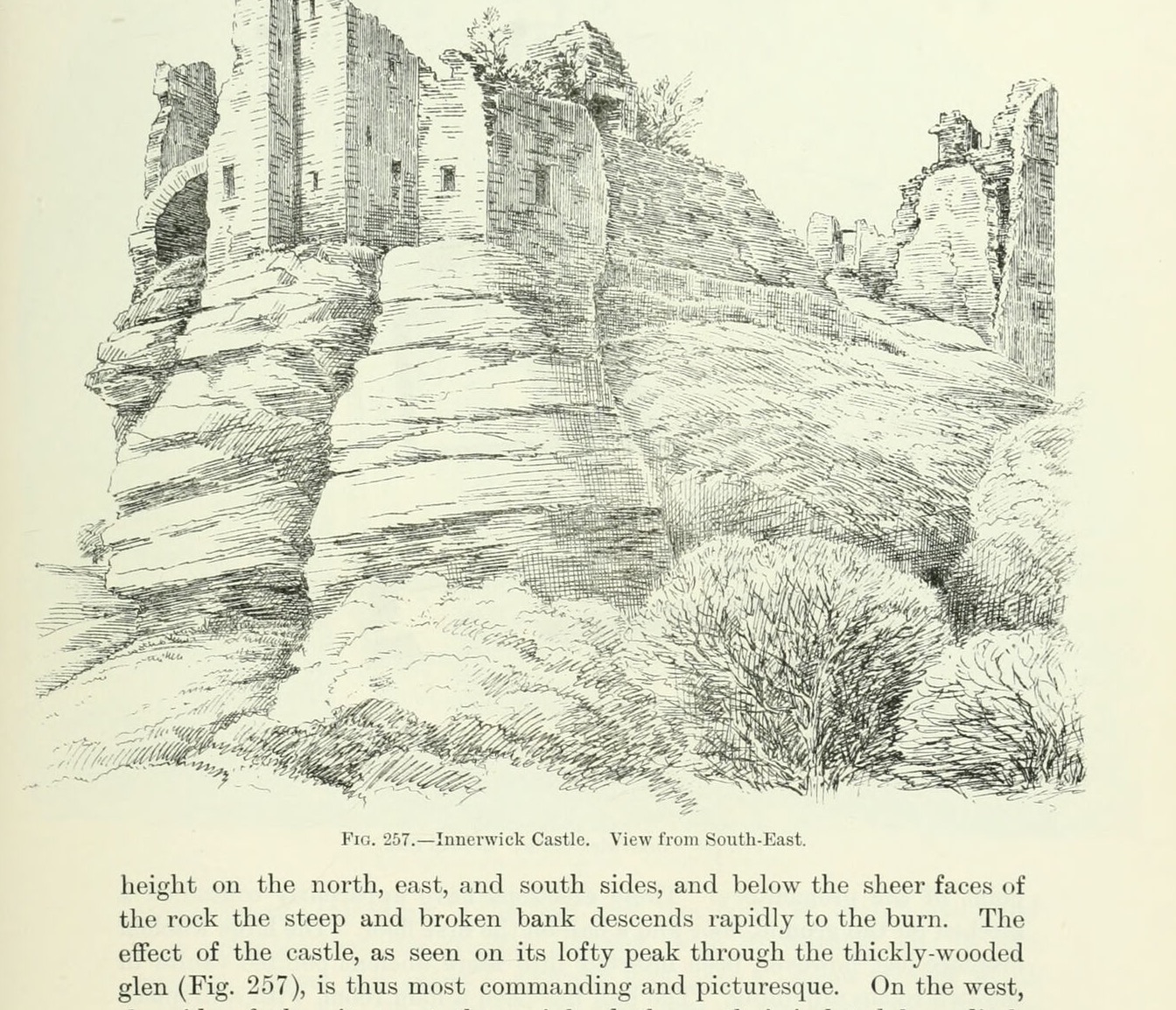
Fig. 257. — Innerwick Castle. View from South-East., Innerwick Castle

Fig. 257. — Innerwick Castle. View from South-East.

1889 · MacGibbon & Ross, vol. 3 (1889)

Public domain
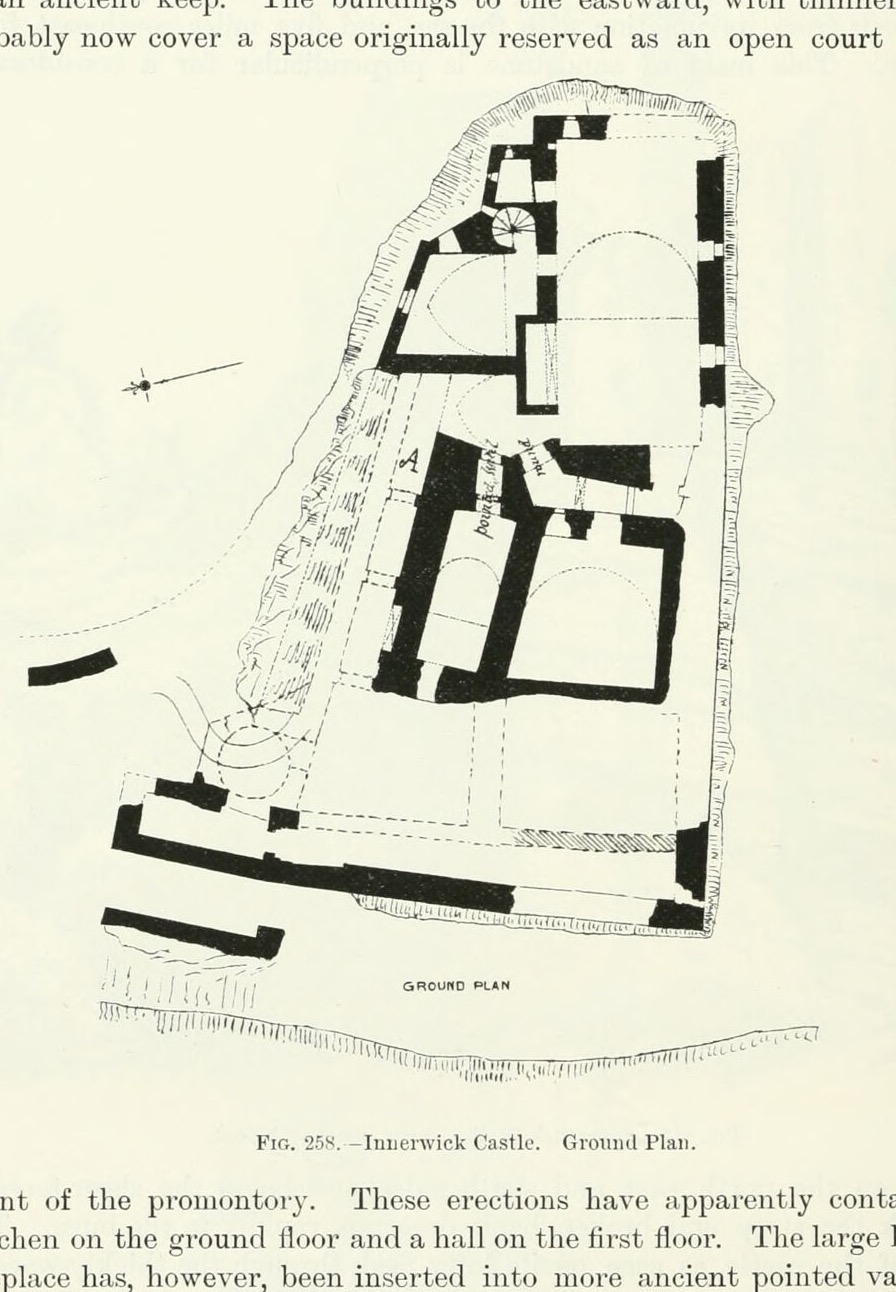
Fig. 258. — Innerwick Castle. Ground Plan., Innerwick Castle

Fig. 258. — Innerwick Castle. Ground Plan.

1889 · MacGibbon & Ross, vol. 3 (1889)

Public domain

Questions about Innerwick Castle

What is the history of Innerwick Castle?

Innerwick Castle was built in the 14th century as a stronghold on the edge of a precipitous glen. It was held by the Stewarts and Hamiltons and later extended several times. In 1547, Edward Seymour, 1st Duke of Somerset, captured and destroyed it; in the 17th century, Covenanters used it as a base against Oliver Cromwell’s lines of communication.

What is inside Innerwick Castle?

Inside Innerwick Castle, the documented remains include a tower interior with a stair, along with basement vaults and cellars. The roofs and timber floors are absent today, so these spaces survive within fragmentary masonry rather than an intact building.

Why was Innerwick Castle built, and what was it used for?

Innerwick Castle was built as a stronghold overlooking Thornton Glen and the Thornton Burn. Its position also served a strategic purpose, as Innerwick and nearby Thornton Castle guarded routes from the south. In the 17th century, the castle was used as a base by the Covenanters to harass Oliver Cromwell’s lines of communication.

Where is Innerwick Castle?

Innerwick Castle is in East Lothian, near the village of Innerwick and five miles from Dunbar. It stands above Thornton Glen on the Thornton Burn, on top of a crag overlooking the glen.

When was Innerwick Castle built?

Innerwick Castle was built in the 14th century, although the precise first-raised year is not recorded. It was extended several times after its initial construction, so the surviving remains represent more than one building phase.

Was Innerwick Castle ever attacked or besieged?

Innerwick Castle was besieged in 1406 by Robert Stewart, Duke of Albany, who attacked to expel the forces of the Earl of Northumberland. It fell in September 1547, when Edward Seymour, 1st Duke of Somerset, captured and destroyed it; English soldiers accessed the basement and set it on fire.

Which family or clan held Innerwick Castle?

Innerwick Castle was held by the Stewarts and the Hamiltons. The land around the castle was sold to the Nisbets in 1663. James Hamilton of Innerwick was captured by the English during the Rough Wooing and held for ransom by Ralph Eure.

What did Innerwick Castle look like in its prime?

Innerwick Castle was a compact sandstone stronghold built directly onto a red-tinged rock outcrop above the glen. Its remains include coursed rubble and dressed stone, a surviving multi-storey tower or tower-stump, and low curtain walls with narrow vertical window-slits and breaches. Roofs and timber floors are absent, while vegetation clings to the exposed stone.

Is Innerwick Castle still standing, or is it a ruin?

Innerwick Castle is a ruin today. It survives as fragmentary masonry on a sandstone crag above Thornton Glen, including a tower or tower-stump and low stretches of curtain wall. The roofs and timber floors are gone, and breaches and vegetation affect the exposed stone faces.
All castles of Scotland · Castles of Europe · the best castles in Europe · explore the finished reconstructions.